Protective Relay Training - Basic
Our customized live online or in‑person group training can be delivered to your staff at your location.
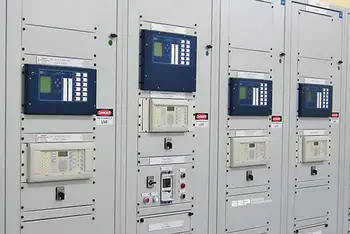
- Live Online
- 12 hours Instructor-led
- Group Training Available
Regular Price:
$699
Coupon Price:
$599
San Francisco Power Plant Closure follows a legal settlement with Mirant, curbing emissions and bay pollution, while ISO grid reliability, transmission upgrades, renewable energy, and efficiency measures balance power needs in Dogpatch and Mission Bay.
The Important Points
A settlement to close a San Francisco fossil plant, cut emissions, and meet ISO reliability with solar and efficiency.
- 40-year fossil plant to shutter by end of 2010
- Settlement obligates Mirant and expedites city review
- ISO reliability may delay closure; local capacity required
- Cooling intake kills larvae; heated discharge harms bay
- $1M pledged for neighborhood health and asthma clinics
The heavily polluting power plant on San Francisco's southeastern waterfront would close by the end of next year under a legal settlement announced between Mirant Corp. and City Attorney Dennis Herrera.
The 40-year-old fossil-fuel plant, which officials say is one of the dirtiest in the state, spews particles and chemicals from a bayside smokestack. Its cooling system, which sucks in millions of gallons of bay water per day, kills fish larvae and discharges heated water into San Francisco Bay.
The settlement appears to end a decade-long contentious debate among city officials, community leaders, energy providers and environmentalists about whether the plant, located south of Mission Bay, should be retrofitted or closed.
It is not yet certain, however, if state energy officials will allow it to be closed.
In April, Herrera sued Atlanta-based Mirant for failing to retrofit brick buildings on its property, but it was clear that the intent of the suit went beyond making the buildings safe and into a broader legal fight against power plants pursued by advocates.
"This is a major step forward for a San Francisco that will be cleaner, greener and healthier because of what we've achieved today," Herrera said of the settlement at a news conference.
The legal accord that would end the lawsuit obligates Mirant to shutter the Potrero plant by the end of 2010 and work with the city to overcome possible objections from state energy monitors. The company also would pay $1 million for health initiatives in the neighborhood, including possible asthma clinics.
In return for its pledge to close the facility, Mirant, which owns the property, will get expedited city review for any future development projects. Herrera also retracted his demand that the five unoccupied brick structures on the site be fixed.
Mirant spokesman Chip Little said the company agreed to the settlement because it wanted to end the lawsuit and saw benefits in the city's other promises.
The settlement must be approved by the Board of Supervisors and Mayor Gavin Newsom.
Yet a potentially much bigger hurdle for closing the plant is the California Independent System Operator.
The ISO ensures that cities have reliable energy supplies that can withstand power line failures and other emergencies during peak demand in San Francisco events as well. The agency has demanded that San Francisco have a new power plant within city limits.
The city has told the ISO that it can meet the energy reliability requirements through multiple sources, including a 53-mile Trans Bay Cable that will run under the bay to Pittsburg. That line is scheduled to start delivering power from East Bay fossil fuel plants by spring. Renewable sources, including solar power, and greater energy efficiency would also help meet demands, city officials have said.
Herrera said the city would present a formal plan to the ISO in the coming months but did not commit to a date.
The power grid monitor reacted cautiously to news of the legal settlement, noting that Sierra Club lawsuits have influenced early plant closures elsewhere.
The ISO's role "is to protect system reliability and safety for the citizens of San Francisco and California without regard to local politics or economic interests," ISO spokesman Gregg Fishman said in a statement. "The ISO will continue to require local measures to be available at the level necessary to ensure that San Francisco reliability is consistent with that of other major metropolitan areas."
Residents in the Dogpatch neighborhood, where the plant is located, said they have waited a long time for it to close. A Pacific Gas and Electric Co. plant near the shoreline in Hunters Point closed in 2006 after long-standing community opposition, mirroring the Salem Harbor power station closure in another state as well.
"We are thrilled and would like to see it shut down as soon as possible," said Janet Carpinelli, president of the Dogpatch Neighborhood Association. "The talk has gone back and forth as the pollution has continued all night long and every day."
Related News
Related News
Covid-19 puts brake on Turkey’s solar sector
Turkey Net Metering Suspension freezes regulator reviews, stalling rooftop solar permits and grid interconnections amid…
View more

Warren Buffett’s Secret To Cheap Electricity: Wind
Berkshire Hathaway Energy Wind Power drives cheap electricity rates in Iowa via utility-scale wind turbines,…
View more
What to know about the big climate change meeting in Katowice, Poland
COP24 Climate Talks in Poland gather nearly 200 nations to finalize the Paris Agreement rulebook,…
View more
Solar changing shape of electricity prices in Northern Europe
EU Solar Impact on Electricity Prices highlights how rising solar PV penetration drives negative pricing,…
View more
USDA Grants $4.37 Billion for Rural Energy Upgrades
USDA Rural Energy Infrastructure Funding boosts renewable energy, BESS, and transmission upgrades, delivering grid modernization,…
View more
Global push needed to ensure "clean, affordable and sustainable electricity" for all
SDG7 Energy Progress Report assesses global energy access, renewables, clean cooking, and efficiency, citing COVID-19…
View more
Sign Up for Electricity Forum’s Newsletter
Stay informed with our FREE Newsletter — get the latest news, breakthrough technologies, and expert insights, delivered straight to your inbox.
Electricity Today T&D Magazine Subscribe for FREE

Stay informed with the latest T&D policies and technologies.
- Timely insights from industry experts
- Practical solutions T&D engineers
- Free access to every issue

