CSA Z462 Arc Flash Training – Electrical Safety Compliance Course
Our customized live online or in‑person group training can be delivered to your staff at your location.

- Live Online
- 6 hours Instructor-led
- Group Training Available
Regular Price:
$249
Coupon Price:
$199
Saudi Solar Desalination Initiative aims to power reverse osmosis with renewable energy, leveraging nanotechnology membranes by IBM and KACST, cutting costs to $0.40/m3, saving oil, and supplying Al-Khafji via a 10 MW plant.
A Closer Look
A national program to power RO desalination with solar, cut water costs below $0.40/m3, and shrink oil use across Saudi Arabia.
- 18% of global desalinated water from 28+ units
- Plants consume ~1.5M barrels of oil daily
- Stage 1: 30,000 m3/day RO; 10 MW solar; Al-Khafji
With abundant supply of sunlight and saline water, Saudi Arabia is planning to build the country's first solar-powered water desalination plant. This is the first part of a three-stage program to ensure energy security and provide drinking water to Saudis.
Saudi Arabia produces about 18% of the world's desalinated water, using more than 28 desalination units, which cater to 70% of the country's drinking water requirements. These units, however, run on conventional fuels such as fuel oil, even as Saudi Arabia expands wind power options, which, in addition to draining an expensive fuel, adds to the cost of water extracted from such units. On average, about 1.5 million barrels of oil per day are reportedly used in desalination plants.
Fluctuating oil prices also have a direct impact on the cost of water. The move to switch to solar energy to power desalination plants would not only save precious oil, but would allow the utilization of a natural clean energy source, which is available throughout the year.
As part of the "National Initiative To Desalinate Water Using Solar Energy," IBM Corporation and King Abdul Aziz City for Science and Technology have set up a Joint Center for Nanotechnology Research, reflecting growing green energy investment in the kingdom. The center has developed techniques and membranes for the application of solar power for water desalination. In a three-stage program spanning nine years, several solar-powered desalination plants are expected to be developed.
The first stage involves construction of a desalination plant capable of producing 30,000 cubic meters of water per day, and a reverse osmosis (RO) plant based on indigenous technology. The solar plant associated with the desalination unit will generate about 10 MW of power, aligning with Morocco's solar power initiative goals. The residents of Al-Khafji City, numbering about 100,000, will benefit from this phase, which was initiated at the beginning of 2010. The execution of this stage is expected to continue for three years.
The first stage will serve as a basis for the second, which involves construction of a 300,000-cubic-meter-per-day desalination plant, which is expected to span three years, drawing parallels with Morocco's 2,000-MW solar project underway. The plant site is yet to be decided.
The third stage involves development of several desalination units across the country, with attention to solar plant water use considerations, based on the techniques of the first two stages.
The projects will be executed by an industrial consortium, under the purview of the Ministry of Commerce and Industry of Saudi Arabia, and will be based on the Industrial National Strategy guidelines. Saudi Arabia receives 7,000 watts of sunshine per square meter on an average day of 12 hours, supporting efforts such as a solar traffic lights plan nationwide. The initiative aims at reducing the cost of desalination to less than 40 U.S. cents per cubic meter as compared to current costs of 70 cents to $1.50 per cubic meter, using thermal energy and reverse osmosis processes for a 30,000-cubic-meter-per-day desalination plant.
Related News
Related News
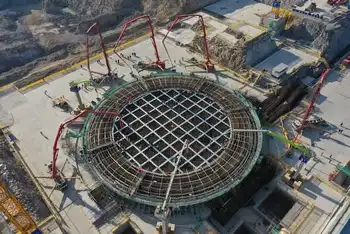
China's nuclear energy on steady development track, say experts
China Nuclear Power Expansion accelerates with reactor approvals, Hualong One and CAP1400 deployments, rising gigawatts,…
View more
Romania enhances safety at Cernavoda, IAEA reports
IAEA OSART Cernavoda highlights strengthened operational safety at Romania’s Cernavoda NPP, citing improved maintenance practices,…
View more

Shocking scam: fraudster pretending to be from BC Hydro attempts to extort business
BC Hydro Bitcoin Scam targets small businesses with utility impersonation, call spoofing, and disconnection threats,…
View more

27 giant parts from China to be transported to wind farm in Saskatchewan
Port of Vancouver Wind Turbine Blades arrive from China for a Saskatchewan wind farm, showcasing…
View more

China's Data Centers Alone Will Soon Use More Electricity Than All Of Australia
Cloud Data Centers Environmental Impact highlights massive electricity use, carbon emissions, and cooling demands, with…
View more

TTC Introduces Battery Electric Buses
TTC Battery-Electric Buses lead Toronto transit toward zero-emission mobility, improving air quality and climate goals…
View more
Sign Up for Electricity Forum’s Newsletter
Stay informed with our FREE Newsletter — get the latest news, breakthrough technologies, and expert insights, delivered straight to your inbox.
Electricity Today T&D Magazine Subscribe for FREE

Stay informed with the latest T&D policies and technologies.
- Timely insights from industry experts
- Practical solutions T&D engineers
- Free access to every issue

