Energy prices highest in Alberta: Opposition

By Canadian Press


NFPA 70e Training - Arc Flash

Our customized live online or in‑person group training can be delivered to your staff at your location.

  • Live Online
  • 6 hours Instructor-led
  • Group Training Available
Regular Price:
$199
Coupon Price:
$149
Reserve Your Seat Today
Alberta's New Democrats say for the second year in a row, electricity prices in the energy rich province are the most expensive in Canada.

New Democrat Brian Mason says a survey done by Manitoba Hydro shows the northern Alberta city of Grande Prairie -- a region rich with oil and gas -- has the highest energy cost out of the 17 communities it measured across the country.

The survey measured the cost of 750-kilowatts of power.

In Grande Prairie, it would cost about one-hundred and 10 dollars.

Mason says Edmonton, Calgary, Charlottetown, PEI and Englehart, Ontario are also paying top dollar for electricity.

He says he'd like to see the Alberta government admit that deregulation of the electricity industry is driving up prices.

Mason says they want price protection for consumers.

Related News
ABL Secures Contract for UK Subsea Power

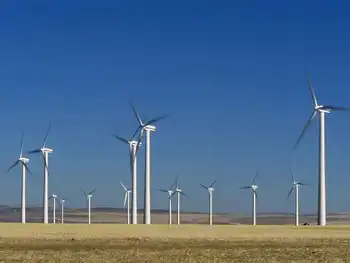
ABL has secured a contract for the UK Subsea Power Link, highlighting ABL Group’s marine warranty role in Eastern Green Link 2, a 2 GW offshore electricity superhighway connecting Scotland and England to enhance grid reliability and renewable energy transmission.


Key Points: ABL Group’s contract for the UK Subsea Power Link

ABL Group has been appointed to provide marine warranty survey services for the 2 GW Eastern Green Link 2 subsea interconnector between Scotland and England.

✅ Manages vessel suitability checks, installation oversight, and DP assurance

✅ Strengthens UK grid reliability and advances the clean energy transition

✅ Sizeable contract valued between USD 1 million and 3 million


Energy and marine consultancy ABL, a subsidiary of ABL Group, has been awarded a contract by Eastern Green Link 2 (EGL2) to provide marine warranty survey (MWS) services for the installation of a new 2 GW subsea power connection between Scotland and England.

EGL2 is one of the United Kingdom’s most significant energy-infrastructure projects, involving the creation of a 505-kilometre “electricity superhighway” that will enable simultaneous power transfer between Peterhead in Aberdeenshire and Drax in North Yorkshire, mirroring a renewable power link announced for the same corridor recently. The project is designed to strengthen grid resilience, integrate renewable energy from Scotland’s offshore resources, and advance the UK’s broader energy transition goals.

Under the terms of the contract, ABL will be responsible for the technical review and approval of the project and procedural documentation, as well as conducting suitability surveys of the proposed fleet for marine transportation and installation operations. The company will also provide dynamic positioning (DP) assurance where required and will review and approve all warranted operations through on-site attendances, reflecting practices used on projects like the Great Northern Transmission Line in North America.

Cable-laying operations for the link are scheduled to take place between January and September 2028, amid wider efforts to fast-track grid connections across the UK. According to ABL, the engagement represents a “sizeable” contract, valued between USD 1 million and 3 million.

“This appointment reflects ABL's reputation as a trusted MWS partner for major power transmission infrastructure development and reinforces our position at the forefront of supporting the UK's energy transition,” said Hege Norheim, CEO of ABL Group. “We look forward to contributing to this strategic initiative.”

The subsea interconnector, known as Eastern Green Link 2, will transmit up to 2 gigawatts of electricity—enough to power approximately 2 million homes. It forms part of the Great Grid Upgrade, National Grid’s nationwide program to modernize and expand the transmission network in preparation for a low-carbon future, alongside a recent 2 GW substation milestone.

By linking renewable-rich northern Scotland with high-demand regions in England, EGL2 is expected to reduce congestion on the existing grid by leveraging HVDC technology to improve transfer efficiency, enhance security of supply, and facilitate the more efficient flow of surplus renewable energy south. The connection will also support the UK government’s target of decarbonizing the electricity system by 2035.

ABL’s appointment follows a period of intensive marine and geotechnical surveys along the proposed cable route to assess seabed conditions and environmental sensitivities. The company’s marine warranty oversight will ensure that transportation and installation operations meet strict safety, technical, and environmental standards demanded by insurers and project partners, as seen in a recent cross-border transmission approval in North America.

For ABL Group, which provides engineering and risk services to the offshore energy and marine industries worldwide, the contract marks another milestone in its expanding portfolio of subsea power and transmission projects across Europe. With operations set to begin in 2028, the Eastern Green Link 2 initiative represents both a major engineering challenge and a key enabler of the UK’s offshore energy ambitions, echoing a recent offshore wind power milestone in the U.S.


Related Articles


View more

Michigan utilities propose more than $20M in EV charging programs

Michigan EV time-of-use charging helps DTE Energy and Consumers Energy manage off-peak demand, expand smart charger rebates, and build DC fast charging infrastructure, lowering grid costs, emissions, and peak load impacts across Michigan's distribution networks.


Key Points

Michigan utility programs using time-based EV rates to shift charging off-peak and ease grid load via charger rebates.

✅ Off-peak rates cut peak load and distribution transformer stress.

✅ Rebates support home smart chargers and DC fast charging sites.

✅ DTE Energy and Consumers Energy invest to expand EV infrastructure.


The two largest utilities in the state of Michigan, DTE Energy and Consumers Energy, are looking at time-of-use charging rates in two proposed electric vehicle (EV) charging programs, aligned with broader EV charging infrastructure trends among utilities, worth a combined $20.5 million of investments.

DTE Energy last month proposed a $13 million electric vehicle (EV) charging program, which would include transformer upgrades/additions, service drops, labor and contractor costs, materials, hardware and new meters to provide time-of-use charging rates amid evolving charging control dynamics in the market. The Charging Forward program aims to address customer education and outreach, residential smart charger support and charging infrastructure enablement, DTE told regulators in its 1,100-page filing. The utility requested that rebates provided through the program be deferred as a regulatory asset.

Consumers Energy in 2017 withdrew a proposal to install 800 electric vehicle charging ports in its Michigan service territory after questions were raised over how to pay for the $15 million plan. According to Energy News Network, the utility has filed a modified proposal building on the former plan and conversations over the last year that calls for approximately half of the original investment.

Utilities across the country are viewing new demand from EVs as a potential boon to their systems, a shift accelerated by the Model 3's impact on utility planning, potentially allowing greater utilization and lower costs. But that will require the vehicles to be plugged in when other demand is low, to avoid the need for extensive upgrades and more expensive power purchases. Michigan utilities' proposal focuses on off-peak EV charging, as well as on developing new EV infrastructure.

While adoption has remained relatively low nationally, last year the Edison Electric Institute and the Institute for Electric Innovation forecast 7 million EVs on United States' roads by the end of 2025. But unless those EVs can be coordinated, state power grids could face increased stress, the National Renewable Energy Laboratory has said distribution transformers may need to be replaced more frequently and peak load could push system limits — even with just one or two EVs on a neighborhood circuit. 

In its application, DTE told regulators that electrification of transportation offers a range of benefits including "reduced operating costs for EV drivers and affordability benefits for utility customers."

"Most EV charging takes place overnight at home, effectively utilizing distribution and generation capacity in the system during a low load period," the utility said. "Therefore, increased EV adoption puts downward pressure on rates by spreading fixed costs over a greater volume of electric sales."

DTE added that other benefits include reduced carbon emissions, improved air quality, increased expenditures in local economies and reduced dependency on foreign oil for the public at large.

A previous proposal from Consumers Energy included 60 fast charging DC stations along major highways in the Lower Peninsula and 750 240-volt AC stations in metropolitan areas. Consumers' new plan will offer rebates for charger installation, as U.S. charging networks jostle for position amid federal electrification efforts, including residential and DC fast-charging stations.


Related News

View more

PC Leader Doug Ford vows to fire Hydro One CEO, board if elected

Doug Ford's Hydro One firing vow targets CEO pay, the utility's board, and privatization, amid Ontario politics over electricity rates, governance, and control, raising questions about legal tools, contracts, and impacts on customers and taxpayers.


Key Points

Ford vows to oust Hydro One's CEO and board to curb pay and signal rate restraint, subject to legal and governance limits.

✅ Province lacks direct control post-privatization

✅ Possible board removals to influence executive pay

✅ Impact on rates, contracts, and shareholders unclear


Ontario PC Leader Doug Ford is vowing to fire the head of Hydro One, and its entire board if he's elected premier in June.

Ford made the announcement, calling President and CEO Mayo Schmidt, Premier "Kathleen Wynne's $6-Million dollar man," referring to his yearly salary and bonuses, which now add up to $6.2 million.

"This board and this CEO are laughing themselves to the bank," Ford said.

However, it's unclear how Ford would do that since the province does not control the company anymore.

"We don't have the ability to go out and say we are firing the CEO at Hydro One," PC energy critic Todd Smith said while speaking to reporters after Ford's remarks.

#google#

However, he said "we do have tools at our disposal in the tool box. The unfortunate thing is that Kathleen Wynne and the Liberals have just let those tools sit there for the last couple of years and [have] not taken action on things like this."

Smith declined to provide details about what those tools are, but suggested Ford would have the right to fire Hydro's board.

He said that would send a message "that we're not going to accept these salaries."

Smith says the Ontario gov still has the right to fire Hydro One board. What about their contracts? Pay them out? Smith says they don't know the details of people's contacts

We will not engage in politics,' Hydro One says

A Hydro One spokesperson said the amount customers pay to compensate the CEO's salary is the same as before privatization — two cents on each monthly bill.

"We will not engage in politics, however our customers deserve the facts," said the email statement to CBC Toronto.

"Nearly 80 per cent of the total executive compensation package is paid for by shareholders."

Ontario NDP MPP Peter Tabuns says Ford is pro-privatization, and that won't help those struggling with high hydro bills. (Michelle Siu/The Canadian Press)

Peter Tabuns, the NDP's energy critic, said his government would aim to retake public control of Hydro One to cap CEO pay and control the CEO's "outrageous salary."

But while he shares Ford's goal of cutting Schmidt's pay, Tabuns blasted what he believes would be the PC leader's approach.

"Doug Ford has no idea how to reign [sic] in the soaring hydro bills that Ontario families are facing — in fact, if his threats of further privatization include hydro, he'll drive bills and executive salaries ever higher," he said in an email statement.

The only plan we've heard from Doug Ford so far is firing people and laying off people.- Glenn Thibeault, Energy Minister

​Tabuns says his party would aim to cut hydro bills by 30 per cent.

Meanwhile, Liberal Energy Minister Glenn Thibeault said Ford's plan will do nothing to address the actual issue of keeping hydro rates low, comparing his statement Thursday to the rhetoric and actions of U.S. President Donald Trump.

"The only plan we've heard from Doug Ford so far is firing people and laying off people," Thibeault said.

"What I'm seeing a very strong prevalence to is the person running the White House. He's been doing a lot of firing as well and that's not been working out so well for them."

Wynne government has taken steps to cut hydro bills, including legislation to lower electricity rates in Ontario.

Hydro prices have shot up in recent years prompting criticism from across Ontario. Wynne made the controversial move of privatizing part of the utility beginning in 2015.

By Oct. 2017, the Ontario Liberal government's "Fair Hydro Plan" had brought down the average household electricity bill by a 25% rate cut from the peak it hit in the summer of 2016. The Wynne government has also committed to keep rate increases below inflation for the next four years, but admits bills will rise significantly in the decade that follows as a recovery rate could drive costs higher.

Ford blasted the government's moves during a Toronto news conference, echoing calls to scrap the Fair Hydro Plan and review other options.

"The party's over with the tax payer's money, we're going to start respecting the tax payers," Ford said, repeatedly saying the money spent on Hydro One salaries is "morally indefensible."


Related News

View more

N.L. premier says Muskrat Falls costs are too great for optimism about benefits

Muskrat Falls financial impact highlights a hydro megaproject's cost overruns, rate mitigation challenges, and inquiry findings in Newfoundland and Labrador, with power exports, Churchill River generation, and subsea cables shaping long-term viability.


Key Points

It refers to the project's burden on provincial finances, driven by cost overruns, rate hikes, and debt risks.

✅ Costs rose to $12.7B from $6.2B; inquiry cites suppressed risks.

✅ Rate mitigation needed to offset power bill shocks.

✅ Exports via subsea cables may improve long-term viability.


Newfoundland and Labrador's premier says the Muskrat Falls hydro megaproject is currently too much of a massive financial burden for him to be optimistic about its long-term potential.

"I am probably one of the most optimistic people in this room," Liberal Premier Dwight Ball told the inquiry into the project's runaway cost and scheduling issues, echoing challenges at Manitoba Hydro that have raised similar concerns.

"I believe the future is optimistic for Newfoundland Labrador, of course I do. But I'm not going to sit here today and say we have an optimistic future because of the Muskrat Falls project."

Ball, who was re-elected on May 16, has been critical of the project since he was opposition leader around the time it was sanctioned by the former Tory government.

He said Friday that despite his criticism of the Labrador dam, which has seen costs essentially double to more than $12.7 billion, he didn't set out to celebrate a failed project.

He said he still wants to see Muskrat Falls succeed someday through power sales outside the province, but there are immediate challenges -- including mitigating power-rate hikes once the dam starts providing full power and addressing winter reliability risks for households.

"We were told the project would be $6.2 billion, we're at $12.7 (billion). We were never told this project would be nearly 30 per cent of the net debt of this province just six, seven years later," the premier said.

"I wanted this to be successful, and in the long term I still want it to be successful. But we have to deal with the next 10 years."

The nearly complete dam will harness Labrador's lower Churchill River to provide electricity to the province as well as Nova Scotia and potentially beyond through subsea cables, while the legacy of Churchill Falls continues to shape regional power arrangements.

Ball's testimony wraps up a crucial phase of hearings in the extensive public inquiry.

The inquiry has heard from dozens of witnesses, with current and former politicians, bureaucrats, executives and consultants, amid debates over Quebec's electricity ambitions in the region, shedding long-demanded light on what went on behind closed doors that made the project go sideways.

Some witnesses have suggested that estimates were intentionally suppressed, and many high-ranking officials, including former premiers, have denied seeing key information about risk.

On Thursday, Ball testified to his shock when he began to understand the true financial state of the project after he was elected premier in 2015.

On Friday, Ball said he has more faith in future of the offshore oil and gas industry, and emerging options like small nuclear reactors, for example, than a mismanaged project that has put immense pressure on residents already struggling to make ends meet.

After his testimony, Ball said he takes some responsibility for a missed opportunity to mitigate methylmercury risks downstream from the dam through capping the reservoir, in parallel with debates over biomass power in electricity generation, something he had committed to doing before it is fully flooded this summer.

Still to come is a third phase of hearings on future best practices for issues like managing large-scale projects and independent electricity planning, two public feedback sessions and closing submissions from lawyers.

The final report from the inquiry is due before Dec. 31.


Related News

View more

More Polar Vortex 2021 Fallout (and Texas Two-Step): Monitor For ERCOT Identifies Improper Payments For Ancillary Services

ERCOT Ancillary Services Clawback and VOLL Pricing summarize PUCT and IMM actions on load shed, real-time pricing adders, clawbacks, and settlement corrections after the 2021 winter storm in the Texas power grid market.


Key Points

Policies addressing clawbacks for unprovided AS and correcting VOLL-based price adders after load shed ended in ERCOT.

✅ PUCT ordered clawbacks for ancillary services not delivered.

✅ IMM urged price correction after firm load shed ceased.

✅ ERCOT's VOLL adder raised costs by $16B during 32 hours.


Potomac Economics, the Independent Market Monitor (IMM) for the Electric Reliability Council of Texas (ERCOT), filed a report with the Public Utility Commission of Texas (PUCT) that certain payments were made by ERCOT for Ancillary Services (AS) that were not provided, even as ERCOT later issued a winter reliability RFP to procure capacity during subsequent seasons.

According to the IMM (emphasis added):

There were a number of instances during the operating days outlined above in which AS was not provided in real time because of forced outages or derations. For market participants that are not able to meet their AS responsibility, typically the ERCOT operator marks the short amount in the software. This causes the AS responsibility to be effectively removed and the day-ahead AS payment to be clawed back in settlement. However, the ERCOT operators did not complete this task during the winter event, echoing issues like the Ontario IESO phantom demand that cost customers millions, and therefore the "failure to provide" settlements were not invoked in real time.

Removing the operator intervention step and automating the "failure to provide" settlement was contemplated in NPRR947: Clarification to Ancillary Service Supply Responsibility Definition and Improvements to Determining and Charging for Ancillary Service Failed Quantities; however, the NPRR was withdrawn in August 2020 amid ongoing market reform discussions because of the system cost, some complexities related to AS trades, and the implementation of real-time co-optimization.

Invoking the "failure to provide" settlement for all AS that market participants failed to provide during the operating days outlined above will produce market outcomes and settlements consistent with underlying market principles. In this case, the principle is that market participants should not be paid for services that they do not provide, even as a separate ruling found power plants exempt from providing electricity in emergencies under Texas law, underscoring the distinction between obligations and settlements. Whether ERCOT marked the short amount in real-time or not should not affect the settlement of these ancillary services.

On March 3, 2021, the PUCT ordered (a related press release is here) that:

ERCOT shall claw back all payments for ancillary service that were made to an entity that did not provide its required ancillary service during real time on ERCOT operating days starting February 14, 2021 and ending on February 19,2021.

On March 4, 2021, the IMM filed another report and recommended that:

the [PUCT] direct ERCOT to correct the real-time prices from 0:00 February 18,2021, to 09:00 February 19, 2021, to remove the inappropriate pricing intervention that occurred during that time period.

The IMM approvingly noted the PUCT's February 15, 2021 order, which mandated that real-time energy prices reflect firm load shed by setting prices at the value of lost load (VOLL).1

According to the IMM (emphasis added):

This is essential in an energy-only market, like ERCOT's, where the Texas power grid faces recurring crisis risks, because it provides efficient economic signals to increase the electric generation needed to restore the load and service it reliably over the long term.

Conversely, it is equally important that prices not reflect VOLL when the system is not in shortage and load is being served, and experiences in capacity markets show auction payouts can fall sharply under different conditions. The Commission recognized this principle in its Order, expressly stating it is only ERCOT's out-of-market shedding firm load that is required to be reflected in prices. Unfortunately, ERCOT exceeded the mandate of the Commission by continuing to set process at VOLL long after it ceased the firm load shed.

ERCOT recalled the last of the firm load shed instructions at 23:55 on February 17, 2021. Therefore, in order to comply with the Commission Order, the pricing intervention that raised prices to VOLL should have ended immediately at that time. However, ERCOT continued to hold prices at VOLL by inflating the Real-Time On-Line Reliability Deployment Price Adder for an additional 32 hours through the morning of February 19. This decision resulted in $16 billion in additional costs to ERCOT's market, prompting legislative bailout proposals in Austin, of which roughly $1.5 billion was uplifted to load-serving entities to provide make-whole payments to generators for energy that was not needed or produced.

However, at its March 5, 2021, open meeting (related discussion begins around minute 20), although the PUCT acknowledged the "good points" raised by the IMM, the PUCT was not willing to retrospectively adjust its real-time pricing for this period out of concerns that some related transactions (ICE futures and others) may have already settled and for unintended consequences of such retroactive adjustments.  


Related News

View more

The gloves are off - Alberta suspends electricity purchase talks with B.C.

Alberta-BC Pipeline Dispute centers on Trans Mountain expansion, diluted bitumen shipments, federal approval, spill response capacity, and electricity trade, as Alberta suspends power talks and Ottawa insists the Kinder Morgan project proceeds in national interest.


Key Points

Dispute over Trans Mountain expansion, bitumen limits, and jurisdiction between Alberta, B.C., and Canada.

✅ Alberta suspends BC electricity talks as leverage

✅ Ottawa affirms federal approval and spill response

✅ BC plans advisory panel on diluted bitumen risks


Alberta Premier Rachel Notley says her government is suspending talks with British Columbia on the purchase of electricity from the western province.

It’s the first step in Alberta’s fight against the B.C. government’s proposal to obstruct the Kinder Morgan oil pipeline expansion project by banning increased shipments of diluted bitumen to the province’s coast.

Up to $500 million annually for B.C.’s coffers from electricity exports hangs in the balance, Notley said.

“We’re prepared to do what it takes to get this pipeline built — whatever it takes,” she told a news conference Thursday after speaking with Prime Minister Justin Trudeau on the phone.

Notley said she told Trudeau, who’s in Edmonton for a town-hall meeting, that the federal government needs to act decisively to end the dispute.

Speaking on Edmonton talk radio station CHED earlier in the day, Trudeau said the pipeline expansion is in the national interest and will go ahead, even as the federal government undertakes a study on electrification across sectors.

“That pipeline is going to get built,” Trudeau said. “We will stand by our decision. We will ensure that the Kinder Morgan pipeline gets built.”

B.C.’s environment minister has said his minority government plans to ban increased shipments until it can determine that shippers are prepared and able to properly clean up a spill, and, separately, has implemented an electricity rate freeze affecting consumers. He said he will establish an independent scientific advisory panel to study the issue.

The move infuriated Notley, who has accused B.C. of trying to change the rules after the federal government gave the project the green light. B.C. has the right to regulate how any spills would be cleaned up, but can’t dictate what flows through pipelines, she said.

Trudeau said Canada needs to get Alberta’s oil safely to markets other than the U.S. energy market today. He said the federal government did the research and has spent billions on spill response.

“The Kinder Morgan pipeline is not a danger to the B.C. coast,” he said.

Notley said she thanked Trudeau for his assurance that the project will go ahead, but the federal government has to do more to ensure the pipeline’s expansion.

“This is not an Alberta-B.C. issue. This is a Canada-B.C. issue,” she said. “This kind of uncertainty is bad for investment and bad for working people

“Enough is enough. We need to get these things built.”

B.C. Premier John Horgan said his government consulted Alberta and Ottawa about his province’s intentions, noting that Columbia River Treaty talks also shape regional electricity policy.

“I don’t see what the problem is,” Horgan said Thursday at a school opening north of Kelowna, B.C. “It’s within our jurisdiction to put in place regulations to protect the public interest.

“That’s what we are doing.”

He downplayed any possibility of court action or sanctions by Alberta.

“There’s nothing to take to court,” Horgan said. “We are consulting with the people of B.C. It’s way too premature to talk about those sorts of issues.

“Sabre-rattling doesn’t get you very far.”

Speaking in Ottawa, Natural Resources Minister Jim Carr wouldn’t say what Canada might do if British Columbia implements its regulation.

“That’s speculative,” said Carr.

He noted at this point, B.C. has just pledged to consult. He said the federal government heard from thousands of people before the pipeline was approved.

“That’s what they have announced — an intention to consult. We have already consulted.”

B.C.’s proposal creates more uncertainty for Kinder Morgan’s already-delayed Trans Mountain expansion project that would nearly triple the capacity of its pipeline system to 890,000 barrels a day.


Related News

View more

Sign Up for Electricity Forum’s Newsletter

Stay informed with our FREE Newsletter — get the latest news, breakthrough technologies, and expert insights, delivered straight to your inbox.

Electricity Today T&D Magazine Subscribe for FREE

Stay informed with the latest T&D policies and technologies.
  • Timely insights from industry experts
  • Practical solutions T&D engineers
  • Free access to every issue

Download the 2025 Electrical Training Catalog

Explore 50+ live, expert-led electrical training courses –

  • Interactive
  • Flexible
  • CEU-cerified