British Energy Completes Sale Of Canadian Unit

By Reuters


High Voltage Maintenance Training Online

Our customized live online or in‑person group training can be delivered to your staff at your location.
  • Live Online
  • 12 hours Instructor-led
  • Group Training Available
Regular Price:
$599
Coupon Price:
$499
Reserve Your Seat Today
Troubled nuclear generator British Energy said it had completed the sale of its Canadian subsidiary Bruce Power, another key step in its financial restructuring.

The company said in a brief statement that it had completed the sale of its 82.4 per cent stake in Bruce Power for an initial consideration of 250 million pounds.

British Energy also received 51 million in recognition of a capital contribution it paid Bruce Power in December when the sale was initially agreed.

The government, which had said it would call in a state loan that was keeping the privatised firm afloat if agreement was not reached with bondholders and trade creditors, said earlier it was willing to extend credit after March 9, but at a lower rate.

The loan, standing at 650 million pounds ($1.05 billion), has kept the provider of a fifth of Britain's electricity going since September, when it sought help to stave off bankruptcy.

The government welcomed the progress made by British Energy in implementing its restructuring, but said further "hard work" was needed to complete it and that being put into administration was still a possibility.

Related News
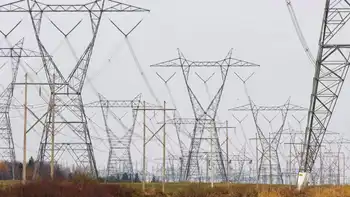
Enel Starts Operations of 450 MW Wind Farm in U.S

High Lonesome Wind Farm powers Texas with 500 MW of renewable energy, backed by a 12-year PPA with Danone North America and a Proxy Revenue Swap, cutting CO2 emissions as Enel's largest project to date.


Key Points

A 500 MW Enel wind project in Texas, supplying renewable power via PPAs and hedged by a Proxy Revenue Swap.

✅ 450 MW online; expanding to 500 MW in early 2020

✅ 12-year PPA with Danone North America for 20.6 MW

✅ PRS hedge with Allianz and Nephila stabilizes revenues


Enel, through its US renewable subsidiary Enel Green Power North America, Inc. (“EGPNA”), has started operations of its 450 MW High Lonesome wind farm in Upton and Crockett Counties, in Texas, the largest operational wind project in the Group’s global renewable portfolio, alongside a recent 90 MW Spanish wind build in its European pipeline. Enel also signed a 12-year, renewable energy power purchase agreement (PPA) with food and beverage company Danone North America, a Public Benefit Corporation, for physical delivery of the renewable electricity associated with 20.6 MW, leading to an additional 50 MW expansion of High Lonesome that will increase the plant’s total capacity to 500 MW. The construction of the 50 MW expansion is currently underway and operations are due to start in the first quarter of 2020.

“The start of operations of Enel’s largest wind farm in the world marks a significant achievement for our company and reinforces our global commitment to accelerated renewable energy growth,” said Antonio Cammisecra, CEO of Enel Green Power, referencing the largest wind project constructed in North America as evidence of market momentum. “This milestone is matched with a new partnership with Danone North America to support their renewable goals, a reinforcement of our continued commitment to provide customers with tailored solutions to meet their sustainability goals.”

The agreement between Enel and Danone North America will provide enough electricity to produce the equivalent of almost 800 million cups of yogurt1 and over 80 million gallons2 of milk each year and support the food and beverage company’s commitment to securing 100% of its purchased electricity from renewable sources by 2030, in a market where North Carolina’s first wind farm is now fully operational and expanding access to clean power.

Mariano Lozano, president and CEO of Danone North America, added:“This is an exciting and significant step as we continue to advance our 2030 renewable electricity goals. As a public benefit corporation committed to balancing the needs of our business with those of society and the planet, we truly believe that this agreement makes sense from both a business and sustainability point of view. We’re delighted to be working with Enel Green Power to expand their High Lonesome wind farm and grow the renewable electricity infrastructure, such as New York’s biggest offshore wind projects, here in the US.”

In addition, as more US wind projects come online, such as TransAlta’s 119 MW project, the energy produced by a 295 MW portion of the project will be hedged under a Proxy Revenue Swap (PRS) with insurer Allianz Global Corporate & Specialty, Inc.'s Alternative Risk Transfer unit (Allianz), and Nephila Climate, a provider of weather and climate risk management products. The PRS is a financial derivative agreement designed to produce stable revenues for the project regardless of power price fluctuations and weather-driven intermittency, hedging the project from this kind of risk in addition to that associated with price and volume.

Under the PRS agreement, and as other projects begin operations, like Building Energy’s latest plant, High Lonesome will receive fixed payments based on the expected value of future energy production, with adjustments paid depending on how the realized proxy revenue of the project differs from the fixed payment. The PRS for High Lonesome, which is the largest by capacity for a single plant globally and the first agreement of its kind for Enel, was executed in collaboration with REsurety, Inc.

The investment in the construction of the 500 MW plant amounts to around 720 million US dollars. The wind farm is due to generate around 1.9 TWh annually, comparable to a 280 MW Alberta wind farm’s output, while avoiding the emission of more than 1.2 million tons of CO2 per year.


Related News

View more

Germany extends nuclear power amid energy crisis

Germany Nuclear Power Extension keeps Isar 2, Neckarwestheim 2, and Emsland running as Olaf Scholz tackles the energy crisis, soaring gas prices, and EU winter demand, prioritizing grid stability amid the Ukraine war.


Key Points

A temporary policy keeping three German reactors online to enhance grid stability and national energy security.

✅ Extends Isar 2, Neckarwestheim 2, and Emsland operations

✅ Addresses EU energy crisis and soaring gas prices

✅ Prioritizes grid stability while coal phase-out advances


German Chancellor Olaf Scholz has ordered the country's three remaining nuclear power stations to keep operating until mid-April, signalling a nuclear U-turn as the energy crisis sparked by Russia's invasion of Ukraine hurts the economy.

Originally Germany planned to phase out all three by the end of this year, continuing its nuclear phaseout policy at the time.

Mr Scholz's order overruled the Greens in his coalition, who wanted two plants kept on standby, to be used if needed.

Nuclear power provides 6% of Germany's electricity.

The decision to phase it out was taken by former chancellor Angela Merkel after Japan's Fukushima nuclear disaster in 2011.

But gas prices have soared since Russia's invasion of Ukraine in February, which disrupted Russia's huge oil and gas exports to the EU, though some officials argue that nuclear would do little to solve the gas issue in the short term. In August Russia turned off the gas flowing to Germany via the Nord Stream 1 undersea pipeline.

After relying so heavily on Russian gas Germany is now scrambling to maintain sufficient reserves for the winter. The crisis has also prompted it to restart mothballed coal-fired power stations, with coal generating about a third of its electricity currently, though the plan is to phase out coal in the drive for green energy.

Last year Germany got 55% of its gas from Russia, but in the summer that dropped to 35% and it is declining further.

EU leaders consider how to cap gas prices
France sends Germany gas for first time amid crisis
Chancellor Scholz's third coalition partner, the liberal Free Democrats (FDP), welcomed his move to keep nuclear power as part of the mix. The three remaining nuclear plants are Isar 2, Neckarwestheim 2 and Emsland, which were ultimately shut down after the extension.

The Social Democrat (SPD) chancellor also called for ministries to present an "ambitious" law to boost energy efficiency and to put into law a phase-out of coal by 2030, aiming for a coal- and nuclear-free economy among major industrial nations.

Last week climate activist Greta Thunberg said it was a "mistake" for Germany to press on with nuclear decommissioning while resorting to coal again, intensifying debate over a nuclear option for climate goals nationwide.


Related News

View more

BC Ferries celebrates addition of hybrid ships

BC Ferries Island Class hybrid ferries deliver quiet, battery-electric travel with shore power readiness, lower emissions, and larger capacity on northern routes, protecting marine wildlife while replacing older vessels on Powell River and Texada services.


Key Points

Hybrid-electric ferries using batteries and diesel for quiet, low-emission service, ready for shore power upgrades.

✅ Operate 20% electric at launch; future full-electric via shore power

✅ 300 passengers, 47 vehicles; replacing older, smaller vessels

✅ Quieter transits help protect West Coast whales and marine habitat


In a champagne celebration, BC Ferries welcomed two new, hybrid-electric ships into its fleet Wednesday. The ships arrived in Victoria last month, and are expected to be in service on northern routes by the summer.

The Island Aurora and Island Discovery have the ability to run on either diesel or electricity.

"The pressure on whales on the West Coast is very intense right now," said BC Ferries CEO Mark Collins. "Quiet operation is very important. These ships will be gliding out of the harbor quietly and electrically with no engines running, that will be really great for marine space."

BC Ferries says the ships will be running on electricity 20 per cent of the time when they enter service, but the company hopes they can run on electricity full-time in the future. That would require the installation of shoreline power, which the company hopes to have in place in the next five to 10 years. Each ship costs around $40-million, a price tag that the federal government partially subsidized through CIB support as part of the electrification push.

When the two ships begin running on the Powell River to Texada, and Port McNeill, Alert Bay, and Sointula routes, two older vessels will be retired.

On Kootenay Lake, an electric-ready ferry is slated to begin operations in 2023, reflecting the province's wider shift.

"They are replacing a 47-car ferry, but on some routes they will be replacing a 25-car ferry, so those routes will see a considerable increase in service," said Collins.

Although the ships will not be servicing Colwood, the municipality's mayor is hoping that one day, they will.

"We can look at an electric ferry when we look at a West Shore ferry that would move Colwood residents to Victoria," said Mayor Rob Martin, noting that across the province electric school buses are hitting the road as well. "Here is a great example of what BC Ferries can do for us."

BC Ferries says it will be adding four more hybrid ships to its fleet by 2022, and is working on adding hybrid ships that could run from Victoria to Tsawwassen, similar to Washington State Ferries' hybrid upgrade underway in the region. 

B.C’s first hybrid-electric ferries arrived in Victoria on Saturday morning ushering in a new era of travel for BC Ferries passengers, as electric seaplane flights are also on the horizon for the region.

“It’s a really exciting day for us,” said Tessa Humphries, spokesperson for BC Ferries.

It took the ferries 60 days to arrive at the Breakwater District at Ogden Point. They came all the way from Constanta, Romania.

“These are battery-equipped ships that are designed for fully electric operation; they are outfitted with hybrid technology that bridges the gap until the EV charging infrastructure and funding is available in British Columbia,” said Humphries.

The two new "Island Class" vessels arrived at about 9 a.m. to a handful of people eagerly wanting to witness history.

Sometime in the next few days, the transport ship that brought the new ferries to B.C. will go out into the harbor and partially submerge to allow them to be offloaded, Humphries said.

The transfer process could happen in four to five days from now. After the final preparations are finished at the Breakwater District, the ships will be re-commissioned in Point Hope Maritime and then BC Ferries will officially take ownership.

“We know a lot of people are interested in this so we will put out advisory once we have more information as to a viewing area to see the whole process,” said Humphries.

Both Island Class ferries can carry 300 passengers and 47 vehicles. They won’t be sailing until later this year, but Humphries tells CTV News they will be named by the end of February. 


Related News

View more

Alberta Carbon tax is gone, but consumer price cap on electricity will remain

Alberta Electricity Rate Cap stays despite carbon tax repeal, keeping the Regulated Rate Option at 6.8 cents/kWh. Levy funds cover market gaps as the UCP reviews NDP policies to maintain affordable utility bills.


Key Points

Program capping RRO power at 6.8 cents/kWh, using levy funds to offset market prices while the UCP reviews policy.

✅ RRO cap fixed at 6.8 cents/kWh for eligible customers

✅ Levy funds pay generators when market prices exceed the cap

✅ UCP reviewing NDP policies to ensure affordable rates


Alberta's carbon tax has been cancelled, but a consumer price cap on electricity — which the levy pays for — is staying in place for now.

June electricity rates are due out on Monday, about four days after the new UCP government did away with the carbon charge on natural gas and vehicle fuel.

Part of the levy's revenue was earmarked by the previous NDP government to keep power prices at or below 6.8 cents per kilowatt hour under new electricity rules set by the province.

"The Regulated Rate Option cap of 6.8 cents/kWh was implemented by the previous government and currently remains in effect. We are reviewing all policies put in place by the former government and will make decisions that ensure more affordable electricity rates for job-creators and Albertans," said a spokesperson for Alberta's energy ministry in an emailed statement.

Albertans with regulated rate contracts and all City of Medicine Hat utility customers only pay that amount or less, though some Alberta ratepayers have faced deferral-related arrears.

If the actual market price rises above that, the difference is paid to generators directly from levy funds, a buffer that matters as experts warn prices are set to soar later this year.

The government has paid more than $55 million to utilities over the past year ending in March 2019, due to that electricity price cap being in place.

Alberta Energy says the price gap program will continue, at least for the time being, amid electricity policy changes being considered.


Related News

View more

Told "no" 37 times, this Indigenous-owned company brought electricity to James Bay anyway

Five Nations Energy Transmission Line connects remote First Nations to the Ontario power grid, delivering clean, reliable electricity to Western James Bay through Indigenous-owned transmission infrastructure, replacing diesel generators and enabling sustainable community growth.


Key Points

An Indigenous-owned grid link providing reliable power to Western James Bay First Nations, replacing polluting diesel.

✅ Built by five First Nations; fully Indigenous-owned utility

✅ 270 km line connecting remote James Bay communities

✅ Ended diesel dependence; enabled sustainable development


For the Indigenous communities along northern Ontario’s James Bay — the ones that have lived on and taken care of the lands as long as anyone can remember — the new millenium marked the start of a diesel-less future, even as Ontario’s electricity outlook raised concerns about getting dirtier in policy debates. 

While the southern part of the province took Ontario’s power grid for granted, despite lessons from Europe’s power crisis about reliability, the vast majority of these communities had never been plugged in. Their only source of power was a handful of very loud diesel-powered generators. Because of that, daily life in the Attawapiskat, Kashechewan and Fort Albany First Nations involved deliberating a series of tradeoffs. Could you listen to the radio while toasting a piece of bread? How many Christmas lights could you connect before nothing else was usable? Was there enough power to open a new school? 

The communities wanted a safe, reliable, clean alternative, with Manitoba’s clean energy illustrating regional potential, too. So did their chiefs, which is why they passed a resolution in 1996 to connect the area to Ontario’s grid, not just for basic necessities but to facilitate growth and development, and improve their communities’ quality of life. 

The idea was unthinkable at the time — scorned and dismissed by those who held the keys to Ontario’s (electrical) power, much like independent power projects can be in other jurisdictions. Even some in the community didn’t fully understand it. When the idea was first proposed at a gathering of Nishnawbe Aski Nation, which represents 49 First Nations, one attendee said the only way he could picture the connection was as “a little extension cord running through the bush from Moosonee.” 

But the leadership of Attawapiskat, Kashechewan and Fort Albany First Nations had been dreaming and planning. In 1997, along with members of Taykwa Tagamou and Moose Cree First Nations, they created the first, and thus far only, fully Indigenous-owned energy company in Canada: Five Nations Energy Inc., as partnerships like an OPG First Nation hydro project would later show in action, too. 

Over the next five years, the organization built Omushkego Ishkotayo, the Cree name for the Western James Bay transmission line: “Omushkego” refers to the Swampy Cree people, and “Ishkotayo” to hydroelectric power, while other regions were commissioning new BC generating stations in parallel. The 270-kilometre-long transmission line is in one of the most isolated regions of Ontario, one that can only be accessed by plane, except for a few months in winter when ice roads are strong enough to drive on. The project went online in 2001, bringing reliable power to over 7,000 people who were previously underserved by the province’s energy providers. It also, somewhat controversially, enabled Ontario’s first diamond mine in Attawapiskat territory.

The future the First Nations created 25 years ago is blissfully quiet, now that the diesel generators are shut off. “When the power went on, you could hear the birds,” Patrick Chilton, the CEO of Five Nations Energy, said with a smile. “Our communities were glowing.”

Power, politics and money: Five Nations Energy needed government, banks and builders on board
Chilton took over in 2013 after the former CEO, his brother Ed, passed away. “This was all his idea,” Chilton told The Narwhal in a conversation over Zoom from his office in Timmins, Ont. The company’s story has never been told before in full, he said, because he felt “vulnerable” to the forces that fought against Omushkego Ishkotayo or didn’t understand it, a dynamic underscored by Canada’s looming power problem reporting in recent years. 

The success of Five Nations Energy is a tale of unwavering determination and imagination, Chilton said, and it started with his older brother. “Ed was the first person who believed a transmission line was possible,” he said.

In a Timmins Daily Press death notice published July 2, 2013, Ed Chilton is described as having “a quiet but profound impact on the establishment of agreements and enterprises benefitting First Nations peoples and their lands.” Chilton doesn’t describe him that way, exactly. 

“If you knew my brother, he was very stubborn,” he said. A certified engineering technologist, Ed was a visionary whose whole life was defined by the transmission line. He was the first to approach the chiefs with the idea, the first to reach out to energy companies and government officials and the one who persuaded thousands of people in remote, underserved communities that it was possible to bring power to their region.

After that 1996 meeting of Nishnawbe Aski Nation, there came a four-year-long effort to convince the rest of Ontario, and the country, the project was possible and financially viable. The chiefs of the five First Nations took their idea to the halls of power: Queen’s Park, Parliament Hill and the provincial power distributor Hydro One (then Ontario Hydro). 

“All of them said no,” Chilton said. “They saw it as near to impossible — the idea that you could build a transmission line in the ‘swamp,’ as they called it.” The Five Nations Energy team kept a document at the time tracking how many times they heard no; it topped out at 37. 

One of the worst times was in 1998, at a meeting on the 19th floor of the Ontario Hydro building in the heart of downtown Toronto. There, despite all their preparation and planning, a senior member of the Ontario Hydro team told Chilton, Martin and other chiefs “you’ll build that line over my dead body,” Chilton recalled. 

At the time, Chilton said, Ontario Hydro was refusing to cooperate: unwilling to let go of its monopoly over transmission lines, but also saying it was unable to connect new houses in the First Nations to diesel generators it said were at maximum capacity. (Ontario Hydro no longer exists; Hydro One declined to comment.)

“There’s always naysayers no matter what you’re doing,” Martin said. “What we were doing had never been done before. So of course people were telling us how we had never managed something of this size or a budget of this size.” 

“[Our people] basically told them to blow it up your ass. We can do it,” Chilton said.

So the chiefs of the five nations did something they’d never done before: they went to all of the big banks and many, many charitable foundations trying to get the money, a big ask for a project of this scale, in this location. Without outside support, their pitch was that they’d build it themselves.

This was the hardest part of the process, said Lawrence Martin, the former Grand Chief of Mushkegowuk Tribal Council and a member of the Five Nations Energy board. “We didn’t know how to finance something like this, to get loans,” he told The Narwhal. “That was the toughest task for all of us to achieve.”

Eventually, they got nearly $50 million in funding from a series of financial organizations including the Bank of Montreal, Pacific and Western Capital, the Northern Ontario Heritage Fund Corporation (an Ontario government agency) and the engineering and construction company SNC Lavalin, which did an assessment of the area and deemed the project viable. 

And in 1999, Ed Chilton, other members of the Chilton family and the chiefs were able to secure an agreement with Ontario Hydro that would allow them to buy electricity from the province and sell it to their communities. 


Related News

View more

Warren Buffett’s Secret To Cheap Electricity: Wind

Berkshire Hathaway Energy Wind Power drives cheap electricity rates in Iowa via utility-scale wind turbines, integrated transmission, battery storage, and grid management, delivering renewable energy, stable pricing, and long-term rate freezes through 2028.


Key Points

A vertically integrated wind utility lowering Iowa rates via owned generation, transmission, and advanced grid control.

✅ Owned wind assets meet Iowa residential demand

✅ Integrated transmission lowers costs and losses

✅ Rate freeze through 2028 sustains cheap power


In his latest letter to Berkshire Hathaway shareholders, Warren Buffett used the 20th anniversary of Berkshire Hathaway Energy to tout its cheap electricity bills for customers.

When Berkshire purchased the majority share of BHE in 2000, the cost of electricity for its residential customers in Iowa was 8.8 cents per kilowatt-hour (kWh) on average. Since then, these electricity rates have risen at a paltry <1% per year, with a freeze on rate hikes through 2028. As anyone who pays an electricity bill knows, that is an incredible deal.  

As Buffett himself notes with alacrity, “Last year, the rates [BHE’s competitor in Iowa] charged its residential customers were 61% higher than BHE’s. Recently, that utility received a rate increase that will widen the gap to 70%.”


The Winning Strategy

So, what’s Buffett’s secret to cheap electricity? Wind power.

“The extraordinary differential between our rates and theirs is largely the result of our huge accomplishments in converting wind into electricity,” Buffett explains. 

Wind turbines in Iowa that BHE owns and operates are expected to generate about 25.2 million megawatt-hours (MWh) of electricity for its customers, as projects like Building Energy operations begin to contribute. By Buffett’s estimations, that will be enough to power all of its residential customers’ electricity needs in Iowa.  


The company has plans to increase its renewable energy generation in other regions as well. This year, BHE Canada is expected to start construction on a 117.6MW wind farm in Alberta, Canada with its partner, Renewable Energy Systems, that will provide electricity to 79,000 homes in Canada’s oil country.

Observers note that Alberta is a powerhouse for both green energy and fossil fuels, underscoring the region's unique transition.

But I would argue that the secret to BHE’s success perhaps goes deeper than transitioning to sources of renewable energy. There are plenty of other utility companies that have adopted wind and solar power as an energy source. In the U.S., where renewable electricity surpassed coal in 2022, at least 50% of electricity customers have the option to buy renewable electricity from their power supplier, according to the Department of Energy. And some states, such as New York, have gone so far as to allow customers to pick from providers who generate their electricity.

What differentiates BHE from a lot of the competition in the utility space is that it owns the means to generate, store, transmit and supply renewable power to its customers across the U.S., U.K. and Canada, with lessons from the U.K. about wind power informing policy.

In its financial filings for 2019, the company reported that it owns 33,600MW of generation capacity and has 33,400 miles of transmission lines, as well as a 50% interest in Electric Transmission Texas (ETT) that has approximately 1,200 miles of transmission lines. This scale and integration enables BHE to be efficient in the distribution and sale of electricity, including selling renewable energy across regions.

BHE is certainly not alone in building renewable-energy fueled electricity dominions. Its largest competitor, NextEra, built 15GW of wind capacity and has started to expand its utility-scale solar installations. Duke Energy owns and operates 2,900 MW of renewable energy, including wind and solar. Exelon operates 40 wind turbine sites across the U.S. that generate 1,500 MW.


Integrated Utilities Power Ahead

It’s easy to see why utility companies see wind as a competitive source of electricity compared to fossil fuels. As I explained in my previous post, Trump’s Wrong About Wind, the cost of building and generating wind energy have fallen significantly over the past decade. Meanwhile, improvements in battery storage and power management through new technological advancements have made it more reliable (Warren Buffett bet on that one too).

But what is also striking is that integrated power and transmission enables these utility companies to make those decisions; both in terms of sourcing power from renewable energy, as well as the pricing of the final product. Until wind and solar power are widespread, these utility companies are going to have an edge of the more fragmented ends of the industry who can’t make these purchasing or pricing decisions independently. 

Warren Buffett very rarely misses a beat. He’s not the Oracle of Omaha for nothing. Berkshire Hathaway’s ownership of BHE has been immensely profitable for its shareholders. In the year ended December 31, 2019, BHE and its subsidiaries reported net income attributable to BHE shareholders of $2.95 billion.

There’s no question that renewable energy will transform the utility industry over the next decade. That change will be led by the likes of BHE, who have the power to invest, control and manage their own energy generation assets.


Related News

View more

Sign Up for Electricity Forum’s Newsletter

Stay informed with our FREE Newsletter — get the latest news, breakthrough technologies, and expert insights, delivered straight to your inbox.

Electricity Today T&D Magazine Subscribe for FREE

Stay informed with the latest T&D policies and technologies.
  • Timely insights from industry experts
  • Practical solutions T&D engineers
  • Free access to every issue

Live Online & In-person Group Training

Advantages To Instructor-Led Training – Instructor-Led Course, Customized Training, Multiple Locations, Economical, CEU Credits, Course Discounts.

Request For Quotation

Whether you would prefer Live Online or In-Person instruction, our electrical training courses can be tailored to meet your company's specific requirements and delivered to your employees in one location or at various locations.