TransAlta Powers Up First Mexican Station

By TransAlta


Substation Relay Protection Training

Our customized live online or in‑person group training can be delivered to your staff at your location.

  • Live Online
  • 12 hours Instructor-led
  • Group Training Available
Regular Price:
$699
Coupon Price:
$599
Reserve Your Seat Today
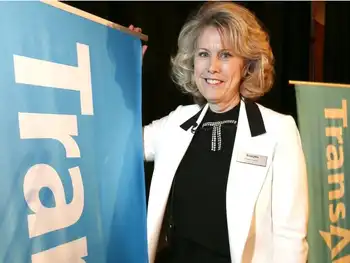
TransAlta Corporation has officially began commercial operation of its new $310 million (US$202 million), 252-megawatt (MW) combined-cycle gas- and diesel-fueled Campeche power plant located in the Mexican state of Campeche in the Yucatan Peninsula. Mexico's government-owned utility, the Comisión Federal de Electricidad (CFE), has purchased 100 per cent of the plant's electricity output under a 25-year contract. The facility is TransAlta's first power plant in Mexico.

"Today represents a significant milestone for TransAlta," said Steve Snyder, TransAlta President and CEO. "Mexico is a high growth market for electricity and associated international investments. Our long-term contracts in U.S. dollars with the CFE minimize our revenue risk, allowing us to grow our capacity and diversify our geographic and fuel mix."

In March 2000, the CFE selected TransAlta to build and operate the Campeche power plant. Construction started March 2001 and created over 1,000 construction jobs at peak periods. The plant will be operated with a workforce of 27 Mexican nationals. In March 2001, the CFE selected TransAlta to build and operate a second power plant in Mexico in the northern state of Chihuahua. TransAlta expects this 259-MW gas-fired plant, Chihuahua III, to come on line in third quarter 2003.

TransAlta is Canada's largest non-regulated power generation and wholesale marketing company. We have close to $9 billion in coal-fired, gas-fired, hydro and renewable generation assets in Canada, the U.S., Mexico and Australia. With approximately 10,000 megawatts of capacity either in operation, under construction or in development, our focus is to efficiently operate our assets in order to provide our wholesale customers with a reliable, low-cost source of power.

Related News

Coalition pursues extra $7.25B for DOE nuclear cleanup, job creation

DOE Environmental Management Funding Boost seeks $7.25B to accelerate nuclear cleanup, upgrade Savannah River Site infrastructure, create jobs, and support small businesses, echoing ARRA 2009 results and expediting DOE EM waste remediation nationwide.


Key Points

A proposed $7.25B stimulus for DOE's EM to accelerate nuclear cleanup, modernize infrastructure, and create jobs.

✅ $7.25B one-time stimulus for DOE EM cleanup and infrastructure.

✅ Targets Savannah River Site; supports jobs and small businesses.

✅ Builds on ARRA 2009; accelerates nuclear waste remediation.


A bloc of local governments and nuclear industry, nuclear innovation efforts, labor and community groups are pressing Congress to provide a one-time multibillion-dollar boost to the U.S. Department of Energy Office of Environmental Management, the remediation-focused Savannah River Site landlord.

The organizations and officials -- including Citizens For Nuclear Technology Awareness Executive Director Jim Marra and Savannah River Site Community Reuse Organization President and CEO Rick McLeod -- sent a letter Friday to U.S. House and Senate leadership "strongly" supporting a $7.25 billion funding injection, even as ACORE challenges coal and nuclear subsidies in separate regulatory proceedings, arguing it "will help reignite the national economy," help revive small businesses and create thousands of new jobs despite the novel coronavirus crisis.

More than 30 million Americans have filed unemployment claims in the past two months, with additional clean energy job losses reported, too. Hundreds of thousands of claims have been filed in South Carolina since mid-March, compounding issues like unpaid utility bills in neighboring states.

The requested money could, too, speed Environmental Management's nuclear waste cleanup missions and be used to fix ailing infrastructure and strengthen energy security for rural communities nationwide -- some of which dates back to the Cold War -- at sites across the country. That's a "rare" opportunity, reads the letter, which prominently features the Energy Communities Alliance logo and its chairman's signature.

Similar funding programs, like what was done with the 2009 American Recovery and Reinvestment Act and recent clean energy funding initiatives, have been successful.

At the time, amid a staggering economic downturn nationwide, Environmental Management contractors "hired over 20,000 new workers," putting them "to work to reduce the overall cleanup complex footprint by 688 square miles while strengthening local economies," the Friday letter reads.

The Energy Department's cleanup office estimates the $6 billion investment years ago reduced its environmental liability by $13 billion, according to a 2012 report.

Such a leap forward, the coalition believes, is repeatable, a view reflected in current plans to revitalize coal communities with clean energy projects across the country.

"We are confident that DOE can successfully manage increased funding and leverage it for future economic development as it has in the past," the letter states. It continues: "We take pride in working together to support jobs and development of infrastructure and work that make our country stronger and assists us to recover from the impacts of COVID-19."

As of Monday afternoon, 8,942 cases of COVID-19, the disease caused by the novel coronavirus, have been logged in South Carolina. Aiken County is home to 155 of those cases.


Related News

View more

Mexican president's contentious electricity overhaul defeated in Congress

Mexico Energy Reform Defeat underscores opposition unity as CFE-first rules, state regulators, and lithium nationalization falter amid USMCA concerns, investment risks, and clean energy transition impacts in Congress over power generation policy.


Key Points

The failed push to expand CFE control, flagged for USMCA risks, higher costs, regulator shifts, and slower clean energy transition.

✅ Bill to mandate 54% CFE generation and priority dispatch failed.

✅ Opposition cited USMCA breaches, higher prices, slower clean energy.

✅ Lithium nationalization to return via separate legislation.


Mexican President Andres Manuel Lopez Obrador's plan to increase state control of power generation was defeated in parliament on Sunday, as opposition parties united in the face of a bill they said would hurt investment and breach international obligations, concerns mirrored by rulings such as the Florida court on electricity monopolies that scrutinize market concentration.

His National Regeneration Movement (MORENA) and its allies fell nearly 60 votes short of the two-thirds majority needed in the 500-seat lower house of Congress, mustering just 275 votes after a raucous session that lasted more than 12 hours.

Seeking to roll back previous constitutional reforms that liberalized the electricity market, Lopez Obrador's proposed changes would have done away with a requirement that state-owned Comision Federal de Electricidad (CFE) sell the cheapest electricity first, a move reminiscent of debates when energy groups warned on pricing changes under federal proposals, allowing it to sell its own electricity ahead of other power companies.

Under the bill, the CFE would also have been set to generate a minimum of 54% of the country's total electricity, and energy regulation would have been shifted from independent bodies to state regulators, paralleling concerns raised when a Calgary retailer opposed a market overhaul over regulatory impacts.

The contentious proposals faced much criticism from business groups and the United States, Mexico's top trade partner as well as other allies who argued it would violate the regional trade deal, the United States-Mexico-Canada Agreement (USMCA), even as the USA looks to Canada for green power to deepen cross-border energy ties.

Lopez Obrador had argued the bill would have protected consumers and made the country more energy independent, echoing how Texas weighs market reforms to avoid blackouts to bolster reliability, saying the legislation was vital to his plans to "transform" Mexico.

Although the odds were against his party, he came into the vote seeking to leverage his victory in last weekend's referendum on his leadership.

Speaking ahead of the vote, Jorge Alvarez Maynez, a lawmaker from the opposition Citizens' Movement party, said the proposals, if enacted, would damage Mexico, pointing to experiences like the Texas electricity market bailout after a severe winter storm as cautionary examples.

"There isn't a specialist, academic, environmentalist or activist with a smidgen of doubt - this bill would increase electricity prices, slow the transition to (clean) energy in our country and violate international agreements," he added.

Supporters of clean-energy goals noted that subnational shifts, such as the New Mexico 100% clean electricity bill can illustrate alternative pathways to reform.

The bill also contained a provision to nationalize lithium resources.

Lopez Obrador said this week that if the bill was defeated, he would send another bill to Congress on Monday aiming to have at least the lithium portion of the proposed legislation passed.


Related News

View more

California electricity pricing changes pose an existential threat to residential rooftop solar

California Rooftop Solar Rate Reforms propose shifting net metering to fixed access fees, peak-demand charges, and time-of-use pricing, aligning grid costs, distributed generation incentives, and retail rates for efficient, least-cost electricity and fair cost recovery.


Key Points

Policies replacing net metering with fixed fees, demand charges, and time-of-use rates to align costs and incentives.

✅ Large fixed access charge funds grid infrastructure

✅ Peak-demand pricing reflects capacity costs at system peak

✅ Time-varying rates align marginal costs and emissions


The California Public Service Commission has proposed revamping electricity rates for residential customers who produce electricity through their rooftop solar panels. In a recent New York Times op‐​ed, former Governor Arnold Schwarzenegger argued the changes pose an existential threat to residential rooftop solar. Interest groups favoring rooftop solar portray the current pricing system, often called net metering, in populist terms: “Net metering is the one opportunity for the little guy to get relief, and they want to put the kibosh on it.” And conventional news coverage suggests that because rooftop solar is an obvious good development and nefarious interests, incumbent utilities and their unionized employees, support the reform, well‐​meaning people should oppose it. A more thoughtful analysis would inquire about the characteristics and prices of a system that supplies electricity at least cost.

Currently, under net metering customers are billed for their net electricity use plus a minimum fixed charge each month. When their consumption exceeds their home production, they are billed for their net use from the electricity distribution system (the grid) at retail rates. When their production exceeds their consumption and the excess is supplied to the grid, residential consumers also are reimbursed at retail rates. During a billing period, if a consumer’s production equaled their consumption their electric bill would only be the monthly fixed charge.

Net metering would be fine if all the fixed costs of the electric distribution and transmission systems were included in the fixed monthly charge, but they are not. Between 66 and 77 percent of the expenses of California private utilities do not change when a customer increases or decreases consumption, but those expenses are recovered largely through charges per kWh of use rather than a large monthly fixed charge. Said differently, for every kWh that a PG&E solar household exported into the grid in 2019, it saved more than 26 cents, on average, while the utility’s costs only declined by about 8 cents or less including an estimate of the pollution costs of the system’s fossil fuel generators. The 18‐​cent difference pays for costs that don’t change with variation in a household’s consumptions, like much of the transmission and distribution system, energy efficiency programs, subsidies for low‐​income customers, and other fixed costs. Rooftop solar is so popular in California because its installation under a net metering system avoids the 18 cents, creating a solar cost shift onto non-solar customers. Rooftop solar is not the answer to all our environmental needs. It is simply a form of arbitrage around paying for the grid’s fixed costs.

What should electricity tariffs look like? This article in Regulation argues that efficient charges for electricity would consist of three components: a large fixed charge for the distribution and transmission lines, meter reading, vegetation trimming, etc.; a peak‐​demand charge related to your demand when the system’s peak demand occurs to pay for fixed capacity costs associated with peak use; and a charge for electricity use that reflects the time‐ and location‐​varying cost of additional electricity supply.

Actual utility tariffs do not reflect this ideal because of political concerns about the effects of large fixed monthly charges on low‐​income customers and the optics of explaining to customers that they must pay 50 or 60 dollars a month for access even if their use is zero. Instead, the current pricing system “taxes” electricity use to pay for fixed costs. And solar net metering is simply a way to avoid the tax. The proposed California rate reforms would explicitly impose a fixed monthly charge on rooftop solar systems that are also connected to the grid, a change that could bring major changes to your electric bill statewide, and would thus end the fixed‐​cost avoidance. Any distributional concerns that arise because of the effect of much larger fixed charges on lower‐​income customers could be managed through explicit tax deductions that are proportional to income.

The current rooftop solar subsidies in California also should end because they have perverse incentive effects on fossil fuel generators, even as the state exports its energy policies to neighbors. Solar output has increased so much in California that when it ends with every sunset, natural gas generated electricity has to increase very rapidly. But the natural gas generators whose output can be increased rapidly have more pollution and higher marginal costs than those natural gas plants (so called combined cycle plants) whose output is steadier. The rapid increase in California solar capacity has had the perverse effect of changing the composition of natural gas generators toward more costly and polluting units.

The reforms would not end the role of solar power. They would just shift production from high‐​cost rooftop to lower‐​cost centralized solar production, a transition cited in analyses of why electricity prices are soaring in California, whose average costs are comparable with electricity production in natural gas generators. And they would end the excessive subsidies to solar that have negatively altered the composition of natural gas generators.

Getting prices right does not generate citizen interest as much as the misguided notion that rooftop solar will save the world, and recent efforts to overturn income-based utility charges show how politicized the debate remains. But getting prices right would allow the decentralized choices of consumers and investors to achieve their goals at least cost.


Related News

View more

Nigeria's Electricity Crisis

Nigeria Electricity Crisis undermines energy access as aging grid, limited generation, and transmission losses cause power outages, raising costs for businesses and public services; renewables, microgrids, and investment offer resilient, inclusive solutions.


Key Points

A nationwide power gap from weak infrastructure, low generation, and grid losses that disrupt services and growth.

✅ Aging grid and underinvestment drive frequent power outages

✅ Businesses face higher costs, lost productivity, weak competitiveness

✅ Renewables, microgrids, and regulatory reform can expand access


In Nigeria, millions of residents face persistent challenges with access to reliable electricity, a crisis that has profound implications for businesses, public services, and overall socio-economic development. This article explores the root causes of Nigeria's electricity deficit, drawing on 2021 electricity lessons to inform analysis, its impact on various sectors, and potential solutions to alleviate this pressing issue.

Challenges with Electricity Access

The issue of inadequate electricity access in Nigeria is multifaceted. The country's electricity generation capacity falls short of demand due to aging infrastructure, inadequate maintenance, and insufficient investment in power generation and distribution, a dynamic echoed when green energy supply constraints emerge elsewhere as well. As a result, many Nigerians, particularly in rural and underserved urban areas, experience frequent power outages or have limited access to electricity altogether.

Impact on Businesses

The unreliable electricity supply poses significant challenges to businesses across Nigeria. Manufacturing industries, small enterprises, and commercial establishments rely heavily on electricity to operate machinery, maintain refrigeration for perishable goods, and power essential services. Persistent power outages disrupt production schedules, increase operational costs, and, as grids prepare for new loads from electric vehicle adoption worldwide, hinder business growth and competitiveness in both domestic and international markets.

Public Services Strain

Public services, including healthcare facilities, schools, and government offices, also grapple with the consequences of Nigeria's electricity crisis. Hospitals rely on electricity to power life-saving medical equipment, maintain proper sanitation, and ensure patient comfort. Educational institutions require electricity for lighting, technological resources, and administrative functions. Without reliable power, the delivery of essential public services is compromised, impacting the quality of education, healthcare outcomes, and overall public welfare.

Socio-economic Impact

The electricity deficit in Nigeria exacerbates socio-economic disparities and hampers poverty alleviation efforts, even as debates continue over whether access alone reduces poverty in every context. Lack of access to electricity limits economic opportunities, stifles entrepreneurship, and perpetuates income inequality. Rural communities, where access to electricity is particularly limited, face greater challenges in accessing educational resources, healthcare services, and economic opportunities compared to urban counterparts.

Government Initiatives and Challenges

The Nigerian government has implemented various initiatives to address the electricity crisis, including privatization of the power sector, investment in renewable energy projects, and regulatory reforms aimed at improving efficiency and accountability, while examples like India's village electrification illustrate rapid expansion potential too. However, progress has been slow, and challenges such as corruption, bureaucratic inefficiencies, and inadequate funding continue to impede efforts to expand electricity access nationwide.

Community Resilience and Adaptation

Despite these challenges, communities and businesses in Nigeria demonstrate resilience and adaptability in navigating the electricity crisis. Some businesses invest in alternative power sources such as generators, solar panels, or hybrid systems to mitigate the impact of power outages, while utilities weigh shifts signaled by EVs' impact on utilities for future planning. Community-led initiatives, including local cooperatives and microgrids, provide decentralized electricity solutions in underserved areas, promoting self-sufficiency and resilience.

Path Forward

Addressing Nigeria's electricity crisis requires a concerted effort from government, private sector stakeholders, and international partners, informed by UK grid transformation experience as well. Key priorities include increasing investment in power infrastructure, enhancing regulatory frameworks to attract private sector participation, and promoting renewable energy deployment. Improving energy efficiency, reducing transmission losses, and expanding electricity access to underserved communities are critical steps towards achieving sustainable development goals and improving quality of life for all Nigerians.

Conclusion

The electricity crisis in Nigeria poses significant challenges to businesses, public services, and socio-economic development. Addressing these challenges requires comprehensive strategies that prioritize infrastructure investment, regulatory reform, and community empowerment. By working together to expand electricity access and promote sustainable energy solutions, Nigeria can unlock its full economic potential, improve living standards, and create opportunities for prosperity and growth across the country.


Related News

View more

Trudeau vows to regulate oil and gas emissions, electric car sales

Canada Oil and Gas Emissions Cap sets five-year targets to cut sector emissions toward net-zero by 2050, alongside an EV mandate, carbon pricing signals, and support for carbon capture, clean energy jobs, climate policy.


Key Points

A federal policy to regulate and reduce oil and gas emissions via 5-year targets, reaching net-zero by 2050.

✅ Regulated 5-year milestones to cut oil and gas emissions to net-zero by 2050

✅ Interim EV mandate: 50% by 2030; 100% zero-emission sales by 2035

✅ $2B fund for clean energy jobs in oil- and gas-reliant communities


Liberal Leader Justin Trudeau vowed to regulate total emissions from Canada’s oil and gas producers as he laid out his first major climate change promises of the campaign Sunday, a plan that was welcomed by several environmental and climate organizations.

Trudeau said that if re-elected, the Liberals will set out regulated five-year targets for emissions from oil and gas production to get them to net-zero emissions by 2050, a goal that, according to an IEA report will require more electricity, but also create a $2 billion fund to create jobs in oil and gas-reliant communities in Alberta, Saskatchewan and Newfoundland and Labrador.

“Let’s be realistic, over a quarter of Canada’s emissions come from our oil and gas sector. We need the leadership of these industries to decarbonize our country,” Trudeau said.

“That’s why we’ll make sure oil and gas emissions don’t increase and instead go down with achievable milestones,” while ensuring local economies can prosper.“

The Liberals are also introducing an interim electric vehicle mandate, which will require half the cars sold in Canada to be zero-emission by 2030, and because cleaning up electricity is critical to meeting climate pledges, the policy pairs with power-sector decarbonization, ahead of the final mandated target of 100 per cent by 2035.

Trudeau spoke in Cambridge, Ont., where protesters once again made an appearance amid a visible police presence. Officers carried one woman off the property when she refused to leave when asked.

Trudeau alluded to the protesters and their actions, which included sounding sirens and chanting expletives, as he defended his government’s record on climate change including progress in the electricity sector nationally, and touted its new plan.

“Sirens in the background may remind us that this is a climate emergency. That’s why we will move faster and be bolder,” he said.

Canada’s largest oilsands producers have already committed to reaching net zero greenhouse gas emissions by 2050, but the policy proposed Sunday “calls the oil companies’ bluff” by making those goals a legislated requirement, said Keith Stewart, senior energy strategist with Greenpeace Canada.

The new timeline for electric vehicles also “sends a clear signal to auto companies to get cracking (and build them here),” he said on Twitter, even as proposals like a fully renewable grid by 2030 are debated today. “We’d like to see this happen faster but the shift away from voluntary targets to requirements is big.”


Merran Smith, executive director of Clean Energy Canada, a climate program at Simon Fraser University, said clean electricity, clean transportation and “phasing out oil and gas with accountable milestones” must be key priorities over the next decade, aligning with Canada’s race to net-zero and the role of renewable energy.

“Today’s announcement, which checks all of these boxes, is not just good ambition_it’s good policy. Policy that will drive down carbon pollution and drive up clean job growth and economic competitiveness. It is policy that will drive Canada forward with cleaner cars, power Canada with clean electricity, and invest in businesses that will last such as battery manufacturing, electric vehicle manufacturing and low carbon steel,” Smith said in an email.

Michael Bernstein, executive director of the climate policy organization Clean Prosperity, said the promises laid out Sunday offer a “strong boost” to the federal government’s previous climate commitments.

He said the organization prefers market incentives such as carbon pricing, that spur innovation over further regulation. But since the largest oilsands companies have already committed to reaching net-zero emissions, he said the newly unveiled policy could provide some support.

“ First, I would encourage the Liberal Party to release independent modelling showing the types of emissions reductions they expect to achieve with their new package of policies. Second, many policies are referred to in general terms so I hope the Liberal Party will provide further details in the coming days,” he said.

“Finally, the document does not specifically mention carbon capture or carbon dioxide removal technologies but both technologies will be critical to achieve some of the pledges in today’s announcement, especially reaching net-zero emissions in the oil a gas sector.”

NDP Leader Jagmeet Singh painted the announcement as the latest in a string of “empty promises” from the Liberals on climate change, saying Canada has the highest increase in greenhouse gas emissions among all G7 countries, and that provinces like B.C. risk missing 2050 targets as well, he argued.

“Climate targets mean nothing when you don’t act on them. We can’t afford more of Justin Trudeau’s empty words on climate change,” he said in a statement.

The Trudeau Liberals submitted new targets to the United Nations in July, promising that Canada will curb emissions by 40 to 45 per cent from 2005 levels by 2030, building on the net-zero by 2050 plan announced earlier, officials say.


Related News

View more

U.S. power companies face supply-chain crisis this summer

U.S. Power Grid Supply Shortages strain reliability as heat waves, hurricanes, and drought drive peak demand; transformer scarcity, gas constraints, and renewable delays raise outage risks across ERCOT and MISO, prompting FERC warnings.


Key Points

They are equipment and fuel constraints that, amid extreme weather and peak demand, elevate outage risks.

✅ Transformer shortages delay storm recovery and repairs.

✅ Record gas burn, low hydro tighten generation capacity.

✅ ERCOT and MISO warn of rolling outages in heat waves.


U.S. power companies are facing supply crunches amid the U.S. energy crisis that may hamper their ability to keep the lights on as the nation heads into the heat of summer and the peak hurricane season.

Extreme weather events such as storms, wildfires and drought are becoming more common in the United States. Consumer power use is expected to hit all-time highs this summer, reflecting unprecedented electricity demand across the Eastern U.S., which could strain electric grids at a time when federal agencies are warning the weather could pose reliability issues.

Utilities are warning of supply constraints for equipment, which could hamper efforts to restore power during outages. They are also having a tougher time rebuilding natural gas stockpiles for next winter, after the Texas power system failure highlighted cold-weather vulnerabilities, as power generators burn record amounts of gas following the shutdown of dozens of coal plants in recent years and extreme drought cuts hydropower supplies in many Western states.

"Increasingly frequent cold snaps, heat waves, drought and major storms continue to challenge the ability of our nation’s electric infrastructure to deliver reliable affordable energy to consumers," Richard Glick, chairman of the U.S. Federal Energy Regulatory Commission (FERC), said earlier this month.

Federal agencies responsible for power reliability like FERC have warned that grids in the western half of the country could face reliability issues this summer as consumers crank up air conditioners to escape the heat, with nationwide blackout risks not limited to Texas. read more

Some utilities have already experienced problems due to the heat. Texas' grid operator, the Electric Reliability Council of Texas (ERCOT), was forced to urge customers to conserve energy as the Texas power grid faced another crisis after several plants shut unexpectedly during an early heat wave in mid-May. read more

In mid-June, Ohio-based American Electric Power Co (AEP.O) imposed rolling outages during a heat wave after a storm damaged transmission lines and knocked out power to over 200,000 homes and businesses.

The U.S. Midwest faces the most severe risk because demand is rising while nuclear and coal power supplies have declined. read more

The Midcontinent Independent System Operator (MISO), which operates the grid from Minnesota to Louisiana, warned that parts of its coverage area are at increased risk of temporary outages to preserve the integrity of the grid.

Supply-chain issues have already delayed the construction of renewable energy projects across the country, and the aging U.S. grid is threatening progress on renewables and EVs. Those renewable delays coupled with tight power in the Midwest prompted Wisconsin's WEC Energy Group Inc (WEC.N) and Indiana's NiSource Inc (NI.N) to delay planned coal plant shutdowns in recent months.

BRACING FOR SUPPLY SHORTAGES
Utility operators are conserving their inventory of parts and equipment as they plan to prevent summer power outages during severe storms. Over the last several months, that means operators have been getting creative.

"We’re doing a lot more splicing, putting cables together, instead of laying new cable because we're trying to maintain our new cable for inventory when we need it," Nick Akins, chief executive of AEP, said at the CERAWeek energy conference in March.

Transformers, which often sit on top of electrical poles and convert high-voltage energy to the power used in homes, are in short supply.

New Jersey-based Public Service Enterprise Group Inc (PSEG) (PEG.N) Chief Executive Ralph Izzo told Reuters the company has had to look at alternate supply options for low voltage transformers.

"You don’t want to deplete your inventory because you don't know when that storm is coming, but you know it's coming," Izzo said.

Some utilities are facing waiting times of more than a year for transformer parts, the National Rural Electric Cooperative Association and the American Public Power Association told U.S. Energy Secretary Jennifer Granholm in a May letter.

Summer is just starting, but U.S. weather so far this year has already been about 21% warmer than the 30-year norm, according to data provider Refinitiv.

"If we have successive days of 100-degree-heat, those pole top transformers, they start popping like Rice Krispies, and we would not have the supply stack to replace them," Izzo said.


Related News

View more

Sign Up for Electricity Forum’s Newsletter

Stay informed with our FREE Newsletter — get the latest news, breakthrough technologies, and expert insights, delivered straight to your inbox.

Electricity Today T&D Magazine Subscribe for FREE

Stay informed with the latest T&D policies and technologies.
  • Timely insights from industry experts
  • Practical solutions T&D engineers
  • Free access to every issue

Download the 2025 Electrical Training Catalog

Explore 50+ live, expert-led electrical training courses –

  • Interactive
  • Flexible
  • CEU-cerified