S&P comments on proposals for Danish energy sector

By Reuters Power News


High Voltage Maintenance Training Online

Our customized live online or in‑person group training can be delivered to your staff at your location.

  • Live Online
  • 12 hours Instructor-led
  • Group Training Available
Regular Price:
$599
Coupon Price:
$499
Reserve Your Seat Today
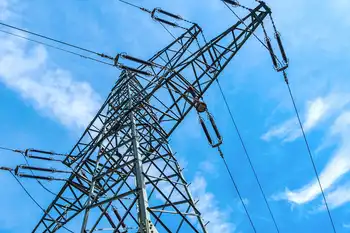
Recent restructuring proposals by the Danish government are likely to result in considerable changes in the Danish energy industry over the coming years, says Standard & Poor's Ratings Services in a report published today.

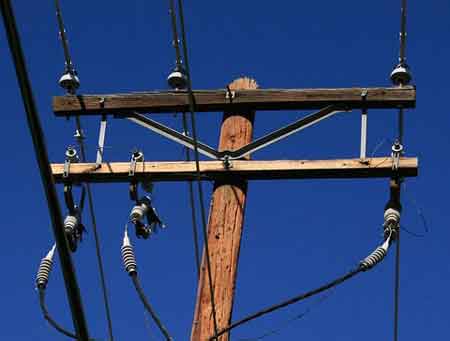
The proposed changes could have a significant effect, in particular, on network distribution companies and high-voltage transmission companies. Furthermore, the proposals could lead to the creation of integrated electricity companies in Denmark. "Although the final impact on credit quality is yet to be determined, it is our view at this stage that the proposed changes are likely to be neutral or even slightly positive," said Standard & Poor's credit analyst Magnus Pettersson. A political majority has agreed in principle to several changes to the existing energy regulations and structures proposed by the government.

These include the creation of a single national energy transmission company; repayment of equity to end-users through lower tariffs; a change in taxation rules; and relaxation of ownership rules. The recent bid by Elsam A/S (A/Watch Neg/A-1) for NESA A/S, one of the major Danish network distribution companies, may be only the start of an expected restructuring and further liberalization of the currently fragmented Danish energy sector.

Related News

West Coast consumers won't benefit if Trump privatizes the electrical grid

BPA Privatization would sell the Bonneville Power Administration's transmission lines, raising FERC-regulated grid rates for ratepayers, impacting hydropower and the California-Oregon Intertie under the Trump 2018 budget proposal in the Pacific Northwest region.


Key Points

Selling Bonneville's transmission grid to private owners, raising rates and returns, shifting costs to ratepayers.

✅ Trump 2018 budget targets BPA transmission assets for sale.

✅ Higher capital costs, taxes, and profit would raise transmission rates.

✅ California-Oregon Intertie and hydropower flows face price impacts.


President Trump's 2018 budget proposal is so chock-full of noxious elements — replacing food stamps with "food boxes," drastically cutting Medicaid and Medicare, for a start — that it's unsurprising that one of its most misguided pieces has slipped under the radar.

That's the proposal to privatize the government-owned Bonneville Power Administration, which owns about three-quarters of the high-voltage electric transmission lines in a region that includes California, Washington state and Oregon, serving more than 13.5 million customers. By one authoritative estimate, any such sale would drive up the cost of transmission by 26%-44%.

The $5.2-billon price cited by the Trump administration, moreover, is nearly 20% below the actual value of the Bonneville grid — meaning that a private buyer would pocket an immediate windfall of $1.2 billion, at the expense of federal taxpayers and Bonneville customers.

Trump's plan for Portland, Ore.-based Bonneville is part of a larger proposal to sell off other government-owned electricity bodies, including the Colorado-based Western Area Power Administration and the Oklahoma-based Southwestern Power Administration. But Bonneville is by far the largest of the three, accounting for nearly 90% of the total $5.8 billion the budget anticipates collecting from the sales. The proposal is also part of the administration's

Both plans are said to be politically dead-on-arrival in Washington. But they offer a window into the thinking in the Trump White House.

"The word 'muddle' comes to mind," says Robert McCullough, a respected Portland energy consultant, referring to the justification for the privatization sale included in the Trump budget.

The White House suggests that selling the Bonneville grid would result in lower costs. But that narrative, McCullough wrote in a blistering assessment of the proposal, "displays a severe lack of understanding about the process of setting transmission rates."

McCullough's assessment is an update of a similar analysis he performed when the privatization scheme was first raised by the Trump administration last year. In that analysis issued in June, McCullough said the proposal "raises the question of why these valuable assets would be sold at a discount — and who would get the benefit of the discounted price."

The implications of a sale could be dire for Californians. Bonneville is the majority owner of the California-Oregon Intertie, an electrical transmission system that carries power, including Columbia River-generated hydropower and other clean-energy generation in British Columbia that supports the regional exchange, south to California in the summer and excess California generation to the Pacific Northwest in the winter.

But the idea has drawn fire throughout the region. When it was first broached last year, the Public Power Council, an association of utilities in the Northwest, assailed it as an apparent "transfer of value from the people of the Northwest to the U.S. Treasury," drawing parallels to Manitoba Hydro governance issues elsewhere.

The region's political leaders had especially harsh words for the idea this time around. "Oregonians raised hell last year when Trump tried to raise power bills for Pacific Northwesterners by selling off Bonneville Power, and yet his administration is back at it again," Sen. Ron Wyden (D-Ore.) said after the idea reappeared. "Our investment shouldn't be put up for sale to free up money for runaway military spending or tax cuts for billionaires." Sen. Maria Cantwell (D-Wash.) promised in a statement to work to "stop this bad idea in its tracks."

The notion of privatizing Bonneville predates the Trump administration; it was raised by Bill Clinton and again by George W. Bush, who thought the public would gain if the administration could sell its power at market rates. Both initiatives failed.

The same free-enterprise ideology underlies the Trump proposal. Privatizing the transmission lines "encourages a more efficient allocation of economic resources and mitigates unnecessary risk to taxpayers," the budget asserts. "Ownership of transmission assets is best carried out by the private sector where there are appropriate market and regulatory incentives."

But that's based on a misunderstanding of how transmission rates are set, McCullough says. Transmission is essentially a monopoly enterprise, with rates overseen by the Federal Energy Regulatory Commission based on the grid's costs, and with federal scrutiny of public utilities such as the TVA underscoring that oversight. There's very little in the way of market "incentives" involved in transmission, since no one has come forward to build a competing grid.

Those include the owners' cost of capital — which would be much higher for a private owner than a government agency, McCullough observes, as Hydro One investor uncertainty demonstrates in practice. A private owner, unlike the government-owned Bonneville, also would owe federal income taxes, which would be passed on to consumers.

Then there's the profit motive. Bonneville "currently sells and delivers its power at cost," McCullough wrote last year. "Under a private regime, an investor-owned utility would likely charge a higher rate of return, a pattern seen when UK network profits drew regulatory rebukes."

None of these considerations appears to have been factored into the White House budget proposal. "Either there's an unsophisticated person at the Office of Management and Budget thinking up these numbers himself," McCullough told me, "or there would seem to be ongoing negotiations with an unidentified third party." No such buyer has emerged in the past, however.

What's left is a blind faith in the magic of the market, compounded by ignorance about how the transmission market operates. Put it together, and there's reason to wonder if Trump is even serious about this plan.


Related News

View more

Doug Ford's New Stance on Wind Power in Ontario

Ontario Wind Power Policy Shift signals renewed investment in renewable energy, wind farms, and grid resilience, aligning with climate goals, lower electricity costs, job creation, and turbine technology for cleaner, diversified power.


Key Points

A provincial pivot to expand wind energy, meet climate goals, lower costs, and boost jobs across Ontario’s power system.

✅ Diversifies Ontario's grid with scalable renewable capacity.

✅ Targets emissions cuts while stabilizing electricity prices.

✅ Spurs rural investment, supply chains, and skilled jobs.


Ontario’s energy landscape is undergoing a significant transformation as Premier Doug Ford makes a notable shift in his approach to wind power. This change represents a strategic pivot in the province’s energy policy, potentially altering the future of Ontario’s power generation, environmental goals, and economic prospects.

The Backdrop: Ford’s Initial Stance on Wind Power

When Doug Ford first assumed the role of Premier in 2018, his administration was marked by a strong stance against renewable energy projects, including wind power, with Ford later saying he was proud of tearing up contracts as part of this shift. Ford’s government inherited a legacy of ambitious renewable energy commitments from the previous Liberal administration under Kathleen Wynne, which had invested heavily in wind and solar energy. The Ford government, however, was critical of these initiatives, arguing that they resulted in high energy costs and a surplus of power that was not always needed.

In 2019, Ford’s government began rolling back several renewable energy projects, including wind farms, and was soon tested by the Cornwall wind farm ruling that scrutinized a cancellation. This move was driven by a promise to reduce electricity bills and cut what was perceived as wasteful spending on green energy. The cancellation of several wind projects led to frustration among environmental advocates and the renewable energy sector, who viewed the decision as a setback for Ontario’s climate goals.

The Shift: Embracing Wind Power

Fast forward to 2024, and Premier Ford’s administration is taking a markedly different approach. The recent policy shift, which moves to reintroduce renewable projects, indicates a newfound openness to wind power, reflecting a broader acknowledgment of the changing dynamics in energy needs and environmental priorities.

Several factors appear to have influenced this shift:

  1. Rising Energy Demands and Climate Goals: Ontario’s growing energy demands, coupled with the pressing need to address climate change, have necessitated a reevaluation of the province’s energy strategy. As Canada commits to reducing greenhouse gas emissions and transitioning to cleaner energy sources, wind power is increasingly seen as a crucial component of this strategy. Ford’s change in direction aligns with these national and global goals.

  2. Economic Considerations: The economic landscape has also evolved since Ford’s initial opposition to wind power. The cost of wind energy has decreased significantly over the past few years, making it a more competitive and viable option compared to traditional energy sources, as competitive wind power gains momentum in markets worldwide. Additionally, the wind energy sector promises substantial job creation and economic benefits, which are appealing in the context of post-pandemic recovery and economic growth.

  3. Public Opinion and Pressure: Public opinion and advocacy groups have played a role in shaping policy. There has been a growing demand from Ontarians for more sustainable and environmentally friendly energy solutions. The Ford administration has been responsive to these concerns, recognizing the importance of addressing public and environmental pressures.

  4. Technological Advancements: Advances in wind turbine technology have improved efficiency and reduced the impact on wildlife and local communities. Modern wind farms are less intrusive and more effective, addressing some of the concerns that were previously associated with wind power.

Implications of the Policy Shift

The implications of Ford’s shift towards wind power are far-reaching. Here are some key areas affected by this change:

  1. Energy Portfolio Diversification: By reembracing wind power, Ontario will diversify its energy portfolio, reducing its reliance on fossil fuels and increasing the proportion of renewable energy in the mix. This shift will contribute to a more resilient and sustainable energy system.

  2. Environmental Impact: Increased investment in wind power will contribute to Ontario’s efforts to combat climate change. Wind energy is a clean, renewable source that produces no greenhouse gas emissions during operation. This aligns with broader environmental goals and helps mitigate the impact of climate change.

  3. Economic Growth and Job Creation: The wind power sector has the potential to drive significant economic growth and create jobs. Investments in wind farms and associated infrastructure can stimulate local economies, particularly in rural areas where many wind farms are located.

  4. Energy Prices: While the initial shift away from wind power was partly motivated by concerns about high energy costs, including exposure to costly cancellation fees in some cases, the decreasing cost of wind energy could help stabilize or even lower electricity prices in the long term. As wind power becomes a larger component of Ontario’s energy supply, it could contribute to a more stable and affordable energy market.

Moving Forward: Challenges and Opportunities

Despite the positive aspects of this policy shift, there are challenges to consider, and other provinces have faced setbacks such as the Alberta wind farm scrapped by TransAlta that illustrate potential hurdles. Integrating wind power into the existing grid requires careful planning and investment in grid infrastructure. Additionally, addressing local concerns about wind farms, such as their impact on landscapes and wildlife, will be crucial to gaining broader acceptance.

Overall, Doug Ford’s shift towards wind power represents a significant and strategic change in Ontario’s energy policy. It reflects a broader understanding of the evolving energy landscape and the need for a sustainable and economically viable energy future. As the province navigates this new direction, the success of this policy will depend on effective implementation, ongoing stakeholder engagement, and a commitment to balancing environmental, economic, and social considerations, even as the electricity future debate continues among party leaders.


Related News

View more

FERC needs to review capacity market performance, GAO recommends

FERC Capacity Markets face scrutiny as GAO flags inconsistent data on resource adequacy and costs, urging performance goals, risk assessment, and better metrics across PJM, ISO-NE, NYISO, and MISO amid cost-recovery proposals.


Key Points

FERC capacity markets aim for resource adequacy, but GAO finds weak data and urges goals and performance reviews.

✅ GAO cites inconsistent data on resource adequacy and costs

✅ Calls for performance goals, metrics, and risk assessment

✅ Applies to PJM, ISO-NE, NYISO; MISO market is voluntary


Capacity markets may or may not be functioning properly, but FERC can't adequately make that determination, according to the GAO report.

"Available information on the level of resource adequacy ... and related costs in regions with and without capacity markets is not comprehensive or consistent," the report found. "Moreover, consistent data on historical trends in resource adequacy and related costs are not available for regions without capacity markets."

The review concluded that FERC collects some useful information in regions with and without capacity markets, but GAO said it "identified problems with data quality, such as inconsistent data."

GAO included three recommendations, including calling for FERC to take steps to improve the quality of data collected, and regularly assess the overall performance of capacity markets by developing goals for those assessments.

"FERC should develop and document an approach to regularly identify, assess, and respond to risks that capacity markets face," the report also recommended. The commission "has not established performance goals for capacity markets, measured progress against those goals, or used performance information to make changes to capacity markets as needed."

The recommendation comes as the agency is grappling with a controversial proposal to assure cost-recovery for struggling coal and nuclear plants in the power markets. So far, the proposal would only apply to power markets with capacity markets, including PJM Interconnection, the New England ISO, the New York ISO and possibly MISO. However MISO only has a voluntary capacity market, making it unclear how the proposed rule would be applied there. 


Related News

View more

It's CHEAP but not necessarily easy: Crosbie introduces PCs' Newfoundland electricity rate reduction strategy

Crosbie Hydro Energy Action Plan outlines rate mitigation for Muskrat Falls, leveraging Nalcor oil revenues, export sales, Holyrood savings, and potential Hydro-Quebec taxation to keep Newfoundland and Labrador electricity rates near 14.67 cents/kWh.


Key Points

PC plan to cap post-Muskrat rates by using Nalcor revenues, exports, and savings, with optional Accord funds.

✅ $575.4M yearly to hold rates near 14.67 cents/kWh

✅ Sources: Nalcor oil $231M, Holyrood $150M, rates/dividends $123.4M

✅ Options: export sales, restructuring, Atlantic Accord, HQ tax


Newfoundland and Labrador PC Leader Ches Crosbie says Muskrat Falls won't drive up electricity rates, a goal consistent with an agreement to shield ratepayers from cost overruns, if he's elected premier.

According to Crosbie, who presented the party's Crosbie Hydro Energy Action Plan — acronym CHEAP — at a press conference Monday, $575.4 million is needed per year in order to keep rates from ballooning past 14.67 cents per kilowatt hour.

Here's where he thinks the money could come from:

  • Hydro rates and dividends — $123.4 million
  • Export sales — $40.1 million
  • Nalcor restructuring — $30 million
  • Holyrood savings — $150  million
  • Nalcor oil revenue — $231 million

The oil money, Crosbie said, isn't going into government coffers but being invested into the offshore which, he said, is a good place for it.

"But the plan from the beginning around Muskrat Falls was that if there was need for it — for mitigation for rates — that those revenues and operating cash flows from Nalcor oil and gas would be available to be recycled into rate mitigation, as reflected in a recent financial update on the pandemic's impact. and that's what we're going to have to do," he said.

According to Crosbie, his numbers come from the preliminary stage of the Public Utilities Board process, even as rate mitigation talks have lacked public details.

This is a recent aerial view of the Muskrat Falls project in central Labrador. The project is more than 90 per cent complete, with first power forecast for late 2019, alongside Ottawa's $5.2B support for the project. (Nalcor)

"I'm telling you this is the best information available to anyone outside of government," he said. "We're working on what we can."

The PUB estimated Nalcor restructuring could save between $10 million and $15 million, according to Crosbie, but he figures there's "enough duplication and overpayment involved in the way things are now set up that we can find $30 million there."

Currently, provincial ratepayers pay about 12 cents per kilowatt hour as electricity users have started paying for Muskrat Falls costs.

Crosbie's $575.4-million figure would put rates at 14.67 cents per kilowatt-hour in 2021, where his plan pledges to keep them.

A recent Public Utilities Board Report says there's a potential $10 million to $15 million in savings from Nalcor, but Crosbie says he can find $30 million. (CBC)

"The promise is that Muskrat Falls, when it comes online — comes in service — will not increase your rates. Between now and when that happens there are rate increases already in the pipeline up to that level of [14.67 cents per kilowatt-hour] … so that is the baseline target rate at which rates will be kept.

"In other words, Muskrat will not drive up prices for electricity to consumers beyond that point."

In addition to those savings, Crosbie's plan outlined two further steps.

"We think it could be done out of the resources that I've just identified now, but if there's a problem with that, and as a temporary measure, we can use a modest amount of the Atlantic Accord review, fiscal review, revenues," he said.


Plan 'nothing new'

Premier Dwight Ball slammed the plan at the House of Assembly on Monday, saying it lacked insight.

"It was a copy and paste exercise," he told reporters. "There's nothing new in that plan. Not at all."

"We're not leaving any stone unturned of where the opportunity would be to actually generate revenue," he said.  "We are genuinely concerned about rate mitigation and we've got to get a plan in place."


Potential to tax Hydro-Québec

Crosbie also said there's potential to tax Hydro-Québec.

According to Crosbie, tax exemptions that expired in 2016 allow the province to tax exports from the Upper Churchill, which, he said, could result in "hundreds of millions or billions" in revenue.

"It's not my philosophy to immediately go and do that because that would generate litigation — who needs more of that? — but we do need to let Quebec know that we're very aware of that, and aware of that opportunity, and invite them to come talk about a whole host of issues," Crosbie said.

Crosbie said the tax would also have to be applied to domestic consumption.

"But so massive is the potential revenue from the Upper Churchill export that there would be ways to mitigate that and negate the effect of that on consumers in the province."

Crosbie said with the Atlantic Accord revenue, he could still present a balanced budget by 2022.


Related News

View more

Japan to host one of world's largest biomass power plants

eRex Biomass Power Plant will deliver 300 MW in Japan, offering stable baseload renewable energy, coal-cost parity, and feed-in tariff independence through economies of scale, efficient fuel procurement, and utility-scale operations supporting RE100 demand.


Key Points

A 300 MW Japan biomass project targeting coal-cost parity and FIT-free, stable baseload renewable power.

✅ 300 MW capacity; enough for about 700,000 households

✅ Aims to skip feed-in tariff via economies of scale

✅ Targets coal-cost parity with stable, dispatchable output


Power supplier eRex will build its largest biomass power plant to date in Japan, hoping the facility's scale will provide healthy margins, a strategy increasingly seen among renewable developers pursuing diverse energy sources, and a means of skipping the government's feed-in tariff program.

The Tokyo-based electric company is in the process of selecting a location, most likely in eastern Japan. It aims to open the plant around 2024 or 2025 following a feasibility study. The facility will cost an estimated 90 billion yen ($812 million) or so, and have an output of 300 megawatts -- enough to supply about 700,000 households. ERex may work with a regional utility or other partner

The biggest biomass power plant operating in Japan currently has an output of 100 MW. With roughly triple that output, the new facility will rank among the world's largest, reflecting momentum toward 100% renewable energy globally that is shaping investment decisions.

Nearly all biomass power facilities in Japan sell their output through the government-mediated feed-in tariff program, which requires utilities to buy renewable energy at a fixed price. For large biomass plants that burn wood or agricultural waste, the rate is set at 21 yen per kilowatt-hour. But the program costs the Japanese public more than 2 trillion yen a year, and is said to hamper price competition.

ERex aims to forgo the feed-in tariff with its new plant by reaping economies of scale in operation and fuel procurement. The goal is to make the undertaking as economical as coal energy, which costs around 12 yen per kilowatt-hour, even as solar's rise in the U.S. underscores evolving benchmarks for competitive renewables.

Much of the renewable energy available in Japan is solar power, which fluctuates widely according to weather conditions, though power prediction accuracy has improved at Japanese PV projects. Biomass plants, which use such materials as wood chips and palm kernel shells as fuel, offer a more stable alternative.

Demand for reliable sources of renewable energy is on the rise in the business world, as shown by the RE100 initiative, in which 100 of the world's biggest companies, such as Olympus, have announced their commitment to get 100% of their power from renewable sources. ERex's new facility may spur competition.


Related News

View more

Customers on the hook for $5.5 billion in deferred BC Hydro operating costs: report

BC Hydro Deferred Regulatory Assets detail $5.5 billion in costs under rate-regulated accounting, to be recovered from ratepayers, highlighting B.C. Utilities Commission oversight, audit scrutiny, financial reporting impacts, and public utility governance.


Key Points

BC Hydro defers costs as regulatory assets to recover from ratepayers, influencing rates and financial reporting.

✅ $5.5B in deferred costs recorded as net regulatory assets

✅ Rate impacts tied to B.C. Utilities Commission oversight

✅ Auditor General to assess accounting and governance


Auditor General Carol Bellringer says BC Hydro has deferred $5.5 billion in expenses that it plans to recover from ratepayers in the future, as rates to rise by 3.75% over two years.

Bellringer focuses on the deferred expenses in a report on the public utility's use of rate-regulated accounting to control electricity rates for customers.

"As of March 31, 2018, BC Hydro reported a total net regulatory asset of $5.455 billion, which is what ratepayers owe," says the report. "BC Hydro expects to recover this from ratepayers in the future. For BC Hydro, this is an asset. For ratepayers, this is a debt."

She says rate-regulated accounting is used widely across North America, but cautions that Hydro has largely overridden the role of the independent B.C. Utilities Commission to regulate rates.

"We think it's important for the people of B.C. and our members of the legislative assembly to better understand rate-regulated accounting in order to appreciate the impact it has on the bottom line for BC Hydro, for government as a whole, for ratepayers and for taxpayers, especially following a three per cent rate increase in April 2018," Bellringer said in a conference call with reporters.

Last June, the B.C. government launched a two-phase review of BC Hydro to find cost savings and look at the direction of the Crown utility, amid calls for change from advocates.

The review came shortly after a planned government rate freeze was overturned by the utilities commission, which resulted in a three per cent rate increase in April 2018.

A statement by BC Hydro and the government says a key objective of the review due this month is to enhance the regulatory oversight of the commission.

Bellringer's office will become BC Hydro's auditor next year — and will be assessing the impact of regulation on the utility's financial reporting.

"It is a complex area and confidence in the regulatory system is critical to protect the public interest," wrote Bellringer.


Related News

View more

Sign Up for Electricity Forum’s Newsletter

Stay informed with our FREE Newsletter — get the latest news, breakthrough technologies, and expert insights, delivered straight to your inbox.

Electricity Today T&D Magazine Subscribe for FREE

Stay informed with the latest T&D policies and technologies.
  • Timely insights from industry experts
  • Practical solutions T&D engineers
  • Free access to every issue

Download the 2025 Electrical Training Catalog

Explore 50+ live, expert-led electrical training courses –

  • Interactive
  • Flexible
  • CEU-cerified