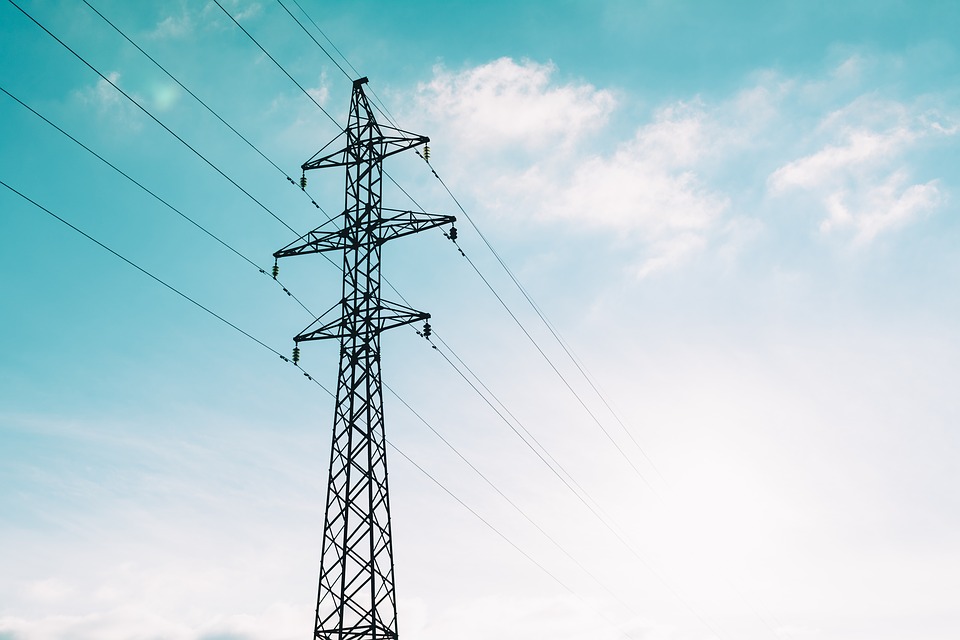
NFPA 70b Training - Electrical Maintenance
Our customized live online or in‑person group training can be delivered to your staff at your location.

- Live Online
- 12 hours Instructor-led
- Group Training Available
Regular Price:
$699
Coupon Price:
$599
LOS ANGELES
—
Eaton Fire Investigation centers on surveillance video and utility records indicating an idle transmission line sparked the blaze, as insurers pursue inverse condemnation and liability against the utility amid wildfire risk and grid safety concerns.
Inside the Issue
-
Lawyers link idle line to ignition near tower M16T1
-
Video flashes align with two faults three seconds apart
-
Insurers seek inverse condemnation; hearing on Aug. 11
-
Utility disputes claims; probes by authorities continue
-
3,500 claims filed; $650M in offers; AB 1054 fund noted
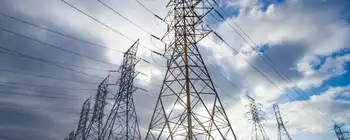
New surveillance video and utility records described in a recent court filing have intensified scrutiny on whether a century-old transmission asset owned by Southern California Edison ignited the Eaton wildfire. Attorneys representing property insurers argue that an idle line spanning Eaton Canyon sparked the Jan. 7, 2025 blaze that killed 19 people and left thousands of families homeless in the Altadena and Pasadena area. The dispute highlights how wildfire risk and grid operations intersect, themes explored in grid climate change coverage that continues to shape utility risk management discussions.
According to the filing, surveillance footage from the Gerrish Swim & Tennis Club captured two bright flashes at approximately 6:11 p.m. near a transmission tower designated M16T1. The lawyers say those flashes align with two electrical faults, three seconds apart, that the utility recorded on another transmission line more than five miles away just before the fire ignited. Residents subsequently documented flames at the base of the tower. The filing contends the idle circuit, left in place for decades, should have been removed and that the event sequence points to the line as the ignition source.
The insurers are seeking an inverse condemnation ruling to hold the utility financially responsible for losses, asserting that when private electric infrastructure causes damage, property owners must be compensated regardless of negligence. Their motion, filed May 18, seeks judgment on liability, with a hearing set for Aug. 11 in Los Angeles County Superior Court. The dispute arrives amid broader reliability debates, including those examined in California faces blackouts, as utilities balance safety with continuity of service.
The company has not accepted responsibility and says both its internal investigation and separate state and county inquiries are continuing. A spokesperson criticized the newly surfaced video for not being produced earlier in discovery and said the insurer's motion is wrong on the facts and the law, with a formal response forthcoming. Customer-facing impacts of emergency operations and communications practices remain a point of attention, as reflected in PGE power interruption discussions that inform how utilities address risk and resilience.
In a February 2025 letter to regulators, the utility reported detecting a fault at about 6:11 p.m. on a line more than five miles from Altadena, causing a brief surge on four live transmission lines crossing Eaton Canyon. Engineers have examined whether that surge could have induced a short burst of energy into the adjacent idle conductor through electromagnetic induction. The tower and line at issue were designated out of service in 1971, and internal guidance states that the out of service status is intended for equipment expected to remain permanently out of service.
Company officials have explained that idle lines may be retained to preserve rights-of-way and accommodate potential future capacity needs, while asserting that such facilities are grounded and inspected. Those long-horizon planning choices also interact with state decarbonization policy, including targets discussed in the California Carbon Free Mandate, which can influence transmission build-out and asset retention strategies.
Separately, the utility has offered compensation to people impacted by the fire. It has received more than 3,500 claims and extended nearly 1,900 offers totaling over $650 million, with the company indicating it expects reimbursement from a $21 billion fund established by 2019 legislation. As wildfire hardening proceeds, a regulatory report cited by the company shows customer electric rates have risen by 101 percent over the last decade. The utility also acknowledges its lines sparked more fires in 2024 than in 2019, attributing conditions in part to erratic weather and dry vegetation. For communities, those operational realities have compounded disaster response challenges captured in California faces power outages landslides amid severe storm coverage that followed severe weather.
Related News
Related News
A New Electric Boat Club Launches in Seattle
Aurelia Boat Club delivers electric boat membership in Seattle, featuring zero-emission propulsion, quiet cruising, sustainable…
View more
Analysis: Why is Ontario’s electricity about to get dirtier?
Ontario electricity emissions forecast highlights rising grid CO2 as nuclear refurbishments and the Pickering closure…
View more
Only one in 10 utility firms prioritise renewable electricity – global study
Utility Renewable Investment Gap highlights Oxford study in Nature Energy: most electric utilities favor fossil…
View more

Clorox accelerates goal of achieving 100% renewable electricity in the U.S. and Canada to 2021
Clorox Enel 70 MW VPPA accelerates renewable energy, sourcing Texas solar from the Roadrunner project…
View more

Shell says electricity to meet 60 percent of China's energy use by 2060
China 2060 Carbon-Neutral Energy Transition projects tripled electricity, rapid electrification, wind and solar dominance, scalable…
View more
Ontario Energy Board Sets New Electricity Rate Plan Prices and Support Program Thresholds
OESP Eligibility 2024 updates Ontario electricity affordability: TOU, Tiered, Ultra-Low-Overnight price plans, online bill calculator,…
View more
Sign Up for Electricity Forum’s Newsletter
Stay informed with our FREE Newsletter — get the latest news, breakthrough technologies, and expert insights, delivered straight to your inbox.
Electricity Today T&D Magazine Subscribe for FREE

Stay informed with the latest T&D policies and technologies.
- Timely insights from industry experts
- Practical solutions T&D engineers
- Free access to every issue
