By New York Times


NFPA 70b Training - Electrical Maintenance

Our customized live online or in‑person group training can be delivered to your staff at your location.
  • Live Online
  • 12 hours Instructor-led
  • Group Training Available
Regular Price:
$699
Coupon Price:
$599
Reserve Your Seat Today
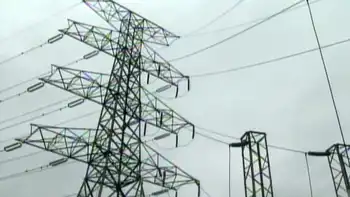
Engineers meeting in Philadelphia here for the first public technical session about the Aug. 14 blackout said recently that to avoid a recurrence, the industry should be more tightly linked, through mutual regulation and data sharing, though the path to that point was unclear.

The moderator of the session, Gerry W. Cauley, director for reliability performance at the North American Electric Reliability Council, a voluntary industry group founded after the 1965 Northeast blackout, said, "We can't go through another summer like this." But Mr. Cauley added that the August blackout did not occur on a peak demand day, and that a large-scale blackout like the one in August "can happen at any time." The engineers discussed whether their industry should have a system of peer review, like the one the nuclear industry uses, in which experts from various control rooms audit one another's workplace. Another idea at the daylong conference was better data integration, so the technicians who operate transmission systems could see trouble brewing in their neighbors' territory. "You need it for the area that you could affect and the area that could affect you," said Don Watkins, a transmission expert at the Bonneville Power Administration, which operates federally owned hydroelectric installations and transmission lines in the Pacific Northwest. A report on the blackout by a Canadian-American task force, many of whose members gave presentations recently, found that two Midwestern entities, the FirstEnergy Corporation and the Midwest Independent Transmission System Operator, had violated the existing voluntary rules. A representative of the Midwest system operator said his group was taking steps to improve its operations by the end of the year. Federal officials and industry executives have anticipated better regulation through action by Congress, which has discussed authorizing federal regulators to impose mandatory reliability standards. That idea is popular in Washington, but the legislation to establish them was incorporated into a mammoth energy bill that so far has failed to pass the Senate. A similar approach also failed in 2002. The provision in the energy bill would have allowed the Federal Energy Regulatory Commission, which is mostly an economic regulator, to designate the North American Electric Reliability Council to set reliability rules. But now, Mr. Cauley said, the industry should proceed "with or without Congress." The chairman of the commission, Pat Wood, took a similar position earlier this month and asked his staff to investigate whether the agency already had the authority that could be used to enact such standards. But the problem, engineers agreed, extends far beyond setting standards, to actually instituting them. "We're going to need some monitoring mechanisms in place," said David W. Hilt, the director for compliance of the North American Electric Reliability Council. The goal, Mr. Hilt said, was to "assure we really do implement the recommendations." Marjorie R. Philips, director of market policy at P.S.E.G. Energy Resources and Trade, an affiliate of a company that provides electricity and gas in New Jersey, said it would take more than monitoring. "If there's no consequence, you have not done what you set out to do," she said. For violators, she suggested monetary penalties or "public shunning." The industry has not even standardized the method for calculating how much electricity a line can carry, said Tapani O. Seppa, president of the Valley Group, a consulting firm in Ridgefield, Conn. On Aug. 14, FirstEnergy was assuming a wind of 4.4 feet per second, he said, but actual conditions in much of its territory were dead calm. Without any cooling from wind, the cables would be 40 to 100 degrees Fahrenheit higher, he said, and would sag more, leading to cables hitting the trees. Tree contact for a fully loaded line is equivalent to "two or three sticks of dynamite," Mr. Seppa said. On that day, 23 percent of weather observations in the area were showing a wind speed of zero, he said.

But Mr. Cauley added that the August blackout did not occur on a peak demand day, and that a large-scale blackout like the one in August "can happen at any time."

The engineers discussed whether their industry should have a system of peer review, like the one the nuclear industry uses, in which experts from various control rooms audit one another's workplace. Another idea at the daylong conference was better data integration, so the technicians who operate transmission systems could see trouble brewing in their neighbors' territory.

"You need it for the area that you could affect and the area that could affect you," said Don Watkins, a transmission expert at the Bonneville Power Administration, which operates federally owned hydroelectric installations and transmission lines in the Pacific Northwest.

A report on the blackout by a Canadian-American task force, many of whose members gave presentations recently, found that two Midwestern entities, the FirstEnergy Corporation and the Midwest Independent Transmission System Operator, had violated the existing voluntary rules. A representative of the Midwest system operator said his group was taking steps to improve its operations by the end of the year.

Federal officials and industry executives have anticipated better regulation through action by Congress, which has discussed authorizing federal regulators to impose mandatory reliability standards. That idea is popular in Washington, but the legislation to establish them was incorporated into a mammoth energy bill that so far has failed to pass the Senate. A similar approach also failed in 2002.

The provision in the energy bill would have allowed the Federal Energy Regulatory Commission, which is mostly an economic regulator, to designate the North American Electric Reliability Council to set reliability rules. But now, Mr. Cauley said, the industry should proceed "with or without Congress." The chairman of the commission, Pat Wood, took a similar position earlier this month and asked his staff to investigate whether the agency already had the authority that could be used to enact such standards.

But the problem, engineers agreed, extends far beyond setting standards, to actually instituting them. "We're going to need some monitoring mechanisms in place," said David W. Hilt, the director for compliance of the North American Electric Reliability Council. The goal, Mr. Hilt said, was to "assure we really do implement the recommendations."

Marjorie R. Philips, director of market policy at P.S.E.G. Energy Resources and Trade, an affiliate of a company that provides electricity and gas in New Jersey, said it would take more than monitoring.

"If there's no consequence, you have not done what you set out to do," she said. For violators, she suggested monetary penalties or "public shunning."

The industry has not even standardized the method for calculating how much electricity a line can carry, said Tapani O. Seppa, president of the Valley Group, a consulting firm in Ridgefield, Conn.

On Aug. 14, FirstEnergy was assuming a wind of 4.4 feet per second, he said, but actual conditions in much of its territory were dead calm. Without any cooling from wind, the cables would be 40 to 100 degrees Fahrenheit higher, he said, and would sag more, leading to cables hitting the trees. Tree contact for a fully loaded line is equivalent to "two or three sticks of dynamite," Mr. Seppa said.

On that day, 23 percent of weather observations in the area were showing a wind speed of zero, he said.

Related News
EPA: New pollution limits proposed for US coal, gas power plants reflect "urgency" of climate crisis

EPA Power Plant Emissions Rule proposes strict greenhouse gas limits for coal and gas units, leveraging carbon capture (CCS) under the Clean Air Act to cut CO2 and accelerate decarbonization of the U.S. grid.


Key Points

A proposed EPA rule setting CO2 limits for coal and gas plants, using CCS to cut power-sector greenhouse gases.

✅ Applies to existing and new coal and large gas units

✅ Targets near-zero CO2 by 2038 via CCS or retirement

✅ Cites grid, health, and climate benefits; faces legal challenges


The Biden administration has proposed new limits on greenhouse gas emissions from coal- and gas-fired power plants, its most ambitious effort yet to roll back planet-warming pollution from the nation’s second-largest contributor to climate change.

A rule announced by the Environmental Protection Agency could force power plants to capture smokestack emissions using a technology that has long been promised but is not used widely in the United States, and arrives amid changes stemming from the NEPA rewrite that affect project reviews.

“This administration is committed to meeting the urgency of the climate crisis and taking the necessary actions required,″ said EPA Administrator Michael Regan.

The plan would not only “improve air quality nationwide, but it will bring substantial health benefits to communities all across the country, especially our front-line communities ... that have unjustly borne the burden of pollution for decades,” Regan said in a speech at the University of Maryland.

President Joe Biden, whose climate agenda includes a clean electricity standard as a key pillar, called the plan “a major step forward in the climate crisis and protecting public health.”

If finalized, the proposed regulation would mark the first time the federal government has restricted carbon dioxide emissions from existing power plants, following a Trump-era replacement of Obama’s power plant overhaul, which generate about 25% of U.S. greenhouse gas pollution, second only to the transportation sector. The rule also would apply to future electric plants and would avoid up to 617 million metric tons of carbon dioxide through 2042, equivalent to annual emissions of 137 million passenger vehicles, the EPA said.

Almost all coal plants — along with large, frequently used gas-fired plants — would have to cut or capture nearly all their carbon dioxide emissions by 2038, the EPA said, a timeline that echoed concerns raised during proposed electricity pricing changes in the prior administration. Plants that cannot meet the new standards would be forced to retire.

The plan is likely to be challenged by industry groups and Republican-leaning states, much like litigation over the Affordable Clean Energy rule unfolded in recent years. They have accused the Democratic administration of overreach on environmental regulations and warn of a pending reliability crisis for the electric grid. The power plant rule is one of at least a half-dozen EPA rules limiting power plant emissions and wastewater treatment rules.

“It’s truly an onslaught” of government regulation “designed to shut down the coal fleet prematurely,″ said Rich Nolan, president and CEO of the National Mining Association.

Regan denied that the power plant rule was aimed at shutting down the coal sector, but acknowledged — even after the end to the 'war on coal' rhetoric — “We will see some coal retirements.”


Related News

View more

COVID-19 closures: It's as if Ottawa has fallen off the electricity grid

Ontario Electricity Demand Drop During COVID-19 reflects a 1,000-2,000 MW decline as IESO balances the grid, shifts peak demand later, throttles generators and baseload nuclear, and manages exports amid changing load curves.


Key Points

An about 10% reduction in Ontario's load, shifting peaks and requiring IESO grid balancing measures.

✅ Demand down 1,000-2,000 MW; roughly 10% below normal.

✅ Peak shifts later in morning as home use rises.

✅ IESO throttles generators; baseload nuclear stays online.


It’s as if the COVID-19 epidemic had tripped a circuit breaker, shutting off all power to a city the size of Ottawa.

Virus-induced restrictions that have shut down large swaths of normal commercial life across Canada has led to a noticeable drop in demand for power in Ontario and reflect a global demand dip according to reports, insiders said on Friday.

Terry Young, vice-president with the Independent Electricity System Operator, said planning was underway for further declines in usage and for whether Ontario will embrace more clean power in the long term, given the delicate balance that needs to be maintained between supply and demand.

“We’re now seeing demand that is running about 1,000 to 2,000 megawatts less than we would normally see,” Young said. “You’re essentially seeing a city the size of Ottawa drop off demand during the day.”

At the high end, a 2,000 megawatt reduction would be close to the equivalent peak demand of Ottawa and London, Ont., combined.

The decline, in the order of 10 per cent from the 17,000 to 18,000 megawatts of usage that might normally be expected and similar to the UK’s 10% drop reported during lockdowns, began last week, Young said. The downward trend became more noticeable as governments and health authorities ordered non-essential businesses to close and people to stay home. However, residential and hospital usage has climbed.

Experts say frequent hand-washing and staying away from others is the most effective way to curb the spread of the highly contagious coronavirus, which poses a special risk to older people and those with underlying health conditions. As a result, factories and other big users have reduced production or closed entirely.

Because electricity cannot be stored, generators need to throttle back their output as domestic demand shrinks and exports to places such as the United States, including New York City, which is also being hit hard by the coronavirus, fall.

“We’re watching this carefully,” Young said. “We’re able to manage this drop, but it’s something we obviously have to keep watching…and making sure we’re not over-generating electricity.”

Turning off generation, especially for nuclear plants, is an intensive process, as are restarts and would likely happen only if the downward demand trend intensifies significantly, amid concerns over Ontario’s electricity getting dirtier if baseload is displaced. However, one of North America’s largest generators, Bruce Power near Kincardine, Ont., said it had a large degree of flexibility to scale down or up.

“We have the ability to provide one-third of our output as a dynamic response, which is unique to our facility,” said James Scongack, an executive vice-president with Bruce Power. “We developed this coming out of the 2008 downturn and it’s been a critical system asset for the last decade.”

“We don’t see there being a scenario where our baseload will not be needed,” he said, even as some warn Ontario may be short of electricity in the coming years.

The province’s publicly owned Ontario Power Generation said it was also in conversations with the system operator, which provides direction to generators, and is often cited in the Ontario election discussion.

One clear shift in normal work-day usage with so many people staying at home has been the change in demand patterns. Typically, Young said, there’s a peak from about 7 a.m. to 8 a.m. as people wake and get ready to go to work or school. The peak is now occurring later in the morning, Young said.


Related News

View more

Energy groups warn Trump and Perry are rushing major change to electricity pricing

DOE Grid Resilience Pricing Rule faces FERC review as energy groups challenge an expedited timeline to reward coal and nuclear for reliability in wholesale markets, impacting natural gas, renewables, baseload economics, and grid pricing.


Key Points

A DOE proposal directing FERC to compensate coal and nuclear plants for reliability attributes in wholesale markets.

✅ Industry coalition seeks normal FERC timeline and review

✅ Impacts wholesale pricing, baseload economics, reliability

✅ Request for 90-day comments and reply period


A coalition of 11 industry groups is pushing back on Energy Secretary Rick Perry's efforts to quickly implement a major change to the way electric power is priced in the United States.

The Energy Department on Friday proposed a rule that stands to bolster coal and nuclear power plants by forcing the regional markets that set electricity prices to compensate them for the reliability they provide. Perry asked the Federal Energy Regulatory Commission to consider and finalize the rule within 60 days, including a 45-day period during which stakeholders can issue comments.

On Monday, groups representing petroleum, natural gas, electric power and renewable energy interests including ACORE urged FERC to reject the expedited process, as well as the Department of Energy's request that the regulatory commission consider putting in place an interim rule.

They say the time frame is "aggressive" and the department didn't provide adequate justification for fast-tracking a process that could have huge impacts on wholesale electricity markets.

"This is one of the most significant proposed rules in decades related to the energy industry and, if finalized, would unquestionably have significant ramifications for wholesale markets under the Commission's jurisdiction," the groups said in the motion filed with FERC.

"The Energy Industry Associations urge the Commission to reject the proposed unreasonable timelines and instead proceed in a manner that would afford meaningful consideration of public comments and be consistent with the normal deliberative process that it typically affords such major undertakings," they said.

The groups are requesting a 90-day comment period, as well as another period for reply comments. FERC, which has authority to regulate interstate transmission and sale of electricity and natural gas, is not required to decide in favor of the rule but, amid a recent FERC decision that drew industry criticism, must consider it.

Expediting the process or imposing an interim rule is generally limited to emergencies, the groups said. The Energy Department's letter to FERC does not even attempt to establish that an immediate threat to U.S. electricity reliability exists, they allege.


  • A coalition of energy industry groups asked regulators to reject a rule proposed by the U.S. Department of Energy on Friday.
  • The rule would bolster coal-fired and nuclear power plants by requiring wholesale markets to compensate them for certain attributes.
  • The groups say the Energy Department proposed "unreasonable timelines" for stakeholders to offer feedback on a rule with "significant ramifications for wholesale markets."


The groups cite a recent Energy Department report on grid reliability that concluded: "reliability is adequate today despite the retirement of 11 percent of the generating capacity available in 2002, as significant additions from natural gas, wind, and solar have come online since then."

The Department of Energy did not return a request for comment.

The Energy Department's rule marks a flashpoint in the battle between natural gas-fired and renewable energy and so-called baseload power sources like coal and nuclear.

Separately, coal and business groups have supported the EPA in litigation over the Affordable Clean Energy rule, as documented in legal challenges brought during the rule's defense.

Gas, wind and solar power have eaten into coal and nuclear's share of U.S. electric power generation in recent years. That is thanks to a boom in U.S. gas production that has pushed down prices, the rapid adoption of subsidized renewable energy and President Barack Obama's efforts to mitigate emissions from power plants, which the Trump administration has sought to replace with a tune-up as policies shift.

Electric power is priced in deregulated, wholesale markets in many parts of the country. Utilities typically draw on the cheapest power sources first.

Some worry that the retirement of coal-fired and nuclear power plants undermines the nation's ability to reliably and affordably deliver electricity to households and businesses.

President Donald Trump has vowed to revive the ailing coal industry, declaring an end to the 'war on coal' in public remarks. Trump, Perry and other administration officials reject the consensus among climate scientists that carbon emissions from sources like coal-fired plants are the primary cause of global warming.


Related News

View more

Daimler Details Gigantic Scope of Its Electrification Plan

Daimler Electric Strategy drives EV adoption with global battery factories, Mercedes-Benz electrified models, battery cells procurement, and major investments spanning vans, buses, trucks, and production capacity across Europe, Asia, and the USA.


Key Points

Daimler Electric Strategy is a multi-billion EV roadmap for batteries, factories, and 130 electrified Mercedes models.

✅ Eight battery factories across three continents

✅ EUR 10B for EV lineup; EUR 20B for battery cells

✅ 130 electrified variants plus vans, buses, trucks


Throughout 2018, we all witnessed the unprecedented volume of promises for a better future made by the giants of the auto industry. All say they've committed billions so that, within a decade, combustion engines will be on their way out.

The most active of all companies when talking about promises is Volkswagen, which, amid German plant closures, time and time again has said it will do this or that and completely change the meaning of car in the coming years. But there are other planning the same thing, possibly with even vaster resources.

Planning to end the year on a high note, Daimler detailed its plan for the electric future once again on Tuesday, this time making no secret of its gigantic size and scope.

As announced before, Daimler plans to build electric cars, but also manufacture electric batteries for its own and others’ use, and has launched a US energy storage company to support this strategy. These batteries will eventually be produced by Daimler in eight factories on three continents.

Batteries are already rolling off the lines in Kamenz, and a second facility will begin doing so next year. Two more factories will be built in Stuttgart-Untertürkheim, one at the company’s Sindelfingen site, and one each at the sites in Beijing (China), Bangkok (Thailand) and Tuscaloosa (USA).

In all, one billion EUR will be invested in the expansion of the global battery production network, but that is nothing compared to the 10 billion to be poured into the expansion of the Mercedes-Benz car fleet.

On top of that, 20 billion EUR will go towards the purchase of battery cells from producers all around the world, echoing other automakers' battery sourcing strategies worldwide over the next 12 years.

“After investing billions of euros in the development of the electric fleet and the expansion of our global battery network, we are now taking the next step,” said in a statement Dieter Zetsche, Daimler chairman of the board.

“With the purchase of battery cells for more than 20 billion euros, we are systematically pushing forward with the transformation into the electric future of our company.”

By 2022, the carmaker plans to launch 130 electrified variants of its cars, as cheaper, more powerful batteries become available, adding to them electric vans, buses and trucks. That pretty much means all the models and variants sold by Daimler globally will be at least partially powered by electricity.


Related News

View more

In Europe, A Push For Electricity To Solve The Climate Dilemma

EU Electrification Strategy 2050 outlines shifting transport, buildings, and industry to clean power, accelerating EV adoption, heat pumps, and direct electrification to meet targets, reduce emissions, and replace fossil fuels with renewables and low-carbon grids.


Key Points

EU plan to cut emissions 95% by 2050 by electrifying transport, buildings and industry with clean power.

✅ 60% of final energy from electricity by 2050

✅ EVs dominate transport; up to 63% electric share

✅ Heat pumps electrify buildings; industry to 50% direct


The European Union has one of the most ambitious carbon emission reduction goals under the global Paris Agreement on climate change – a 95% reduction by 2050.

It seems that everyone has an idea for how to get there. Some are pushing nuclear energy. Others are pushing for a complete phase-out of fossil fuels and a switch to renewables.

Today the European electricity industry came out with their own plan, amid expectations of greater electricity price volatility in Europe in the coming years. A study published today by Eurelectric, the trade body of the European power sector, concludes that the 2050 goal will not be possible without a major shift to electricity in transport, buildings and industry.

The study finds that for the EU to reach its 95% emissions reduction target, electricity needs to cover at least 60 percent of final energy consumption by 2050. This would require a 1.5 percent year-on-year growth of EU electricity use, with evidence that EVs could raise electricity demand significantly in other markets, while at the same time reducing the EU’s overall energy consumption by 1.3 percent per year.

#google#

Transport is one of the areas where electrification can deliver the most benefit, because an electric car causes far less carbon emissions than a conventional vehicle, with e-mobility emerging as a key driver of electricity demand even if that electricity is generated in a fossil fuel power plant.

In the most ambitious scenario presented by the study, up to 63 percent of total final energy consumption in transport will be electric by 2050, and some analyses suggest that mass adoption of electric cars could occur much sooner, further accelerating progress.

Building have big potential as well, according to the study, with 45 to 63 percent of buildings energy consumption could be electric in 2050 by converting to electric heat pumps. Industrial processes could technically be electrified with up to 50 percent direct electrification in 2050, according to the study. The relative competitiveness of electricity against other carbon-neutral fuels will be the critical driver for this shift, but grid carbon intensity differs across markets, such as where fossil fuels still supply a notable share of generation.


Related News

View more

Manitoba Hydro seeks unpaid days off to trim costs during pandemic

Manitoba Hydro unpaid leave plan offers unpaid days off to curb workforce costs amid COVID-19, avoiding temporary layoffs and pay cuts, targeting $5.7M savings through executive, manager, and engineer participation, with union options under discussion.


Key Points

A cost-saving measure offering unpaid days off to avert layoffs and pay cuts, targeting $5.7M savings amid COVID-19.

✅ 3 unpaid days for executives, managers, engineers

✅ Targets $5.7M total; $1.4M from non-union staff

✅ Avoids about 240 layoffs over a four-month period


The Manitoba government's Crown energy utility is offering workers unpaid days off as an alternative to temporary layoffs or pay cuts, even as residential electricity use rises due to more working from home.

In an email to employees, Manitoba Hydro president Jay Grewal says executives, managers, and engineers will take three unpaid days off before the fiscal year ends next March.

She says similar options are being discussed with other employee groups, which are represented by unions, as the Saskatchewan COVID-19 crisis reshaped workforces across the Prairies.

The provincial government ordered Manitoba Hydro to reduce workforce costs during the COVID-19 pandemic, as some power operators considered on-site staffing plans, and at one point the utility said it was looking at 600 to 700 temporary layoffs.

The organization said it’s looking for targeted savings of $5.7 million, down from $11 million previously estimated, while peers like BC Hydro’s Site C began reporting COVID-19 updates.

A spokesperson for Manitoba Hydro said non-unionized staff taking three days of unpaid leave will save $1.4 million of the $5.7 million savings.

“Three days of unpaid leave for every employee would eliminate layoffs entirely,” the spokesperson said in an email. “For comparison, approximately 240 layoffs would have to occur over a four-month period, while measures like Alberta's worker transition fund aim to support displaced workers, to achieve savings of $4.3 million.”

Grewal says the unpaid days off were a preferred option among the executives, managers, and engineers in an industry that recently saw a Hydro One worker injury case.

She says unions representing the other workers have been asked to respond by next Wednesday.


Related News

View more

Sign Up for Electricity Forum’s Newsletter

Stay informed with our FREE Newsletter — get the latest news, breakthrough technologies, and expert insights, delivered straight to your inbox.

Electricity Today T&D Magazine Subscribe for FREE

Stay informed with the latest T&D policies and technologies.
  • Timely insights from industry experts
  • Practical solutions T&D engineers
  • Free access to every issue

Download the 2025 Electrical Training Catalog

Explore 50+ live, expert-led electrical training courses –

  • Interactive
  • Flexible
  • CEU-cerified