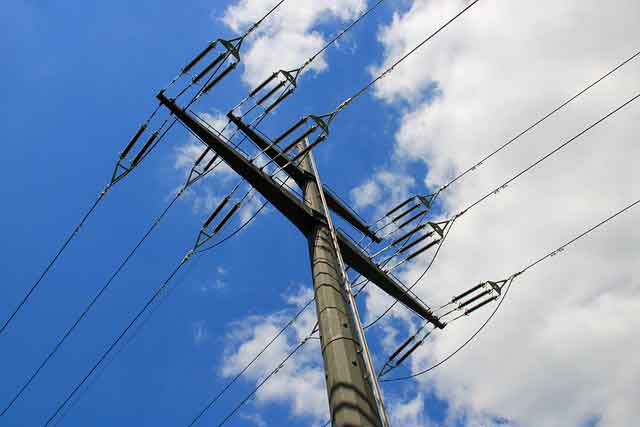
Negotiators Resolve Dispute That Jeopardized Energy Bill

By New York Times


NFPA 70e Training - Arc Flash

Our customized live online or in‑person group training can be delivered to your staff at your location.

  • Live Online
  • 6 hours Instructor-led
  • Group Training Available
Regular Price:
$199
Coupon Price:
$149
Reserve Your Seat Today
WASHINGTON — House and Senate tax writers resolved a dispute recently that was threatening major energy legislation, opening the way to consideration of a measure intended to stimulate domestic energy production and make the nation's electrical transmission system more dependable.

Under direct prodding from Vice President Dick Cheney, Senator Charles E. Grassley, Republican of Iowa, and Representative Bill Thomas, Republican of California, settled their differences over tax breaks for ethanol, a corn-based gasoline additive, which is crucial to building political support for the overall measure in the House and Senate.

Mr. Grassley, the chairman of the Finance Committee, called the agreement a "big step toward" completing an overall energy measure, though he noted that serious differences still remained over tax breaks for the coal industry and for hybrid cars, as well as the ability of states to win exemptions from new requirements for using ethanol.

But lawmakers and aides said the agreement guaranteed continued tax advantages for users of ethanol and would eventually eliminate a disparity in taxes on the fuel, a chief demand of Mr. Grassley. The measure would also give new tax advantages to biodiesel, another Grassley priority. But he relented on a demand that all the changes be made on the energy bill rather than leaving some to a highway measure next year.

Lawmakers, lobbyists and others said the agreement would eliminate an impasse that had stalled the energy bill, a Republican priority, for more than a month.

"We're almost there," said the House majority leader, Representative Tom DeLay of Texas, who said he would like the House to consider the energy bill by the end of the week. Senate officials said that timetable was not realistic, but that the energy measure could reach the floor of the House and Senate as early as next week.

"Mr. Grassley did give a little to get a breakthrough," said an aide, who said the compromise was similar to one the senator floated earlier.

The fact that some of the tax changes would not be made until next year and the unsettled issue of state exemptions for ethanol were troubling to Senate Democrats who are important to passing the energy measure because a handful of Senate Republicans are dead set against it because of other energy issues.

"We still have a long way to go to ensure that this energy bill is not a step backwards for ethanol," said the Senate Democratic leader, Tom Daschle of South Dakota, who wants to triple the use of ethanol over the next decade.

Related News
Ontario's Clean Electricity Regulations: Paving the Way for a Greener Future

Ontario Clean Electricity Regulations accelerate renewable energy adoption, drive emissions reduction, and modernize the smart grid with energy storage, efficiency targets, and reliability upgrades to support decarbonization and a stable power system for Ontario.


Key Points

Standards to cut emissions, grow renewables, improve efficiency, and modernize the grid with storage and smart systems.

✅ Phases down fossil generation and invests in storage.

✅ Sets utility efficiency targets to curb demand growth.

✅ Upgrades to smart grid for reliability and resiliency.


Ontario has taken a significant step forward in its energy transition with the introduction of new clean electricity regulations. These regulations, complementing federal Clean Electricity Regulations, aim to reduce carbon emissions, promote sustainable energy sources, and ensure a cleaner, more reliable electricity grid for future generations. This article explores the motivations behind these regulations, the strategies being implemented, and the expected impacts on Ontario’s energy landscape.

The Need for Clean Electricity

Ontario, like many regions around the world, is grappling with the effects of climate change, including more frequent and severe weather events. In response, the province has set ambitious targets to reduce greenhouse gas emissions and increase the use of renewable energy sources, reflecting trends seen in Alberta’s path to clean electricity across Canada. The electricity sector plays a central role in this transition, as it is responsible for a significant portion of the province’s carbon footprint.

For years, Ontario has been moving away from coal as a source of electricity generation, and now, with the introduction of these new regulations, the province is taking a step further in decarbonizing its grid, including its largest competitive energy procurement to date. By setting clear goals and standards for clean electricity, the province hopes to meet its environmental targets while ensuring a stable and affordable energy supply for all Ontarians.

Key Aspects of the New Regulations

The regulations focus on encouraging the use of renewable energy sources such as wind, solar, hydroelectric, and geothermal power. One of the key elements of the plan is the gradual phase-out of fossil fuel-based energy sources. This shift is expected to be accompanied by greater investments in energy storage solutions, including grid batteries, to address the intermittency issues often associated with renewable energy sources.

Ontario’s new regulations also emphasize the importance of energy efficiency in reducing overall demand. As part of this initiative, utilities and energy providers will be required to meet strict energy-saving targets and participate in new electricity auctions designed to reduce costs, ensuring that both consumers and businesses are incentivized to use energy more efficiently.

In addition, the regulations promote technological innovation in the electricity sector. By supporting the development of smart grids, energy storage technologies, and advanced power management systems, Ontario is positioning itself to become a leader in the global energy transition.

Impact on the Economy and Jobs

One of the anticipated benefits of the clean electricity regulations is their positive impact on Ontario’s economy. As the province invests in renewable energy infrastructure and clean technologies, new job opportunities are expected to arise in industries such as manufacturing, construction, and research and development. These regulations also encourage innovation in energy services, which could lead to the growth of new companies and industries, while easing pressures on industrial ratepayers through complementary measures.

Furthermore, the transition to cleaner energy is expected to reduce the long-term costs associated with climate change. By investing in sustainable energy solutions now, Ontario will help mitigate the financial burdens of environmental damage and extreme weather events in the future.

Challenges and Concerns

While the new regulations have been widely praised for their environmental benefits, they are not without their challenges. One of the primary concerns is the potential cost to consumers, and some Ontario hydro policy critique has called for revisiting legacy pricing approaches to improve affordability. While renewable energy sources have become more affordable over the years, transitioning from fossil fuels could still result in higher electricity prices in the short term. Additionally, the implementation of new technologies, such as smart grids and energy storage, will require substantial upfront investment.

Moreover, the intermittency of renewable energy generation poses a challenge to grid stability. Ontario’s electricity grid must be able to adapt to fluctuations in energy supply as more variable renewable sources come online. This challenge will require significant upgrades to the grid infrastructure and the integration of storage solutions to ensure reliable energy delivery.

The Road Ahead

Ontario’s clean electricity regulations represent an important step in the province’s commitment to combating climate change and transitioning to a sustainable, low-carbon economy. While there are challenges to overcome, the benefits of cleaner air, reduced emissions, and a more resilient energy system will be felt for generations to come. As the province continues to innovate and lead in the energy sector, Ontario is positioning itself to thrive in the green economy of the future.


Related News

View more

TotalEnergies to Acquire German Renewables Developer VSB for US$1.65 Billion

TotalEnergies VSB Acquisition accelerates renewable energy growth, expanding wind and solar portfolios across Germany and Europe, advancing decarbonization, net-zero targets, and the energy transition through a US$1.65 billion strategic clean power investment.


Key Points

A US$1.65B deal: TotalEnergies acquires VSB to scale wind and solar in Europe and advance net-zero goals.

✅ US$1.65B purchase expands wind and solar pipeline

✅ Strengthens presence in Germany and wider Europe

✅ Advances net-zero, energy transition objectives


In a major move to expand its renewable energy portfolio, French energy giant TotalEnergies has announced its decision to acquire German renewable energy developer VSB for US$1.65 billion. This acquisition represents a significant step in TotalEnergies' strategy to accelerate its transition from fossil fuels to greener energy sources, aligning with the global push towards sustainability and carbon reduction, as reflected in Europe's green surge across key markets.

Strengthening TotalEnergies’ Renewable Energy Portfolio

TotalEnergies has long been one of the largest players in the global energy market, historically known for its oil and gas operations. However, in recent years, the company has made a concerted effort to diversify its portfolio and shift its focus toward renewable energy. The purchase of VSB, a leading developer of wind and solar energy projects, occurs amid rising European wind investment trends and is a clear reflection of TotalEnergies' commitment to this green energy transition.

VSB, based in Dresden, Germany, specializes in the development, construction, and operation of renewable energy projects, particularly wind and solar power. The company has a significant presence in Europe, with a growing portfolio of projects in countries like Germany, where clean energy accounts for 50% of electricity today, Poland, and the Czech Republic. The acquisition will allow TotalEnergies to bolster its renewable energy capacity, particularly in the wind and solar sectors, which are key components of its long-term sustainability goals.

By acquiring VSB, TotalEnergies is not only increasing its renewable energy output but also gaining access to a highly experienced team with a proven track record in energy project development. This move is expected to expedite TotalEnergies’ renewable energy ambitions, enabling the company to build on VSB’s strong market presence and established partnerships across Europe.

VSB’s Strategic Role in the Energy Transition

VSB’s expertise in the renewable energy sector makes it a valuable addition to TotalEnergies' green energy strategy. The company has been at the forefront of the energy transition in Europe, particularly in wind energy development, as offshore wind is set to become a $1 trillion business over the coming decades. Over the years, VSB has completed numerous large-scale wind projects, including both onshore and offshore installations.

The acquisition also positions TotalEnergies to better compete in the rapidly growing European renewable energy market, including the UK, where offshore wind is powering up alongside strong demand due to increased governmental focus on achieving net-zero emissions by 2050. Germany, in particular, has set ambitious renewable energy targets as part of its Energiewende initiative, which aims to reduce the country’s carbon emissions and increase the share of renewables in its energy mix. By acquiring VSB, TotalEnergies is not only enhancing its capabilities in Germany but also gaining a foothold in other European markets where VSB has operations.

With Europe increasingly shifting toward wind and solar power as part of its decarbonization efforts, including emerging solutions like offshore green hydrogen that complement wind buildouts, VSB’s track record of developing large-scale, sustainable energy projects provides TotalEnergies with a strong competitive edge. The acquisition will further TotalEnergies' position as a leader in the renewable energy space, especially in wind and solar power generation.

Financial and Market Implications

The US$1.65 billion deal marks TotalEnergies' largest renewable energy acquisition in recent years and underscores the growing importance of green energy investments within the company’s broader business strategy. TotalEnergies plans to use this acquisition to scale up its renewable energy assets and move closer to its target of achieving net-zero emissions by 2050. The deal also positions TotalEnergies to capitalize on the expected growth of renewable energy across Europe, particularly in countries with aggressive renewable energy targets and incentives.

The transaction is also expected to boost TotalEnergies’ presence in the global renewable energy market. As the world increasingly turns to wind, solar, and other sustainable energy sources, TotalEnergies is positioning itself to be a major player in the global energy transition. The acquisition of VSB complements TotalEnergies' previous investments in renewable energy and further aligns its portfolio with international sustainability trends.

From a financial standpoint, TotalEnergies’ purchase of VSB reflects the growing trend of large energy companies investing heavily in renewable energy. With wind and solar power becoming more economically competitive with fossil fuels, this investment is seen as a prudent long-term strategy, one that is likely to yield strong returns as demand for clean energy continues to rise.

Looking Ahead: TotalEnergies' Green Transition

TotalEnergies' acquisition of VSB is part of the company’s broader strategy to diversify its energy offerings and shift away from its traditional reliance on oil and gas. The company has already made significant strides in renewable energy, with investments in solar, wind, and battery storage projects across the globe, as developments like France's largest battery storage platform underline this momentum. The VSB acquisition will only accelerate these efforts, positioning TotalEnergies as one of the foremost leaders in the clean energy revolution.

By 2030, TotalEnergies plans to allocate more than 25% of its total capital expenditure to renewable energies and electricity. The company has already set ambitious goals to reduce its carbon footprint and shift its business model to align with the global drive toward sustainability. The integration of VSB into TotalEnergies’ portfolio signals a firm commitment to these goals, ensuring the company remains at the forefront of the energy transition.

In conclusion, TotalEnergies’ purchase of VSB for US$1.65 billion marks a significant milestone in the company’s renewable energy journey. By acquiring a company with deep expertise in wind and solar power development, TotalEnergies is taking decisive steps to strengthen its position in the renewable energy market and further its ambitions of achieving net-zero emissions by 2050. This acquisition will not only enhance the company’s growth prospects but also contribute to the ongoing global shift toward clean, sustainable energy sources.


Related News

View more

IEA warns fall in global energy investment may lead to shortages

Global Energy Investment Decline risks future oil and electricity supply, says the IEA, as spending on upstream, coal plants, and grids falls while renewables, storage, and flexible generation lag in the energy transition.


Key Points

Multi-year cuts to oil, power, and grid spending that increase risks of future supply shortages and market tightness.

✅ IEA warns underinvestment risks oil supply squeeze

✅ China and India slow coal plant additions; renewables rise

✅ Batteries aid flexibility but cannot replace seasonal storage


An almost 20 per cent fall in global energy investment over the past three years could lead to oil and electricity shortages, as surging electricity demand persists, and there are concerns about whether current business models will encourage sufficient levels of spending in the future, according a new report.

The International Energy Agency’s second annual IEA benchmark analysis of energy investment found that while the world spent $US1.7 trillion ($2.2 trillion) on fossil-fuel exploration, new power plants and upgrades to electricity grids last year, with electricity investment surpassing oil and gas even as global energy investment was down 12 per cent from a year earlier and 17 per cent lower than 2014.

While the IEA said continued oversupply of oil and electricity globally would prevent any imminent shock, falling investment “points to a risk of market tightness and undercapacity at some point down the line’’.

The low crude oil price drove a 44 per cent drop in oil and gas investment between 2014 and 2016. It fell 26 per cent last year. It was due to falls in upstream activity and a slowdown in the sanctioning of conventional oilfields to the lowest level in more than 70 years.

“Given the depletion of existing fields, the pace of investment in conventional fields will need to rise to avoid a supply squeeze, even on optimistic assumptions about technology and the impact of climate policies on oil demand,’’ the IEA warned in its report released yesterday evening. “The energy transition has barely begun in several key sectors, such as transport and industry, which will continue to rely heavily on oil, gas and coal for the foreseeable future.’’

The fall in global energy spending also reflected declining investment in power generation, particularly from coal plants.

While 21 per cent of global ­energy investment was made by China in 2016, the world’s fastest growing economy had a 25 per cent decline in the commissioning of new coal-fired power plants, due largely to air pollution issues and investment in renewables.

Investment in new coal-fired plants also fell in India.

“India and China have slammed the brakes on coal-fired generation. That is the big change we have seen globally,’’ said ­Bruce Mountain a director at CME Australia.

“What it confirms is the ­pressures and the changes we are seeing in Australia, the restructuring of our energy supply, is just part of a global trend. We are facing the pressures more sharply in Australia because our power prices are very high. But that same shift in energy source in Australia are being mirrored internationally.’’ The IEA — a Paris-based adviser to the OECD on energy policy — also highlighted Australia’s reduced power reserves in its report and called for regulatory change to encourage greater use of renewables.

“Australia has one of the highest proportions of households with PV systems on their roof of any country in the world, and its ­electricity use in its National ­Electricity Market is spread out over a huge and weakly connected network,’’ the report said.

“It appears that a series of accompanying investments and regulatory changes are needed, including a plan to avoid supply threats, to use Australia’s abundant wind and solar potential: changing system operation methods and reliability procedures as well as investment into network capacity, flexible generation and storage.’’ The report found that in Australia there had been an increase in grid-scale installations mostly associated with large-scale solar PV plants.

Last month the Turnbull ­government revealed it was prepared to back the construction of new coal-fired power stations to prevent further shortfalls in electricity supplies, while the PM ruled out taxpayer-funded plants and declared it was open to using “clean coal” technology to replace existing generators.

He also pledged “immediate” ­action to boost the supply of gas by forcing exporters to divert ­production into the domestic ­market.

Since then technology billionaire Elon Musk has promised to solve South Australia’s energy ­issues by building the world’s largest lithium-ion battery in the state.

But the IEA report said batteries were unlikely to become a “one size fits all” single solution to ­electricity security and flexibility provision.

“While batteries are well-suited to frequency control and shifting hourly load, they cannot provide seasonal storage or substitute the full range of technical services that conventional plants provide to stabilise the system,’’ the report said.

“In the absence of a major technological breakthrough, it is most likely that batteries will complement rather than substitute ­conventional means of providing system flexibility. While conventional plants continue to provide essential system services, their business model is increasingly being called into question in ­unbundled systems.’’


Related News

View more

BC Hydro Rates to Rise by 3.75% Over Two Years

British Columbia electricity rate increase will raise BC Hydro bills 3.75% over 2025-2026 to fund infrastructure, Site C, and clean energy, balancing affordability, reliability, and energy security while keeping prices below the North American average.


Key Points

BC will raise BC Hydro rates 3.75% in 2025-2026, about $3.75/month, to fund grid upgrades, Site C, and clean energy.

✅ 3.75% over 2025-2026; about $3.75/month on $100 average bill

✅ Funds Site C, grid maintenance, and clean energy capacity

✅ Keeps BC Hydro rates below North American averages


British Columbia's electricity rates will experience a 3.75% increase over the next two years, following an earlier 3% rate increase approval that set the stage, as confirmed by the provincial government on March 17, 2025. The announcement was made by Minister of Energy and Climate Solutions, Adrian Dix, who emphasized the decision's necessity for maintaining BC Hydro’s infrastructure while balancing affordability for residents.

For most households, the increase will amount to an additional $3.75 per month, based on an average BC Hydro bill of $100, though some coverage framed an earlier phase as a BC Hydro $2/month proposal that later evolved. While this may seem modest, the increase reflects a broader strategy to stabilize the utility's rates amidst economic challenges and ensure long-term energy security for the province.

Reasons Behind the Rate Hike

The rate increase comes during a period of rising costs in both global markets and local economies. According to Dix, the economic uncertainty stemming from trade dynamics and inflation has forced the government to act. Despite these pressures, and after a prior B.C. rate freeze to moderate impacts, the increase remains below cumulative inflation over the last several years, a move designed to shield consumers from the full force of these economic changes.

Dix also noted that, when adjusted for inflation, electricity rates in British Columbia in 2025 are effectively at the same price they were four decades ago. This stability, he argued, underscores the provincial government’s commitment to keeping rates as low as possible for residents, even as operating costs rise.

“We must take urgent action to protect British Columbians from the uncertainty posed by rising costs while building a strong, resilient electricity system for the long-term benefit of B.C.’s energy independence,” Dix said. He also highlighted the government's approach to minimizing the financial burden on consumers by keeping electricity costs well below the North American average.

Infrastructure and Maintenance Costs

The primary justification for the rate increase is to allow BC Hydro to continue its critical infrastructure development, including the Site C hydroelectric project, which is expected to become operational in the coming years. The increased costs of maintaining and upgrading the province's electricity grid also contribute to the need for higher rates.

The Site C project, a massive hydroelectric dam under construction on the Peace River, is expected to provide a substantial increase in clean, renewable energy capacity. However, such large-scale projects require significant investment and maintenance, both of which have contributed to the increased operating costs for BC Hydro.

A Strategic Move for Rate Stability

The provincial government has been clear that the rate increase will allow for a continuation of infrastructure development while keeping the rates manageable for consumers. The 3.75% increase will be spread across two years, with the first hike scheduled for April 1, 2025, reflecting the typical April rate changes BC Hydro implements, and the second for April 1, 2026.

Dix confirmed that the rate hike would still keep electricity costs among the lowest in North America, noting that British Columbians pay about half of what residents in Alberta pay for electricity. This is part of a broader effort by the provincial government to provide stable energy pricing while bolstering the transition to clean energy solutions, such as the Site C project and other renewable energy initiatives.

Addressing Public Concerns

Although the government has framed the increase as a necessary measure to ensure the province's long-term energy independence and reliability, the rate hikes are likely to face scrutiny from residents, particularly those already struggling with the rising cost of living, even as provinces like Ontario face their own Ontario hydro rate increase pressures this fall.

Public reactions to utility rate increases are often contentious, as residents feel the pressure of rising prices across various sectors, from housing to healthcare. However, the government has promised that the new rates will remain manageable, especially considering the relatively low rate increases compared to inflation and other regions where Manitoba Hydro scaled back a planned increase to temper impacts.

Furthermore, the increase comes as part of a broader strategy that aims to keep the overall impact on consumers as low as possible. Minister Dix emphasized that these rate increases were intended to ensure the continued reliability of BC Hydro’s services, without overwhelming ratepayers.

Long-Term Goals

Looking ahead, the province's strategy centers on not only maintaining affordable electricity rates but also reinforcing the importance of renewable energy, while some jurisdictions consider a 2.5% annual increase plan over multiple years to stabilize their grids. As climate change becomes an increasingly pressing issue, BC’s investments in clean energy projects like Site C aim to provide sustainable power for generations to come.

The government’s long-term vision involves building a resilient, energy-independent province that can weather future economic and environmental challenges. In this context, the rate increases are framed not just as a response to immediate inflationary pressures but as a necessary step in preparing BC’s energy infrastructure for the future.

The 3.75% rate increase set for 2025 and 2026 represents a balancing act between managing the financial health of BC Hydro and protecting consumers from higher costs. While the increase will have a modest effect on household bills, the long-term goal is to build a more robust and sustainable electricity system for British Columbia’s future. Through investments in clean energy and strategic infrastructure development, the province aims to keep electricity rates competitive while positioning itself as a leader in energy independence and climate action.


Related News

View more

Nova Scotia Premier calls on regulators to reject 14% electricity rate hike agreement

Nova Scotia Power Rate Increase Settlement faces UARB scrutiny as regulators weigh electricity rates, fuel costs, storm rider provisions, Bill 212 limits, and Muskrat Falls impacts on ratepayers and affordability for residential and industrial customers.


Key Points

A deal proposing 13.8% electricity hikes for 2023-2024, before the UARB, covering fuel costs, a storm rider, and Bill 212.

✅ UARB review may set different rates than the settlement

✅ Fuel cost prepayment and hedging incentives questioned

✅ Storm rider shifts climate risk onto ratepayers


Nova Scotia Premier Tim Houston is calling on provincial regulators to reject a settlement agreement between Nova Scotia Power and customer groups that would see electricity rates rise by nearly 14% electricity rate hike over the next two years.

"It is our shared responsibility to protect ratepayers and I can't state strongly enough how concerned I am that the agreement before you does not do that," Houston wrote in a letter to the Nova Scotia Utility and Review Board late Monday.

Houston urged the three-member panel to "set the agreement aside and reach its own conclusion on the aforementioned application."

"I do not believe, based on what I know, that the proposed agreement is in the best interest of ratepayers," he said.

The letter does not spell out what his Progressive Conservative government would do if the board accepts the settlement reached last week between Nova Scotia Power and lawyers representing residential, small business and large industrial customer classes.

Other groups also endorsed the deal, although Nova Scotia Power's biggest customer — Port Hawkesbury Paper — did not sign on.

'We're protecting the ratepayers'
Natural Resources Minister Tory Rushton said the province was not part of the negotiations leading up to the settlement.

"As a government or department we had no intel on those conversations that were taking place," he said Tuesday. "So, we saw the information the same as the public did late last week, and right now we're protecting the ratepayers of Nova Scotia, even though the province cannot order Nova Scotia Power to lower rates under current law. We want to make sure that that voice is still heard at the UARB level."

Rushton said he didn't want to presuppose what the UARB will say.

"But I think the premier's been very loud and clear and I believe I have been, too. The ratepayers are at the top of our mind. We have different tools at our [disposal] and we'll certainly do what we can and need to [do] to protect those ratepayers."


The settlement agreement
If approved by regulators, rates would rise by 6.9 per cent in 2023 and 6.9 per cent in 2024 — almost the same amount on the table when hearings before the review board ended in September.

The Houston government later intervened with legislation, known as Bill 212, that capped rates to cover non-fuel costs by 1.8 per cent. It did not cap rates to cover fuel costs or energy efficiency programs.

In a statement announcing the agreement, Nova Scotia Power president Peter Gregg claimed the settlement adhered "to the direction provided by the provincial government through Bill 212."

Consumer advocate Bill Mahody, representing residential customers, told CBC News the proposed 13.8 per cent increase was "a reasonable rate increase given the revenue requirement that was testified to at the hearing."

Settlement 'remarkably' similar to NSP application
The premier disagrees, noting that the settlement and rate application that triggered the rate cap are "remarkably consistent."

He objects to the increased amount of fuel costs rolled into rates next year before the annual true up of actual fuel costs, which are automatically passed on to ratepayers.

"If Nova Scotia Power is effectively paid in advance, what motive do they have to hedge and mitigate the adjustment eventually required," Houston asked in his letter.

He also objected to the inclusion of a storm rider in rates to cover extreme weather, which he said pushed the risk of climate change on to ratepayers.

Premier second-guesses Muskrat Falls approval
Houston also second-guessed the board for approving Nova Scotia Power's participation in the Muskrat Falls hydro project in Labrador.

"The fact that Nova Scotians have paid over $500 million for this project with minimal benefit, and no one has been held accountable, is wrong," he said. "It was this board of the day that approved the contracts and entered the final project into rates."

Ratepayers are committed to paying $1.7 billion for the Maritime Link to bring the green source of electricity into the province, while rate mitigation talks in Newfoundland lack public details for their customers.

Although the Maritime Link was built on time and on budget by an affiliated company, only a fraction of Muskrat Falls hydro has been delivered because of ongoing problems in Newfoundland, including an 18% electricity rate hike deemed unacceptable by the province's consumer advocate.

"I find it remarkable that those contracts did not include different risk sharing mechanisms; they should have had provisions for issues in oversight of project management. Nevertheless, it was approved, and is causing significant harm to ratepayers in the form of increased rates."

Houston notes that because of non-delivery from Muskrat Falls, Nova Scotia Power has been forced to buy much more expensive coal to burn to generate electricity.


Opposition reaction
Opposition parties in Nova Scotia reacted to Houston's letter.

NDP Leader Claudia Chender dismissed it as bluster.

"It exposes his Bill 212 as not really helping Nova Scotians in the way that he said it would," she said. "Nothing in the settlement agreement contravenes that bill. But it seems that he's upset that he's been found out. And so here we are with another intervention in an independent regulatory body."

Liberal Leader Zach Churchill said the government should intervene to help ratepayers directly.

"We just think that it makes more sense to do that directly by supporting ratepayers through heating assistance, lump-sum electricity credits, rebate programs and expanding the eligibility for that or to provide funding directly to ratepayers instead of intervening in the energy market in this way," he said.

The premier's office said that no one was available when asked about an interview on Tuesday.

"The letter speaks for itself," the office responded.

Nova Scotia Power issued a statement Tuesday. It did not directly address Houston's claims.

"The settlement agreement is now with the NS Utility and Review Board," the utility said.

"The UARB process is designed to ensure customers are represented with strong advocates and independent oversight. The UARB will determine whether the settlement results in just and reasonable rates and is in the public interest."


Related News

View more

California scorns fossil fuel but can't keep the lights on without it

California fossil fuel grid reliability plan addresses heat wave demand, rolling blackouts, and grid stability by temporarily procuring gas generation while accelerating renewables, storage, and transmission to meet clean energy and carbon-neutral targets by 2045.


Key Points

A stop-gap policy to prevent blackouts by buying fossil power while fast-tracking renewables, storage, and grid upgrades.

✅ Temporary procurement of gas to avoid rolling blackouts

✅ Accelerates renewables, storage, transmission permitting

✅ Aims for carbon neutrality by 2045 without new gas plants


California wants to quit fossil fuels. Just not yet Faced with a fragile electrical grid and the prospect of summertime blackouts, the state agreed to put aside hundreds of millions of dollars to buy power from fossil fuel plants that are scheduled to shut down as soon as next year.

That has prompted a backlash from environmental groups and lawmakers who say Democratic Gov. Gavin Newsom’s approach could end up extending the life of gas plants that have been on-track to close for more than a decade and could threaten the state’s goal to be carbon neutral by 2045.

“The emphasis that the governor has been making is ‘We’re going to be Climate Leaders; we’re going to do 100 percent clean energy; we’re going to lead the nation and the world,’” said V. John White, executive director of the Sacramento-based Center for Energy Efficiency and Renewable Technologies, a non-profit group of environmental advocates and clean energy companies. “Yet, at least a part of this plan means going the opposite direction.”

That plan was a last-minute addition to the state’s energy budget, which lawmakers in the Democratic-controlled Legislature reluctantly passed. Backers say it’s necessary to avoid the rolling blackouts like the state experienced during a heat wave in 2020. Critics see a muddled strategy on energy, and not what they expected from a nationally ambitious governor who has made climate action a centerpiece of his agenda.

The legislation, which some Democrats labeled as “lousy” and “crappy,” reflects the reality of climate change. Heat waves are already straining power capacity, and the transition to cleaner energy isn’t coming fast enough to meet immediate needs in the nation’s most populous state.

Officials have warned that outages would be possible this summer, as the grid faces heat wave tests again, with as many as 3.75 million California homes losing power in a worst-case scenario of a West-wide heat wave and insufficient electrical supplies, particularly in the evenings.

It’s also an acknowledgment of the political reality that blackout politics are hazardous to elected officials, even in a state dominated by one party.

Newsom emphasized that the money to prop up the power grid, part of a larger $4.3 billion energy spending package, is meant as a stop-gap measure. The bill allows the Department of Water Resources to spend $2.2 billion on “new emergency and temporary generators, new storage systems, clean generation projects, and funding on extension of existing generation operations, if any occur,” the governor said in a statement after signing the bill.

“Action is needed now to maintain reliable energy service as the State accelerates the transition to clean energy,” Newsom said.

Following the signing, the governor called for the state California Air Resources Board to add a set of ambitious goals to its 2022 Scoping Plan, which lays out California’s path for reducing carbon emissions.

Among Newsom’s requested changes is a move away from fossil fuels, asking state agencies to prepare for an energy transition that avoids the need for new natural gas plants.

Alex Stack, a spokesman for the governor, said in a statement that California has been a global leader in reducing pollution and exporting energy policies across Western states, and pointed to Newsom’s recent letter to the Air Resources Board as well as one sent to President Joe Biden outlining how states can work with the federal government to combat climate change.

“California took action to streamline permitting for clean energy projects to accelerate the build out of clean energy that is needed to meet our climate goals and help maintain reliability in the face of extreme heat, wildfires, and drought,” Stack said.

But the prospect of using state money on fossil fuel power, even in the short term, has raised ire among the state’s many environmental advocacy groups, and raised questions about whether California will be able to achieve its goals.

“What is so frustrating about an energy bill like this is that we are at crunch time to meet these goals,” said Mary Creasman, CEO of California Environmental Voters. “And we’re investing a scale of funding into things that exacerbate those goals.”
 
Emmanuelle Chriqui and Mary Creasman speak during the 2021 Environmental Media Association IMPACT Summit at Pendry West Hollywood on September 2, 2021 in West Hollywood, California. | Jesse Grant/Getty Images for Environmental Media Association

With climate change-induced drought and high temperatures continuing to ravage the West, California anticipates the demand on the grid will only continue to grow. Despite more than a decade of bold posturing and efforts to transition to solar, wind and hydropower, the state worries it doesn’t have enough renewable energy sources on hand to keep the power on in an emergency right now, amid a looming shortage that will test reliability.

The specter of power outages poses a hazard to Newsom, and Democrats in general, especially ahead of November. While the governor is widely expected to sail to reelection, rolling blackouts are a serious political liability — in 2003, they were the catalyst for recalling Democratic Gov. Gray Davis. A lack of power isn’t just about people sweating in the dark, said Steven Maviglio, a longtime Democratic consultant who served as communications director for Davis, it can affect businesses, travel and have an outsized impact on the economy.

It behooves any state official to keep the power on, but, unlike Davis, Newsom is under serious pressure to make sure the state also adheres to its climate goals.

“Gavin Newsom’s brand is based on climate change and clean air, so it’s a little more difficult for him to say ‘well that’s not as important as keeping the power on,’” Maviglio said.

The same bill effectively ends local government control over those projects, for the time being. It hopes to speed up the state’s production of renewable energy sources by giving exclusive authority over the siting of those projects to a single state agency for the next seven years.

Environmental advocates say the state is now scrambling to address an issue they’ve long known was coming. In 2010, California officials set a schedule to retire a number of coastal gas plants that rely on what’s known as once-through cooling systems, which are damaging to the environment, especially marine life, even as regulators weigh more power plants to maintain reliability today. Many of those plants have been retired since 2010, but others have received extensions.

The remaining plants have various deadlines for when they must cease operations, with the soonest being the end of 2023.

Also at issue is the embattled Diablo Canyon nuclear power plant, California’s largest electricity source. The Pacific Gas & Electric-owned plant is scheduled to close in 2025, but the strain on the grid has officials considering the possibility of seeking an extension. Newsom said earlier this spring he would be open to extending the life of the plant. Doing so would also require federal approval.

Al Muratsuchi stands and talks into a microphone with a mask on. 
Assemblyman Al Muratsuchi speaks during an Assembly session in Sacramento, Calif., on Jan. 31, 2022. | Rich Pedroncelli/AP Photo

The International Brotherhood of Electrical Workers 1245, a labor union, sees the energy package as a way to preserve Diablo Canyon, and jobs at the plant.

“The value to 1245 PG&E members at Diablo Canyon is clear — funding to keep the plant open,” the union said of the bill.

Assemblymember Al Muratsuchi (D-Los Angeles) criticized the bill as “crappy” when it came to the floor in late June, describing it as “a rushed, unvetted and fossil-fuel-heavy response” to the state’s need to bolster the grid.

“The state has had over 12 years to procure and bring online renewable energy generation to replace these once through cooling gas power plants,” Muratsuchi said. “Yet, the state has reneged on its promise to shut down these plants, not once, but twice already.”

Not all details of the state’s energy budget are final. Lawmakers still have $3.8 billion to allocate when they return on Aug. 1 for the final stretch of the year.

Creasman, at California Environmental Voters, said she wants lawmakers to set specific guidelines for how and where it will spend the $2.2 billion when they return in August to dole out the remaining money in the budget. Newsom and legislators also need to ensure that this is the last time California has to spend money on fossil fuel, she said.

“Californians deserve to see what the plan is to make sure we’re not in this position again of having to choose between making climate impacts worse or keeping our lights on,” Creasman said. “That’s a false choice.”


Related News

View more

Sign Up for Electricity Forum’s Newsletter

Stay informed with our FREE Newsletter — get the latest news, breakthrough technologies, and expert insights, delivered straight to your inbox.

Electricity Today T&D Magazine Subscribe for FREE

Stay informed with the latest T&D policies and technologies.
  • Timely insights from industry experts
  • Practical solutions T&D engineers
  • Free access to every issue

Download the 2025 Electrical Training Catalog

Explore 50+ live, expert-led electrical training courses –

  • Interactive
  • Flexible
  • CEU-cerified