By Guardian


Protective Relay Training - Basic

Our customized live online or in‑person group training can be delivered to your staff at your location.

  • Live Online
  • 12 hours Instructor-led
  • Group Training Available
Regular Price:
$699
Coupon Price:
$599
Reserve Your Seat Today
Energy Poll reveals attitudes to green fuels

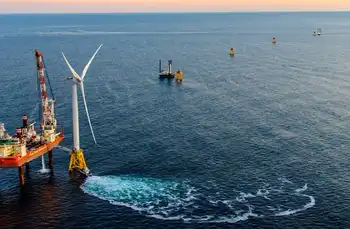
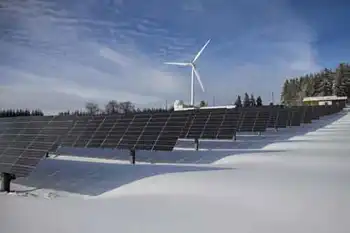
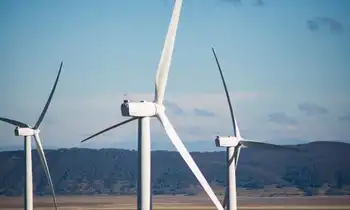
Three-quarters of the British public are aware of at least one renewable energy source: hydroelectric, wind, wave and solar power, but only one in five could name one without prompting, according to research published recently.

A survey, backed by the Department of Trade and Industry, the Scottish executive and the Welsh assembly found that 17% of a sample of 1,279 Britons thought renewable energy involved recycling, and another 17% thought it was "energy you can use again".

About 12% defined it as something "always there" or "sustainable". Only 19% could spontaneously name at least one type of renewable energy.

Only around one person in 20 spontaneously used the term "renewable energy" at all. The study also found that 60% could name onshore wind turbines as a source of such power, 35% knew about hydroelectricity, 34% mentioned offshore wind farms and 29% solar panels. People over 65 or people between 16 and 24 were less likely than average to name a form of renewable energy unprompted.

Related News

Ontario Breaks Ground on First Small Modular Nuclear Reactor

Ontario SMR BWRX-300 leads Canada in next-gen nuclear energy at Darlington, with GE Vernova and Hitachi, delivering clean, reliable power via modular design, passive safety, scalability, and lower costs for grid integration.


Key Points

Ontario SMR BWRX-300 is a 300 MW modular boiling water reactor at Darlington with passive safety and clean power.

✅ 300 MW BWR supplies power for about 300,000 homes

✅ Passive safety enables safe shutdown without external power

✅ Modular design reduces costs and speeds grid integration


Ontario has initiated the construction of Canada's first small modular nuclear reactor (SMR), supported by OPG's SMR commitment to deployment, marking a significant milestone in the province's energy strategy. This development positions Ontario at the forefront of next-generation nuclear technology within the G7 nations.

The project, known as the Darlington New Nuclear Project, is being led by Ontario Power Generation (OPG) in collaboration with GE Vernova and Hitachi Nuclear Energy, and through its OPG-TVA partnership on new nuclear technology development. The chosen design is the BWRX-300, a 300-megawatt boiling water reactor that is approximately one-tenth the size and complexity of traditional nuclear reactors. The first unit is expected to be operational by 2029, with plans for additional units to follow.

Each BWRX-300 reactor is projected to supply electricity to about 300,000 homes, contributing to Ontario's efforts, which include the decision to refurbish Pickering B for additional baseload capacity, to meet the anticipated 75% increase in electricity demand by 2050. The compact design of the SMR allows for easier integration into existing infrastructure, reducing the need for extensive new transmission lines.

The economic impact of the project is substantial. The construction of four such reactors is expected to create up to 18,000 jobs and contribute approximately $38.5 billion CAD to the Canadian economy, reflecting the economic benefits of nuclear projects over 65 years. The modular nature of SMRs also allows for scalability, with each additional unit potentially reducing costs through economies of scale.

Safety is a paramount consideration in the design of the BWRX-300. The reactor employs passive safety features, meaning it can safely shut down without the need for external power or operator intervention. This design enhances the reactor's resilience to potential emergencies, aligning with stringent regulatory standards.

Ontario's commitment to nuclear energy is further demonstrated by its plans for four SMRs at the Darlington site. This initiative reflects a broader strategy to diversify the province's energy mix, incorporating clean and reliable power sources to complement renewable energy efforts.

While the development of SMRs in Ontario is a significant step forward, it also aligns with the Canadian nuclear initiative positioning Canada as a leader in the global nuclear energy landscape. The successful implementation of the BWRX-300 could serve as a model for other nations exploring advanced nuclear technologies.

Ontario's groundbreaking work on small modular nuclear reactors represents a forward-thinking approach to energy generation. By embracing innovative technologies, the province is not only addressing future energy demands but also, through the Pickering NGS life extension, contributing to the global transition towards sustainable and secure energy solutions.


Related News

View more

Siemens Energy to unlock a new era of offshore green hydrogen production

Offshore Wind-to-Hydrogen Integration enables green hydrogen by embedding an electrolyzer in offshore turbines. Siemens Gamesa and Siemens Energy align under H2Mare to decarbonize industry, advance the Paris Agreement, and unlock scalable, off-grid renewable production.


Key Points

A method integrating electrolyzers into offshore wind turbines to generate green hydrogen and reduce carbon emissions.

✅ Integrated electrolyzer at turbine base for off-grid operation

✅ Enables scalable, cost-efficient green hydrogen production

✅ Supports decarbonization targets under Paris Agreement


To reach the Paris Agreement goals, the world will need vast amounts of green hydrogen and, with offshore wind growth accelerating, wind will provide a large portion of the power needed for its production.

Siemens Gamesa and Siemens Energy announced today that they are joining forces combining their ongoing wind-to-hydrogen developments to address one of the major challenges of our decade - decarbonizing the economy to solve the climate crisis.

The companies are contributing with their developments to an innovative solution that fully integrates an electrolyzer into an offshore wind turbine as a single synchronized system to directly produce green hydrogen. The companies intend to provide a full-scale offshore demonstration of the solution by 2025/2026. The German Federal Ministry of Education and Research, reflecting Germany's clean energy progress, announced today that the developments can be implemented as part of the ideas competition 'Hydrogen Republic of Germany'.

'Our more than 30 years of experience and leadership in the offshore wind industry, coupled with Siemens Energy's expertise in electrolyzers, brings together brilliant minds and cutting-edge technologies to address the climate crisis. Our wind turbines play a huge role in the decarbonization of the global energy system, and the potential of wind to hydrogen means that we can do this for hard-to-abate industries too. It makes me very proud that our people are a part of shaping a greener future,' said Andreas Nauen, Siemens Gamesa CEO.

Christian Bruch, CEO of Siemens Energy, explains: 'Together with Siemens Gamesa, we are in a unique position to develop this game changing solution. We are the company that can leverage its highly flexible electrolyzer technology and create and redefine the future of sustainable offshore energy production. With these developments, the potential of regions with abundant offshore wind, such as the UK offshore wind sector, will become accessible for the hydrogen economy. It is a prime example of enabling us to store and transport wind energy, thus reducing the carbon footprint of economy.'

Over a time frame of five years, Siemens Gamesa plans to invest EUR 80 million and Siemens Energy is targeting to invest EUR 40 million in the developments. Siemens Gamesa will adapt its development of the world's most powerful turbine, the SG 14-222 DD offshore wind turbine to integrate an electrolysis system seamlessly into the turbine's operations. By leveraging Siemens Gamesa's intricate knowledge and decades of experience with offshore wind, electric losses are reduced to a minimum, while a modular approach ensures a reliable and efficient operational set-up for a scalable offshore wind-to-hydrogen solution. Siemens Energy will develop a new electrolysis product to not only meet the needs of the harsh maritime offshore environment and be in perfect sync with the wind turbine, but also to create a new competitive benchmark for green hydrogen.

The ultimate fully integrated offshore wind-to-hydrogen solution will produce green hydrogen using an electrolyzer array located at the base of the offshore wind turbine tower, blazing a trail towards offshore hydrogen production. The solution will lower the cost of hydrogen by being able to run off grid, much like solar-powered hydrogen in Dubai showcases for desert environments, opening up more and better wind sites. The companies' developments will serve as a test bed for making large-scale, cost-efficient hydrogen production a reality and will prove the feasibility of reliable, effective implementation of wind turbines in systems for producing hydrogen from renewable energy.

The developments are part of the H2Mare initiative which is a lighthouse project likely to be supported by the German Federal Ministry of Education and Research ideas competition 'Hydrogen Republic of Germany'. The H2mare initiative under the consortium lead of Siemens Energy is a modular project consisting of multiple sub-projects to which more than 30 partners from industry, institutes and academia are contributing. Siemens Energy and Siemens Gamesa will contribute to the H2Mare initiative with their own developments in separate modular building blocks.

About hydrogen and its role in the green energy transition

Currently 80 million tons of hydrogen are produced each year and production is expected to increase by about 20 million tons by 2030. Just 1% of that hydrogen is currently generated from green energy sources. The bulk is obtained from natural gas and coal, emitting 830 million tons of CO2 per year, more than the entire nation of Germany or the global shipping industry. Replacing this current polluting consumption would require 820 GW of wind generating capacity, 26% more than the current global installed wind capacity. Looking further ahead, many studies suggest that by 2050 production will have grown to about 500 million tons, with a significant shift to green hydrogen already signaled by projects like Brazil's green hydrogen plant now underway. The expected growth will require between 1,000 GW and 4,000 GW of renewable capacity by 2050 to meet demand, and in the U.S. initiatives like DOE hydrogen hubs aim to catalyze this build-out, which highlights the vast potential for growth in wind power.


Related News

View more

New Orleans Levees Withstood Hurricane Ida as Electricity Failed

Hurricane Ida New Orleans Infrastructure faced a split outcome: levees and pumps protected against storm surge, while the power grid collapsed as transmission lines failed, prompting large-scale restoration efforts across Louisiana and Mississippi.


Key Points

It summarizes Ida's impact: levees and pumps held, but the power grid failed, causing outages and slow restoration.

✅ Levees and pumps mitigated flooding and storm surge impacts.

✅ All transmission lines failed, crippling the power grid.

✅ Crews and drones assess damage; restoration may take weeks.


Infrastructure in the city of New Orleans turned in a mixed performance against the fury of Hurricane Ida, with the levees and pumps warding off catastrophic flooding even as the electrical grid, part of the broader Louisiana power grid, failed spectacularly.

Ida’s high winds, measuring 150 miles (240 kilometers) an hour at landfall, took out all eight transmissions lines that deliver power into New Orleans, ripped power poles in half and crumpled at least one steel transmission tower into a twisted metal heap, knocking out electricity to all of the city. A total of more than 1.2 million homes and businesses in Louisiana and Mississippi lost power. While about 90,000 customers were reconnected by Monday afternoon, many could face days without electricity, and frustration can mount as seen during the Houston outage after major storms.

In contrast, the New Orleans area’s elaborate flood defenses seem to have held up, a vindication of the Army Corps of Engineers’ $14.5 billion project to rebuild levees, flood gates and pumps in the wake of the devastation wrought by Hurricane Katrina in 2005. While there were reports of scattered deaths tied to Ida, the city escaped the kind of flooding that destroyed entire neighborhoods in Katrina’s wake, left parts of the city uninhabitable for months and claimed 1,800 lives. 

“The situation in New Orleans, as bad as it is today with the power, could be so much worse,” Louisiana Governor John Bel Edwards said Monday on the Today Show, praising the levee system’s performance. “All you have to do is go back 16 years to get a glimpse of what that would have been like.”

While the levees’ resiliency is no doubt due to the rebuilding effort that followed Katrina, the starkly different outcomes also stems from the storms’ different characteristics. Katrina slammed the coast with a 30-foot storm surge of ocean water, while preliminary estimates from Ida put its surge far lower. 


Ida’s winds, however, were stronger than Katrina’s, and that’s what ultimately took out so many power lines, a dynamic that also saw Texas utilities struggle during Harvey. Deanna Rodriguez, the chief executive officer of power provider Entergy New Orleans, declined to comment on when service would be restored, saying the company was using helicopters and drones to help assess the damage.

Michael Webber, an energy and engineering professor at the University of Texas at Austin, estimated power restoration will take days and possibly weeks, a pattern seen in Florida restoration timelines after major hurricanes, based on the initial damage reports from the storm. More than 25,000 workers from at least 32 states and Washington are mobilized to assist with power restoration efforts, similar to FPL's massive response after Irma, according to the Edison Electric Institute.

“The question is, how long will it take to rebuild these lines,” Webber said. The utilities will first need to complete their damage assessments before they can get a sense of repair timelines, a step that Gulf Power crews have highlighted in past recoveries, he said. “You can imagine that will take days at least, possibly weeks.”

The loss of electricity will have other affects as well, and even though grid resilience during the pandemic was strong, local systems face immediate constraints. Sewer substations, for example, need electricity to keep wastewater moving, said Ghassan Korban, executive director of the New Orleans Sewerage & Water Board. The storm knocked out power to about 80 of the city’s 84 pumping stations, he said at a Monday press conference. “Without electricity, wastewater backs up and can cause overflows,” he said, adding that residents should conserve water to lessen stress on the system.


Related News

View more

Here are 3 ways to find out where your electricity comes from

US energy mix shows how the electric grid blends renewables, fossil fuels, nuclear, and hydro, varying by ISO/RTO markets, utilities, and state policies, affecting carbon emissions, pricing, reliability, and access.


Key Points

The US energy mix is the grid's source breakdown by region: fossil fuels, renewables, nuclear, and hydro.

✅ Check ISO or RTO dashboards for real-time generation by fuel source.

✅ Utilities may offer green power plans or RECs at modest premiums.

✅ Energy mix shifts with policy, pricing, and grid reliability needs.


There are few resources more important than energy. Sure, you may die if you don't eat for days. But your phone will die if you go too long without charging it. Energy feeds tech, the internet, city infrastructure, refrigerators, lights, and has evolved throughout U.S. history in profound ways. You get the idea. Yet unlike our other common needs, such as food, energy sources aren't exactly front of mind for most people. 

"I think a lot of people don't put a lot of bandwidth into thinking about this part of their lives," said Richard McMahon, the SVP of energy supply and finance at Edison Electric Institute, a trade group that represents investor-owned electric companies in the US. 

It makes sense. For most Americans, electricity is always there, and in many locations, there's not much of a choice involved, even as electricity demand is flat across the U.S. today. You sign up with a utility when you move into a new residence and pay your bills when they're due. 

But there's an important reality that indifference eschews: In 2018, a third of the energy-related carbon-dioxide emissions in the US came from the electric power sector, according to the US Energy Information Administration (EIA). 

A good chunk of that is from the residential sector, which consistently uses more energy than commercial customers, per EIA data.

Just as many people exercise choice when they eat, you typically also have a choice when it comes to your energy supply. That's not to say your current offering isn't what you want, or that switching will be easy or affordable, but "if you're a customer and want power with a certain attribute," McMahon said, "you can pretty much get it wherever you are." 

But first, you need to know the energy mix you have right now. As it turns out, it's not so straightforward. At all.

This brief guide may help. 

For some utility providers, you can find out if it publishes the energy mix online. Dominion Energy, which serves Idaho, North Carolina, Ohio, South Carolina, Utah, Virginia, West Virginia, and Wyoming, provides this information in a colored graphic. 

"Once you figure out who your utility is you can figure out what mix of resources they use," said Heidi Ratz, an electricity markets researcher at the World Resources Institute.

But not all utilities publish this information.

It has to do with their role in the grid and reflects utility industry trends in structure and markets. Some utility companies are vertically integrated; they generate power through nuclear plants or wind farms and distribute those electrons directly to their customers. Other utilities just distribute the power that different companies produce. 

Consider Consolidated Edison, or Con Ed, which distributes energy to parts of New York City. While reporting this story, Business Insider could not find information about the utility's energy mix online. When reached for comment, a spokesperson said, "we're indifferent to where it comes from."

That's because, in New York, distribution utilities like Con Ed often buy energy through a wholesale marketplace.

Take a look at this map. If you live in one of the colored regions, your electricity is sold on a wholesale market regulated by an organization called a regional transmission organization (RTO) or independent system operator (ISO). Distribution utilities like Con Ed often buy their energy through these markets, based on availability and cost, while raising questions about future utility revenue models as prices shift. 

Still, it's pretty easy to figure out where your energy comes from. Just look up the ISO or RTO website (such as NYISO or CAISO). Usually, these organizations will provide energy supply information in near-real time. 

That's exactly what Con Edison (which buys energy on the NYISO marketplace) suggested. As of Friday morning, roughly 40% of the energy on the market place was natural gas or other fossil fuels, 34% was nuclear, and about 22% was hydro. 

If you live in another region governed by an ISO or RTO, such as in most of California, you can do the same thing. Like NYISO, CAISO has a dashboard that shows (again, as of Friday morning) about 36% of the energy on the market comes from natural gas and more than 20% comes from renewables. 

In the map linked above, you'll notice that some of the ISOs and RTOs like MISO encompass enormous regions. That means that even if you figure out where the energy in your market comes from, it's not going to be geographically specific. But there are a couple of ways to drill down even further. 

The Environmental Protection Agency has a straightforward tool called Power Profiler. You can enter your zip code to see the fuel mix in your area. But it's not perfect. The data are from 2016 and, in some regions of the country like the upper Midwest, they aren't much more localized, and some import dirty electricity due to regional trading. 

The World Resources Institute also has a tool that allows you to see the electricity mix by state, based on 2017 data from EIA. These numbers represent power generation, not the electricity actually flowing into your sockets, but they offer a rough idea of what energy resources are operating in your state. 

One option is to check with your utility to see if it has a "green power" offering. Over 600 utilities across the country have one, according to the Climate Reality Project, though they often come at a slightly higher cost. It's typically on the scale of just a few more cents per kilowatt-hour. 

There are also independent, consumer-facing companies like Arcadia and Green Mountain Energy that allow you to source renewable energy, by virtually connecting you to community solar projects or purchasing Renewable Energy Certificates, or RECs, on your behalf, as America goes electric and more options emerge. 

"RECs measure an investment in a clean energy resource," Ratz said, in an email. "The goal of putting that resource on the grid is to push out the need for dirtier resources."

The good news: Even if you do nothing, your energy mix will get cleaner. Coal production has fallen to lows not seen since the 1980s, amid disruptions in coal and nuclear sectors that affect reliability and costs, while renewable electricity generation has doubled since 2008. So whether you like it or not, you'll be roped into the clean energy boom one way or another. 


Related News

View more

Military Is Ramping Up Preparation For Major U.S. Power Grid Hack

DARPA RADICS Power Grid Security targets DoD resilience to cyber attacks, delivering early warning, detection, isolation, and characterization tools, plus a secure emergency network to protect critical infrastructure and speed grid restoration and communications.


Key Points

A DoD/DARPA initiative to detect, contain, and rapidly recover the U.S. grid from sophisticated cyber attacks.

✅ Early warning separates attacks from routine outages

✅ Pinpoints intrusion points and malware used

✅ Builds secure emergency network for rapid restoration


The U.S. Department of Defense is growing increasingly concerned about hackers taking down our power grid and crippling the nation, reflecting a renewed focus on grid protection across agencies, which is why the Pentagon has created a $77-million security plan that it hopes will be up and running by 2020.

The U.S. power grid is threatened every few days. While these physical and cyber attacks have never led to wide-scale outages, attacks are getting more sophisticated. According to a 494-page report released by the Department of Energy in January and a new grid report card, the nation’s grid “faces imminent danger from cyber attacks.” Such a major, sweeping attack could threaten “U.S. lifeline networks, critical defense infrastructure, and much of the economy; it could also endanger the health and safety of millions of citizens.” If it were to happen today, America could be powered-down and vulnerable for weeks.

#google#

The DoD is working on an automated system to speed up recovery time to a week or less — what it calls the Rapid Attack Detection, Isolation, and Characterization (RADICS) program. DARPA, the Pentagon’s research arm, originally solicited proposals in late 2015, asking for technology that did three things. Primarily, it had to detect early warning signs and distinguish between attacks and normal outages, especially after intrusions at U.S. electric utilities underscored the risk, but it also had to pinpoint the access point of the attack and determine what malicious software was used. Finally, it must include an emergency system that can rapidly connect various power-supply centers, without any human coordination. This would allow emergency and military responders to have an ad hoc communication system in place moments after an attack.

“If a well-coordinated cyberattack on the nation’s power grid were to occur today, the time it would take to restore power would pose daunting national security challenges,” said DARPA program manager John Everett, in a statement, at the time. “Beyond the severe domestic impacts, including economic and human costs, prolonged disruption of the grid would hamper military mobilization and logistics, impairing the government’s ability to project force or pursue solutions to international crises.”

DARPA plans to spend $77 million on RADICS, while DOE funding to improve the grid complements these initiatives. Last November, SRI International announced it had received $7.3 million from the program. In December, Raython was granted $9 million. The latest addition is BAE Systems, which received $8.6 million last month to develop technology that detects and contains power-grid threats, and creates a secure emergency provisional system that restores some power and communication in the wake of an attack — what is being called a secure emergency network.

According to the military news site Defense Systems, BAE’s SEN would rely on radio, satellite, or wireless internet — particularly as ransomware attacks continue to rise — whatever is available that allows the grid to continue working. The SEN would serve as a wireless connection between separate power grid stations.

While the ultimate goal of the RADICS program will be the restoration of civilian power and communications, the SEN will prioritize communication networks that would be used for defense or combat, so the U.S. government can still wage war while the rest of us are in the dark.


Related News

View more

Iran eyes transmitting electricity to Europe as region’s power hub

Iran Electricity Grid Synchronization enables regional interconnection, cross-border transmission, and Caspian-Europe energy corridors, linking Iraq, Azerbaijan, Russia, and Qatar to West Asia and European markets with reliable, flexible power exchange.


Key Points

Iran's initiative to link West Asian and European power grids for trade, transit, reliability, and regional influence.

✅ Synchronizes grids with Iraq, Azerbaijan, Russia, and potential Qatar link

✅ Enables east-to-Europe electricity transit via Caspian energy corridors

✅ Backed by gas-fueled and combined-cycle generation capacity


Following a plan for becoming West Asia’s electricity hub, Iran has been taking serious steps for joining its electricity network with neighbors in the past few years.

The Iranian Energy Ministry has been negotiating with the neighboring countries including Iraq for the connection of their power networks with Iran, discussing Iran-Iraq energy cooperation as well as ties with Russia, Afghanistan, Azerbaijan, and Qatar to make them enable to import or transmit their electricity to new destination markets through Iran.

The synchronization of power grids with the neighboring countries, not only enhances Iran’s electricity exchanges with them, but it will also increase the political stance of the country in the region.

So far, Iran’s electricity network has been synchronized with Iraq, where Iran is supplying 40% of Iraq's power today, and back in September, the Energy Minister Reza Ardakanian announced that the electricity networks of Russia and Azerbaijan are the next in line for becoming linked with the Iranian grid in the coming months.

“Within the next few months, the study project of synchronization of the electricity networks of Iran, Azerbaijan, and Russia will be completed and then the executive operations will begin,” the minister said.

Meanwhile, Ardakanian and Qatari Minister of State for Energy Affairs Saad Sherida Al-Kaabi held an online meeting in late September to discuss joining the two countries' electricity networks via sea.

During the online meeting, Al-Kaabi said: "Electricity transfer between the two countries is possible and this proposal should be worked on.”

Now, taking a new step toward becoming the region’s power hub, Iran has suggested becoming a bridge between East and Europe for transmitting electricity.

In a virtual conference dubbed 1st Caspian Europe Forum hosted by Berlin on Thursday, the Iranian energy minister has expressed the country’s readiness for joining its electricity network with Europe.

"We are ready to connect Iran's electricity network, as the largest power generation power in West Asia, with the European countries and to provide the ground for the exchange of electricity with Europe," Ardakanian said addressing the online event.

Iran's energy infrastructure in the oil, gas, and electricity sectors can be used as good platforms for the transfer of energy from east to Europe, he noted.

In the event, which was aimed to study issues related to the development of economic cooperation, especially energy, between the countries of the Caspian Sea region, the official added that Iran, with its huge energy resources and having skilled manpower and advanced facilities in the field of energy, can pave the ground for the prosperity of international transport and energy corridors.

"In order to help promote communication between our landlocked neighbors with international markets, as Uzbekistan aims to export power to Afghanistan across the region, we have created a huge transit infrastructure in our country and have demonstrated in practice our commitment to regional development and peace and stability," Ardakanian said.

He pointed out that having a major percentage of proven oil and gas resources in the world, regional states need to strengthen relations in a bid to regulate production and export policies of these huge resources and potentially play a role in determining the price and supply of these resources worldwide.

“EU countries can join our regional cooperation in the framework of bilateral or multilateral mechanisms such as ECO,” he said.

Given the growing regional and global energy needs and the insufficient investment in the field, with parts of Central Asia facing severe electricity shortages today, as well as Europe's increasing needs, this area can become a sustainable area of cooperation, he noted.

Ardakanian also said that by investing in energy production in Iran, Europe can meet part of its future energy needs on a sustainable basis.

In Iraq, plans for nuclear power plants are being pursued to tackle chronic electricity shortages, reflecting parallel efforts to diversify generation.

Iran currently has electricity exchange with Armenia, Azerbaijan, Iraq, where grid rehabilitation deals have been finalized, Turkmenistan, and Afghanistan.

The country’s total electricity exports vary depending on the hot and cold seasons of the year, since during the hot season which is the peak consumption period, the country’s electricity exports decreases, however electrical communication with neighboring countries continues.

Enjoying abundant gas resources, which is the main fuel for the majority of the country’s power plants, Iran has the capacity to produce about 85,500 megawatts [85.5 gigawatts (GW)] of electricity.

Currently, combined cycle power plants account for the biggest share in the country’s total power generation capacity as Iran is turning thermal plants to combined cycle to save energy, followed by gas power plants.


Related News

View more

Sign Up for Electricity Forum’s Newsletter

Stay informed with our FREE Newsletter — get the latest news, breakthrough technologies, and expert insights, delivered straight to your inbox.

Electricity Today T&D Magazine Subscribe for FREE

Stay informed with the latest T&D policies and technologies.
  • Timely insights from industry experts
  • Practical solutions T&D engineers
  • Free access to every issue

Download the 2025 Electrical Training Catalog

Explore 50+ live, expert-led electrical training courses –

  • Interactive
  • Flexible
  • CEU-cerified