
NFPA 70E Training - 2027 Edition - Arc Flash and Electrical Safety Course
Our customized live online or in‑person group training can be delivered to your staff at your location.

- Live Online
- 6 hours Instructor-led
- Group Training Available
Regular Price:
$199
Coupon Price:
$149
BRUSSELS
—
EU Permitting Reform gains urgency as an industry coalition urges faster, simpler and more predictable approvals to unlock grid upgrades, renewables, CCS and hydrogen investment, improving competitiveness with digitalized, single-journey processes and legal certainty.
The Core Facts
-
Coalition presses for faster, simpler, predictable approvals
-
Call for a single permitting journey and legal certainty
-
Focus on grids, renewables, CCS, hydrogen and raw materials
-
Timing aligned with EU work program and policy files
An industry coalition used the European Conference on Permitting in Brussels on September 9, 2026 to press for faster, simpler and more predictable approvals across the energy value chain. The message was direct: Europe cannot compete or decarbonize at the required pace unless it can permit and build strategic projects more efficiently.
The cross-sector group, convened as the Informal Coalition on Permitting, brought together representatives from EU institutions and businesses spanning grids, renewables, industrial infrastructure and raw materials. Their shared conclusion emphasized that modern permitting is now a core competitiveness issue, not only a compliance step, and that delays raise costs and investment risk for projects that Europe says it wants to deliver.
The coalition argues that reform should be woven into the broader EU simplification agenda. Rather than adding new administrative layers, it calls for a coherent, near-single permitting journey with aligned timelines, coordinated authorities, less duplication, digitalized steps and stronger legal certainty, while keeping robust environmental standards intact.
The policy window is timely, with the State of the Union and preparations for the 2027 Work Programme shaping the next phase of the EU agenda. Legislative activity already on the table includes the Industrial Accelerator Act, the Environmental Omnibus, the Grids Package, the Critical Raw Materials Act and a CO2 markets and infrastructure package. Ongoing debate around the electricity network framework, including perspectives reflected in eu grids package states oppose central planning, highlights how governance choices can affect delivery models for network buildout.
For electricity networks specifically, the coalition links permitting performance directly to Europe's ability to connect new generation and reinforce cross-border capacity. Experience with cross-jurisdiction projects underscores the value of aligned rules and streamlined oversight, themes also discussed in eu grids package ireland permitting cross border, which speaks to practical challenges that can arise at interfaces.
The reform case extends beyond wires. The coalition lists renewables, CCS and CO2 infrastructure, hydrogen, natural gas and biogas networks, and strategic raw materials as areas where predictable, timely approvals can unlock capital and accelerate deployment. In electricity market policy, related design discussions captured in eu revamps electricity intersect with infrastructure readiness, since market reforms and physical buildout must advance in tandem to achieve system targets.
Execution details matter. The proposed "single journey" approach implies clearer sequencing, standardized documentation, interoperable digital portals and early coordination among competent authorities, helping developers and network planners reduce rework and uncertainty. Practical considerations at key nodes such as ports also figure in the conversation, with topics like connection capacity and on-site electrification appearing in eu ports grid connections electrification brief, underscoring how permitting touches entire value chains.
Ultimately, the coalition frames permitability as part of Europe's competitiveness policy. Ambitious targets alone do not deliver projects; timely permits, investable business cases and skilled people do. By reducing overlap, clarifying accountabilities and digitizing procedures, policymakers can help convert ambition into bankable projects. The investment signal from predictable approvals can also shape long-run expectations for consumers and producers, a lens echoed in europe future electricity prices, where infrastructure readiness is one factor among many considered in outlooks.
Related News
Related News
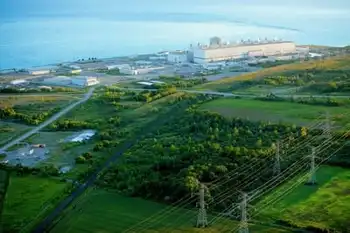
OPG, TVA Partner on New Nuclear Technology Development
OPG-TVA SMR Partnership advances advanced nuclear technology and small modular reactors for 24/7 carbon-free baseload…
View more
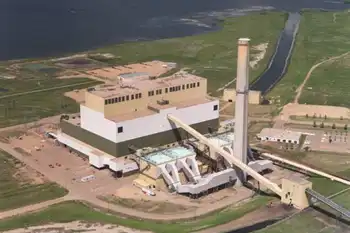
Stop the Shock campaign seeks to bring back Canadian coal power
Alberta Electricity Price Hikes spotlight grid reliability, renewable transition, coal phase-out, and energy poverty, as…
View more
US Automakers Will Build 30,000 Electric Vehicle Chargers
Automaker EV Fast-Charging Network will deploy 30,000 DC fast chargers across US and Canada, supporting…
View more

California electricity pricing changes pose an existential threat to residential rooftop solar
California Rooftop Solar Rate Reforms propose shifting net metering to fixed access fees, peak-demand charges,…
View more
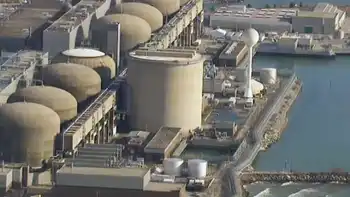
Here's what we know about the mistaken Pickering nuclear alert one week later
Pickering Nuclear Alert Error prompts Ontario investigation into the Alert Ready emergency alert system, Pelmorex…
View more
COVID-19: Daily electricity demand dips 15% globally, says report
COVID-19 Impact on Electricity Demand, per IEA data, shows 15% global load drop from lockdowns,…
View more
Sign Up for Electricity Forum’s Newsletter
Stay informed with our FREE Newsletter — get the latest news, breakthrough technologies, and expert insights, delivered straight to your inbox.
Electricity Today T&D Magazine Subscribe for FREE

Stay informed with the latest T&D policies and technologies.
- Timely insights from industry experts
- Practical solutions T&D engineers
- Free access to every issue
