NFPA 70B Training - 2026 Edition - Electrical Maintenance Program Compliance
Our customized live online or in‑person group training can be delivered to your staff at your location.

- Live Online
- 12 hours Instructor-led
- Group Training Available
Regular Price:
$699
Coupon Price:
$599
Iran is close to a deal that would include a temporary suspension of uranium enrichment and clear the way for nuclear talks but Tehran wants to keep the agreement secret, The Washington Times reported recently.
The deal could be completed when EU foreign policy chief Javier Solana and Iranian negotiator Ali Larijani are set to meet in Europe, the report said, citing Bush administration officials who spoke on condition of anonymity.
The report said Iran had agreed to suspend uranium enrichment for 90 days so additional talks could be held with European states. However, an Iranian nuclear official was quoted by an Iranian news agency denying such suspension plans.
In Brussels, a spokeswoman for Solana said he had no plans to meet Larijani and was staying in Brussels all day.
The spokeswoman, Cristina Gallach, declined comment on the newspaper report but said senior EU official Robert Cooper and Iranian official Javad Vaeedi had held talks in Paris.
"We are working on the meeting with Larijani, but I will not say when nor where until it really happens," she said. "We continue to engage with the Iranians in order to create the conditions for these negotiations."
Foreign ministers of the major powers agreed last week in New York to give Solana a few more weeks to try to clinch a deal on launching formal negotiations, setting an unannounced deadline of early October, diplomats said.
The deputy head of Iran's Atomic Energy Organization, Mohammad Saeedi, denied any agreement to suspend enrichment for 90 days when he was asked about the Washington Times report.
"These are not the issues to be discussed in the future negotiations, and as Mr. Larijani has said before, the P5+1 proposal will be the basis of the future negotiations with the representatives of the P5+1," Saeedi was quoted as saying by Iran's ISNA news agency. He did not elaborate.
The United States, France, Russia, China and Britain - the five permanent members of the U.N. Security Council - plus Germany offered Iran a package of incentives in June aimed at persuading Tehran to suspend enrichment, a technology that can be used to make fuel for power plants or material for bombs.
Suspending enrichment was a precondition for talks to start on the incentives offered.
Asked about Iran's secrecy demand, State Department spokesman Tom Casey told the newspaper: "The terms laid out by the Security Council are clear. Iran needs to suspend its uranium enrichment activities and it needs to do so in a verifiable way.
"If it does, we can start negotiations. If it doesn't, we move to sanctions," Casey said.
Iran says its nuclear program is for electricity generation and has, so far, ignored an August 31 U.N. Security Council deadline to suspend enrichment.
Related News

More people are climbing dangerous hydro dams and towers in search of 'social media glory,' utility says
BC Hydro Trespassing Surge highlights risky social media stunts at dams and power stations, with…
View more

Net-zero roadmap can cut electricity costs by a third in Germany - Wartsila
Germany net-zero roadmap charts coal phase-out by 2030, rapid renewables buildout, energy storage, and hydrogen-ready…
View more
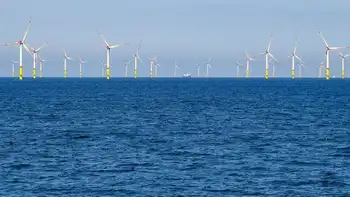
Wind Denmark - summer's autumn weather provides extraordinarily low electricity prices
Western Denmark Negative Electricity Prices stem from wind energy oversupply, grid congestion, and limited interconnector…
View more
Starting Texas Schools After Labor Day: Power Grid and Cost Benefits?
Texas After-Labor Day School Start could ease ERCOT's power grid strain by shifting peak demand,…
View more
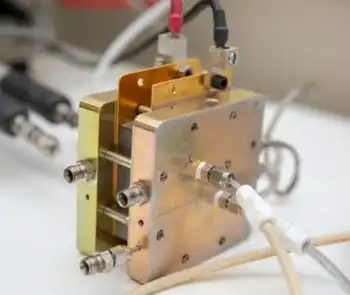
New fuel cell concept brings biological design to better electricity generation
Quinone-mediated fuel cell uses a bio-inspired organic shuttle to carry electrons and protons to a…
View more
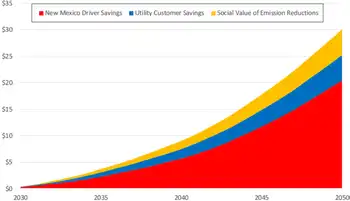
New Mexico Could Reap $30 Billion Driving on Electricity
New Mexico EV Benefits highlight cheaper fuel, lower maintenance, cleaner air, and smarter charging, cutting…
View more
Sign Up for Electricity Forum’s Newsletter
Stay informed with our FREE Newsletter — get the latest news, breakthrough technologies, and expert insights, delivered straight to your inbox.
Electricity Today T&D Magazine Subscribe for FREE
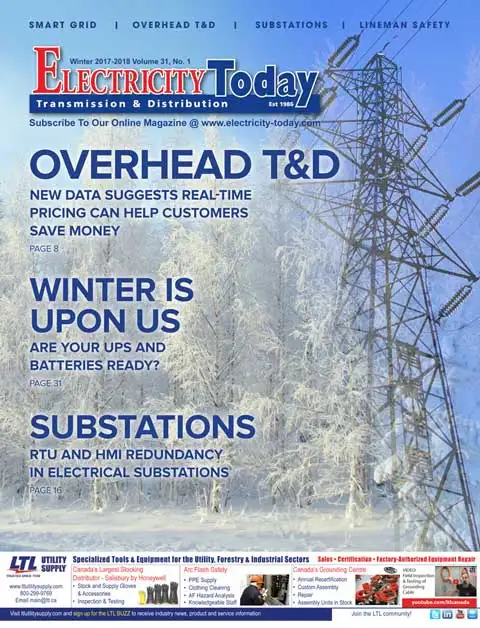
Stay informed with the latest T&D policies and technologies.
- Timely insights from industry experts
- Practical solutions T&D engineers
- Free access to every issue
