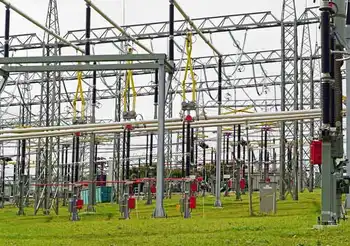
FTC warns FERC regional grid plan may up costs

By Reuters


Arc Flash Training CSA Z462 - Electrical Safety Essentials

Our customized live online or in‑person group training can be delivered to your staff at your location.

  • Live Online
  • 6 hours Instructor-led
  • Group Training Available
Regular Price:
$249
Coupon Price:
$199
Reserve Your Seat Today
Federal Trade Commission staff warned that a government proposal to give states more say in a federal electric grid overhaul could undermine its goal of lowering power costs for consumers.

FTC staff said it supported the Federal Energy Regulatory Commission's general aim to boost competition and lower prices while increasing power grid reliability.

But in comments filed at FERC on Friday, FTC staff raised concerns that regional variations allowed by FERC could boost costs for energy companies that buy and sell electricity in multiple regions. The FTC gave no detailed estimate of cost impacts.

FERC's grid-building plan envisions several U.S. regional power grids, which will create super-regional energy markets and hopefully boost available supplies.

Several such regional grids are in the works in the Midwest, Northeast and New England regions. The plan has hit stiff opposition in the Pacific Northwest and Southeast, where state officials see it as an imposition on their turf.

To soften such opposition, FERC in April issued a revised version of its rules that give states more input on timing and reliability standards.

The Federal Trade Commission's staff warned that allowing such regional variations "may impose costs or create risks that will reduce incentives to execute efficient interregional wholesale transactions."

Related News

New Hydro One CEO aims to repair relationship with Ontario government — and investors

Hydro One CEO Mark Poweska aims to rebuild ties with Ontario's provincial government, investors, and communities, stabilize the executive team, boost earnings and dividends, and reset strategy after the scrapped Avista deal and regulatory setbacks.


Key Points

He plans to mend government and investor relations, rebuild the C-suite, and refocus growth after the failed Avista bid.

✅ Rebuild ties with Ontario government and regulators

✅ Stabilize executive team and governance

✅ Refocus growth after Avista deal termination


The incoming chief executive officer of Hydro One Ltd. said Thursday that he aims to rebuild the relationship between the Ontario electrical utility and the provincial government, as seen in COVID-19 support initiatives, as well as ties between the company and its investors.

Mark Poweska, the former executive vice-president of operations at BC Hydro, was announced as Hydro One’s new president and CEO in March. His hiring followed a turbulent period for Toronto-based Hydro One, Ontario’s biggest distributor and transmitter of electricity, with large-scale storm restoration efforts underscoring its role.

Hydro One’s former CEO and board of directors departed last year under pressure from a new Ontario government, the utility’s biggest shareholder. Earlier this year, the company’s plan for a $6.7-billion takeover fell apart over concerns of political interference and the utility clashed with the new provincial government and Progressive Conservative Premier Doug Ford over executive compensation levels, amid rate policy debates such as no peak rate cuts for self-isolating customers.

Hydro One facing $885 million charge as regulator upholds tax decision forcing it to share savings with customers

Shares of Hydro One were up more than eight per cent year-to-date on Wednesday, closing at $21.74. However, the stock price was up only six per cent from Hydro One’s 2015 initial public offering price, something its incoming CEO seems set on changing.

“One of my first priorities will be to solidify the executive team and build relationships with the Government of Ontario, our customers, informed by customer flexibility research, and communities, indigenous leaders, investors, and our partners across the electricity sector,” Poweska said Thursday on a conference call outlining Hydro One’s first-quarter results. “At the same time, I will be working to earn the trust and confidence of the investment community.”

Hydro One reported a profit of $171 million for the three months ended March 31, while peers such as Hydro-Québec reported pandemic-related losses as the sector adapted. Net income for the first quarter was down from $222 million a year earlier, which was due to $140 million in costs related to the scrapping of Hydro One’s proposed acquisition of U.S. energy company Avista Corp.

Hydro One Ltd. appointed Mark Poweska as President and CEO.

In January, Hydro One said the proposed takeover of Spokane, Wash.-headquartered Avista, an approximately $6.7-billion deal announced in July 2017, was being called off. As a result, Hydro One said it would pay Avista a US$103 million break fee.

Revenues net of purchased power for the first quarter rose to $952 million, up by 15.4 per cent compared to last year, Hydro One said, helped by higher distribution revenues. Adjusted profit for the quarter, which removes the Avista-related costs, was $311 million, up from $210 million a year ago.

The company is hiking its quarterly dividend to 24.15 cents per share, up five per cent from the last increase in May 2018, while also launching a pandemic relief fund for customers.

Poweska is taking over for acting president and CEO Paul Dobson this month, and the new executive will be charged with revamping Hydro One’s C-suite.

The company’s chief operating officer, chief legal officer, and chief corporate development officer have all departed this year. The company’s chief human resource officer has retired as well, although Poweska did announce Thursday that he had appointed acting chief financial officer Chris Lopez as CFO.

“Hydro One’s significant bench strength and management depth will ensure stability and continuity during this period of transition, as the sector pursues Hydro-Québec energy transition as well,” the company said in its first-quarter earnings press release.

Ontario remains Hydro One’s biggest shareholder, owning approximately 47 per cent of the company.


Related News

View more

Ontario Energy minister downplays dispute between auditor, electricity regulator

Ontario IESO Accounting Dispute highlights tensions over public sector accounting standards, auditor general oversight, electricity market transparency, KPMG advice, rate-regulated accounting, and an alleged $1.3B deficit understatement affecting Hydro bills and provincial finances.


Key Points

A PSAS clash between Ontario's auditor general and the IESO, alleging a $1.3B deficit impact and transparency failures.

✅ Auditor alleges deficit understated by $1.3B

✅ Dispute over PSAS vs US-style accounting

✅ KPMG support, transparency and co-operation questioned


The bad blood between the Ontario government and auditor general bubbled to the surface once again Monday, with the Liberal energy minister downplaying a dispute between the auditor and the Crown corporation that manages the province's electricity market, even as the government pursued legislation to lower electricity rates in the province.

Glenn Thibeault said concerns raised by auditor general Bonnie Lysyk during testimony before a legislative committee last week aren't new and the practices being used by the Independent Electricity System Operator are commonly endorsed by major auditing firms.

"(Lysyk) doesn't like the rate-regulated accounting. We've always said we've relied on the other experts within the field as well, plus the provincial controller," Thibeault said.

#google#

"We believe that we are following public sector accounting standards."

Thibeault said that Ontario Power Generation, Hydro One and many other provinces and U.S. states use the same accounting practices.

"We go with what we're being told by those who are in the field, like KPMG, like E&Y," he said.

But a statement from Lysyk's office Monday disputed Thibeault's assessment.

"The minister said the practices being used by the IESO are common in other jurisdictions," the statement said.

"In fact, the situation with the IESO is different because none of the six other jurisdictions with entities similar to the IESOuse Canadian Public Sector Accounting Standards. Five of them are in the United States and use U.S. accounting standards."

Lysyk said last week that the IESO is using "bogus" accounting practices and her office launched a special audit of the agency late last year after the agency changed their accounting to be more in line with U.S. accounting, following reports of a phantom demand problem that cost customers millions.

Lysyk said the accounting changes made by the IESO impact the province's deficit, understating it by $1.3 billion as of the end of 2017, adding that IESO "stalled" her office when it asked for information and was not co-operative during the audit.

Lysyk's full audit of the IESO is expected to be released in the coming weeks and is among several accounting disputes her office has been engaged in with the Liberal government over the past few years.

Last fall, she accused the government of purposely obscuring the true financial impact of its 25% hydro rate cut by keeping billions in debt used to finance that plan off the province's books. Lysyk had said she would audit the IESO because of its role in the hydro plan's complex accounting scheme.

"Management of the IESO and the board would not co-operate with us, in the sense that they continually say they're co-operating, but they stalled on giving us information," she said last week.

Terry Young, a vice-president with the IESO, said the agency has fully co-operated with the auditor general. The IESO opened up its office to seven staff members from the auditor's office while they did their work.

"We recognize the work that she's doing and to that end we've tried to fully co-operate," he said. "We've given her all of the information that we can."

Young said the change in accounting standards is about ensuring greater transparency in transactions in the energy marketplace.

"It's consistent with many other independent electricity system operators are doing," he said.

Lysyk also criticized IESO's accounting firm, KPMG, for agreeing with the IESO on the accounting standards. She was critical of the firm billing taxpayers for nearly $600,000 work with the IESO in 2017, compared to their normal yearly audit fee of $86,500.

KPMG spokeswoman Lisa Papas said the accounting issues that IESO addressed during 2017 were complex, contributing to the higher fees.

The accounting practices the auditor is questioning are a "difference of professional judgement," she said.

"The standards for public sector organizations such as IESO are principles-based standards and, accordingly, require the exercise of considerable professional judgement," she said in a statement.

"In many cases, there is more than one acceptable approach that is compliant with the applicable standards."

Progressive Conservative energy critic Todd Smith said the government isn't being transparent with the auditor general or taxpayers, aligning with calls for cleaning up Ontario's hydro mess in the sector.

"Obviously, they have some kind of dispute but the auditor's office is saying that the numbers that the government is putting out there are bogus.

Those are her words," he said. "We've always said that we believe the auditor general's are the true numbers for the
province of Ontario."

NDP energy critic Peter Tabuns said the Liberal government has decided to "play with accounting rules" to make its books look better ahead of the spring election, despite warnings that electricity prices could soar if costs are pushed into the future.


Related News

View more

Two huge wind farms boost investment in America’s heartland

MidAmerican Energy Wind XI expands Iowa wind power with the Beaver Creek and Prairie farms, 169 turbines and 338 MW, delivering renewable energy, grid reliability, rural jobs, and long-term tax revenue through major investment.


Key Points

MidAmerican Energy Wind XI is a $3.6B Iowa wind buildout adding 2,000 MW to enhance reliability, jobs, and tax revenue.

✅ 169 turbines at Beaver Creek and Prairie deliver 338 MW.

✅ Wind supplies 36.6 percent of Iowa electricity generation.

✅ Projects forecast $62.4M in property taxes over 20 years.


Power company MidAmerican Energy recently announced the beginning of operations at two huge wind farms in the US state of Iowa.

The two projects, called Beaver Creek and Prairie, total 169 turbines and have a combined capacity of 338 megawatts (MW), enough to meet the annual electricity needs of 140,000 homes in the state.

“We’re committed to providing reliable service and outstanding value to our customers, and wind energy accomplishes both,” said Mike Fehr, vice president of resource development at MidAmerican. “Wind energy is good for our customers, and it’s an abundant, renewable resource that also energizes the economy.”

The wind farms form part of MidAmerican Energy’s major Wind XI project, which will see an extra 2,000MW of wind power built, and $3.6 billion invested amid notable wind farm acquisitions shaping the market by the end of 2019. The company estimates it is the largest economic development project in Iowa’s history.

Iowa is something of a hidden powerhouse in American wind energy. The technology provides an astonishing 36.6 percent of the state’s entire electricity generation and plays a growing role in the U.S. electricity mix according to the American Wind Energy Association (AWEA). It also has the second largest amount of installed capacity in the nation at 6917MW; Texas is first with over 21,000MW.

Along with capital investment, wind power brings significant job opportunities and tax revenues for the state. An estimated 9,000 jobs are supported by the industry, something a U.S. wind jobs forecast stated could grow to over 15,000 within a couple of years.

MidAmerican Energy is also keen to stress the economic benefits of its new giant projects, claiming that they will bring in $62.4 million of property tax revenue over their 20-year lifetime.

Tom Kiernan, AWEA’s CEO, revealed last year that, as the most-used source of renewable electricity in the U.S., wind energy is providing more than five states in the American Midwest with over 20 percent of electricity generation, “a testament to American leadership and innovation”.

“For these states, and across America, wind is welcome because it means jobs, investment, and a better tomorrow for rural communities”, he added.


Related News

View more

UK peak power prices rise to second highest level since 2018

UK Peak Power Prices surged as low wind speeds forced National Grid to rely on gas-fired plants and coal generation, amid soaring wholesale gas prices and weak wind generation during the energy crisis.


Key Points

UK Peak Power Prices are electricity costs at peak hours, driven by wind output, gas reliance, and market dynamics.

✅ Spikes when wind generation drops and demand rises.

✅ Driven by gas-fired plants, coal backup, and wholesale gas prices.

✅ Moderate as wind output recovers and interconnectors supply.


Low wind speeds pushed peak hour power prices to the second highest level for at least three years on Monday, a move consistent with UK electricity prices hitting a 10-year high earlier this year, as Britain’s grid was forced to increase its reliance on gas-fired power plants and draw on coal generation.

Calm weather this year has exacerbated the energy price crisis in the UK, as gas-fired power stations have had to pick up the slack from wind farms. Energy demand has surged as countries open up from pandemic restrictions, which together with lower supplies from Russia to western Europe, has sent wholesale gas prices soaring.

Power prices in the UK for the peak evening period between 5pm and 6pm on Monday surpassed £2,000 per megawatt hour, only the second time they have exceeded that level in recent years.

This was still below the levels reached at the height of the gas price crisis in mid-September, when they hit £2,500/MWh, according to the energy consultancy Cornwall Insight, whose records date back to 2018.

Low wind speeds were the main driver behind Monday’s price spike, although expectations of a pick-up in wind generation on Tuesday, after recent record wind generation days, should push them back down to similar levels seen in recent weeks, analysts said.

Despite the expansion of renewables, such as wind and solar, over the past decade, with instances of wind leading the power mix in recent months, gas remains the single biggest source of electricity generation in Britain, typically accounting for nearly 40 per cent of output.

At lunchtime on Monday, gas-fired power plants were producing nearly 55 per cent of electricity, while coal accounted for 3 per cent, reflecting more power from wind than coal in 2016 milestones. Britain’s wind farms were contributing 1.67 gigawatts or just over 4 per cent, according to data from the Drax Electrics Insights website. Over the past 12 months, wind farms have produced 21 per cent of the UK’s electricity on average.

National Grid, which manages the UK’s electricity grid, has been forced on a number of occasions in recent months to ask coal plants to fire up to help offset the loss of wind generation, after issuing a National Grid short supply warning to the market. The government announced in June that it planned to bring forward the closure of the remaining coal stations to the end of September 2024.

Ministers also committed this year to making Britain’s electricity grid “net zero carbon” by 2035, and milestones such as when wind was the main source underline the transition, although some analysts have pointed out that would not signal the end of gas generation.

Since the start of the energy crisis in August, 20 energy suppliers have gone bust as they have struggled to secure the electricity and gas needed to supply customers at record wholesale prices, with further failures expected in coming weeks.

Phil Hewitt, director of the consultancy EnAppSys, said Monday’s high prices would further exacerbate pressures on those energy suppliers that do not have adequate hedging strategies. “This winter is a good time to be a generator,” he added.

Energy companies including Orsted of Denmark and SSE of the UK have reported some of the lowest wind speeds for at least two decades this year, even though record output during Storm Malik highlighted the system's volatility.

According to weather modelling group Vortex, the strength of the wind blowing across northern Europe has fallen by as much as 15 per cent on average in places this year, which some scientists suggest could be due to climate change.


Related News

View more

NT Power Penalized $75,000 for Delayed Disconnection Notices

NT Power OEB Compliance Penalty highlights a $75,000 fine for improper disconnection notices, 14-day rule violations, process oversight failures, refunds, LEAP support, and corrective training to strengthen consumer protection and regulatory adherence in Ontario areas.


Key Points

A $75,000 OEB fine to NT Power for improper disconnection notices; refunds, LEAP support, and improved compliance.

✅ $75k administrative monetary penalty; $25k LEAP donation; refunds

✅ 870 notices misdated; 14-day rule training implemented

✅ 10 disconnects reconnected; $100 goodwill credits


The Ontario Energy Board recently ruled against Newmarket-Tay Power Distribution Ltd. (NT Power), fining them $75,000 for failing to issue timely disconnection notices to 870 customers between April and August 2022. These notices did not comply with the Ontario Energy Board's distribution system code, similar to standards reaffirmed in the OEB decision on Hydro One rates earlier this year, which mandates a minimum 14-day notice period before disconnection.

Out of the affected customers, ten had their electricity services disconnected, and six were additionally charged reconnection fees. However, NT Power has since reconnected all disconnected customers and refunded the reconnection fees, as confirmed by the Ontario Energy Board.

In response to these issues, NT Power has voluntarily accepted an assurance of compliance. This agreement stipulates that NT Power will pay a $75,000 administrative monetary penalty. Furthermore, they will make an additional payment of $25,000 to the Salvation Army's Northridge Community Church, which administers the Low-income Energy Assistance Program (LEAP) within NT Power's service area, aligning with broader efforts to reduce costs for industry highlighted by Canadian Manufacturers & Exporters recently, according to the association.

This is not the first time NT Power has faced compliance issues in this regard. The utility company admitted that this incident marks the second instance in three years where they failed to adhere to their disconnection-related obligations as outlined in the code, and sector governance debates, including the Manitoba Hydro board debate, underscore how oversight remains a national focus.

In a statement to NewmarketToday, NT Power acknowledged a similar issue three years ago when they were alerted to problems with their disconnection process. They promptly made adjustments to align their in-house procedures with the requirements of the Ontario Energy Board. Unfortunately, they neglected to implement a secondary check, leading to disconnect notices being dated a few days too early.

Alex Braletic, NT Power's Vice President of Engineering and Operation, clarified that no customers were actually disconnected prematurely, and debates over paying for electricity in India illustrate how enforcement challenges differ globally, but the issued letters contained inaccuracies. He added that NT Power has since instituted additional verification procedures to prevent such errors from occurring again.

The Ontario Energy Board emphasized that NT Power has assured them that corrective measures have been taken to ensure that their staff involved in the disconnection process receive proper training and management oversight, and recent market reactions such as Hydro One shares falling after leadership changes underscore the importance of strong governance to guarantee compliance with regulatory requirements.

Brian Hewson, Vice President of Consumer Protection and Industry Performance at the Ontario Energy Board, stated, referencing earlier Ontario rate reductions for businesses that complemented consumer protections, "As a result of the actions we have taken and NT Power’s assurance that it is aware of its obligations and has taken steps to improve its processes, consumers will be better protected."

Braletic encouraged NT Power's customers who are facing difficulties paying their electricity bills to reach out to their customer service department or visit their website. He emphasized that various programs and services are available to provide relief for bills, and amid ongoing Toronto Hydro impersonation scams customers should contact NT Power directly. NT Power is committed to collaborating with customers proactively and connecting them with assistance to avoid serving them with disconnection notices.

Furthermore, NT Power plans to send a letter to the ten affected customers and provide each of them with a $100 bill credit as a goodwill gesture.


Related News

View more

Saudis set to 'boost wind by over 6GW'

Saudi Arabia Wind Power Market set to lead the Middle East, driven by Vision 2030 renewables goals, REPDO tenders, and PIF backing, adding 6.2GW wind capacity by 2028 alongside solar PV diversification.


Key Points

It is the emerging national segment leading Middle East wind growth, targeting 6.2GW by 2028 under Vision 2030 policies.

✅ Adds 6.2GW, 46% of regional wind capacity by 2028

✅ REPDO tenders and PIF funding underpin pipeline

✅ Targets: 16GW wind, 40GW solar under Vision 2030


Saudi Arabia will become a regional heavyweight in the Middle East's wind power market adding over 6GW in the next 10 years, according to new research by Wood Mackenzie Power & Renewables.

The report – 'Middle East Wind Power Market Outlook, 2019-2028’ – said developers will build 6.2GW of wind capacity in the country or 46% of the region’s total wind capacity additions between 2019 and 2028.

Wood Mackenzie Power & Renewables senior analyst Sohaib Malik said: “The integration of renewables in Vision 2030’s objectives underlines strong political commitment within Saudi Arabia.

“The level of Saudi ambition for wind and solar PV varies significantly, despite the cost parity between both technologies during the first round of tenders in 2018.”

Saudi Arabia has set a 16GW target for wind by 2030 and 40GW for solar, plans to solicit 60 GW of clean energy over the next decade, Wood Mackenzie added.

“Moving forward, the Renewable Energy Project Development Office will award 850MW of wind capacity in 2019, which is expected to be commissioned in 2021-2022, and increase the local content requirement in future tendering rounds,” Malik said.

However, Saudi Arabia will fall short of its current 2030 renewables target, despite growth projections and regional leadership, the report said.

Some 70% of the renewables capacity target is to be supported by the Public Investment Fund (PIF), the Saudi sovereign wealth fund, while the remaining capacity is to be awarded through REPDO.

“A central concern is the PIF’s lack of track record in the renewables sector and its limited in-house sectoral expertise,” said Malik

“REPDO, on the other hand, completed two renewables request for proposals after pre-developing the sites,” he said.

PIF is estimated to have $230bn of assets – targeted to reach $2 trillion under Vision 2030 – driven by investments in a variety of sectors ranging from electric vehicles to public infrastructure, Wood Mackenzie said.

“There is little doubt about the fund’s financial muscle, however, its past investment strategy focused on established firms in traditional industries,” Malik added.

“Aspirations to develop a value chain for wind and PV technologies locally is a different ball game and requires the PIF to acquire new capabilities for effective oversight of these ventures,” he said.

The report noted that regional volatility is expected to remain, with strong positive growth, driven by Jordan and Iran in 2018 expected to reverse in 2019, and policy shifts, as in Canada’s scaled-back projections, can influence outcomes.

Post-2020 Wood Mackenzie Power & Renewables sees regional demand returning to steady growth as global renewables set more records elsewhere.

“In 2018, developers added 185MW and 63MW of wind capacity in Jordan and Iran, respectively, compared to 53MW of capacity across the entire region in 2017, following a record year for renewables in 2016,” said Malik.

“The completion of the 89MW Al Fujeij and the 86MW Al Rajef projects in 2018 indicates that Jordan has 375MW of the region’s operational 675MW wind capacity.

“Iran followed with 278MW of installed capacity at the end of 2018. A slowdown in 2019 is expected, as project development activity softens in Iran.

“Additionally, delays in awarding the 400MW Dumat Al Jandal project in Saudi Arabia will limit annual capacity additions to 184MW.”

He added that a maturing project pipeline in the region supports the 2020-2021 outlook, even as wind power grew despite Covid-19 globally.

“Saudi Arabian demand serves as the foundation for regional demand. Regional demand diversification is also occurring, with Lebanon set to add 200-400MW to its existing permitted capacity pipeline of 202MW in 2019,” he said

“These developments pave the way for the addition of 2GW of wind capacity between 2019 and 2021.”

Wood Mackenzie Power & Renewables added that the outlook for solar in the region is “much more positive” than wind.

“Compared to only 6GW of wind power capacity, developers will add 53GW of PV capacity through 2024,” said Malik.

He added: “Solar PV, supported by trends such as China’s rapid PV growth in 2016, has become a natural choice for many countries in the region, which is endowed with world class solar energy resources.

“The increased focus on solar energy is demonstrated by ambitious PV targets across the region.”


Related News

View more

Sign Up for Electricity Forum’s Newsletter

Stay informed with our FREE Newsletter — get the latest news, breakthrough technologies, and expert insights, delivered straight to your inbox.

Electricity Today T&D Magazine Subscribe for FREE

Stay informed with the latest T&D policies and technologies.
  • Timely insights from industry experts
  • Practical solutions T&D engineers
  • Free access to every issue

Download the 2025 Electrical Training Catalog

Explore 50+ live, expert-led electrical training courses –

  • Interactive
  • Flexible
  • CEU-cerified