Germany pulls the plug on nuclear power plant

By Reuters


Arc Flash Training CSA Z462 - Electrical Safety Essentials

Our customized live online or in‑person group training can be delivered to your staff at your location.
  • Live Online
  • 6 hours Instructor-led
  • Group Training Available
Regular Price:
$249
Coupon Price:
$199
Reserve Your Seat Today
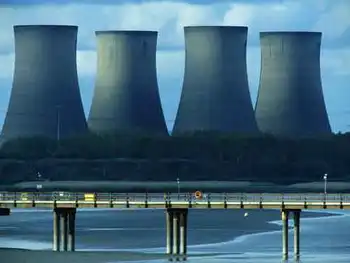
STADE, Germany — Germany switched off the first of its 19 nuclear power stations recently, launching what it calls the world's fastest withdrawal from atomic energy.

Germany's centre-left government struck a deal with industry in 2000 to close all nuclear power plants by about 2025 after the Greens made the phase-out a condition for forming a coalition with Chancellor Gerhard Schroeder's Social Democrats in 1998.

It is still unclear if Germany can meet the deadline and how it will replace atomic power, which provides a third of its electricity, while also meeting commitments to cap its emissions of greenhouse gases produced by fossil fuels.

With little fanfare inside the control room, the Stade plant, Germany's second oldest, ceased operations in the morning of November 14th with the simple pressing of two buttons.

"All rods are engaged. We are now out," said shift leader Bernd Schroeder as the reactor near Hamburg shut off.

Green Environment Minister Jurgen Trittin said the closing showed nuclear power had no future in Germany.

"No country is pulling out as quickly as Germany. Up until 2020, one nuclear power plant will be closed on average every year in Germany," he said.

The Greens held a party in Berlin to celebrate, but the plant operator said the 32-year-old reactor would have closed anyway on purely economic grounds without government pressure.

Belgium and Sweden have also announced nuclear phase-out plans. Sweden closed one reactor but postponed further closings after protests from energy-intensive industry.

Related News
Avista Commissions Largest Solar Array in Washington

Adams Nielson Solar Array, a 28 MW DC utility-scale project in Lind, WA, spans 200 acres with 81,700 panels, powering about 4,000 homes, supporting Avista’s Solar Select program and renewable energy, sustainability, and carbon reduction.


Key Points

Adams Nielson Solar Array is a 28 MW DC facility in Lind, WA, powering ~4,000 homes via Avista’s Solar Select.

✅ 81,700 panels across 200 acres in Eastern Washington

✅ Offsets emissions equal to removing 7,300 cars annually

✅ Collaboration by Avista, Strata Solar, WUTC, WSU Energy


Official commissioning of the Adams Nielson solar array located in Lind, WA occurred today. The 28 Megawatt DC array is comprised of 81,700 panels that span 200 acres and generates enough electricity to supply the equivalent of approximately 4,000 homes annually, similar to a new co-op solar project serving South Metro members.

“Avista’s interest in the development of Solar Select, a voluntary commercial solar program reflecting broader corporate adoption such as a corporate solar power plant commissioned by Arvato, is consistent with the Company’s ongoing commitment to provide customers with renewable energy choices at reasonable cost,” said Dennis Vermillion, president, Avista Corporation. “In recent years, an increasing number of Avista customers have expressed their expectations and challenges in acquiring renewable energy. Avista is pleased to lead this effort and develop renewable energy products that meet our customers’ needs today and into the future.” This interest is being generated by a mix of local and national customers across a variety of industries, including Huckleberry’s, Gonzaga University, Community Colleges of Spokane, Hotstart, Central Pre-Mix Concrete, a CRH Co., independently owned McDonald's franchise locations, Spokane City, Main Market and Community Building and VA Medical Center.

Jim Simon, director of sustainability at Gonzaga University said, “The Solar Select program helps Gonzaga University move even closer to achieving its goal of climate neutrality by 2050 by continuing to prioritize renewables in our energy portfolio, as other communities add projects like a municipal solar project to boost local supply. We are grateful for Avista’s leadership in this project and look forward to other opportunities to reduce our greenhouse gas emissions.”

Spokane Mayor David Condon said, “The City of Spokane is pleased to partner with Avista through the Solar Select Program, as we continue to seek out opportunities that are both environmentally and financially responsible. The City already is a net producer of energy, generating more clean, green energy than our use of electricity, natural gas, and fuel, a milestone also seen with North Carolina's first wind farm now fully operational. We are excited to add even more clean energy to power City Hall.”

The Solar Select program created a cost-effective structure to bring solar energy to large business customers in Eastern Washington, allowing them to advance their desired sustainability goals and benefiting from industry service innovations led by companies like Omnidian expanding their global reach. The array is projected to deliver the environmental benefit equivalent of more than 7,300 cars removed from the road each year. This renewable energy program was made possible through a collaboration of Avista, Strata Solar, the Washington Utilities and Transportation Commission, and the WSU Energy Program. 


Related News

View more

Germany agrees 200 bln euro package to shield against surging energy prices

Germany Energy Price Defensive Shield counters soaring gas and electricity costs with a gas price brake, VAT cut, subsidies for households and SMEs, LNG terminals, renewables, temporary nuclear extension, and targeted borrowing to curb inflation.


Key Points

A 200 billion euro package to cap energy costs, subsidize basics, and stabilize inflation for firms and households.

✅ Gas price brake and VAT cut reduce consumer and SME energy bills.

✅ Temporary electricity subsidies and nuclear extension aid winter supply.

✅ Funded via new borrowing; supports LNG and renewable expansion.


German Chancellor Olaf Scholz set out a 200 billion euro ($194 billion) "defensive shield", including a gas price brake and a cut in sales tax for the fuel, to protect companies and households from the impact of soaring energy prices in Germany.

Europe's biggest economy is trying to cope with surging gas and electricity costs, with local utilities seeking help, caused largely by a collapse in Russian gas supplies to Europe, which Moscow has blamed on Western sanctions following its invasion of Ukraine in February.

3 minute readSeptember 29, 202211:35 AM PDTLast Updated 6 days ago
Germany agrees 200 bln euro package to shield against surging energy prices
By Holger Hansen and Kirsti Knolle

"Prices have to come down, so the government will do everything it can. To this end, we are setting up a large defensive shield," said Scholz.

Under the plans, to run until spring 2024, the government will introduce an emergency price brake on gas, the details of which will be announced next month, while Europe weighs emergency measures to limit electricity prices across the bloc. It is scrapping a planned gas levy meant to help firms struggling with high spot market prices. 

A temporary electricity price brake will subsidise basic consumption for consumers and small and medium-sized companies, and complements an electricity subsidy for industries under discussion. Sales tax on gas will fall to 7% from 19%.

In its efforts to cut its dependence on Russian energy, Germany is also promoting the expansion of renewable energy and developing liquefied gas terminals, but rolling back European electricity prices remains complex.

To help households and companies weather any winter supply disruption, amid rising heating and electricity costs this winter, especially in southern Germany, two nuclear plants previously due to close by the end of this year will be able to keep running until spring 2023.

The package will be financed with new borrowing this year, as Berlin makes use of the suspension of a constitutionally enshrined limit on new debt of 0.35% of gross domestic product.

Finance Minister Christian Lindner has said he wants to comply with the limit again next year, even as the EU outlines gas price cap strategies for the market.

Lindner, of the pro-business Free Democrats (FDP) who share power with Scholz's Social Democrats and the Greens, said on Thursday the country's public finances were stable.

"We can put it no other way: we find ourselves in an energy war," said Lindner. "We want to clearly separate crisis expenditure from our regular budget management, we want to send a very clear signal to the capital markets."

He also said the steps would act as a brake on inflation, which hit its highest level in more than a quarter of century in September.

Opposition conservative Markus Soeder, premier of the southern state of Bavaria, said the steps gave the right signal.

"It gives industry and citizens confidence that we can get through the winter," he said.


Related News

View more

FPL stages massive response to Irma but power may not be back for days or weeks

FPL Power Restoration mobilizes Florida linemen and mutual-aid utility crews to repair the grid, track outages with smart meters, prioritize hospitals and essential services, and accelerate hurricane recovery across the state.


Key Points

FPL Power Restoration is the utility's hurricane effort to rebuild the grid and quickly restore service across Florida.

✅ 18,000 mutual-aid utility workers deployed from 28 states

✅ Smart meters pinpoint outages and accelerate repairs

✅ Critical facilities prioritized before neighborhood restorations


Teams of Florida Power & Light linemen, assisted by thousands of out-of-state utility workers and 200 Ontario workers who joined the effort, scrambled across Florida Monday to tackle the Herculean task of turning the lights back on in the Sunshine State.

The job is quite simply mind-boggling as Irma caused extensive damages to the power grid and the outages have broken previous records, and in other storms Louisiana's grid needed a complete rebuild after Hurricane Laura to restore service.

By 3 p.m. Monday, some 3.47 million of the company's 4.9 million customers in Florida were without power. This breaks the record of 3.24 million knocked off the grid during Hurricane Wilma in 2005, according to FPL spokesman Bill Orlove.

Prepared to face massive outages, FPL brought some 18,000 utility workers from 28 states here to join FPL crews, including Canadian power crews arriving to help restore service, to enable them to act more quickly.

“That’s the thing about the utility industry,” said  Alys Daly, an FPL spokeswoman. “It’s truly a family.”

Even with what is believed to be the largest assembly of utility workers ever assembled for a single storm in the United States, power restoration is expected to take weeks, not days in some areas.

FPL vowed to work as quickly as possible as they assess the damage and send out crews to restore power.

"We understand that people need to have power right away to get their lives back to normal," Daly said.

The priority, she said, were medical and emergency management facilities and then essential service providers like gas stations and grocery stores.

After that, FPL will endeavor to repair the problems that will restore power to the maximum number of people possible. Then it's individual neighborhoods.

As of 3 p.m. Monday, 219,040 of FPL's 307,600 customers on the Space Coast had no power. That's an improvement over the 260,600 earlier in the day.

Daly was unable to say Monday how many crews FPL had working in Brevard County. In some areas, power came back relatively swiftly, much quicker than expected.

" I was definitely surprised at how quickly they got our power back on here in NE Palm Bay," said Kelli Coats. "We lost power last night around 9 p.m Sunday and regained power around 8:30 a.m. today."

Others, many of them beachside, were looking at a full 24 hours without power and it's possible it could extend into Tuesday or longer.

One reason for improved response times since 2005, Daly said, is the installation of nearly 5 million "Smart Meters" at residences. These new devices, which replaced older analog models, allows FPL crews to track a neighborhood's power status via handheld computers, pinpointing the cause of an outage so it can be repaired.

Quick restoration is key as stores and restaurants struggle to re-open, and Gulf Power crews restored power in the early push. Without electricity many of them just can't re-start operations and get goods and services to consumers.

At the Atlanta-based Waffle House, which Federal Emergency Management Administration use to gauge the severity of damage and service to an area, restaurant executives are reviewing its operations in Florida and should have a better handle Monday afternoon how quickly restaurants will re-open.

"Right now, we're in an assessment phase," said Pat Warner, spokesman for Waffle House. "We're looking at which stores have power and which ones have damage."

FEMA's color-coded Waffle House Index started after the hurricanes in the early 2000s. It works like this: When an official phones a Waffle House to see if it is open,  the next stop is to assess it's level of service. If it's open and serving a full menu, the index is green. When the restaurant is open but serving a limited menu, it's yellow. When it's closed, it's red.


Related News

View more

Wind and solar make more electricity than nuclear for first time in UK

UK Renewables Surpass Nuclear Milestone as wind farms and solar panels outpace atomic output, cutting greenhouse gas emissions. BEIS data show low-carbon power generation rising while onshore wind subsidies and auction timelines face policy debate.


Key Points

It is the quarter when UK wind and solar generated more electricity than nuclear, signaling cleaner, low-carbon growth.

✅ BEIS reports wind and solar at 18.33 TWh vs nuclear 16.69 TWh

✅ Energy sector emissions fell 8% as coal use dropped

✅ Calls grow to reopen onshore wind support via CFD auctions


Wind farms and solar panels, with wind leading the power mix during key periods, produced more electricity than the UK’s eight nuclear power stations for the first time at the end of last year, official figures show.

Britain’s greenhouse gas emissions also continued to fall, dropping 3% in 2017, as coal use fell and the use of renewables climbed, though low-carbon generation stalled in 2019 according to later data.

Energy experienced the biggest drop in emissions of any UK sector, of 8%, while pollution from transport and businesses stayed flat.

Energy industry chiefs said the figures showed that the government should rethink its ban on onshore wind subsidies, a move that ministers have hinted could happen soon.

Lawrence Slade, chief executive of the big six lobby group Energy UK, said: “We need to keep up the pace ... by ensuring that the lowest cost renewables are no longer excluded from the market.”

Across the whole year, low-carbon sources of power – wind, solar, biomass and nuclear – provided a record 50.4% of electricity, up from 45.7% in 2016, when wind beat coal for the first time.

But in the fourth quarter of 2017, high wind speeds, new renewables installations and lower nuclear output saw wind and solar becoming the second biggest source of power for the first time.

Wind and solar generated 18.33 terawatt hours (TWh), with nuclear on 16.69TWh, and the UK later set a new record for wind power during 2019, the figures published by the Department for Business, Energy and Industrial Strategy show.

But renewables still have a long way to go to catch up with gas, the UK’s top source of electricity at 36.12TWh, which saw its share of generation fall slightly, though at times wind became the main source as capacity expanded.

Greenpeace said the figures showed the government should capitalise on its lead in renewables and “stop wasting time and money propping up nuclear power”.

Horizon Nuclear Power, a subsidiary of the Japanese conglomerate Hitachi, is in talks with Whitehall officials for a financial support package from the government, which it says it needs by midsummer.

By contrast, large-scale solar and onshore wind projects are not eligible for support, after the Conservative government cut subsidies in 2015.

However the energy minister, Claire Perry, recently told House Magazine that “we will have another auction that brings forward wind and solar, we just haven’t yet said when”.


Related News

View more

Sudbury, Ont., eco groups say sustainability is key to grid's future

Sudbury Electrification and Grid Expansion is driving record power demand, EV charging, renewable energy planning, IESO forecasts, smart grid upgrades, battery storage, and industrial electrification, requiring cleaner power plants and transmission capacity in northern Ontario.


Key Points

Rising electricity demand and clean energy upgrades in Sudbury to power EVs, industry, and a smarter, expanded grid.

✅ IESO projects system size may need to more than double

✅ EVs and smart devices increase peak and off-peak load

✅ Battery storage and V2G can support reliability and resiliency


Sudbury, Ont., is consuming more power than ever, amid an electricity supply crunch in Ontario, according to green energy organizations that say meeting the demand will require cleaner energy sources.

"This is the welfare of the entire city on the line and they are putting their trust in electrification," said David St. Georges, manager of communications at reThink Green, a non-profit organization focused on sustainability in Sudbury.

According to St. Georges, Sudbury and northern Ontario can meet the growing demand for electricity to charge clean power for EVs and smart devices. 

According to the Independent Electricity System Operator (IESO), making a full switch from fossil fuels to other renewable energy sources could require more power plants, while other provinces face electricity shortages of their own.

"We have forecasted that Ontario's electricity system will need significant expansion to meet this, potentially more than doubling in size," the IESO told CBC News in an emailed statement.

Electrification in the industrial sector is adding greater demand to the electrical grid as electric cars challenge power grids in many regions. Algoma Steel in Sault Ste. Marie and ArcelorMittal Dofasco in Hamilton both aim to get electric arc furnaces in operation. Together, those projects will require 630 megawatts.

"That's like adding four cities the size of Sudbury to the grid," IESO said.

Devin Arthur, chapter president of the Electric Vehicle society in Greater Sudbury, said the city is coming full circle with fully electrifying its power grid, reflecting how EVs are a hot topic in Alberta and beyond.

"We're going to need more power," he said.

"Once natural gas was introduced, that kind of switched back, and everyone was getting out of electrification and going into natural gas and other sources of power."

Despite Sudbury's increased appetite for electricity, Arthur added it's also easier to store now as Ontario moves to rely on battery storage solutions.

"What that means is you can actually use your electric vehicle as a battery storage device for the grid, so you can actually sell power from your vehicle that you've stored back to the grid, if they need that power," he said.

Harneet Panesar, chief operating officer for the Ontario Energy Board, told CBC the biggest challenge to going green is seeing if it can work around older infrastructure, while policy debates such as Canada's 2035 EV sales mandate shape the pace of change.

"You want to make sure that you're building in the right spot," he said.

"Consumers are shifting from combustion engines to EV drivetrains. You're also creating more dependency. At a very high level, I'm going to say it's probably going to go up in terms of the demand for electricity."

Fossil fuels are the first to go for generating electricity, said St. Georges.

"But we're not there yet, because it's not a light switch solution. It takes time to get to that, which is another issue of electrification," he said.

"It's almost impossible for us not to go that direction."


Related News

View more

Why electric buses haven't taken over the world—yet

Electric Buses reduce urban emissions and noise, but require charging infrastructure, grid upgrades, and depot redesigns; they offer lower operating costs and simpler maintenance, with range limits influencing routes, schedules, and on-route fast charging.


Key Points

Battery-electric buses cut emissions and noise while lowering operating and maintenance costs for transit agencies.

✅ Lower emissions, noise; improved rider experience

✅ Requires charging, grid upgrades, depot redesigns

✅ Range limits affect routes; on-route fast charging helps


In lots of ways, the electric bus feels like a technology whose time has come. Transportation is responsible for about a quarter of global emissions, and those emissions are growing faster than in any other sector. While buses are just a small slice of the worldwide vehicle fleet, they have an outsize effect on the environment. That’s partly because they’re so dirty—one Bogotá bus fleet made up just 5 percent of the city’s total vehicles, but a quarter of its CO2, 40 percent of nitrogen oxide, and more than half of all its particulate matter vehicle emissions. And because buses operate exactly where the people are concentrated, we feel the effects that much more acutely.

Enter the electric bus. Depending on the “cleanliness” of the electric grid into which they’re plugged, e-buses are much better for the environment. They’re also just straight up nicer to be around: less vibration, less noise, zero exhaust. Plus, in the long term, e-buses have lower operating costs, and related efforts like US school bus electrification are gathering pace too.

So it makes sense that global e-bus sales increased by 32 percent last year, according to a report from Bloomberg New Energy Finance, as the age of electric cars accelerates across markets worldwide. “You look across the electrification of cars, trucks—it’s buses that are leading this revolution,” says David Warren, the director of sustainable transportation at bus manufacturer New Flyer.

Today, about 17 percent of the world’s buses are electric—425,000 in total. But 99 percent of them are in China, where a national mandate promotes all sorts of electric vehicles. In North America, a few cities have bought a few electric buses, or at least run limited pilots, to test the concept out, and early deployments like Edmonton's first e-bus offer useful lessons as systems ramp up. California has even mandated that by 2029 all buses purchased by its mass transit agencies be zero-emission.

But given all the benefits of e-buses, why aren’t there more? And why aren’t they everywhere?

“We want to be responsive, we want to be innovative, we want to pilot new technologies and we’re committed to doing so as an agency,” says Becky Collins, the manager of corporate initiative at the Southeastern Pennsylvania Transportation Authority, which is currently on its second e-bus pilot program. “But if the diesel bus was a first-generation car phone, we’re verging on smartphone territory right now. It’s not as simple as just flipping a switch.”

One reason is trepidation about the actual electric vehicle. Some of the major bus manufacturers are still getting over their skis, production-wise. During early tests in places like Belo Horizonte, Brazil, e-buses had trouble getting over steep hills with full passenger loads. Albuquerque, New Mexico, canceled a 15-bus deal with the Chinese manufacturer BYD after finding equipment problems during testing. (The city also sued). Today’s buses get around 225 miles per charge, depending on topography and weather conditions, which means they have to re-up about once a day on a shorter route in a dense city. That’s an issue in a lot of places.

If you want to buy an electric bus, you need to buy into an entire electric bus system. The vehicle is just the start.

The number one thing people seem to forget about electric buses is that they need to get charged, and emerging projects such as a bus depot charging hub illustrate how infrastructure can scale. “We talk to many different organizations that get so fixated on the vehicles,” says Camron Gorguinpour, the global senior manager for the electric vehicles at the World Resources Institute, a research organization, which last month released twin reports on electric bus adoption. “The actual charging stations get lost in the mix.”

But charging stations are expensive—about $50,000 for your standard depot-based one. On-route charging stations, an appealing option for longer bus routes, can be two or three times that. And that’s not even counting construction costs. Or the cost of new land: In densely packed urban centers, movements inside bus depots can be tightly orchestrated to accommodate parking and fueling. New electric bus infrastructure means rethinking limited space, and operators can look to Toronto's TTC e-bus fleet for practical lessons on depot design. And it’s a particular pain when agencies are transitioning between diesel and electric buses. “The big issue is just maintaining two sets of fueling infrastructure,” says Hanjiro Ambrose, a doctoral student at UC Davis who studies transportation technology and policy.

“We talk to many different organizations that get so fixated on the vehicles. The actual charging stations get lost in the mix as the American EV boom gathers pace across sectors.”

Then agencies also have to get the actual electricity to their charging stations. This involves lengthy conversations with utilities about grid upgrades, rethinking how systems are wired, occasionally building new substations, and, sometimes, cutting deals on electric output, since electric truck fleets will also strain power systems in parallel. Because an entirely electrified bus fleet? It’s a lot to charge. Warren, the New Flyer executive, estimates it could take 150 megawatt-hours of electricity to keep a 300-bus depot charged up throughout the day. Your typical American household, by contrast, consumes 7 percent of that—per year. “That’s a lot of work by the utility company,” says Warren.

For cities outside of China—many of them still testing out electric buses and figuring out how they fit into their larger fleets—learning about what it takes to run one is part of the process. This, of course, takes money. It also takes time. Optimists say e-buses are more of a question of when than if. Bloomberg New Energy Finance projects that just under 60 percent of all fleet buses will be electric by 2040, compared to under 40 percent of commercial vans and 30 percent of passenger vehicles.

Which means, of course, that the work has just started. “With new technology, it always feels great when it shows up,” says Ambrose. “You really hope that first mile is beautiful, because the shine will come off. That’s always true.”


Related News

View more

Sign Up for Electricity Forum’s Newsletter

Stay informed with our FREE Newsletter — get the latest news, breakthrough technologies, and expert insights, delivered straight to your inbox.

Electricity Today T&D Magazine Subscribe for FREE

Stay informed with the latest T&D policies and technologies.
  • Timely insights from industry experts
  • Practical solutions T&D engineers
  • Free access to every issue

Live Online & In-person Group Training

Advantages To Instructor-Led Training – Instructor-Led Course, Customized Training, Multiple Locations, Economical, CEU Credits, Course Discounts.

Request For Quotation

Whether you would prefer Live Online or In-Person instruction, our electrical training courses can be tailored to meet your company's specific requirements and delivered to your employees in one location or at various locations.