



By -- Source, The Pantagraph Bloomington


Arc Flash Training CSA Z462 - Electrical Safety Essentials

Our customized live online or in‑person group training can be delivered to your staff at your location.

  • Live Online
  • 6 hours Instructor-led
  • Group Training Available
Regular Price:
$249
Coupon Price:
$199
Reserve Your Seat Today
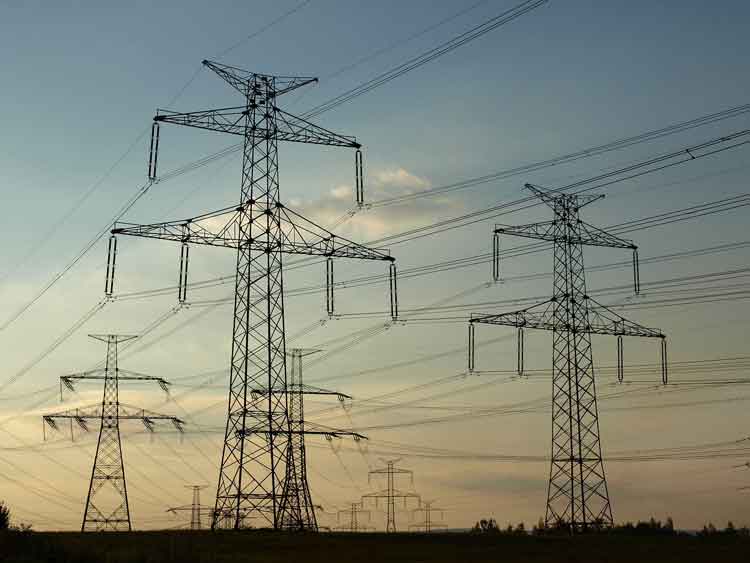
BLOOMINGTON - No rolling power blackouts will come between Central Illinois power customers and the sun this summer.

All the utilities serving The Pantagraph area reported they are amply stocked to meet the demands of summer usage, whether from increased use of air conditioners or the drain of a thousand pool filters being plugged in.

"Illinois Power has supply contracts in place that will allow us to meet our customers' demand for electricity throughout the summer," said Shawun Schukar, IP vice president of energy supply management, told the Illinois Commerce Commission earlier this month.

"In addition, Illinois Power maintains a strong interconnected transmission and distribution system with the capability to bring sufficient power into the area to serve anticipated peak loads," he said.

The company has contracts from suppliers "and a comfortable reserve. And we maintain a strong interconnected delivery system," said Illinois Power spokeswoman Shirley Swarthout.

Illinois Power, an energy delivery company based in Decatur, provides electricity and natural gas to more than 650,000 customers in a 15,000-square-mile territory in Illinois, including the Bloomington-Normal area. It is a subsidiary of Dynegy Inc.

Energy cooperative Corn Belt Energy Corp. is "well-positioned for this summer," according to spokesman Dave Hawkinson. "We have some long-term power contracts, so we would expect there to be stability." Corn Belt has 28,000 cooperative members in Central and North Central Illinois.

Corn Belt spent a great deal of time and energy in upgrading and servicing the Parkside Substation, near Normal Community West High School, which has given the company and customers past outage problems, he said.

"We have spent a number of staff time hours and resources to make sure the substation was not subject to failures," he said.

The company also has increased capacity at the substation in Normal because of growth in the area it handles. There have also been upgrades in the Wapella and Lilly areas to handle increased summer power because of population growth.

"We have test run all our 'peak' generators and all are operational," said Hawkinson. The six generators are used for backup power generation during times of peak electricity demand, say a particularly steamy stretch of weather that sends air conditioner use soaring.

Line work is ongoing, particularly in the Kappa area, he said, and breakers and relay switches have been checked across the company's area.

"The McLean County area is extremely strong - a very strong area for new growth" for Corn Belt, said Hawkinson, and the company remains busy providing new service.

AmerenCIPS does not expect problems this summer, said spokesman Leigh Morris. "We've taken a look at the entire system and, even in unusually hot weather, we don't see any problems this summer."

AmerenCIPS serves Ford, Iroquois, eastern McLean, southern Livingston and northern Champaign counties.

"We are one of the lower-priced power plants in the United States," said Morris. "We have huge operating efficiencies that benefit our customers."

CILCO "anticipates all available units will be operating at capacity," said spokesman Neale Johnson. Preventive maintenance has been done to improve performance, he said, adding that the company has reserves that provide security for electricity availability during hot summer days.

"In the last year we added 63 megawatts of peaking capacity in Tazewell" county, Johnson added, to cover high demands.

CILCO serves Logan and Tazewell counties, western Woodford and Marshall counties and the cities of Stanford, McLean and Heyworth in McLean County.

Whatever the weather, Exelon's Clinton Nuclear Power Station will be generating at close to its top capacity of 1,053 megawatts, said spokesman Bruce Paulsen.

The nuclear reactor, which was placed on standby status May 13 because of a malfunctioning water control system, was gradually "powered up" beginning May 14 and is now generating electricity at near peak capacity no matter what the power demands, said Paulsen.

Excess power will be integrated into the power grid and sold at energy trading markets.

However, as part of the terms of the reactor's 1999 sale by Illinois Power, IP will purchase 75 percent of Clinton's total electricity output at a specific price until 2005, Paulsen said.

Related News

Hydro-Quebec shocks cottage owner with $5,300 in retroactive charges

Hydro-Quebec back-billing arises from analogue meter errors and estimated consumption, leading to arrears for electricity usage; disputes over access, payment plans, and potential power diversion reviews can impact cottage owners near Gatineau.


Key Points

Hydro-Quebec back-billing recovers underbilled electricity from analogue meter errors or prolonged estimated use.

✅ Triggered by inaccurate analogue meters or missed readings

✅ Based on actual usage versus prior estimated consumption

✅ Payment plans may spread arrears; theft checks may adjust


A relaxing lakefront cottage has become a powerful source of stress for an Ottawa woman who Hydro-Quebec is charging $5,300 to cover what it says are years of undercharging for electricity usage.

The utility said an old analogue power meter is to blame for years of inaccurate electricity bills for the summer getaway near Gatineau, Que.

Separate from individual billing issues, Hydro-Quebec has also reported pandemic-related losses earlier this year.

Owner Jan Hodgins does not think she should be held responsible for the mistake, nor does she understand how her usage could have surged over the years.

“I’m very hydro conscious, because I was raised that way. When you left a room, you always turned the light out,” she told CTV Montreal on Wednesday, relating her shock after receiving some hefty bills from Hydro-Quebec on Sept. 22.

Hodgins said she mainly uses the cottage on weekends, does not heat the place when she is not there, and does not use a washer or dryer, to keep her energy footprint as small as possible. She’s owned the cottage for 14 years, during which she says her monthly bill has hovered around $40.

Hydro-Quebec said it has not had an accurate reading of her usage for several years, relying instead on consumption estimates to determine what she pays. The company recently reviewed her energy consumption back to 2014, and found their estimates were not accurate.

“In the past, she was consuming about 10 to 15 kilowatt hours per day. This summer she was more around 40 kilowatt hours per day,” Marc-Antoine Pouliot with Hydro-Quebec told CTV Ottawa.

Hodgins said that means her regular bill will now be more than twice the $200 her neighbours are paying for hydro each month, even with peak hydro rates in place.

Hydro-Quebec said it will correct the bill if its technicians discover that someone is illegally diverting power nearby.

Hodgins said it’s not her fault that technicians did not check her meter in person, and chose to rely on inaccurate estimates. Pouliot argues that reaching her cottage was too difficult.

“There was too much snow. There were conditions during the winter disconnection ban period, and the consequence was that people, our workers, were not able to reach the meter,” he said.

Hydro-Quebec said it is willing to stretch out the debt into monthly payments over a year, which Hodgins said amount to $440 per month on top of her regular bill.

Utilities also caution customers about scammers threatening shutoffs during billing disputes.

“I’m on a fixed income. I don’t have that kind of money. I’m completely distraught,” she said. “I don’t know what I’m going to do.”


Related News

View more

Nigeria's Electricity Crisis

Nigeria Electricity Crisis undermines energy access as aging grid, limited generation, and transmission losses cause power outages, raising costs for businesses and public services; renewables, microgrids, and investment offer resilient, inclusive solutions.


Key Points

A nationwide power gap from weak infrastructure, low generation, and grid losses that disrupt services and growth.

✅ Aging grid and underinvestment drive frequent power outages

✅ Businesses face higher costs, lost productivity, weak competitiveness

✅ Renewables, microgrids, and regulatory reform can expand access


In Nigeria, millions of residents face persistent challenges with access to reliable electricity, a crisis that has profound implications for businesses, public services, and overall socio-economic development. This article explores the root causes of Nigeria's electricity deficit, drawing on 2021 electricity lessons to inform analysis, its impact on various sectors, and potential solutions to alleviate this pressing issue.

Challenges with Electricity Access

The issue of inadequate electricity access in Nigeria is multifaceted. The country's electricity generation capacity falls short of demand due to aging infrastructure, inadequate maintenance, and insufficient investment in power generation and distribution, a dynamic echoed when green energy supply constraints emerge elsewhere as well. As a result, many Nigerians, particularly in rural and underserved urban areas, experience frequent power outages or have limited access to electricity altogether.

Impact on Businesses

The unreliable electricity supply poses significant challenges to businesses across Nigeria. Manufacturing industries, small enterprises, and commercial establishments rely heavily on electricity to operate machinery, maintain refrigeration for perishable goods, and power essential services. Persistent power outages disrupt production schedules, increase operational costs, and, as grids prepare for new loads from electric vehicle adoption worldwide, hinder business growth and competitiveness in both domestic and international markets.

Public Services Strain

Public services, including healthcare facilities, schools, and government offices, also grapple with the consequences of Nigeria's electricity crisis. Hospitals rely on electricity to power life-saving medical equipment, maintain proper sanitation, and ensure patient comfort. Educational institutions require electricity for lighting, technological resources, and administrative functions. Without reliable power, the delivery of essential public services is compromised, impacting the quality of education, healthcare outcomes, and overall public welfare.

Socio-economic Impact

The electricity deficit in Nigeria exacerbates socio-economic disparities and hampers poverty alleviation efforts, even as debates continue over whether access alone reduces poverty in every context. Lack of access to electricity limits economic opportunities, stifles entrepreneurship, and perpetuates income inequality. Rural communities, where access to electricity is particularly limited, face greater challenges in accessing educational resources, healthcare services, and economic opportunities compared to urban counterparts.

Government Initiatives and Challenges

The Nigerian government has implemented various initiatives to address the electricity crisis, including privatization of the power sector, investment in renewable energy projects, and regulatory reforms aimed at improving efficiency and accountability, while examples like India's village electrification illustrate rapid expansion potential too. However, progress has been slow, and challenges such as corruption, bureaucratic inefficiencies, and inadequate funding continue to impede efforts to expand electricity access nationwide.

Community Resilience and Adaptation

Despite these challenges, communities and businesses in Nigeria demonstrate resilience and adaptability in navigating the electricity crisis. Some businesses invest in alternative power sources such as generators, solar panels, or hybrid systems to mitigate the impact of power outages, while utilities weigh shifts signaled by EVs' impact on utilities for future planning. Community-led initiatives, including local cooperatives and microgrids, provide decentralized electricity solutions in underserved areas, promoting self-sufficiency and resilience.

Path Forward

Addressing Nigeria's electricity crisis requires a concerted effort from government, private sector stakeholders, and international partners, informed by UK grid transformation experience as well. Key priorities include increasing investment in power infrastructure, enhancing regulatory frameworks to attract private sector participation, and promoting renewable energy deployment. Improving energy efficiency, reducing transmission losses, and expanding electricity access to underserved communities are critical steps towards achieving sustainable development goals and improving quality of life for all Nigerians.

Conclusion

The electricity crisis in Nigeria poses significant challenges to businesses, public services, and socio-economic development. Addressing these challenges requires comprehensive strategies that prioritize infrastructure investment, regulatory reform, and community empowerment. By working together to expand electricity access and promote sustainable energy solutions, Nigeria can unlock its full economic potential, improve living standards, and create opportunities for prosperity and growth across the country.


Related News

View more

Trump's Proposal to Control Ukraine's Nuclear Plants Sparks Controversy

US Control of Ukraine Nuclear Plants sparks debate over ZNPP, Zaporizhzhia, sovereignty, safety, ownership, and international cooperation, as Washington touts utility expertise, investment, and modernization to protect critical energy infrastructure amid conflict.


Key Points

US management proposal for Ukraine's nuclear assets, notably ZNPP, balancing sovereignty, safety, and investment.

✅ Ukraine retains ownership; any transfer requires parliament approval.

✅ ZNPP safety risks persist amid occupation near active conflict.

✅ International reactions split: sovereignty vs. cooperation and investment.


In a recent phone call with Ukrainian President Volodymyr Zelenskyy, U.S. President Donald Trump proposed that the United States take control of Ukraine's nuclear power plants, including the Zaporizhzhia Nuclear Power Plant (ZNPP), which has been under Russian occupation since early in the war and where Russia is reportedly building power lines to reactivate the plant amid ongoing tensions. Trump suggested that American ownership of these plants could be the best protection for their infrastructure, a proposal that has sparked controversy in policy circles, and that the U.S. could assist in running them with its electricity and utility expertise.

Ukrainian Response

President Zelenskyy promptly addressed Trump's proposal, stating that while the conversation focused on the ZNPP, the issue of ownership was not discussed. He emphasized that all of Ukraine's nuclear power plants belong to the Ukrainian people and that any transfer of ownership would require parliamentary approval . Zelenskyy clarified that while the U.S. could invest in and help modernize the ZNPP, ownership would remain with Ukraine.

Security Concerns

The ZNPP, Europe's largest nuclear facility, has been non-operational since its occupation by Russian forces in 2022. The plant's location near active conflict zones raises significant safety risks that the IAEA has warned of in connection with attacks on Ukraine's power grids, and its future remains uncertain. Ukrainian officials have expressed concerns about potential Russian provocations, such as explosions, especially after UN inspectors reported mines at the Zaporizhzhia plant near key facilities, if and when Ukraine attempts to regain control of the plant.

International Reactions

The proposal has elicited mixed reactions both within Ukraine and internationally. Some Ukrainian officials view it as an opportunistic move by the U.S. to gain control over critical infrastructure, while others see it as a potential avenue for modernization and investment, alongside expanding wind power that is harder to destroy in wartime. The international community remains divided on the issue, with some supporting Ukraine's sovereignty over its nuclear assets and others advocating for a possible agreement on power plant attacks to ensure the plant's safety and future operation.

President Trump's proposal to have the U.S. take control of Ukraine's nuclear power plants has sparked significant controversy. While the U.S. offers expertise and investment, Ukraine maintains that ownership of its nuclear assets is a matter of national sovereignty, even as it has resumed electricity exports to bolster its economy. The situation underscores the complex interplay between security, sovereignty, and international cooperation in conflict zones.


Related News

View more

BC Hydro Expects To See Electricity Usage Rise This Holiday Season

BC Hydro Holiday Electricity Usage is set to rise as energy demand increases during peak 4-10 pm on Christmas and Boxing Day, driven by larger gatherings, more cooking, and eased COVID-19 restrictions province-wide.


Key Points

Expected rise in power demand on Christmas and Boxing Day evenings versus 2020, driven by larger gatherings and cooking.

✅ Peak hours 4-10 pm expected to rise in provincial load.

✅ 2020 saw 4% and 7% drops vs 2019 on Christmas and Boxing Day.

✅ Holiday lighting adds ~3% to use; switching to LED can save ~$40.


BC Hydro data showed residential electricity load in the Cariboo and throughout the province, even as drought affects generation dynamics heading into winter, dropped on Christmas Day and Boxing Day in 2020.

Northern Community Relations Manager, Bob Gammer, said the decrease was due in part to more people following the COVID-19 restrictions and not getting together for big meals, even though 2018 Earth Hour usage increased elsewhere illustrates how behavior can sometimes raise demand.

However, this year Gammer said between 4 and 10 pm on those two days, BC Hydro does expect to see a change in overall usage, aligning with all-time high demand trends reported recently in B.C.

“On Christmas Day and Boxing Day, we expect to see increases through those hours and a little bit more so between 4 and 10 pm we should see the amount of power being consumed across the province, as record-breaking 2021 demand indicated earlier, going up compared to what it was on those two days last year.”

In 2020 on Christmas Day evening hydro usage dropped by over 4 percent and Boxing Day evening decreased by 7 percent compared to 2019, whereas regions like Calgary's winter demand have seen spikes during extreme cold.

Gammer added after BC Hydro surveyed their customers and introduced a winter payment plan, they expect to see a lot more cooking happening on Christmas Day and Boxing Day this year as people are intending to have larger gatherings and visit friends.

We asked Gammer about hydro usage when it comes to homes decked out for the holidays, and how that compares to newer loads like crypto mining activity in B.C.

“The Christmas lighting displays people have, not just indoors but outdoors as well, what we’re seeing is about a 3 percent increase in electricity consumption overall through the Christmas season. If people switch, if you still have older lights that are incandescent, switch those over to LED, and through the season it could wind up saving you $40 in electricity just switching over about 8 strings of lights to LED.”


Related News

View more

More red ink at Manitoba Hydro as need for new power generation looms

Manitoba NDP Energy Financing Strategy outlines public ownership of renewables, halts private wind farms, stabilizes hydroelectric rates, and addresses Manitoba Hydro deficits amid drought, export revenue declines, and rising demand for grid reliability.


Key Points

A plan to fund public renewables, pause private wind, and stabilize Manitoba Hydro rates, improving utility finances.

✅ Public ownership favored over private wind contracts

✅ Focus on rate freeze and Manitoba Hydro debt management

✅ Addresses drought impacts, export revenue declines, rising demand


Manitoba's NDP administration has declared its intention to formulate a strategy for financing new energy ventures, following a decision to halt the development of additional private-sector wind farms and to extend a pause on new cryptocurrency connections amid grid pressures. This plan will accompany efforts to stabilize hydroelectric rates and manage the financial obligations of the province's state-operated energy company.

Finance Minister Adrien Sala, overseeing Manitoba Hydro, shared these insights during a legislative committee meeting on Thursday, emphasizing the government's desire for future energy expansions to remain under public ownership, even as Ontario moves to reintroduce renewable energy projects after prior cancellations, and expressing trust in Manitoba Hydro's governance to realize these goals.

This announcement was concurrent with Manitoba Hydro unveiling increased financial losses in its latest quarterly report. The utility anticipates a $190-million deficit for the fiscal year ending in March, marking a $29 million increase from its previous forecast and a significant deviation from an initial $450 million profit expectation announced last spring. Contributing factors to this financial downturn include reduced hydroelectric power generation due to drought conditions, diminished export revenues, and a mild fall season impacting heating demand.

The recent financial update aligns with a period of significant changes at Manitoba Hydro, initiated by the NDP government's board overhaul following its victory over the former Progressive Conservative administration in the October 3 election, and comes as wind projects are scrapped in Alberta across the broader Canadian energy landscape.

Subsequently, the NDP-aligned board discharged CEO Jay Grewal, who had advocated for integrating wind energy from third-party sources, citing competitive wind power trends, to promptly address the province's escalating energy requirements. Grewal's approach, though not unprecedented, sought to offer a quicker, more cost-efficient alternative to constructing new Manitoba Hydro dams, highlighting an imminent energy production shortfall projected for as early as 2029.

The opposition Progressive Conservatives have criticized the NDP for dismissing the wind power initiative without presenting an alternate solution, warning about costly cancellation fees seen in Ontario when projects are halted, and emphasizing the urgency of addressing the predicted energy gap.

In response, Sala reassured that the government is in the early stages of policy formulation, reflecting broader electricity policy debates in Ontario about how to fix the power system, and criticized the previous administration for its inaction on enhancing generation capacity during its tenure.

Manitoba Hydro has named Hal Turner as the acting CEO while it searches for Grewal's successor, following controversies such as Solar Energy Program mismanagement raised by a private developer. Turner informed the committee that the utility is still deliberating on its approach to new energy production and is exploring ways to curb rising demand.

Expressing optimism about collaborating with the new board, Turner is confident in finding a viable strategy to fulfill Manitoba's energy needs in a safe and affordable manner.

Additionally, the NDP's campaign pledge to freeze consumer rates for a year remains a priority, with Sala committing to implement this freeze before the next provincial election slated for 2027.


Related News

View more

Disrupting Electricity? This Startup Is Digitizing Our Very Analog Electrical System

Solid-State AC Switching reimagines electrification with silicon-based, firmware-driven controls, smart outlets, programmable circuit breakers, AC-DC conversion, and embedded sensors for IoT, energy monitoring, surge protection, and safer, globally compatible devices.


Key Points

Solid-state AC switching replaces mechanical switches with silicon chips for intelligent, programmable power control.

✅ Programmable breakers trip faster and add surge and GFCI protection

✅ Shrinks AC-DC conversion, boosting efficiency and device longevity

✅ Enables sensor-rich, IoT-ready outlets with energy monitoring


Electricity is a paradox. On the one hand, it powers our most modern clean cars and miracles of computing like your phone and laptop. On the other hand, it’s one of the least updated, despite efforts to build a smarter electricity infrastructure nationwide, and most ready-for-disruption parts of our homes, offices, and factories.

A startup in Silicon Valley plans to change all that, in California’s energy transition where reliability is top of mind, and has just signed deals with leading global electronics manufacturers to make it happen.

“The end point of the electrification infrastructure of every building out there right now is based on old technology,” Thar Casey, CEO of Amber Solutions, told me recently on the TechFirst podcast. “Basically some was invented ... last century and some came in a little bit later on in the fifties and sixties.”

Ultimately, it’s an almost 18th century part of modern homes.

Even smart homes, with add-ons like the Tesla Powerwall, still rely on legacy switching.

The fuses, breakers, light switches, and electrical outlets in your home are ancient technology that would easily understood by Thomas Edison, who was born in 1847. When you flip a switch and instantly flood your room with light, it feels like a modern right. But you are simply pushing a piece of plastic which physically moves one wire to touch another wire. That completes a circuit, electricity flows, and ... let there be light.

Casey wants to change all that. To transform our hard-wired electrical worlds and make them, in a sense, soft wired. And the addressable market is literally tens of billions of devices.

The core innovation is a transition to solid-state switches.

“Take your table, which is a solid piece of wood,” Casey says. “If you can mimic what an electromechanical switch does, opening and closing, inside that table without any actual moving parts, that means you are now solid state AC switching.”

And solid-state is exactly what Silicon Valley is all about.

“Solid state it means it can be silicon,” Casey says. “It can be a chip, it can be smaller, it can be intelligent, you can have firmware, you can add software ... now you have a mini computer.”

That’s a significant innovation with a huge number of implications. It means that the AC to DC converters attached to every appliance you plug into the wall — the big “bricks” that are part of your power cord, for instance — can now be a tiny fraction of the size. Appliance run on DC, direct current, and the electricity in your walls is AC, alternating current; similar principles underpin advanced smart inverters in solar systems, and it needs to be converted before it’s usable, and that chunk of hardware, with electrolytics, magnetics, transformers and more, can now be replaced, saving space in thermostats, CO2 sensors, coffee machines, hair dryers, smoke detectors ... any small electric device.

(Since those components generally fail before the device does, replacing them is a double win.)

Going solid state also means that you can have dynamic input range: 45 volts all the way up to 600 volts.

So you can standardize one component across many different electric devices, and it’ll work in the U.S., it’ll work in Europe, it’ll work in Japan, and it will work whether it’s getting 100 or 120 or 220 volts.

Building it small and building it solid state has other benefits as well, Casey says, including a much better circuit breaker for power spikes as the U.S. grid faces climate change impacts today.

“This circuit breaker is programmable, it has intelligence, it has WiFi, it has Bluetooth, it has energy monitoring metering, it has surge protection, it has GFCI, and here’s the best part: we trip 3000 times faster than a mechanical circuit breaker.”

What that means is much more ambient intelligence that can be applied all throughout your home. Rather than one CO2 sensor in one location, every power outlet is now a CO2 sensor that can feed virtual power plant programs, too. And a particulate matter sensor and temperature sensor and dampness sensor and ... you name it.

Amber’s next-generation system-on-chip complete replacement for smart outlets
Amber’s next-generation system-on-chip complete replacement for smart outlets JOHN KOETSIER
“We put as many as fifteen functions ... in one single gang box in a wall,” Casey told me.

Solid state is the gift that keeps giving, because now every outlet can be surge-protected. Every outlet can have GFCI — ground fault circuit interruption — not just the ones in your bathroom. And every outlet and light switch in your home can participate in the sensor network that powers your home security system. Oh, and, if you want, Alexa or Siri or the Google Assistant too. Plus energy-efficient dimmers for all lighting appliances that don’t buzz.

So when can you buy Amber switches and outlets?

In a sense, never.

Casey says Amber isn’t trying to be a consumer-facing company and won’t bring these innovations to market themselves. This July, Amber announced a letter of intent with a global manufacturer that includes revenue, plus MOUs with six other major electronics manufacturers. Letters of intent can be a dime a dozen, as can memoranda of understanding, but attaching revenue makes it more serious and significant.

The company has only raised $6.7 million, according to Craft, and has a number of competitors, such as Blixt, which has funding from the European Union, and Atom Power, which is already shipping technology. But since Amber is not trying to be a consumer product and take its innovations to market itself, it needs much less cash to build a brand and a market. You’ll be able to buy Amber’s technology at some point; just not under the Amber name.

“We have over 25 companies that we’re in discussions with,” Casey says. “We’re going to give them a complete solution and back them up and support them toward success. Their success will be our success at the end of the day.”

Ultimately, of course, cost will be a big part of the discussion.

There are literally tens of billions of switches and outlets on the planet, and modernizing all of them won’t happen overnight. And if it’s expensive, it won’t happen quickly either, even as California turns to grid-scale batteries to ease strain.

Casey is a big cagey with costs — there are still a lot of variables, after all. But it seems it won’t cost that much more than current technology.

“This can’t be $1.50 to manufacture, at least not right now, maybe down the road,” he told me. “We’re very competitive, we feel very good. We’re talking to these partners. They recognize that what we’re bringing, it’s a cost that is cost effective.”


Related News

View more

Sign Up for Electricity Forum’s Newsletter

Stay informed with our FREE Newsletter — get the latest news, breakthrough technologies, and expert insights, delivered straight to your inbox.

Electricity Today T&D Magazine Subscribe for FREE

Stay informed with the latest T&D policies and technologies.
  • Timely insights from industry experts
  • Practical solutions T&D engineers
  • Free access to every issue

Download the 2025 Electrical Training Catalog

Explore 50+ live, expert-led electrical training courses –

  • Interactive
  • Flexible
  • CEU-cerified