Minnesota Signs Deal With Manitoba Hydro

By Canadian Press


Arc Flash Training CSA Z462 - Electrical Safety Essentials

Our customized live online or in‑person group training can be delivered to your staff at your location.

  • Live Online
  • 6 hours Instructor-led
  • Group Training Available
Regular Price:
$249
Coupon Price:
$199
Reserve Your Seat Today
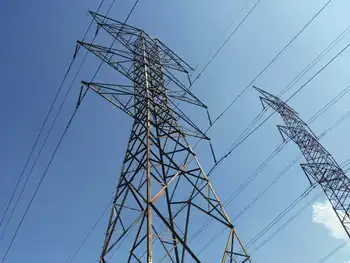
The Minnesota Public Utilities Commission has unanimously approved a $1.7 billion power export deal with Manitoba Hydro.

It allows Minneapolis-based Xcel Energy to import power from Manitoba Hydro, despite the objections of aboriginal groups.

The 500-megawatt, 10-year deal was given the go-ahead.

It's an extension of an existing deal and will allow power to be exported until 2015.

Approval by Canada's National Energy Board is pending.

The Minnesota decision is a blow to the Pimicikamak Cree Nation of Cross Lake, Manitoba. They had asked the commission to first call a formal hearing into the social and economic impact of historic hydro development on their homeland.

Related News
A resilient Germany is weathering the energy crunch

German Energy Price Brakes harness price signals in a market-based policy, cutting gas consumption, preserving industrial output, and supporting CO2 reduction, showcasing Germany's resilience and adaptation while protecting households and businesses across Europe.


Key Points

Fixed-amount subsidies preserving price signals to curb gas use, shield consumers, and sustain industrial output.

✅ Maintains incentives via market-based price signals

✅ Cuts gas consumption without distorting EU markets

✅ Protects households and industry while curbing CO2


German industry and society are once again proving much more resilient and adaptable than certain people feared. Horror scenarios of a dangerous energy rationing or a massive slump in our economy have often been bandied about. But we are nowhere near that. With a challenging year just behind us, this is good news — not only for Germany, but also for Europe, where France-Germany energy cooperation has strengthened solidarity.

Companies and households reacted swiftly to the sharp increases in energy prices, in line with momentum in the global energy transition seen across markets. They installed more efficient heating or production facilities, switched to alternatives and imported intermediate products. The results are encouraging: German households and businesses have reduced gas consumption significantly, despite recent cold weather. From the start of the war in Ukraine to mid-December industrial gas consumption in Germany was (temperature-adjusted) around 20 per cent lower than the average level for the preceding three years. Even if some firms have cut back production, especially in energy-intensive sectors, industrial output as a whole has only fallen by about 1 per cent since the start of 2022. Added to this, in a survey released by the Ifo institute in November, over a third of German companies saw the potential to reduce gas consumption further without endangering output.

Instead of imposing excessive laws and regulations, we have relied on price signals and the prudence of market participants to create the right incentives and reduce gas consumption, as falling costs like record-low solar power prices continue to reinforce those signals across sectors.

We will follow this approach in coming months, when energy savings will remain important, even as the EU electricity outlook anticipates sharply higher demand by 2050. Our latest relief measures will not distort price signals. To this end, the Bundestag approved gas and electricity price brakes in its final session in 2022. They are designed to function without any intervention in markets or prices. This system will pay out a fixed amount relative to previous years’ consumption and the current difference to a reference price — regardless of current consumption.

Energy price brakes are the main component of Germany’s “protective shield”, which makes up to €200bn available for measures in 2022 to 2024. Seen in relation to the German economy’s size, its past heavy reliance on Russian energy imports and the fact that the measures will expire in 2024, these are balanced and expedient mechanisms. In contrast to instruments used in other countries, our new arrangements will not affect the price formation process driven by supply and demand, or on incentives to save gas. Companies and households will continue to save the full market price when they reduce consumption by a unit of gas or electricity. In this way, the price brakes also avoid the creation of additional demand for gas at the expense of consumers in other European countries, even as Europe’s Big Oil turning electric signals broader structural shifts in energy markets. No one need fear that competition will be distorted or that gas will be bought up. Indeed, a recent IMF working paper on cushioning the impact of high energy prices on households explicitly praises the German energy price brakes.

Current developments confirm the effectiveness of a market-based approach — and show that we should also rely on price signals when it comes to reducing CO₂ emissions, as suggested by IEA CO2 trends in recent years. Last year, households and companies had only a few weeks to adapt, yet we have already seen a strong response. The effect of CO₂ prices can be even stronger, as adaptation is possible over a much longer time and they additionally affect expectations and long-term decisions. Regulatory interventions and subsidy schemes, even if well targeted, cannot compete with market co-ordination and incentives that support individual decision-making and promote innovation.

Europe and Germany can weather this crisis without a collapse in industrial production. We also have an opportunity to deal efficiently with the move to climate neutrality, aligned with Germany’s hydrogen strategy for imported low-carbon fuels. In both cases, we should have confidence in price signals as well as in the power of people and business to innovate and adapt.


Related News

View more

Canada in top 10 for hydropower jobs, but doesn't rank on other renewables

Canada Renewable Energy Jobs rank top 10 in hydropower, says IRENA, but trail in solar PV, wind power, and liquid biofuels; clean tech growth, EV manufacturing, and Canada Infrastructure Bank funding signal broader carbon-neutral opportunities.


Key Points

Canada counts 61,130 clean energy roles, top 10 in hydropower, with potential in solar, wind, biofuels, and EV manufacturing.

✅ 61,130 clean energy jobs in Canada per IRENA

✅ Top 10 share in hydropower employment

✅ Growth expected in solar, wind, biofuels, and EVs


Canada has made the top 10 list of countries for the number of jobs in hydropower, but didn’t rank in three other key renewable energy technologies, according to new international figures.

Although Canada has only two per cent of the global workforce, it had one of the 10 largest slices of the world’s jobs in hydropower in 2019, says the Abu Dhabi-based International Renewable Energy Agency (IRENA)

Canada didn’t make IRENA’s other top-10 employment lists, for solar photovoltaic (PV) technology, where solar power lags by international standards, liquid biofuels or wind power, released Sept. 30. Figures from the agency show the whole sector represents 61,130 jobs across Canada, or 0.5 per cent of the world’s 11.5 million jobs in renewables.

The numbers show Canada needs to move faster to minimize the climate crisis, including by joining trade blocs that put tariffs on high-carbon goods, argued the Victoria-based BC Sustainable Energy Association after reviewing IRENA’s report. The Canadian Renewable Energy Association also said it showed the country has untapped job creation potential, even as growth projections were scaled back after Ontario scrapped a clean energy program.

But other clean tech advocates say there’s more to the story. When tallying clean energy jobs, it's worth a broader look, Clean Energy Canada argued, pointing to the recent Ford-Unifor deal that includes a $1.8-billion commitment to produce electric vehicles in Oakville, Ont.

Natural Resources Minister Seamus O'Regan’s office also pointed out the renewables employment figures from IRENA are proportional to global population. “While Canada's share of the global clean energy job market is in line with our population size, we produce almost 2.7 per cent of the world’s total primary renewable energy supply. As only 0.5 per cent of the global population, we punch above our weight,” said O'Regan's press secretary, Ian Cameron.

Canada joined IRENA in January 2019 and the country has been described by the association as an “important market” for renewables over the long term.

On Thursday, Prime Minister Justin Trudeau announced a new $10-billion “Growth Plan” to be run by the Canada Infrastructure Bank that would include “$2.5 billion for clean power to support renewable generation and storage and to transmit clean electricity between provinces, territories, and regions, including to northern and Indigenous communities.” The infrastructure bank's plan is expected to create 60,000 jobs, the government said, and in Alberta an Alberta renewables surge could power 4,500 jobs as projects scale up.

World ‘building the renewable energy revolution now’

A powerful renewables sector is not just about job creation. It is also imperative if we are to meet global climate objectives, according to the Intergovernmental Panel on Climate Change. Renewable energy sources have to make up at least a 63 per cent share of the global electricity market by mid-century to battle the more extreme effects of climate change, it said.

“The IRENA report shows that people all over of the world are building the renewable energy revolution now,” said Tom Hackney, policy adviser for the BC Sustainable Energy Association.

“Many people in Canada are doing so, too. But we need to move faster to minimize climate change. For example, at the level of trade policy, a great idea would be to develop low-carbon trading blocs that put tariffs on goods with high embodied carbon emissions.”

Canadian Renewable Energy Association president and CEO Robert Hornung said the IRENA jobs review highlights “significant job creation potential” in Canada. As governments explore how to stimulate economic recovery from the impact of the COVID-19 pandemic, said Hornung, it's important to “capitalize on Canada's untapped renewable energy resources.”

In Canada, 82 per cent of the electricity grid is already non-emitting, noted Sarah Petrevan, policy director for Clean Energy Canada.

With the federal government committing to a 90 per cent non-emitting grid by 2030, said Petrevan, more wind and solar deployment can be expected, even though solar demand has lagged in recent years, especially in the Prairies where renewables are needed to help with Canada’s coal-fired power plant phase out.

One example of renewables in the Prairies, where the provinces are poised to lead growth, is the Travers Solar project, which is expected to be constructed in Alberta through 2021, and is being touted as “Canada's largest solar farm.”

But renewables are only “one part of the broader clean energy sector,” said Petrevan. Clean Energy Canada has outlined how Canada could be electric and clean with the right choices, and has calculated clean tech supports around 300,000 jobs, projected to grow to half a million by 2030.

“We’re talking about a transition of our energy system in every sense — not just in the power we produce. So while the IRENA figures provide global context, they reflect only a portion of both our current reality and the opportunity for Canada,” she said.

The organization’s research has shown that manufacturing of electric vehicles would be one of the fastest-growing job creators over the next decade. Putting a punctuation mark on that is a recent $1.8-billion deal with Ford Motor Company of Canada to produce five models of electric vehicles in Oakville, Ont.

China ‘remains the clear leader’ in renewables jobs

With 4.3 million renewable energy jobs in 2019, or 38 per cent of all renewables jobs, China “remains the clear leader in renewable energy employment worldwide,” the IRENA report states. China has the world's largest population and the second-largest GDP.

The country is also by far the world’s largest emitter of carbon pollution, at 28 per cent of global greenhouse gas emissions, and has significant fossil fuel interests. Chinese President Xi Jinping called for a “green revolution” last month, and pledged to “achieve carbon neutrality before 2060.”

China holds the largest proportion of jobs in hydropower, with 29 per cent of all jobs, followed by India at 19 per cent, Brazil at 11 per cent and Pakistan at five per cent, said IRENA.

Canada, with 32,359 jobs in the industry, and Turkey and Colombia hold two per cent each of the world’s hydropower jobs, while Myanmar and Russia hold three per cent each and Vietnam has four per cent.

China also dominates the global solar PV workforce, with 59 per cent of all jobs, followed by Japan, the United States, India, Bangladesh, Vietnam, Malaysia, Brazil, Germany and the Philippines. There are 4,261 jobs in solar PV in Canada, IRENA calculated, and the country is set to hit a 5 GW solar milestone as capacity expands, out of a global workforce of 3.8 million jobs.

In wind power, China again leads, with 44 per cent of all jobs. Germany, the United States and India come after, with the United Kingdom, Denmark, Mexico, Spain, the Philippines and Brazil following suit. Canada has 6,527 jobs in wind power out of 1.17 million worldwide.

As for liquid biofuels, Brazil leads that industry, with 34 per cent of all jobs. Indonesia, the United States, Colombia, Thailand, Malaysia, China, Poland, Romania and the Philippines fill out the top 10. There are 17,691 jobs in Canada in liquid biofuels.


Related News

View more

Financial update from N.L energy corp. reflects pandemic's impact

Nalcor Energy Pandemic Loss underscores Muskrat Falls delays, hydroelectric risks, oil price shocks, and COVID-19 impacts, affecting ratepayers, provincial debt, timelines, and software commissioning for the Churchill River project and Atlantic Canada subsea transmission.


Key Points

A $171M Q1 2020 downturn linked to COVID-19, oil price collapse, and Muskrat Falls delays impacting schedules and costs.

✅ Q1 2020 profit swing: +$92M to -$171M amid oil price crash

✅ Muskrat Falls timeline slips; cost may reach $13.1B

✅ Software, workforce, COVID-19 constraints slow commissioning


Newfoundland and Labrador's Crown energy corporation reported a pandemic-related profit loss from the first quarter of 2020 on Tuesday, along with further complications to the beleaguered Muskrat Falls hydroelectric project.

Nalcor Energy recorded a profit loss of $171 million in the first quarter of 2020, down from a $92 million profit in the same period last year, due in part to falling oil prices during the COVID-19 pandemic.

The company released its financial statements for 2019 and the first quarter of 2020 on Tuesday, and officials discussed the numbers in a livestreamed presentation that detailed the impact of the global health crisis on the company's operations.

The loss in the first quarter was caused by lower profits from electricity sales and a drop in oil prices due to the pandemic and other global events, company officials said.

The novel coronavirus also added to the troubles plaguing the Muskrat Falls hydroelectric dam on Labrador's Churchill River, amid Quebec-N.L. energy tensions that long predate the pandemic.

Work at the remote site stopped in March over concerns about spreading the virus. Operations have been resuming slowly, with a reduced workforce tackling the remaining jobs.

Officials with Nalcor said it will likely be another year before the megaproject is complete.

CEO Stan Marshall estimates the months of delays could bring the total cost to $13.1 billion including financing, up from the previous estimate of $12.7 billion -- though the total impact of the coronavirus on the project's price tag has yet to be determined.

"If we're going to shut down again, all of that's wrong," Marshall said. "But otherwise, we can just carry on and we'll have a good idea of the productivity level. I'm hoping that by September we'll have a more definitive number here."

The 824 megawatt hydroelectric dam will eventually send power to Newfoundland, and later Nova Scotia, through subsea cables, even as Nova Scotia boosts wind and solar in its energy mix.

It has seen costs essentially double since it was approved in 2012, and faced significant delays even before pandemic-forced shutdowns in North America and around the world this spring.

Cost and schedule overruns were the subject of a sweeping inquiry that held hearings last year, while broader generation choices like biomass use have drawn scrutiny as well.

The commissioner's report faulted previous governments for failing to protect residents by proceeding with the project no matter what, and for placing trust in Nalcor executives who "frequently" concealed information about schedule, cost and related risks.

Some of the latest delays have come from challenges with the development of software required to run the transmission link between Labrador and Newfoundland, where winter reliability issues have been flagged in reports.

The software is still being worked out, Marshall said Tuesday, and the four units at the dam will come online gradually over the next year.

"It's not an all or nothing thing," Marshall said of the final work stages.
Nalcor's financial snapshot follows a bleak fiscal update from the province this month. The Liberal government reported a net debt of $14.2 billion and a deficit of more than $1.1 billion, even as a recent Churchill Falls deal promised new revenues for the province, citing challenges from pandemic-related closures and oil production shutdowns.

Finance Minister Tom Osborne said at the time that help from Ottawa will be necessary to get the province's finances back on track.

Muskrat Falls represents about one-third of the province's debt, and is set to produce more power than the province of about half a million people requires. Anticipated rate increases due to the ballooning costs and questions about Muskrat Falls benefits have posed a significant political challenge for the provincial government.

Ottawa has agreed to work with Newfoundland and Labrador on a rewrite of the project's financial structure, scrapping the format agreed upon in past federal-provincial loan agreements in order to ease the burden on ratepayers, while some argue independent planning would better safeguard ratepayers.

Marshall, a former Fortis CEO who was brought in to lead Nalcor in 2016, has called the project a "boondoggle" and committed to seeing it completed within four years. Though that plan has been disrupted by the pandemic, Marshall said the end is in sight.

"I'm looking forward to a year from now. And I hope to be gone," Marshall said.


Related News

View more

External investigators looking into alleged assaults by Manitoba Hydro workers

Manitoba Hydro Allegations Investigation reveals RCMP and OPP probes into 1960s abuses in northern Manitoba, affecting Fox Lake Cree Nation, citing racism, discrimination, sexual assault, and oversight by the IIU and Clean Environment Commission.


Key Points

A coordinated probe into historic abuses tied to Manitoba Hydro projects, led by OPP and IIU after RCMP referral.

✅ OPP to investigate historical cases involving Hydro staff and contractors.

✅ IIU to examine any allegations implicating Manitoba RCMP officers.

✅ Findings follow CEC report on racism and abuse near Fox Lake.


Manitoba RCMP have called in outside investigators to probe alleged assaults linked to hydro projects in the province’s north during the 1960s.

RCMP say any historical criminal investigations involving Manitoba Hydro employees or contractors will be handled by the Ontario Provincial Police.

The Independent Investigation Unit of Manitoba, the province’s police watchdog, will investigate any allegations involving RCMP officers.

A report released last month by an arm’s-length review agency outlined racism, discrimination and sexual abuse at the Crown-owned utility’s work sites dating back decades, while projects like Site C COVID-19 updates provide contemporary examples of reporting.

Much of the development at that time was centered around the community of Gillam and the nearby Fox Lake Cree Nation.

The report said the presence of a largely male construction workforce led to the sexual abuse of Indigenous women, some of whom said their complaints were ignored by the RCMP, and in a different context, Hydro One worker injury highlights safety risks in the sector.

Premier Brian Pallister says his government is taking the right approach to addressing alleged sexual assaults and racism by Manitoba Hydro workers against members of a remote northern First Nation, while pandemic cost-cutting at Manitoba Hydro has shaped recent operations.

Pallister made his first public comments about the allegations after a private meeting with Prime Minister Justin Trudeau on Tuesday evening, as COVID-19 reshaped Saskatchewan and other Prairie priorities were in focus.

The allegations, made by members of Fox Lake Cree Nation, were revealed in a report produced by the Clean Environment Commission. The report was released by the provincial government in August, although it was completed in May.

Allegations against Manitoba Hydro workers: What you need to know

"My reaction would be that's deplorable behaviour, and I have to admit, my puzzlement is why this wasn't investigated sooner or didn't come to light sooner," Pallister said, adding that he believes his government has taken the right approach by referring the information to the RCMP.

Some members of Fox Lake Cree Nation say the government didn't give them any advance notice of the release of the report, so the community was traumatized when it hit the news.

Pallister said his government didn't want to delay the release of the report.

'Pure trauma': Fox Lake members stricken after hasty release of troubling report

"I think the right thing to do is release the report. A lot of this information was in the public domain over the last number of weeks and months anyway. It wasn't the case of it being new in that respect," he said.

However, he accepted criticism of the timeline of the report's release.

"I would rather accept those criticisms, than accept the argument that we were in any way covering up information that is important to be released," he said.

Fox Lake Chief Walter Spence has said he expects Pallister to visit the community.

The premier said Tuesday he was not sure of the effectiveness of such a trip.

"I think most of the communities would prefer that there be electricity jobs for young Canadians created in their communities, that there be better water, many other tangible things rather than symbolism," he said.

"That's what I'm hearing and I've been in dozens of First Nations communities in the last two years."


Related News

View more

Germany considers U-turn on nuclear phaseout

Germany Nuclear Power Extension debated as Olaf Scholz weighs energy crisis, gas shortages from Russia, slow grid expansion in Bavaria, and renewables delays; stress test results may guide policy alongside coal plant reactivations.


Key Points

A proposal to delay Germany's nuclear phaseout to stabilize power supply amid gas cuts and slow grid upgrades.

✅ Driven by Russia gas cuts and Nord Stream 1 curtailment

✅ Targets Bavaria grid bottlenecks; renewables deployment delays

✅ Decision awaits grid stress test; coalition parties remain split


The German chancellor on Wednesday said it might make sense to extend the lifetime of Germany's three remaining nuclear power plants.

Germany famously decided to stop using atomic energy in 2011, and the last remaining plants were set to close at the end of this year.

However, an increasing number of politicians have been arguing for the postponement of the closures amid energy concerns arising from Russia's invasion of Ukraine. The issue divides members of Scholz's ruling traffic-light coalition.

What did the chancellor say?
Visiting a factory in western Germany, where a vital gas turbine is being stored, Chancellor Olaf Scholz was responding to a question about extending the lifetime of the power stations.

He said the nuclear power plants in question were only relevant for a small proportion of electricity production. "Nevertheless, that can make sense," he said.

The German government has previously said that renewable energy alternatives are the key to solving the country's energy problems.

However, Scholz said this was not happening quickly enough in some parts of Germany, such as Bavaria.

"The expansion of power line capacities, of the transmission grid in the south, has not progressed as quickly as was planned," the chancellor said.

"We will act for the whole of Germany, we will support all regions of Germany in the best possible way so that the energy supply for all citizens and all companies can be guaranteed as best as possible."

The phaseout has been planned for a long time. Germany's Social Democrat government, under Merkel's predecessor Gerhard Schröder, had announced that Germany would stop using nuclear power by 2022 as planned.

Schröder's successor Angela Merkel — herself a former physicist — had initially sought to extend to life of existing nuclear plants to as late as 2037. She viewed nuclear power as a bridging technology to sustain the country until new alternatives could be found.

However, Merkel decided to ditch atomic energy in 2011, after the Fukushima nuclear disaster in Japan, setting Germany on a path to become the first major economy to phase out coal and nuclear in tandem.

Nuclear power accounted for 13.3% of German electricity supply in 2021. This was generated by six power plants, of which three were switched off at the end of 2021. The remaining three — Emsland, Isar and Neckarwestheim — were due to shut down at the end of 2022. 

Germany's energy mix 1st half of 2022
The need to fill an energy gap has emerged after Russia dramatically reduced gas deliveries to Germany through the Nord Stream 1 pipeline, though nuclear power would do little to solve the gas issue according to some officials. Officials in Berlin say the Kremlin is seeking to punish the country — which is heavily reliant on Moscow's gas — for its support of Ukraine and sanctions on Russia.

Germany has already said it will temporarily fire up mothballed coal and oil power plants in a bid to solve the looming power crisis.

Social Democrat Scholz and Germany's energy minister, Robert Habeck, from the Green Party, a junior partner in the three-way coalition government, had previously ruled out any postponement of the nuclear phasout, despite debate over a possible resurgence of nuclear energy among some lawmakers. The third member of Scholz's coalition, the neoliberal Free Democrats, has voiced support for the extension, as has the opposition conservative CDU-CSU bloc.

Berlin has said it will await the outcome of a new "stress test" of Germany's electric grid before deciding on the phaseout.


Related News

View more

Nissan accepting electricity from EVs as payment for parking

Nissan V2G Parking lets EV drivers pay with electricity via bidirectional charging at the Yokohama Nissan Pavilion, showcasing vehicle-to-grid, smart energy trading, and integrated mobility experiences like Ariya rides and Formula E simulators.


Key Points

A program where EV owners use V2G to pay for parking by discharging power at Nissan's Yokohama Pavilion.

✅ Pay for parking with EV energy via V2G

✅ Powered by Nissan LEAFs and solar at the Pavilion

✅ Showcases Ariya, Formula E, ProPILOT, and I2V tech


Nissan is letting customers pay for parking with electricity by discharging power from their electric car’s battery pack, a concept similar to how EV owners sell electricity back to the grid in other programs. In what the company claims to be a global first, owner of electric cars can trade energy for a parking space at Nissan Pavilion exhibition space in Yokohama, Japan, echoing how parked EVs earn from Europe's grids in comparable schemes.

The venue that showcases Nissan's future technologies, opened its doors to public on August 1 and will remain so through October 23, underscoring how stored EV energy can power buildings in broader applications. “(It) is a place where customers can see, feel, and be inspired by (the company's) near-future vision for society and mobility," says CEO Makoto Uchida. “As the world shifts to electric mobility, EVs will be integrated into society in ways that go beyond just transportation."

Apart from the innovate parking experience, people visiting the pavilion can also virtually experience the thrill of Formula E electric street racing or go for a ride in the all-new Ariya electric crossover, similar to demos at the Everything Electric show in Vancouver. Other experiences include ProPILOT advanced driver assistance system as well as Nissan’s Invisible-to-Visible (I2V) technology, which combines information from the real and virtual worlds to assist drivers, themes also explored at an EV education centre in Toronto for public outreach.

A mobility hub in front of the Pavilion offers a variety of services including EV car-sharing. The Pavilion also operates a cafe operated on power supplied by Nissan LEAF electric cars and solar energy, showcasing vehicle-to-building charging benefits on site.

As part of its Nissan NEXT transformation plan, the company plans to expand its global lineup of EVs and aims to sell more than 1 million electrified vehicles a year by the end of fiscal 2023, aligning with the American EV boom and the challenge of scaling charging infrastructure.


Related News

View more

Sign Up for Electricity Forum’s Newsletter

Stay informed with our FREE Newsletter — get the latest news, breakthrough technologies, and expert insights, delivered straight to your inbox.

Electricity Today T&D Magazine Subscribe for FREE

Stay informed with the latest T&D policies and technologies.
  • Timely insights from industry experts
  • Practical solutions T&D engineers
  • Free access to every issue

Download the 2025 Electrical Training Catalog

Explore 50+ live, expert-led electrical training courses –

  • Interactive
  • Flexible
  • CEU-cerified