BC Hydro Defers Generation Application

By Canadian Association for Renewable Energies


NFPA 70e Training - Arc Flash

Our customized live online or in‑person group training can be delivered to your staff at your location.

  • Live Online
  • 6 hours Instructor-led
  • Group Training Available
Regular Price:
$199
Coupon Price:
$149
Reserve Your Seat Today
BC Hydro has deferred its application to the utilities commission for the proposed Vancouver Island Generation Project.

The province demanded a CPCN certificate but BC Hydro now wants to assess new opportunities for customer generation.

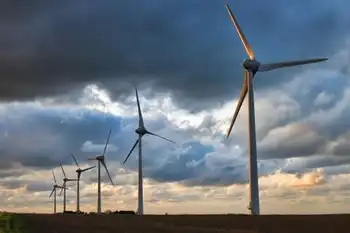
VIGP includes 10 to 40 MW of wind and 4 MW of wave energy.

There are no plans to debate the cost benefits of green energy because renewables cannot provide firm capacity, the utility says. "If it is determined that green energy can be developed in a viable manner, then it may mean that a gas plant can be deferred into the future."

Related News

California Considers Revamping Electricity Rates in Bid to Clean the Grid

California Electricity Rate Overhaul proposes a fixed fee and lower per-kWh rates to boost electrification, renewables, and grid reliability, while CPUC weighs impacts on conservation, low-income customers, and time-of-use pricing across the state.


Key Points

A proposal to add fixed fees and cut per-kWh prices to drive electrification, support renewables, and balance grid costs.

✅ Fixed monthly fee plus lower volumetric per-kWh charges

✅ Aims to accelerate EVs, heat pumps, and building electrification

✅ CPUC review weighs equity, conservation, and grid reliability


California is contemplating a significant overhaul to its electricity rate structure that could bring major changes to electric bills statewide, a move that has ignited debate among environmentalists and politicians alike. The proposed modifications, spearheaded by the California Energy Commission (CEC), would introduce a fixed fee on electric bills and lower the rate per kilowatt-hour (kWh) used.


Motivations for the Change

Proponents of the plan argue that it would incentivize Californians to transition to electric appliances and vehicles, a critical aspect of the state's ambitious climate goals. They reason that a lower per-unit cost would make electricity a more attractive option for applications like home heating and transportation, which are currently dominated by natural gas and gasoline. Additionally, they believe the plan would spur investment in renewable energy sources and distributed generation, ultimately leading to a cleaner electricity grid.

California has some of the most ambitious climate goals in the country, aiming to achieve carbon neutrality by 2045. The transportation sector is the state's largest source of greenhouse gas emissions, and electrification is considered a key strategy for reducing emissions. A 2021 report by the Natural Resources Defense Council (NRDC) found that electrifying all California vehicles and buildings could reduce greenhouse gas emissions by 80% compared to 2020 levels.


Concerns and Potential Impacts

Opponents of the proposal, including some consumer rights groups, express apprehensions that it would discourage conservation efforts. They argue that with a lower per-kWh cost, Californians would have less motivation to reduce their electricity consumption. Additionally, they raise concerns that the income-based fixed charges could disproportionately burden low-income households, who may struggle to afford the base charge regardless of their overall electricity consumption.

A recent study by the CEC suggests that the impact on most Californians would be negligible, even as regulators face calls for action over soaring bills from ratepayers across the state. The report predicts that the average household's electricity bill would change by less than $5 per month under the proposed system. However, some critics argue that this study may not fully account for the potential behavioral changes that could result from the new rate structure.


Similar Initiatives and National Implications

California is not the only state exploring changes to its electricity rates to promote clean energy. Hawaii and New York have also implemented similar programs to encourage consumers to use electricity during off-peak hours. These time-varying rates, also known as time-of-use rates, can help reduce strain on the electricity grid during peak demand periods.

The California proposal has garnered national attention as other states grapple with similar challenges in balancing clean energy goals with affordability concerns amid soaring electricity prices in California and beyond. The outcome of this debate could have significant implications for the broader effort to decarbonize the U.S. power sector.


The Road Ahead

The California Public Utilities Commission (CPUC) is reviewing the proposal and anticipates making a decision later this year, with a potential income-based flat-fee structure under consideration. The CPUC will likely consider the plan's potential benefits and drawbacks, including its impact on greenhouse gas emissions, electricity costs for consumers, and the overall reliability of the grid, even as some lawmakers seek to overturn income-based charges in the legislature.

The decision on California's electricity rates is merely one piece of the puzzle in the fight against climate change. However, it is a significant one, with the potential to shape the state's energy landscape for years to come, including the future of residential rooftop solar markets and investments.


Related News

View more

OPINION Rewiring Indian electricity

India Power Sector Crisis: a tangled market of underused plants, coal shortages, cross-subsidies, high transmission losses, and weak PPAs, requiring deregulation, power exchanges, and cost-reflective tariffs to fix insolvency and outages.


Key Points

India power market failure from subsidies, coal shortages, and losses, needing deregulation and reflective pricing.

✅ Deregulate to enable spot trading on power exchanges

✅ End cross-subsidies; charge cost-reflective tariffs

✅ Secure coal supply; cut T&D losses and theft


India's electricity industry is in a financial and political tangle.

Power producers sit on thousands of megawatts of underutilized plant, while consumers face frequent power cuts, both planned and unplanned.

Financially troubled generators struggle to escape insolvency proceedings. The state-owned banks that have mostly financed power utilities fear that debts of troubled utilities totaling 1.74 trillion rupees will soon go bad.

Aggressive bidding for supply contracts and slower-than-expected demand growth, including a recent demand slump in electricity use, is the root cause. The problems are compounded by difficulties in securing coal and other fuels, high transmission losses, electricity theft and cash-starved distribution companies.

But India's 36 state and union territory governments are contributing mightily to this financial and economic mess. They persist with populist cross-subsidies -- reducing charges for farmers and households at the cost of nonagricultural businesses, especially energy-intensive manufacturing sectors such as steel.

The states refuse to let go of their control over how electricity is produced, distributed and consumed. And they are adamant that true markets, with freedom for large industrial users to buy power at market-determined rates from whichever utility they want at power exchanges -- will not become a reality in India.

State politicians are driven mainly by the electoral need to appease farmers, India's most important vote bank, who have grown used to decades of nearly-free power.

New Delhi is therefore relying on short-term fixes instead of attempting to overhaul a defunct system. Users must pay the real cost of their electricity, as determined by a properly integrated national market free of state-level interference if India's power mess is to be really addressed.

As of Aug. 31, the country's total installed production capacity was 344,689 MW, underscoring its status as the third-largest electricity producer globally by output. Out of that, thermal power comprising coal, gas and diesel accounted for 64%, hydropower 13% and renewables accounted for 20%. Commercial and industrial users accounted for 55% of consumption followed by households on 25% and the remaining 20% by agriculture.

Coal-fired power generation, which contributes roughly 90% of thermal output and the bulk of the financially distressed generators, is the most troubled segment as it faces a secular decline in tariffs due to increasing competition from highly subsidized renewables (which also benefit from falling solar panel costs), coal shortages and weak demand.

The Central Electricity Act (CEA) 2003 opened the gates of the country's power sector for private players, who now account for 45% of generating capacity.

But easy credit, combined with an overconfident estimation of the risks involved, emboldened too many investors to pile in, without securing power purchase agreements (PPAs) with distribution companies.

As a result, power capacity grew at an annual compound rate of 11% compared to demand at 6% in the last decade leading to oversupply.

This does not mean that the electricity market is saturated. Merely that there are not enough paying customers. Distributors have plenty of consumers who will not or cannot pay, even though they have connections. There is huge unmet demand for power. There are 32 million Indian homes -- roughly 13% of the total -- mostly rural and poor with no access to electricity.

Moreover, consumption by those big commercial and industrial users which do not enjoy privileged rates is curbed by high prices, driven up by the cost of subsidizing others, extra charges on exchange-traded power and transmission and distribution losses (including theft) of 20-30%.

With renewables increasingly becoming cheaper, financially stressed distributors are avoiding long-term power purchase agreements, preferring spot markets. Meanwhile, coal shortages force generators to buy expensive imported coal supplies or cut output. The operating load for most private generators, which suffer particularly acute coal shortages in compared to state-owned utilities, has fallen from 84% in 2009-2010 to 55% now.

Smoothing coal supplies should be the top priority. Often coal is denied to power generators without long-term purchase contracts. Such discrimination in coal allocation prevails -- because the seller (state-run Coal India and its numerous subsidiaries) is an inefficient monopolist which cannot produce enough and rations coal supplies, favoring state-run generators over private.

To help power producers, New Delhi plans measures including auctioning power sales contracts with assured access to coal. However, even though coal and electricity shortages eased recently, such short-term fixes won't solve the problem. With electricity prices in secular decline, distributors are not seeking long-term supply contracts -- rather they are often looking for excuses to get out of existing agreements.

India needs a fundamental two-step reform. First, the market must be deregulated to allow most bulk suppliers and users to move to power trading exchanges, which currently account for just 10% of the market.

This would lead to genuine price discovery in a spot market and, in time, lead to the trading of electricity futures contracts. That would help in consumers and producers hedge their respective costs and revenues and safeguard their economic positions without any need for government intervention.

The second step to a healthy electricity industry is for consumers to pay the real cost of power. Cross-subsidization must end. That would promote optimal electricity use, innovation and environmental protection. Farmers enjoying nearly-free power create ecological problems by investing in water-guzzling crops such as rice and sugar cane.

Most industrial consumers, who do not have power supply privileges, have their businesses distorted and delayed by high prices. Lowering their costs would encourage power-intensive manufacturing to expand, and in the process, boost electricity demand and improve capacity utilization.

Of course, cutting theft is central to making consumers pay their way. Government officials must stop turning a blind eye to theft, especially when such transmission and distribution losses average 20%.

Politicians who want to continue subsidizing farmers or assist the poor can do so by paying cash out directly to their bank accounts, instead of wrongly relying on the power sector.

Such market-oriented reforms have long been blocked by state-level politicians, who now enjoy the influence born of operating subsidies and interfering in the sector. New Delhi must address this opposition. Narendra Modi, as a self-styled reforming prime minister, should have the courage to bite this bullet and convince state governments (starting with those ruled by his Bharatiya Janata Party) to reform. To encourage cooperation, he could offer states securing real improvements an increased share of centrally collected taxes.

Ritesh Kumar Singh is to be the chief economist of the new policy research and advocacy company Indonomics Consulting. He is former assistant director of the Finance Commission of India.


Related News

View more

UK Renewable Energy Auction: Boost for Wind and Tidal Power

UK Wind and Tidal Power Auction signals strong CfD support for offshore wind, tidal stream projects, investor certainty, and clean electricity, accelerating the net-zero transition, boosting jobs, and strengthening UK energy security and grid integration.


Key Points

A CfD auction awarding contracts for wind and tidal projects to scale clean power and advance UK net-zero.

✅ Offshore wind dominates CfD awards

✅ Tidal stream gains predictable, reliable capacity

✅ Jobs, investment, and grid integration accelerate


In a significant development for the UK’s renewable energy sector, the latest auction for renewable energy contracts has underscored a transformative shift towards wind and tidal power. As reported by The Guardian, the auction results reveal a strong commitment to expanding these technologies, with new contracts adding 10 GW to the UK grid, marking a pivotal moment in the UK’s transition to cleaner energy sources.

The Auction’s Impact

The renewable energy auction, which took place recently, has allocated contracts for a substantial increase in wind and tidal power projects. This auction, part of the UK’s Contracts for Difference (CfD) scheme, is designed to support the development of low-carbon energy technologies by providing financial certainty to investors. By offering fixed prices for the electricity generated by these projects, the CfD scheme aims to stimulate investment and accelerate the deployment of renewable energy sources.

The latest results are particularly notable for the significant share of contracts awarded to offshore wind farms and tidal power projects, highlighting how offshore wind is powering up the UK as policy and investment priorities continue to shift. This marks a shift from previous auctions, where solar power and onshore wind were the dominant technologies. The move towards supporting offshore wind and tidal power reflects the UK’s strategic focus on harnessing its abundant natural resources to drive the transition to a low-carbon energy system.

Offshore Wind Power: A Major Contributor

Offshore wind power has emerged as a major player in the UK’s renewable energy landscape, within a global market projected to become a $1 trillion business over the coming decades. The recent auction results highlight the continued growth and investment in this sector.

The UK has been a global leader in offshore wind development, with several large-scale projects already operational and more in the pipeline. The auction has further cemented this position, underscoring what the U.S. can learn from the U.K. in scaling offshore wind capacity, with new projects set to contribute significantly to the country’s renewable energy capacity. These projects are expected to deliver substantial amounts of clean electricity, supporting the UK’s goal of achieving net-zero emissions by 2050.

Tidal Power: An Emerging Frontier

Tidal power, although less developed compared to wind and solar, is gaining momentum as a promising renewable energy source, with companies harnessing oceans and rivers to demonstrate practical potential. The auction results have allocated contracts to several tidal power projects, signaling growing recognition of the potential of this technology.

Tidal power harnesses the energy from tidal movements and currents, which are highly predictable and consistent, and a market outlook for wave and tidal energy points to emerging growth drivers and investment. This makes it a reliable complement to intermittent sources like wind and solar power. The inclusion of tidal power projects in the auction reflects the UK’s commitment to diversifying its renewable energy portfolio and exploring all available options for achieving energy security and sustainability.

Economic and Environmental Benefits

The expansion of wind and tidal power projects through the recent auction offers numerous economic and environmental benefits. From an economic perspective, these projects are expected to create thousands of jobs in construction, maintenance, and manufacturing. They also stimulate investment in local economies and support the growth of the green technology sector.

Environmentally, the increased deployment of wind and tidal power contributes to significant reductions in greenhouse gas emissions. Offshore wind farms and tidal power projects produce clean electricity with minimal environmental impact, helping to mitigate the effects of climate change and improve air quality.

Challenges and Future Outlook

Despite the positive outcomes of the auction, there are challenges to address. Offshore wind farms and tidal power projects require substantial upfront investment and face technical and logistical challenges. Issues such as grid integration, environmental impact assessments, and supply chain constraints need to be carefully managed to ensure the successful deployment of these projects.

Looking ahead, the UK’s renewable energy strategy will continue to evolve as new technologies and innovations emerge, and growth despite Covid-19 underscores sector resilience. The success of the latest auction demonstrates the growing confidence in wind and tidal power and sets the stage for further advancements in renewable energy.

The UK government’s commitment to supporting these technologies through initiatives like the CfD scheme is crucial for achieving long-term energy and climate goals. As the country progresses towards its net-zero target, the continued expansion of wind and tidal power will play a key role in shaping a sustainable and resilient energy future.

Conclusion

The latest renewable energy auction represents a significant milestone in the UK’s transition to a low-carbon energy system. By awarding contracts to wind and tidal power projects, the auction underscores the country’s commitment to harnessing diverse and reliable sources of renewable energy. The expansion of offshore wind and the emerging role of tidal power highlight the UK’s strategic approach to achieving energy security, reducing emissions, and driving economic growth. As the renewable energy sector continues to evolve, the UK remains at the forefront of global efforts to build a sustainable and clean energy future.


Related News

View more

Australia to head huge electricity and internet project in PNG

Australia-PNG Infrastructure Rollout delivers electricity and broadband expansion across PNG, backed by New Zealand, the US, Japan, and South Korea, enhancing telecom capacity, digital connectivity, and regional development ahead of the APEC summit.


Key Points

A multi-billion-dollar plan to expand power and broadband in PNG, covering 70% of users with allied support.

✅ Delivers internet to 70% of PNG households and communities

✅ Expands electricity grid, boosting reliability and access

✅ Backed by NZ, US, Japan, and S. Korea; complements APEC investments


Australia will lead a new multi-billion-dollar electricity and internet rollout in Papua New Guinea, with the PM rules out taxpayer-funded power plants stance underscoring its approach to energy policy.

The Australian newspaper reported New Zealand, the US, Japan, whose utilities' offshore wind deal in the UK signaled expanding energy interests, and South Korea are supporting the project, which will be PNG's largest ever development investment.

The project will deliver internet to 70 percent of PNG and improve access to power, even as clean energy investment in developing nations has slipped sharply, according to a recent report.

Both China and the US are also expected to announce new investments in the region at the APEC summit this week, and recent China-Cambodia nuclear energy cooperation underscores those energy ties.

Beijing will announce new mining and energy investments in PNG, echoing projects such as the Chinese-built electricity poles plant in South Sudan, and two Confucius Insitutes to be housed at PNG universities.


Related News

View more

A tenth of all electricity is lost in the grid - superconducting cables can help

High-Temperature Superconducting Cables enable lossless, high-voltage, underground transmission for grid modernization, linking renewable energy to cities with liquid nitrogen cooling, boosting efficiency, cutting emissions, reducing land use, and improving resilience against disasters and extreme weather.


Key Points

Liquid-nitrogen-cooled power cables delivering electricity with near-zero losses, lower voltage, and greater resilience.

✅ Near-lossless transmission links renewables to cities efficiently

✅ Operate at lower voltage, reducing substation size and cost

✅ Underground, compact, and resilient to extreme weather events


For most of us, transmitting power is an invisible part of modern life. You flick the switch and the light goes on.

But the way we transport electricity is vital. For us to quit fossil fuels, we will need a better grid, with macrogrid planning connecting renewable energy in the regions with cities.

Electricity grids are big, complex systems. Building new high-voltage transmission lines often spurs backlash from communities, as seen in Hydro-Que9bec power line opposition over aesthetics and land use, worried about the visual impact of the towers. And our 20th century grid loses around 10% of the power generated as heat.

One solution? Use superconducting cables for key sections of the grid. A single 17-centimeter cable can carry the entire output of several nuclear plants. Cities and regions around the world have done this to cut emissions, increase efficiency, protect key infrastructure against disasters and run powerlines underground. As Australia prepares to modernize its grid, it should follow suit with smarter electricity infrastructure initiatives seen elsewhere. It's a once-in-a-generation opportunity.


What's wrong with our tried-and-true technology?
Plenty.

The main advantage of high voltage transmission lines is they're relatively cheap.

But cheap to build comes with hidden costs later. A survey of 140 countries found the electricity currently wasted in transmission accounts for a staggering half-billion tons of carbon dioxide—each year.

These unnecessary emissions are higher than the exhaust from all the world's trucks, or from all the methane burned off at oil rigs.

Inefficient power transmission also means countries have to build extra power plants to compensate for losses on the grid.

Labor has pledged A$20 billion to make the grid ready for clean energy, and international moves such as US-Canada cross-border approvals show the scale of ambition needed. This includes an extra 10,000 kilometers of transmission lines. But what type of lines? At present, the plans are for the conventional high voltage overhead cables you see dotting the countryside.

System planning by Australia's energy market operator shows many grid-modernizing projects will use last century's technologies, the conventional high voltage overhead cables, even as Europe's HVDC expansion gathers pace across its network. If these plans proceed without considering superconductors, it will be a huge missed opportunity.


How could superconducting cables help?
Superconduction is where electrons can flow without resistance or loss. Built into power cables, it holds out the promise of lossless electricity transfer, over both long and short distances. That's important, given Australia's remarkable wind and solar resources are often located far from energy users in the cities.

High voltage superconducting cables would allow us to deliver power with minimal losses from heat or electrical resistance and with footprints at least 100 times smaller than a conventional copper cable for the same power output.

And they are far more resilient to disasters and extreme weather, as they are located underground.

Even more important, a typical superconducting cable can deliver the same or greater power at a much lower voltage than a conventional transmission cable. That means the space needed for transformers and grid connections falls from the size of a large gym to only a double garage.

Bringing these technologies into our power grid offers social, environmental, commercial and efficiency dividends.

Unfortunately, while superconductors are commonplace in Australia's medical community (where they are routinely used in MRI machines and diagnostic instruments) they have not yet found their home in our power sector.

One reason is that superconductors must be cooled to work. But rapid progress in cryogenics means you no longer have to lower their temperature almost to absolute zero (-273℃). Modern "high temperature" superconductors only need to be cooled to -200℃, which can be done with liquid nitrogen—a cheap, readily available substance.

Overseas, however, they are proving themselves daily. Perhaps the most well-known example to date is in Germany's city of Essen. In 2014, engineers installed a 10 kilovolt (kV) superconducting cable in the dense city center. Even though it was only one kilometer long, it avoided the higher cost of building a third substation in an area where there was very limited space for infrastructure. Essen's cable is unobtrusive in a meter-wide easement and only 70cm below ground.

Superconducting cables can be laid underground with a minimal footprint and cost-effectively. They need vastly less land.

A conventional high voltage overhead cable requires an easement of about 130 meters wide, with pylons up to 80 meters high to allow for safety. By contrast, an underground superconducting cable would take up an easement of six meters wide, and up to 2 meters deep.

This has another benefit: overcoming community skepticism. At present, many locals are concerned about the vulnerability of high voltage overhead cables in bushfire-prone and environmentally sensitive regions, as well as the visual impact of the large towers and lines. Communities and farmers in some regions are vocally against plans for new 85-meter high towers and power lines running through or near their land.

Climate extremes, unprecedented windstorms, excessive rainfall and lightning strikes can disrupt power supply networks, as the Victorian town of Moorabool discovered in 2021.

What about cost? This is hard to pin down, as it depends on the scale, nature and complexity of the task. But consider this—the Essen cable cost around $20m in 2014. Replacing the six 500kV towers destroyed by windstorms near Moorabool in January 2020 cost $26 million.

While superconducting cables will cost more up front, you save by avoiding large easements, requiring fewer substations (as the power is at a lower voltage), and streamlining approvals.


Where would superconductors have most effect?
Queensland. The sunshine state is planning four new high-voltage transmission projects, to be built by the mid-2030s. The goal is to link clean energy production in the north of the state with the population centers of the south, similar to sending Canadian hydropower to New York to meet demand.

Right now, there are major congestion issues between southern and central Queensland, and subsea links like Scotland-England renewable corridors highlight how to move power at scale. Strategically locating superconducting cables here would be the best location, serving to future-proof infrastructure, reduce emissions and avoid power loss.


Related News

View more

Energy minister unveils Ontario's plan to address growing energy needs

Powering Ontario's Growth accelerates clean electricity, pairing solar, wind, and hydro with energy storage, efficiency investments, and new nuclear, including SMRs, to meet rising demand and net-zero goals while addressing supply planning across the province.


Key Points

Ontario's clean energy plan adds renewables, storage, efficiency, and nuclear to meet rising electricity demand.

✅ Over $1B for energy-efficiency programs through 2030+

✅ Largest clean power procurement in Canadian history

✅ Mix of solar, wind, hydro, storage, nuclear, and SMRs


Energy Minister Todd Smith has announced a new plan that outlines the actions the government is taking to address the province's growing demand for electricity.

The government is investing over a billion dollars in "energy-efficiency programs" through 2030 and beyond, Smith said in Windsor.

Experts at Ontario's Independent Electricity System recommended the planning start early to meet demand they predict will require the province to be able to generate 88,000 megawatts (MW) in 20 years.

"That means all of our current supply ... would need to double to meet the anticipated demand by 2050," he said during the announcement.

"While we may not need to start building today, government and those in the energy sector need to start planning immediately, so we have new clean, zero emissions projects ready to go when we need them."

The project is called Powering Ontario's Growth and will advance new clean energy generation from a number of sources, including solar, hydroelectric and wind.

He said this would be the biggest acquisition of clean energy in Canada's history.

Smith made the announcement at Hydro One's Keith Transmission Station.

He said the new planned procurement of green power will pair well with recent energy storage procurements, so that power generated by solar panels, for example, can be stored and injected into the system when needed.

NDP Opposition Leader Marit Stiles said Monday's announcement lacks specifics.

"It's light on details, including key questions of cost, climate impact, waste management and financial risk," said Stiles.

"Ford's Conservatives should be playing catch-up after undermining clean energy in their first term. Instead, they're offering generalities and a vague sense of what they might do."

The Green Party criticized the move Monday afternoon, noting that clean, affordable electricity remains a key Ontario election issue today.

"Ontario is facing an energy crunch – and the Ford government is making it worse by choosing more expensive, dirtier options," said MPP for Guelph Mike Schreiner in the statement.

He said Premier Doug Ford has "grossly" mismanaged the province's energy supply by cancelling 750 renewable energy projects and slashing efficiency programs.

"Now, faced with an opportunity to become a leader in a world that's rapidly embracing renewable energy, this government has chosen to funnel taxpayer dollars into polluting fossil gas plants and expensive new nuclear that will take decades to come online," said Schreiner.

Smith announced last week the plan for three more small modular reactors at the site of the Darlington nuclear power plant. The province also shared its intention to add a third nuclear generating station to Bruce Power near Kincardine. 

"With this backwards approach, the Ford government is squandering a once-in-a-generation opportunity to make Ontario a global leader in attracting investment dollars and creating better jobs in the trillion-dollar clean energy sector," said Schreiner.


Related News

View more

Sign Up for Electricity Forum’s Newsletter

Stay informed with our FREE Newsletter — get the latest news, breakthrough technologies, and expert insights, delivered straight to your inbox.

Electricity Today T&D Magazine Subscribe for FREE

Stay informed with the latest T&D policies and technologies.
  • Timely insights from industry experts
  • Practical solutions T&D engineers
  • Free access to every issue

Download the 2025 Electrical Training Catalog

Explore 50+ live, expert-led electrical training courses –

  • Interactive
  • Flexible
  • CEU-cerified