Brascan Power Adds To Hydro Income Fund

By Canadian Press


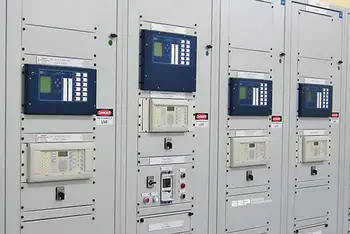
Protective Relay Training - Basic

Our customized live online or in‑person group training can be delivered to your staff at your location.
  • Live Online
  • 12 hours Instructor-led
  • Group Training Available
Regular Price:
$699
Coupon Price:
$599
Reserve Your Seat Today
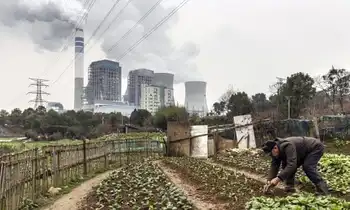
The power subsidiary of the Brascan Corp. conglomerate has increased its stake to a bare majority of the Great Lakes Hydro Income Fund, which owns 21 hydroelectric plants in Canada and the United States.

Great Lakes Hydro announced that Brascan Power had recently bought additional units giving the Brascan unit 50.1 per cent of the units.

Brascan Power is the largest unitholder and a major and active partner in the fund. Brascan Power owned 30 per cent of the fund when it started and increased its stake to 50 per cent in June 2000.

The Great Lakes fund owns and operates 21 hudroelectric stations in Quebec, Ontario, British Columbia, Maine and New Hampshire in the United States. The plants have an installed capacity of 965 megawatts of power.

Brascan is one of Canada's oldest and best-known conglomerates, operating through well-known subsidiaries such as metals giant Noranda Inc., developer Brookfield Properties, Brascan Power and Brascan Financial, formerly Trilon, which owns the Royal LePage real estate brokerage.

Related News

Military Is Ramping Up Preparation For Major U.S. Power Grid Hack

DARPA RADICS Power Grid Security targets DoD resilience to cyber attacks, delivering early warning, detection, isolation, and characterization tools, plus a secure emergency network to protect critical infrastructure and speed grid restoration and communications.


Key Points

A DoD/DARPA initiative to detect, contain, and rapidly recover the U.S. grid from sophisticated cyber attacks.

✅ Early warning separates attacks from routine outages

✅ Pinpoints intrusion points and malware used

✅ Builds secure emergency network for rapid restoration


The U.S. Department of Defense is growing increasingly concerned about hackers taking down our power grid and crippling the nation, reflecting a renewed focus on grid protection across agencies, which is why the Pentagon has created a $77-million security plan that it hopes will be up and running by 2020.

The U.S. power grid is threatened every few days. While these physical and cyber attacks have never led to wide-scale outages, attacks are getting more sophisticated. According to a 494-page report released by the Department of Energy in January and a new grid report card, the nation’s grid “faces imminent danger from cyber attacks.” Such a major, sweeping attack could threaten “U.S. lifeline networks, critical defense infrastructure, and much of the economy; it could also endanger the health and safety of millions of citizens.” If it were to happen today, America could be powered-down and vulnerable for weeks.

#google#

The DoD is working on an automated system to speed up recovery time to a week or less — what it calls the Rapid Attack Detection, Isolation, and Characterization (RADICS) program. DARPA, the Pentagon’s research arm, originally solicited proposals in late 2015, asking for technology that did three things. Primarily, it had to detect early warning signs and distinguish between attacks and normal outages, especially after intrusions at U.S. electric utilities underscored the risk, but it also had to pinpoint the access point of the attack and determine what malicious software was used. Finally, it must include an emergency system that can rapidly connect various power-supply centers, without any human coordination. This would allow emergency and military responders to have an ad hoc communication system in place moments after an attack.

“If a well-coordinated cyberattack on the nation’s power grid were to occur today, the time it would take to restore power would pose daunting national security challenges,” said DARPA program manager John Everett, in a statement, at the time. “Beyond the severe domestic impacts, including economic and human costs, prolonged disruption of the grid would hamper military mobilization and logistics, impairing the government’s ability to project force or pursue solutions to international crises.”

DARPA plans to spend $77 million on RADICS, while DOE funding to improve the grid complements these initiatives. Last November, SRI International announced it had received $7.3 million from the program. In December, Raython was granted $9 million. The latest addition is BAE Systems, which received $8.6 million last month to develop technology that detects and contains power-grid threats, and creates a secure emergency provisional system that restores some power and communication in the wake of an attack — what is being called a secure emergency network.

According to the military news site Defense Systems, BAE’s SEN would rely on radio, satellite, or wireless internet — particularly as ransomware attacks continue to rise — whatever is available that allows the grid to continue working. The SEN would serve as a wireless connection between separate power grid stations.

While the ultimate goal of the RADICS program will be the restoration of civilian power and communications, the SEN will prioritize communication networks that would be used for defense or combat, so the U.S. government can still wage war while the rest of us are in the dark.


Related News

View more

Rio Tinto seeking solutions that transform heat from underground mines into electricity

Rio Tinto waste heat-to-electricity initiative captures underground mining thermal energy at Resolution Copper, Arizona, converting it to renewable power for cooling systems and microgrids, advancing decarbonization, energy efficiency, and the miner's 2050 carbon-neutral goal.


Key Points

A program converting underground thermal energy into on-site electricity to cut emissions and support mine cooling.

✅ Captures low-grade heat from rock and geothermal water.

✅ Generates electricity for ventilation, refrigeration, microgrids.

✅ Scalable, safe, and grid- or storage-ready for peak demand.


The world’s second-largest miner, Rio Tinto announced that it is accepting proposals for solutions that transform waste heat into electricity for reuse from its underground operations.

In a press release, the company said this initiative is aimed at drastically reducing greenhouse gas emissions, even as energy-intensive projects like bitcoin mining operations expand, so that it can achieve its goal of becoming carbon neutral by 2050.

Initially, the project would be implemented at the Resolution copper mine in Arizona, which Rio owns together with BHP (ASX, LON: BHP). At this site, massive electrically-driven refrigeration and ventilation systems, aligned with broader electrified mining practices, are in charge of cooling the work environment because of the latent heat from the underground rock and groundwater. 

THE INITIATIVE IS AIMED AT REDUCING GREENHOUSE GAS EMISSIONS SO THAT RIO CAN ACHIEVE ITS GOAL OF BECOMING CARBON NEUTRAL BY 2050

“When operating, the Resolution copper mine will be a deep underground block cave mine some 7,000 feet (~2 kilometres) deep, with ambient air temperatures ranging between 168°F to 180°F (76°C to 82°C), conditions that, during heat waves, when bitcoin mining power demand can strain local grids, further heighten cooling needs, and underground water at approximately 194°F (90°C),” the media brief states.

“Rio Tinto is seeking solutions to capture and reuse the heat from underground, contributing towards powering the equipment needed to cool the operations. The solution to capture and convert this thermal energy into electrical energy, such as emerging thin-film thermoelectrics, should be safe, environmentally friendly and cost-effective.”

The miner also said that, besides capturing heat for reuse, the solution should generate electrical energy from low range temperatures below the virgin rock temperature and/or from the high thermal water coming from the underground rock, similar to using transformer waste heat for heating in the power sector. 

At the same time, the solution should be scalable and easily transported through the many miles of underground tunnels that will be built to ventilate, extract and move copper ore to the surface.

Rio requires proposals to offer the possibility of distributing the electrical energy generated back into the electrical grid from the mining operation or stored and used at a later stage when energy is required during peak use periods, especially as jurisdictions aim to use more electricity for heat in colder seasons. 


Related News

View more

Victims of California's mega-fire will sue electricity company

PG&E Wildfire Lawsuit alleges utility negligence, inadequate infrastructure maintenance, and faulty transmission lines, as victims seek compensation. Regulators investigate the blaze, echoing class actions after Victoria's Black Saturday mega-fires and utility oversight failures.


Key Points

PG&E Wildfire Lawsuit alleges utility negligence and power line faults, seeking victim compensation amid investigations.

✅ Alleged failure to maintain transmission infrastructure

✅ Spark reports and regulator filings before blaze erupted

✅ Class action parallels with Australia's Black Saturday


Victims of California's most destructive wildfire have filed a lawsuit accusing Pacific Gas & Electric Co. of causing the massive blaze, a move that follows the utility's 2018 Camp Fire guilty plea in a separate case.

The suit filed on Tuesday in state court in California accuses the utility of failing to maintain its infrastructure and properly inspect and manage its power transmission lines, amid prior reports that power lines may have sparked fires in California.

The utility's president said earlier the company doesn't know what caused the fire, but is cooperating with the investigation by state agencies, and other utilities such as Southern California Edison have faced wildfire lawsuits in California.

PG&E told state regulators last week that it experienced a problem with a transmission line in the area of the fire just before the blaze erupted.

A landowner near where the blaze began said PG&E notified her the day before the wildfire that crews needed to come onto her property because some wires were sparking, and the company later promoted its wildfire assistance program for victims seeking aid.

A massive class action after Australia's last mega-fire, Victoria's Black Saturday in 2009, saw $688.5 million paid in compensation to thousands of claimants affected by the Kilmore-Kinglake and Murrindindi-Marysville fires, partly by electricity company SP Ausnet, and partly by government agencies, while in California PG&E's bankruptcy plan won support from wildfire victims addressing compensation claims.


Related News

View more

Britain Prepares for High Winter Heating and Electricity Costs

UK Energy Price Cap drives household electricity bills and gas prices, as Ofgem adjusts unit rates amid natural gas shortages, Russia-Ukraine disruptions, inflation, recession risks, and limited storage; government support offers only short-term relief.


Key Points

The UK Energy Price Cap limits per-unit gas and electricity charges set by suppliers and adjusted by Ofgem.

✅ Reflects wholesale natural gas costs; varies quarterly

✅ Protects consumers from sudden electricity and heating bill spikes

✅ Does not cap total annual spend; usage still determines bills


The government organization that controls the cost of energy in Great Britain recently increased what is known as a price cap on household energy bills. The price cap is the highest amount that gas suppliers can charge for a unit of energy.

The new, higher cost has people concerned that they may not be able to pay for their gas and electricity this winter. Some might pay as much as $4,188 for energy next year. Earlier this year, the price cap was at $2,320, and a 16% decrease in bills is anticipated in April.

Why such a change?

Oil and gas prices around the world have been increasing since 2021 as economies started up again after the coronavirus pandemic. More business activities required more fuel.

Then, Russia invaded Ukraine in late February, creating a new energy crisis. Russia limited the amount of natural gas it sent to European countries that needed it to power factories, produce electricity and keep homes warm.

Some energy companies are charging more because they are worried that Russia might completely stop sending gas to European countries. And in Britain, prices are up because the country does not produce much gas or have a good way to store it. As a result, Britain must purchase gas often in a market where prices are high, and ministers have discussed ending the gas-electricity price link to ease bills.

Citibank, a U.S. financial company, believes the higher energy prices will cause inflation in Britain to reach 18 percent in 2023, while EU energy inflation has also been driven higher by energy costs this year. And the Bank of England says an economic slowdown known as a recession will start later this year.

Public health and private aid organizations worry that high energy prices will cause a “catastrophe” as Britons choose between keeping their homes warm and eating enough food.

What can government do?

As prices rise, the British government plans to give people between $450 and $1,400 to help pay for energy costs, while some British MPs push to further restrict the price charged for gas and electricity. But the help is seen by many as not enough.

If the government approves more money for fuel, it will probably not come until September, as the energy security bill moves toward becoming law. That is the time the Conservative Party will select a new leader to replace Prime Minister Boris Johnson.

The Labour Party says the government should increase the amount it provides for people to pay for fuel by raising taxes on energy companies. However, the two politicians who are trying to become the next Prime Minister do not seem to support that idea.

Giovanna Speciale leads an organization called the Southeast London Community Energy group. It helps people pay their bills. She said the money will help but it is only a short-term solution to a bigger problem with Britain’s energy system. Because the system is privately run, she said, “there’s very little that the government can do to intervene in this.”

Other European countries are seeing higher energy costs, but not as high, and at the EU level, gas price cap strategies have been outlined to tackle volatility. In France, gas prices are capped at 2021 levels. In Germany, prices are up by 38 percent since last year. However, the government is reducing some taxes, which will make it easier for the average person to buy gas. In Italy, prices are going up, but the government recently approved over $8 billion to help people pay their energy bills.


Related News

View more

Russia and Ukraine Accuse Each Other of Violating Energy Ceasefire

Russia-Ukraine Energy Ceasefire Violations escalate as U.S.-brokered truce frays, with drone strikes, shelling, and grid attacks disrupting gas supply and power infrastructure across Kursk, Luhansk, Sumy, and Dnipropetrovsk, prompting sanctions calls.


Key Points

Alleged breaches of a U.S.-brokered truce, with both sides striking power grids, gas lines, and critical energy nodes.

✅ Drone and artillery attacks reported on power and gas assets

✅ Both sides accuse each other of breaking truce terms

✅ U.S. mediation faces verification and compliance hurdles


Russia and Ukraine have traded fresh accusations regarding violations of a fragile energy ceasefire, brokered by the United States, which both sides had agreed to last month. These new allegations highlight the ongoing tensions between the two nations and the challenges involved in implementing a truce amid global energy instability in such a complex and volatile conflict.

The U.S.-brokered ceasefire had initially aimed to reduce the intensity of the fighting, specifically in the energy sector, where both sides had previously targeted each other’s infrastructure. Despite this agreement, the accusations on Wednesday suggest that both Russia and Ukraine have continued their attacks on each other's energy facilities, a crucial aspect of the ceasefire’s terms.

Russia’s Ministry of Defence claimed that Ukrainian forces had launched drone and shelling attacks in the western Kursk region, cutting power to over 1,500 homes. This attack allegedly targeted key infrastructure, leaving several localities without electricity. Additionally, in the Russian-controlled part of Ukraine's Luhansk region, a Ukrainian drone strike hit a gas distribution station, severely disrupting the gas supply for over 11,000 customers in the area around Svatove.

In response, Ukrainian President Volodymyr Zelensky accused Russia of breaking the ceasefire. He claimed that Russian drone strikes had targeted an energy substation in Ukraine’s Sumy region, while artillery fire had damaged a power line in the Dnipropetrovsk region, leaving nearly 4,000 consumers without power even as Ukraine increasingly leans on electricity imports to stabilize the grid. Ukraine's accusations painted a picture of continued Russian aggression against critical energy infrastructure, a strategy that had previously been a hallmark of Russia’s broader military operations in the war.

The U.S. had brokered the energy truce as a potential stepping stone toward a more comprehensive ceasefire agreement. However, the repeated violations raise questions about the truce’s viability and the broader prospects for peace between Russia and Ukraine. Both sides are accusing each other of undermining the agreement, which had already been delicate due to previous suspicions and mistrust. In particular, the U.S. administration, led by President Donald Trump, has expressed impatience with the slow progress in moving toward a lasting peace, amid debates over U.S. national energy security priorities.

Kremlin spokesperson Dmitry Peskov defended Russia’s stance, emphasizing that President Vladimir Putin had shown a commitment to peace by agreeing to the energy truce, despite what he termed as daily Ukrainian attacks on Russian infrastructure. He reiterated that Russia would continue to cooperate with the U.S., even though the Ukrainian strikes were ongoing. This perspective suggests that Russia remains committed to the truce but views Ukraine’s actions as violations that could potentially derail efforts to reach a more comprehensive ceasefire.

On the other hand, President Zelensky argued that Russia was not adhering to the terms of the ceasefire. He urged the U.S. to take a stronger stance against Russia, including increasing sanctions on Moscow as punishment for its violations. Zelensky’s call for heightened sanctions is a continuation of his efforts to pressure international actors, particularly the U.S. and European countries, to provide greater energy security support for Ukraine’s struggle and to hold Russia accountable for its actions.

The ceasefire’s fragility is also reflected in the differing views between Ukraine and Russia on what constitutes a successful resolution. Ukraine had proposed a full 30-day ceasefire, but President Putin declined, raising concerns about monitoring and verifying compliance with the terms. This disagreement suggests that both sides are not entirely aligned on what a peaceful resolution should look like and how it can be realistically achieved.

The situation is complicated by the broader context of the war, which has now dragged on for over three years. The conflict has seen significant casualties, immense destruction, and deep geopolitical ramifications. Both countries are heavily reliant on their energy infrastructures, making any attack on these systems not only a military tactic but also a form of economic warfare. Energy resources, including electricity and natural gas, have become central to the ongoing conflict, with both sides using them to exert pressure on the other amid Europe's deepening energy crisis that reverberates beyond the battlefield.

As of now, it remains unclear whether the recent violations of the energy ceasefire will lead to a breakdown of the truce or whether the United States will intervene further to restore compliance, even as Ukraine prepares for winter amid energy challenges. The situation remains fluid, and the international community continues to closely monitor the developments. The U.S., which played a central role in brokering the energy ceasefire, has made it clear that it expects both sides to uphold the terms of the agreement and work toward a more permanent cessation of hostilities.

The continued accusations between Russia and Ukraine regarding the breach of the energy ceasefire underscore the challenges of negotiating peace in such a complex and entrenched conflict. While both sides claim to be upholding their commitments, the reality on the ground suggests that reaching a full and lasting peace will require much more than temporary truces. The international community, particularly the U.S., will likely continue to push for stronger actions to enforce compliance and to prevent the conflict from further escalating. The outcome of this dispute will have significant implications for both countries and the broader European energy landscape and security landscape.


Related News

View more

Electricity turns garbage into graphene

Waste-to-Graphene uses flash joule heating to convert carbon-rich trash into turbostratic graphene for composites, asphalt, concrete, and flexible electronics, delivering scalable, low-cost, high-quality material from food scraps, plastics, and tires with minimal processing.


Key Points

A flash heating method converting waste carbon into turbostratic graphene for scalable, low-cost industrial uses.

✅ Converts food scraps, plastics, and tires into graphene

✅ Produces turbostratic flakes that disperse well in composites

✅ Scalable, low-cost process via flash joule heating


Science doesn’t usually take after fairy tales. But Rumpelstiltskin, the magical imp who spun straw into gold, would be impressed with the latest chemical wizardry. Researchers at Rice University report today in Nature that they can zap virtually any source of solid carbon, from food scraps to old car tires, and turn it into graphene—sheets of carbon atoms prized for applications ranging from high-strength plastic to flexible electronics, and debates over 5G electricity use continue to evolve. Current techniques yield tiny quantities of picture-perfect graphene or up to tons of less prized graphene chunks; the new method already produces grams per day of near-pristine graphene in the lab, and researchers are now scaling it up to kilograms per day.

“This work is pioneering from a scientific and practical standpoint” as it promises to make graphene cheap enough to use to strengthen asphalt or paint, says Ray Baughman, a chemist at the University of Texas, Dallas. “I wish I had thought of it.” The researchers have already founded a new startup company, Universal Matter, to commercialize their waste-to-graphene process, while others are digitizing the electrical system to modernize infrastructure.

With atom-thin sheets of carbon atoms arranged like chicken wire, graphene is stronger than steel, conducts electricity and heat better than copper, and can serve as an impermeable barrier preventing metals from rusting, while advances such as superconducting cables aim to cut grid losses. But since its 2004 discovery, high-quality graphene—either single sheets or just a few stacked layers—has remained expensive to make and purify on an industrial scale. That’s not a problem for making diminutive devices such as high-speed transistors and efficient light-emitting diodes. But current techniques, which make graphene by depositing it from a vapor, are too costly for many high-volume applications. And higher throughput approaches, such as peeling graphene from chunks of the mineral graphite, produce flecks composed of up to 50 graphene layers that are not ideal for most applications.

Graphene comes in many forms. Single sheets, which are ideal for electronics and optics, can be grown using a method called chemical vapor deposition. But it produces only tiny amounts. For large volumes, companies commonly use a technique called liquid exfoliation. They start with chunks of graphite, which is just myriad stacked graphene layers. Then they use acids and solvents, as well as mechanical grinding, to shear off flakes. This approach typically produces tiny platelets each made up of 20 to 50 layers of graphene.

In 2014, James Tour, a chemist at Rice, and his colleagues found they could make a pure form of graphene—each piece just a few layers thick—by zapping a form of amorphous carbon called carbon black with a laser. Brief pulses heated the carbon to more than 3000 kelvins, snapping the bonds between carbon atoms; for comparison, researchers have also generated electricity from falling snow using triboelectric effects. As the cloud of carbon cooled, it coalesced into the most stable structure possible, graphene. But the approach still produced only tiny qualities and required a lot of energy.

Two years ago, Luong Xuan Duy, one of Tour’s graduate students, read that other researchers had created metal nanoparticles by zapping a material with electricity, creating the same brief blast of heat behind the success of the laser graphene approach. “I wondered if I could use that to heat a carbon source and produce graphene,” Duy says. So, he put a dash of carbon black in a clear glass vial and zapped it with 400 volts, similar in spirit to electrical weed zapping approaches in agriculture, for about 200 milliseconds. Initially he got junk. But after a bit of tweaking, he managed to create a bright yellowish white flash, indicating the temperature inside the vial was reaching about 3000 kelvins. Chemical tests revealed he had produced graphene.

It turned out to be a type of graphene that is ideal for bulk uses. As the carbon atoms condense to form graphene, they don’t have time to stack in a regular pattern, as they do in graphite. The result is a material known as turbostatic graphene, with graphene layers jumbled at all angles atop one another. “That’s a good thing,” Duy says. When added to water or other solvents, turbostatic graphene remains suspended instead of clumping up, allowing each fleck of the material to interact with whatever composite it’s added to.

“This will make it a very good material for applications,” says Monica Craciun, a materials physicist at the University of Exeter. In 2018, she and her colleagues reported that adding graphene to concrete more than doubled its compressive strength. Tour’s team saw much the same result. When they added just 0.05% by weight of their flash-produced graphene to concrete, the compressive strength rose 25%; graphene added to polydimethylsiloxane, a common plastic, boosted its strength by 250%.

As digital control spreads across energy networks, research to counter ransomware-driven blackouts is increasingly important for grid resilience.

Those results could reignite efforts to use graphene in a wide range of composites. Researchers in Italy reported recently that adding graphene to asphalt dramatically reduces its tendency to fracture and more than doubles its life span. Last year, Iterchimica, an Italian company, began to test a 250-meter stretch of road in Milan paved with graphene-spiked asphalt. Tests elsewhere have shown that adding graphene to paint dramatically improves corrosion resistance.

These applications would require high-quality graphene by the ton. Fortunately, the starting point for flash graphene could hardly be cheaper or more abundant: Virtually any organic matter, including coffee grounds, food scraps, old tires, and plastic bottles, can be vaporized to make the material. “We’re turning garbage into graphene,” Duy says.


Related News

View more

Sign Up for Electricity Forum’s Newsletter

Stay informed with our FREE Newsletter — get the latest news, breakthrough technologies, and expert insights, delivered straight to your inbox.

Electricity Today T&D Magazine Subscribe for FREE

Stay informed with the latest T&D policies and technologies.
  • Timely insights from industry experts
  • Practical solutions T&D engineers
  • Free access to every issue

Live Online & In-person Group Training

Advantages To Instructor-Led Training – Instructor-Led Course, Customized Training, Multiple Locations, Economical, CEU Credits, Course Discounts.

Request For Quotation

Whether you would prefer Live Online or In-Person instruction, our electrical training courses can be tailored to meet your company's specific requirements and delivered to your employees in one location or at various locations.