Manitoba Opens Natural Gas-Fuelled Plant

By CEA


Arc Flash Training CSA Z462 - Electrical Safety Essentials

Our customized live online or in‑person group training can be delivered to your staff at your location.
  • Live Online
  • 6 hours Instructor-led
  • Group Training Available
Regular Price:
$249
Coupon Price:
$199
Reserve Your Seat Today
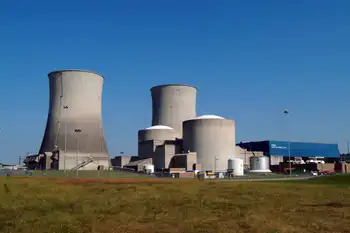
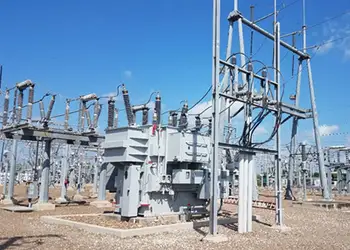
Premier Gary Doer joined Bob Brennan, President and CEO of Manitoba Hydro, in Brandon to officially open the natural gas combustion turbine plant at the Brandon Generating Station.

Built over two years at a cost of $177 million, the new plant will help Manitoba Hydro maximize export revenues while strengthening the security of the electricity system in southern Manitoba.

“These two natural gas-fuelled turbines will allow Manitoba Hydro to back up export sales of hydroelectricity during periods of low water flows,” said Doer. “With this additional support, Manitoba Hydro can sell electricity further in advance on the more lucrative long-term export market, helping to bolster the revenues that ensure Manitoba enjoys the lowest electricity rates anywhere.”

Minister Tim Sale, Minister of Energy, Science and Technology and minister responsible for Hydro, noted that using natural gas to power combustion turbines is considered one of the cleanest sources of thermally generated electricity.

“The completion of these turbines adds another environmentally friendly source to Manitoba Hydro’s system,” said Sale. “Viewed with the conversion of the Selkirk Generating Station from coal to natural gas and Manitoba Hydro’s recent commitment to investigate wind power resources, this plant illustrates why Manitoba Hydro is a leader in providing some of the cleanest energy in the world.”

“To ensure reliability and cost-effectiveness, Manitoba Hydro is always evaluating resource options,” said Manitoba Hydro President and CEO, Bob Brennan. “With low emissions, relatively low capital cost and short construction time, natural gas turbines are a natural fit for our hydraulic system where we periodically experience low flows.”

Brennan also noted that the new 260-megawatt plant would run only occasionally, such as when water flows are extremely low, because Manitoba Hydro has a surplus of hydraulic energy available most of the time.

Work on Brandon combustion turbine created 187.5 person years of employment in Brandon during the two-year construction process.

Related News
When will the US get 1 GW of offshore wind on the grid?

U.S. Offshore Wind Capacity is set to exceed 1 GW by 2024, driven by BOEM approvals, federal leases, and resilient supply chains, with eastern states scaling renewable energy, turbines, and content despite COVID-19 disruptions.


Key Points

Projected gigawatt-scale offshore wind growth enabled by BOEM approvals, federal leases, and East Coast state demand.

✅ 17+ GW leased; only 1,870 MW in announced first phases.

✅ BOEM approvals are critical to reach >1 GW by 2024.

✅ Local supply chains mitigate COVID-19 impacts and lower costs.


Offshore wind in the U.S. will exceed 1 GW of capacity by 2024 and add more than 1 GW annually by 2027, a trajectory consistent with U.S. offshore wind power trends, according to a report released last week by Navigant Research.

The report calculated over 17 GW of offshore state and federal leases for wind production, reflecting forecasts that $1 trillion offshore wind market growth is possible. However, the owners of those leases have only announced first phase plans for 1,870 MW of capacity, leaving much of the projects in early stages with significant room to grow, according to senior research analyst Jesse Broehl.

The Business Network for Offshore Wind (BNOW) believes it is possible to hit 1 GW by 2023-24, according to CEO Liz Burdock. While the economy has taken a hit from the coronavirus pandemic, she said the offshore wind industry can continue growing as "the supply chain from Asia and Europe regains speed this summer, and the administration starts clearing" plans of construction.

BNOW is concerned with the economic hardship imposed on secondary and tertiary U.S. suppliers due to the global spread of COVID-19.

Offshore wind has been touted by many eastern states and governors as an opportunity to create jobs, with U.S. wind employment expected to expand, according to industry forecasts. Analysts see the growing momentum of projects as a way to further lower costs by creating a local supply chain, which could be jeopardized by a long-term shutdown and recession.

"The federal government must act now — today, not in December — and approve project construction and operation plans," a recent BNOW report said. Approving any of the seven projects before BOEM, which has recently received new lease requests, currently would allow small businesses to get to work "following the containment of the coronavirus," but approval of the projects next year "may be too late to keep them solvent."

The prospects for maintaining momentum in the industry falls largely to the Department of the Interior's Bureau of Ocean Energy Management (BOEM). The industry cannot hit the 1 GW milestone without project approvals by BOEM, which is revising processes to analyze federal permit applications in the context of "greater build out of offshore wind capacity," according to its website.

"It is heavily dependent on the project approval success," Burdock told Utility Dive.

Currently, seven projects are awaiting determinations from BOEM on their construction operation plans in Massachusetts, New York, where a major offshore wind farm was recently approved, New Jersey and Maryland, with more to be added soon, a BNOW spokesperson told Utility Dive.

To date, only one project has received BOEM approval for development in federal waters, a 12 MW pilot by Dominion Energy and Ørsted in Virginia. The two-turbine project is a stepping stone to a commercial-scale 2.6 GW project the companies say could begin installation as soon as 2024, and gave the developers experience with the permitting process.

In the U.S., developers have the capacity to develop 16.9 GW of offshore wind in federal U.S. lease areas, even as wind power's share of the electricity mix surges nationwide, Broehl told Utility Dive, but much of that is in early stages. The Navigant report did not address any impacts of coronavirus on offshore wind, he said.

Although Massachusetts has legislation in place to require utilities to purchase 1.6 GW of wind power by 2026, and several other projects are in early development stages, Navigant expects the first large offshore wind projects in the U.S. (exceeding 200 MW) will come online in 2022 or later, and the first projects with 400 MW or more capacity are likely to be built by 2024-2025, and lessons from the U.K.'s experience could help accelerate timelines. The U.S. would add about 1.2 GW in 2027, Broehl said.

The federal leasing activities along with the involvement from Eastern states and utilities "virtually guarantees that a large offshore wind market is going to take off in the U.S.," Broehl said.


Related News

View more

Construction starts on disputed $1B electricity corridor

New England Clean Energy Connect advances despite court delays, installing steel poles on a Maine corridor for Canadian hydropower, while legal challenges seek environmental review; permits, jobs, and grid upgrades drive the renewable transmission project.


Key Points

An HV line in Maine delivering 1,200 MW of Canadian hydropower to New England to cut emissions and stabilize costs.

✅ Appeals court pauses 53-mile new section; upgrades continue

✅ 1,200 MW hydropower aims to cut emissions, stabilize rates

✅ Permits issued; environmental review litigation ongoing


Construction on part of a $1 billion electricity transmission corridor through sparsely populated woods in western Maine is on hold because of legal action, echoing Clean Line's Iowa withdrawal amid court uncertainty, but that doesn't mean all building has been halted.

Workers installed the first of 829 steel poles Tuesday on a widened portion of the existing corridor that is part of the project near The Forks, as the groundwork is laid for the 145-mile ( 230-kilometre ) New England Clean Energy Connect, a project central to Maine's debate over the 145-mile line moving forward.

The work is getting started even though the 1st U.S. Circuit Court of Appeals delayed construction of a new 53-mile ( 85-kilometre ) section.

Three conservation groups are seeking an injunction to delay the project while they sue to force the U.S. Army Corps of Engineers to conduct a more rigorous environmental review.

In western Maine, workers already have staged heavy equipment and timber “mats” that will be used to prevent the equipment from damaging the ground. About 275 Maine workers already have been hired, and more would be hired if not for the litigation, officials said.

“This project has always promised to provide an economic boost to Maine’s economy, and we are already seeing those benefits take shape," Thorn Dickinson, CEO of the New England Clean Energy Connect, said Tuesday.

The electricity transmission line would provide a conduit for up to 1,200 megawatts of Canadian hydropower, reducing greenhouse emissions and stabilizing energy costs in New England as states pursue Connecticut's market overhaul to improve market design, supporters say.

The project, which would be fully funded by Massachusetts ratepayers to meet the state's clean energy goals after New Hampshire rejected a Quebec-Massachusetts proposal elsewhere, calls for construction of a high-voltage power line from Mount Beattie Township on the Canadian border to the regional power grid in Lewiston, Maine.

Critics have been trying to stop the project, reflecting clashes over New Hampshire hydropower in the region, saying it would destroy wilderness in western Maine. They also say that the environmental benefits of the project have been overstated.

In addition to the lawsuit, opponents have submitted petitions seeking to have a statewide vote, even as a Maine court ruling on Hydro-Quebec exports has reshaped the legal landscape.

Sandi Howard, a leading opponent of the project, said the decision by the company to proceed showed “disdain for everyday Mainers” by ignoring permit appeals and ongoing litigation.

“For years, CMP has pushed the false narrative that their unpopular and destructive project is a ‘done deal’ to bully Mainers into submission on this for-profit project. But to be clear, we won’t stop until Maine voters (their customers), have the chance to vote,” said Howard, who led the referendum petition drive for the No CMP Corridor PAC.

The project has received permits from the Army Corps, Maine Department of Environmental Protection, Maine Land Use Planning Commission and Maine Public Utilities Commission.

The final approval came in the form of a presidential permit issued last month from the U.S. Department of Energy, providing green light for the interconnect at the Canadian border, even as customer backlash to utility acquisitions elsewhere underscores public scrutiny.


Related News

View more

Northvolt Affirms Continuation of EV Battery Plant Project Near Montreal

Northvolt Montreal EV Battery Plant advances as a Quebec clean energy hub, leveraging hydroelectric power to supply EV batteries, strengthen North American supply chains, and support automakers' electrification with sustainable manufacturing and regional distribution.


Key Points

A Quebec-based EV battery facility using hydroelectric power to scale sustainable production for North America.

✅ Powered by Quebec hydro for lower-carbon cell manufacturing

✅ Strengthens North American EV supply chain resilience

✅ Creates local jobs, R&D, and advanced manufacturing skills


Northvolt, a prominent player in the electric vehicle (EV) battery industry, has reaffirmed its commitment to proceed with its battery plant project near Montreal as originally planned. This development marks a significant step forward in Northvolt's expansion strategy and signals confidence in Canada's role in the global EV market.

The decision to move forward with the EV battery plant project near Montreal underscores Northvolt's strategic vision to establish a strong foothold in North America's burgeoning electric vehicle sector. The plant is poised to play a crucial role in meeting the growing demand for sustainable battery solutions as automakers accelerate their transition towards electrification.

Located strategically in Quebec, a province known for its abundant hydroelectric power and supportive government policies towards clean energy initiatives, including major Canada-Quebec investments in battery assembly, the battery plant project aligns with Canada's commitment to promoting green technology and reducing carbon emissions. By leveraging Quebec's renewable energy resources, Northvolt aims to produce batteries with a lower carbon footprint compared to traditional manufacturing processes.

The EV battery plant is expected to contribute significantly to the local economy by creating jobs, stimulating economic growth, and fostering technological innovation in the region, much as a Niagara Region battery plant is catalyzing development in Ontario. As Northvolt progresses with its plans, collaboration with local stakeholders, including government agencies, educational institutions, and industry partners, will be pivotal in ensuring the project's success and maximizing its positive impact on the community.

Northvolt's decision to advance the battery plant project near Montreal also reflects broader trends in the global battery manufacturing landscape. With increasing emphasis on sustainability and supply chain resilience, companies like Northvolt are investing in diversified production capabilities, including projects such as a $1B B.C. battery plant, to meet regional market demands and reduce dependency on overseas suppliers.

Moreover, the EV battery plant project near Montreal represents a milestone in Canada's efforts to strengthen its position in the global electric vehicle supply chain, with EV assembly deals helping put the country in the race. By attracting investments from leading companies like Northvolt, Canada aims to build a robust ecosystem for electric vehicle manufacturing and innovation, driving economic competitiveness and environmental stewardship.

The plant's proximity to key markets in North America further enhances its strategic value, enabling efficient distribution of batteries to automotive manufacturers across the continent. This geographical advantage positions Northvolt to capitalize on the growing demand for electric vehicles in Canada, the United States, and beyond, supporting Canada-U.S. collaboration on supply chains and market growth.

Looking ahead, Northvolt's commitment to advancing the EV battery plant project near Montreal underscores its long-term vision and dedication to sustainable development. As the global electric vehicle market continues to evolve, alongside the U.S. auto sector's pivot to EVs, investments in battery manufacturing infrastructure will play a critical role in shaping the industry's future landscape and accelerating the adoption of clean transportation technologies.

In conclusion, Northvolt's affirmation to proceed with the EV battery plant project near Montreal represents a significant milestone in Canada's transition towards sustainable mobility solutions. By harnessing Quebec's renewable energy resources and fostering local partnerships, Northvolt aims to establish a state-of-the-art manufacturing facility that not only supports the growth of the electric vehicle sector but also contributes to Canada's leadership in clean technology innovation, bolstered by initiatives like Nova Scotia vehicle-to-grid pilots that strengthen grid readiness nationwide. As the project moves forward, its impact on economic growth, job creation, and environmental sustainability is expected to resonate positively both locally and globally.


Related News

View more

Notley announces plans to move Alberta's electricity grid to net-zero by 2035 if elected

Alberta NDP Net-Zero Electricity Plan targets a 2035 clean grid, expands renewable energy, cuts emissions, creates jobs, and boosts economic diversification and rural connectivity, aligning Alberta with Canada's 2050 climate goals.


Key Points

A policy to achieve a net-zero electricity grid by 2035, advance renewable energy, cut emissions, and grow jobs.

✅ Net-zero electricity grid target set for 2035

✅ Scales renewable energy and emissions reductions

✅ Focus on jobs, rural connectivity, and diversification


Ahead of the NDP’s weekend convention, Alberta’s Opposition leader has committed to transforming the province’s energy sector and moving the province’s electricity grid to net-zero by 2035, despite debate over the federal 2035 net-zero electricity grid target in other provinces, should an orange crush wash over Alberta in the next election.

NDP Leader Rachel Notley said they would achieve this as part of the path towards Canada’s 2050 net-zero emissions goal, aligning with broader clean grids trends, which will help preserve and create jobs in the province.

“I think it’s an important goal. It’s a way of framing the work that we’re going to do within our energy industry and our energy sector, including how Alberta produces and pays for electricity going forward,” said Notley. “We know the world is moving toward different objectives and we still have the ability to lead on that front, but we need to lay down the markers early and focus on reaching those goals.”

Premier Jason Kenney has previously called the 2050 target “aspirational,” and, as the electricity sector faces profound change in Alberta, Notley said, once the work begins, it’s likely they would meet the objective earlier than proposed to reduce greenhouse gas emissions that contribute to global warming.

This is just one key issue that will be addressed at the party’s online convention, which is the first since the NDP’s defeat by the UCP in the last provincial election. Notley said other key issues will address economic diversification, economic recovery, job creation and social issues, as Alberta’s electricity market is headed for a reshuffle too. The focus, as she puts it, is “jobs, jobs, jobs.”

Attendees will also debate more than 140 policy resolutions over the weekend, including the development of a safe supply drug policy, banning coal mining in the Rocky Mountains and providing paid sick leave for workers.

Outside the formal agenda, debate over electricity market competition continues in Alberta as stakeholders weigh options.

Notley said an area of growing focus for the NDP will be rural Alberta, which is typically a conservative stronghold. One panel presentation during the convention will focus on connecting and building relationships with rural Albertans and growing the NDP profile in those areas.

“We think that we have a lot to offer rural Alberta and that, quite frankly, the UCP and (Kenney), in particular, have profoundly taken rural Alberta for granted,” she said. “Because of that, we think with a renewed energy amongst our membership to go out to parts of the province where we haven’t been previously as active, and talk about what they have been subjected to in the last two years, that we have huge opportunities there.”

Delegates will be asked to support a call for high-speed internet coverage across Alberta, which would remove barriers to access in rural Alberta and Indigenous communities, said the convention guidebook.

The convention comes as the NDP has a wide lead on the UCP, according to the latest polls. A Leger online survey of 1,001 Albertans conducted between March 5 to 8 found 40 per cent of respondents support the NDP, compared to just 20 per cent for the UCP.

Notley said it’s “encouraging” to see, but they aren’t taking anything for granted.

“I’ve always believed that Alberta Democrats have to work twice as hard as anybody else in the political spectrum, or the political arena,” she said. “So what we’re going to do is continue to do exactly what we have been, not only being a strong and I would argue fearless Opposition, but also trying to match every oppositional position with something that is propositional — offering Albertans a different vision, including an Alberta path to clean electricity where possible.”


Related News

View more

Niagara Falls Powerhouse Gets a Billion-Dollar Upgrade for the 21st Century

Sir Adam Beck I refurbishment boosts hydropower capacity in Niagara, upgrading turbines, generators, and controls for Ontario Power Generation. The billion-dollar project enhances grid reliability, clean energy output, and preserves heritage architecture.


Key Points

An OPG upgrade of the historic Niagara plant to replace equipment, add 150 MW, and extend clean power life.

✅ Adds at least 150 MW to Ontario's clean energy supply

✅ Replaces turbines, generators, transformers, and controls

✅ Creates hundreds of skilled construction and engineering jobs


Ontario's iconic Sir Adam Beck hydroelectric generating station in Niagara is set to undergo a massive, billion-dollar refurbishment. The project will significantly boost the power station's capacity and extend its lifespan, with efforts similar to revitalizing older dams seen across North America, ensuring a reliable supply of clean energy for decades to come.


A Century of Power Generation

The Sir Adam Beck generating stations have played a pivotal role in Ontario's power grid for over a century. The first generating station, Sir Adam Beck I, went online in 1922, followed by Sir Adam Beck II in 1954. A third station, the Sir Adam Beck Pump Generating Station, was added in 1957, highlighting the role of pumped storage in Ontario for grid flexibility, Collectively, they form one of the largest hydroelectric complexes in the world, harnessing the power of the Niagara River.


Preparing for Increased Demand

The planned refurbishment of Sir Adam Beck I is part of Ontario Power Generation's broader strategy, which includes the life extension at Pickering NGS among other initiatives, to meet the growing energy demands of the province. With the population expanding and a shift towards electrification, Ontario will need to increase its power generation capacity while also focusing on sustainable and clean sources of energy.


Billions to Secure Sustainable Energy

The project to upgrade Sir Adam Beck I carries a hefty price tag of over a billion dollars but is considered a vital investment in Ontario's energy infrastructure, and recent OPG financial results underscore the utility's capacity to manage long-term capital plans. The refurbishment will see the replacement of aging turbines, generators, and transformers, and a significant upgrade to the station's control systems. Following the refurbishment, the output of Sir Adam Beck I is expected to increase by at least 150 megawatts – enough to power thousands of homes and businesses.


Creating Green Jobs

In addition to securing the province's energy future, the upgrade presents significant economic benefits to the Niagara region. The project will create hundreds of well-paying construction and engineering jobs, similar to employment from the continued operation of Pickering Station across Ontario, during the several years it will take to implement the upgrades.


Commitment to Hydropower

Ontario Power Generation (OPG) has long touted the benefits of hydropower as a reliable, renewable, and affordable source of energy, even as an analysis of rising grid emissions underscores the importance of clean generation to meet demand. The Sir Adam Beck complex is a shining example and represents a significant asset in the fight against climate change while providing reliable power to Ontario's businesses and residents.


Balancing Energy Needs with Heritage Preservation

The refurbishment will also carefully integrate modern design with the station's heritage elements, paralleling decisions such as the refurbishment of Pickering B that weigh system needs and public trust. Sir Adam Beck I is a designated historic site, and the project aims to preserve the station's architectural significance while enhancing its energy generation capabilities.


Related News

View more

Two-thirds of the U.S. is at risk of power outages this summer

Home Energy Independence reduces electricity costs and outage risks with solar panels, EV charging, battery storage, net metering, and smart inverters, helping homeowners offset tiered rates and improve grid resilience and reliability.


Key Points

Home Energy Independence pairs solar, batteries, and smart EV charging to lower bills and keep power on during outages.

✅ Offset rising electricity rates via solar and net metering

✅ Add battery storage for backup power and peak shaving

✅ Optimize EV charging to avoid tiered rate penalties


The Department of Energy recently warned that two-thirds of the U.S. is at risk of losing power this summer. It’s an increasingly common refrain: Homeowners want to be less reliant on the aging power grid and don’t want to be at the mercy of electric utilities due to rising energy costs and dwindling faith in the power grid’s reliability.

And it makes sense. While the inflated price of eggs and butter made headlines earlier this year, electricity prices quietly increased at twice the rate of overall inflation in 2022, even as studies indicate renewables aren’t making power more expensive overall, and homeowners have taken notice. In fact, according to Aurora Solar’s Industry Snapshot, 62% expect energy prices will continue to rise.

Homeowners aren’t just frustrated that electricity is pricey when they need it, they’re also worried it won’t be available at all when they feel the most vulnerable. Nearly half (48%) of homeowners are concerned about power outages stemming from weather events, or grid imbalances from excess solar in some regions, followed closely by outages due to cyberattacks on the power grid.

These concerns around reliability and cost are creating a deep lack of confidence in the power grid. Yet, despite these growing concerns, homeowners are increasingly using electricity to displace other fuel sources.

The electrification of everything
From electric heat pumps to electric stoves and clothes dryers, homeowners are accelerating the electrification of their homes. Perhaps the most exciting example is electric vehicle (EV) adoption and the need for home charging. With major vehicle makers committing to ambitious electric vehicle targets and even going all-electric in the future, EVs are primed to make an even bigger splash in the years to come.

The by-product of this electrification movement is, of course, higher electric bills because of increased consumption. Homeowners also risk paying more for every unit of energy they use if they’re part of a tiered pricing utility structure, where energy-insecure households often pay 27% more on electricity because customers are charged different rates based on the total amount of energy they use. Many new electric vehicle owners don’t realize this until they are deep into purchasing their new vehicle, or even when they open that first electric bill after the car is in their driveway.

Sure, this electrification movement can feel counterintuitive given the power grid concerns. But it’s actually the first step toward energy independence, and emerging models like peer-to-peer energy sharing could amplify that over time.

Balancing conflicting movements
The fact is that electrification is moving forward quickly, even among homeowners who are concerned about electricity prices and power grid reliability, and about why the grid isn’t yet 100% renewable in the U.S. This has the potential to lead to even more discontent with electric utilities and growing anxiety over access to electricity in extreme situations. There is a third trend, though, that can help reconcile these two conflicting movements: the growth of solar.

The popularity of solar is likely higher than you think: Nearly 77% of homeowners either have solar panels on their homes or are interested in purchasing solar. The Aurora Solar Industry Snapshot report also showed a nearly 40% year-over-year increase in residential solar projects across the U.S. in 2022, as the country moves toward 30% power from wind and solar overall, aligning with the Solar Energy Industries Association’s (SEIA) Solar Market Insight Report, which found, “Residential solar had a record year [in 2022] with nearly 6 GWdc of installations, representing 40% growth over 2021.”

It makes sense that finding ways to tamp down—even eliminate—growing bills caused by the electrification of homes is accelerating interest in solar, as more households weigh whether residential solar is worth it for their budgets, and residential solar installers are seeing this firsthand. The link between EVs and solar is a great proof point: Almost 80% of solar professionals said EV adoption often drives new interest in solar. 


Related News

View more

Sign Up for Electricity Forum’s Newsletter

Stay informed with our FREE Newsletter — get the latest news, breakthrough technologies, and expert insights, delivered straight to your inbox.

Electricity Today T&D Magazine Subscribe for FREE

Stay informed with the latest T&D policies and technologies.
  • Timely insights from industry experts
  • Practical solutions T&D engineers
  • Free access to every issue

Live Online & In-person Group Training

Advantages To Instructor-Led Training – Instructor-Led Course, Customized Training, Multiple Locations, Economical, CEU Credits, Course Discounts.

Request For Quotation

Whether you would prefer Live Online or In-Person instruction, our electrical training courses can be tailored to meet your company's specific requirements and delivered to your employees in one location or at various locations.