NEB's Sumas 2 hearing ends

By Sterling News Service


Substation Relay Protection Training

Our customized live online or in‑person group training can be delivered to your staff at your location.

  • Live Online
  • 12 hours Instructor-led
  • Group Training Available
Regular Price:
$699
Coupon Price:
$599
Reserve Your Seat Today
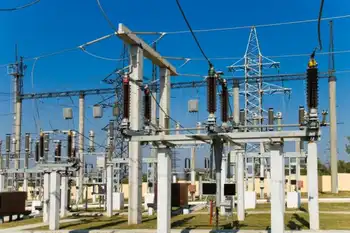
The National Energy Board hearing into a power line for the proposed Sumas Energy 2 power plant wrapped up recently.

SE2 is seeking permission to build an 8.5-kilometre power line from the border to Abbotsford. It would connect the proposed gas-fired power plant in Sumas, Wash., to the B.C. Hydro power grid so the power can be sold throughout B.C. and the U.S. northwest.

SE2 lawyer Russell Lusk argued the power line would bring economic benefits to B.C. in the form of a new supply of power.

If the gas-fired plant goes ahead it will discharge 144.5 tonnes of nitrous oxides, 209 tonnes of particulate matter and 139 tonnes of ammonia a year into the atmosphere.

Lusk said the pollution will add only minimally to existing pollution and will not measurably affect health.

"So politics, not the public interest, has become the dominant consideration," he said.

Related News

Maritime Link sends first electricity between Newfoundland, Nova Scotia

Maritime Link HVDC Transmission connects Newfoundland and Nova Scotia to the North American grid, enabling renewable energy imports, subsea cable interconnection, Muskrat Falls hydro power delivery, and lower carbon emissions across Atlantic Canada.


Key Points

A 500 MW HVDC intertie linking Newfoundland and Nova Scotia to deliver Muskrat Falls hydro power.

✅ 500 MW capacity using twin 170 km subsea HVDC cables

✅ Interconnects Newfoundland and Nova Scotia to the North American grid

✅ Enables Muskrat Falls hydro imports, cutting CO2 and costs


For the first time, electricity has been sent between Newfoundland and Nova Scotia through the new Maritime Link.

The 500-megawatt transmission line — which connects Newfoundland to the North American energy grid for the first time and echoes projects like the New England Clean Power Link underway — was tested Friday.

"This changes not only the energy options for Newfoundland and Labrador but also for Nova Scotia and Atlantic Canada," said Rick Janega, the CEO of Emera Newfoundland and Labrador, which owns the link.

"It's an historic event in our eyes, one that transforms the electricity system in our region forever."


'On time and on budget'

It will eventually carry power from the Muskrat Falls hydro project in Labrador, where construction is running two years behind schedule and $4 billion over budget, a context in which the Manitoba Hydro line to Minnesota has also faced delay, to Nova Scotia consumers. It was supposed to start producing power later this year, but the new deadline is 2020 at the earliest.

The project includes two 170-kilometre subsea cables across the Cabot Strait between Cape Ray in southwestern Newfoundland and Point Aconi in Cape Breton.

The two cables, each the width of a two-litre pop bottle, can carry 250 megawatts of high voltage direct current, and rest on the ocean floor at depths up to 470 metres.

This reel of cable arrived in St. John's back in April aboard the Norwegian vessel Nexans Skagerrak, after the first power cable reached Nova Scotia earlier in the project. (Submitted by Emera NL)

The Maritime Link also includes almost 50 kilometres of overland transmission in Nova Scotia and more than 300 kilometres of overland transmission in Newfoundland, paralleling milestones on Site C transmission work in British Columbia.

The link won't go into commercial operation until January 1.

Janega said the $1.6-billion project is on time and on budget.

"We're very pleased to be in a position to be able to say that after seven years of working on this. It's quite an accomplishment," he said.

This Norwegian vessel was used to transport the 5,500 tonne subsea cable. (Submitted by Emera NL)

Once in service, the link will improve electrical interconnections between the Atlantic provinces, aligning with climate adaptation guidance for Canadian utilities.

"For Nova Scotia it will allow it to achieve its 40 per cent renewable energy target in 2020. For Newfoundland it will allow them to shut off the Holyrood generating station, in fact using the Maritime Link in advance of the balance of the project coming into service," Janega said.

Karen Hutt, president and CEO of Nova Scotia Power, which is owned by Emera Inc., calls it a great day for Nova Scotia.

"When it goes into operation in January, the Maritime Link will benefit Nova Scotia Power customers by creating a more stable and secure system, helping reduce carbon emissions, and enabling NSP to purchase power from new sources," Hutt said in a statement.


Related News

View more

France's nuclear power stations to limit energy output due to high river temperatures

France Nuclear Heatwave Output Restrictions signal reduced reactor capacity along the Rhone River, as EDF curbs output to meet cooling-water rules, balance the grid, integrate solar peaks, and limit impacts on power prices.


Key Points

EDF limits reactor output during heat to protect rivers and keep the grid stable under cooling-water rules.

✅ Cuts likely at midday/weekends when solar peaks

✅ Bugey, Saint Alban maintain minimum grid output

✅ France net exporter; price impact expected small


The high temperature warning has come early this year but will affect fewer nuclear power plants, amid a broader France-Germany nuclear dispute over atomic power policy that shapes regional energy flows.

High temperatures could halve nuclear power production at plants along France's Rhone River this week, as European power hits records during extreme heat. 

Output restrictions are expected at two nuclear plants in eastern France due to high temperature forecasts, nuclear operator EDF said, which may limit energy output during heatwaves. It comes several days ahead of a similar warning that was made last year but will affect fewer plants.

The hot weather is likely to halve the available power supply from the 3.6 GW Bugey plant from 13 July and the 2.6 GW Saint Alban plant from 16 July, the operator said.

However, production will be at least 1.8 GW at Bugey and 1.3 GW at Saint Alban to meet grid requirements, and may change according to grid needs, the operator said.

Kpler analyst Emeric de Vigan said the restrictions were likely to have little effect on output in practice. Cuts are likely only at the weekend or midday when solar output was at its peak so the impact on power prices would be slim.

During recent lockdowns, power demand held firm in Europe, offering context for current price dynamics.

He said the situation would need monitoring in the coming weeks, however, noting it was unusually early in the summer for such restrictions to be imposed.

Water temperatures at the Bugey plant already eclipsed the initial threshold for restrictions on 9 July, underscoring France's outage risks under heat-driven constraints. They are currently forecast to peak next week and then drop again, Refinitiv data showed.

"France is currently net exporting large amounts of power – single nuclear units' supply restrictions will not have the same effect as last year," Refinitiv analyst Nathalie Gerl said.

The Garonne River in southern France has the highest potential for critical levels of warming, but its Golfech plant is currently offline for maintenance until mid-August, the data showed, highlighting how Europe is losing nuclear power during critical periods.

"(The restrictions were) to be expected and it will probably occur more often," Greenpeace campaigner Roger Spautz said.

"The authorities must stick to existing regulations for water discharges. Otherwise, the ecosystems will be even more affected," he added.


Related News

View more

Canada's Ambitious Electric Vehicle Goals

Canada 2035 Gasoline Car Ban accelerates EV adoption, zero-emission transport, and climate action, with charging infrastructure, rebates, and industry investment supporting net-zero goals while addressing affordability, range anxiety, and consumer acceptance nationwide.


Key Points

A federal policy to end new gas car sales by 2035, boosting EV adoption, emissions goals, and charging infrastructure.

✅ Ends new gas car and light-truck sales by 2035

✅ Expands charging infrastructure and grid readiness

✅ Incentives, rebates, and industry investment drive adoption


Canada has set its sights on a bold and transformative goal: to ban the sale of new gasoline-powered passenger cars and light-duty trucks by the year 2035. This ambitious target, announced by the federal government, underscores Canada's commitment to combating climate change and accelerating the adoption of electric vehicles (EVs) nationwide, supported by forthcoming EV sales regulations from Ottawa.

The Federal Initiative

Under the leadership of Prime Minister Justin Trudeau, Canada aims to significantly reduce greenhouse gas emissions from the transportation sector, which accounts for a substantial portion of the country's carbon footprint. The initiative aligns with Canada's broader climate objectives, including achieving net-zero emissions by 2050.

Driving Forces Behind the Decision

The decision to phase out internal combustion engine vehicles reflects growing recognition of the urgency to transition towards cleaner transportation alternatives, even as 2019 electricity from fossil fuels still powered a notable share of Canada's grid. Minister of Environment and Climate Change Jonathan Wilkinson emphasizes the environmental benefits of electric vehicles, citing their potential to lower emissions and improve air quality in urban centers across the country.

Challenges and Opportunities

While the move towards electric vehicles presents promising opportunities for reducing emissions, it also poses challenges. Key considerations include infrastructure development, affordability, and consumer acceptance of EV technology, amid EV shortages and wait times that can influence buying decisions. Addressing these hurdles will require coordinated efforts from government, industry stakeholders, and consumers alike.

Industry Response

The automotive industry plays a crucial role in realizing Canada's EV ambitions. Automakers are increasingly investing in electric vehicle production and innovation to meet evolving consumer demand and regulatory requirements, including cross-border Canada-U.S. collaboration on supply chains. The transition offers opportunities for job creation, technological advancement, and economic growth in the clean energy sector.

Provincial Perspectives

Provinces across Canada are pivotal in facilitating the transition to electric vehicles. Some provinces have already implemented incentives such as rebates for EV purchases, charging infrastructure investments, and policy frameworks to support emissions reduction targets, even as Quebec's EV dominance push faces scrutiny from experts. Collaborative efforts between federal and provincial governments are essential in ensuring a cohesive approach to achieving national EV goals.

Consumer Considerations

For consumers, the shift towards electric vehicles represents a paradigm shift in transportation choices. Factors such as range anxiety, charging infrastructure availability, and upfront costs, with one EV cost survey citing price as the main barrier, remain considerations for prospective buyers. Government incentives and subsidies aim to alleviate some of these concerns and promote widespread EV adoption.

Looking Ahead

As Canada navigates towards a future without gasoline-powered vehicles, stakeholders must work together to overcome challenges and capitalize on opportunities presented by the electric vehicle revolution, even as critics of the 2035 mandate question its feasibility. Continued investments in infrastructure, innovation, and consumer education will be critical in paving the way for a sustainable and prosperous automotive industry.

Conclusion

Canada's commitment to phasing out gasoline-powered vehicles by 2035 marks a pivotal moment in the country's climate action agenda. By embracing electric vehicles, Canada aims to lead by example in combatting climate change, fostering innovation, and building a greener future for generations to come. The success of this ambitious initiative hinges on collective efforts to transform the automotive landscape and accelerate towards a sustainable transportation future.


Related News

View more

Consumer choice has suddenly revolutionized the electricity business in California. But utilities are striking back

California Community Choice Aggregators are reshaping electricity markets with renewable energy, solar and wind sourcing, competitive rates, and customer choice, challenging PG&E, SDG&E, and Southern California Edison while advancing California's clean power goals.


Key Points

Local governments that buy power, often cleaner and cheaper, while utilities handle delivery and billing.

✅ Offer higher renewable mix than utilities at competitive rates

✅ Utilities retain transmission and billing responsibilities

✅ Rapid expansion threatens IOU market share across California


Nearly 2 million electricity customers in California may not know it, but they’re part of a revolution. That many residents and businesses are getting their power not from traditional utilities, but via new government-affiliated entities known as community choice aggregators. The CCAs promise to deliver electricity more from renewable sources, such as solar and wind, even as California exports its energy policies across Western states, and for a lower price than the big utilities charge.

The customers may not be fully aware they’re served by a CCA because they’re still billed by their local utility. But with more than 1.8 million accounts now served by the new system and more being added every month, the changes in the state’s energy system already are massive.

Faced for the first time with real competition, the state’s big three utilities have suddenly become havens of innovation. They’re offering customers flexible options on the portion of their power coming from renewable energy, amid a broader review to revamp electricity rates aimed at cleaning the grid, and they’re on pace to increase the share of power they get from solar and wind power to the point where they are 10 years ahead of their deadline in meeting a state mandate.

#google#

But that may not stem the flight of customers. Some estimates project that by late this year, more than 3 million customers will be served by 20 CCAs, and that over a longer period, Pacific Gas & Electric, Southern California Edison, and San Diego Gas & Electric could lose 80% of their customers to the new providers.

Two big customer bases are currently in play: In Los Angeles and Ventura counties, a recently launched CCA called the Clean Power Alliance is hoping by the end of 2019 to serve nearly 1 million customers. Unincorporated portions of both counties and 29 municipalities have agreed in principle to join up.

Meanwhile, the city of San Diego is weighing two options to meet its goal of 100% clean power by 2035, as exit fees are being revised by the utilities commission: a plan to be submitted by SDG&E, or the creation of a CCA. A vote by the City Council is expected by the end of this year. A city CCA would cover 1.4 million San Diegans, accounting for half SDG&E’s customer demand, according to Cody Hooven, the city’s chief sustainability officer.

Don’t expect the big companies to give up their customers without a fight. Indeed, battle lines already are being drawn at the state Public Utilities Commission, where a recent CPUC ruling sided with a community energy program over SDG&E, and local communities.

“SDG&E is in an all-out campaign to prevent choice from happening, so that they maintain their monopoly,” says Nicole Capretz, who wrote San Diego’s climate action plan as a city employee and now serves as executive director of the Climate Action Campaign, which supports creation of the CCA.

California is one of seven states that have legalized the CCA concept, even as regulators weigh whether the state needs more power plants to ensure reliability. (The others are New York, New Jersey, Massachusetts, Ohio, Illinois and Rhode Island.) But the scale of its experiment is likely to be the largest in the country, because of the state’s size and the ambition of its clean-power goal, which is for 50% of its electricity to be generated from renewable sources by 2030.

California created its system via legislative action in 2002. Assembly Bill 117 enabled municipalities and regional governments to establish CCAs anywhere that municipal power agencies weren’t already operating. Electric customers in the CCA zones were automatically signed up, though they could opt out and stay with their existing power provider. The big utilities would retain responsibility for transmission and distribution lines.

The first CCA, Marin Clean Energy, began operating in 2010 and now serves 470,000 customers in Marin and three nearby counties.

The new entities were destined to come into conflict with the state’s three big investor-owned utilities. Their market share already has fallen to about 70%, from 78% as recently as 2010, and it seems destined to keep falling. In part that’s because the CCAs have so far held their promise: They’ve been delivering relatively clean power and charging less.

The high point of the utilities’ hostility to CCAs was the Proposition 16 campaign in 2009. The ballot measure was dubbed the “Taxpayers Right to Vote Act,” but was transparently an effort to smother CCAs in the cradle. PG&E drafted the measure, got it on the ballot, and contributed all of the $46.5 million spent in the unsuccessful campaign to pass it.

As recently as last year, PG&E and SDG&E were lobbying in the legislature for a bill that would place a moratorium on CCAs. The effort failed, and hasn’t been revived this year.

Rhetoric similar to that used by PG&E against Marin’s venture has surfaced in San Diego, where a local group dubbed “Clear the Air” is fighting the CCA concept by suggesting that it could be financially risky for local taxpayers and questioning whether it will be successful in providing cleaner electricity. Whether Clear the Air is truly independent of SDG&E’s parent, Sempra Energy, is questionable, as at least two of its co-chairs are veteran lobbyists for the company.

SDG&E spokeswoman Helen Gao says the utility supports “customers’ right to choose an energy provider that best meets their needs” and expects to maintain a “cooperative relationship” with any provider chosen by the city.


Related News

View more

Elizabeth May wants a fully renewable electricity grid by 2030. Is that possible?

Green Party Mission Possible 2030 outlines a rapid transition to renewable energy, electric vehicles, carbon pricing, and grid modernization, phasing out oil and gas while creating green jobs, public transit upgrades, and building retrofits.


Key Points

A Canadian climate roadmap to decarbonize by 2030 via renewables, EVs, carbon pricing, and grid upgrades.

✅ Ban on new gas cars by 2030; accelerate EV adoption and charging.

✅ 100 percent renewable-powered grid with interprovincial links.

✅ Just transition: retraining, green jobs, and building retrofits.


Green Party Leader Elizabeth May has a vision for Canada in 2030. In 11 years, all new cars will be electric. A national ban will prohibit anyone from buying a gas-powered vehicle. No matter where you live, charging stations will make driving long distances easy and affordable. Alberta’s oil industry will be on the way out, replaced by jobs in sectors such as urban farming, renewable energy and retrofitting buildings for energy efficiency. The electric grid will be powered by 100 per cent renewable energy as Canada’s race to net-zero accelerates.

It’s all part of the Greens’ “Mission Possible” – a detailed plan released Monday with a level of ambition made clear by its very name. May insists it’s the only way to confront the climate crisis head-on before it’s too late.

“We have to set our targets on what needs to be done. You can’t negotiate with physics,” May told CTV’s Power Play on Monday.

But is that 2030 vision realistic?

CTVNews.ca spoke with experts in economics, political policy, renewable energy and climate science to explore how feasible May’s plan is, how much it would cost and what transitioning to an environmentally-centred economy would look like for everyday Canadians.


MOVING TO A GREEN ECONOMY

Recent polling from Nanos Research shows that the environment and climate change is the top issue among voters this election.

If the Greens win a majority on Oct. 21 – an outcome that May herself acknowledged isn’t likely – it would signal a major restructuring of the Canadian economy.

According to the party’s platform, jobs in the fuels sectors, such as oil and gas production in Alberta, would eventually disappear. The Greens say those job losses would be replaced by opportunities in a variety of fields including renewable energy, farming, public transportation, manufacturing, construction and information technology.

The party would also introduce a guaranteed livable income and greater support for technical and educational training to help workers transition to new jobs.

But Jean-Thomas Bernard, an economist who specializes in energy markets, said plenty of people in today’s energy sector, such as oil and gas workers, wouldn’t have the skills to make that transition.

“Quite a few of these jobs have low technical requirements. Driving a truck is driving a truck. So quite few of these people will not have the capacity to be recycled into well-paid jobs in the renewable sector,” he said.

“Maybe this would be for the young generation, but not people who are 40, 45, 50.”

Ryan Katz-Rosene is an associate professor at the University of Ottawa who researches environmental policy. He says May’s overall pitch is technically possible but would require a huge amount of enthusiasm on behalf of the public. 

“The plan in itself is not physically impossible. It is theoretically achievable. But it would require a major, major change in the urgency and the level of action, the level of investment, the level of popular urgency, the level of political commitment,” he said.

“But it’s not completely fantastical in it being theoretically impossible.”


PHASING OUT BITUMEN PRODUCTION

Katz-Rosene said that, under the Greens’ plan, Canadians would need to pay for a bold carbon pricing plan that helps shift the country away from fossil fuels and has significant implications for electricity grids, he said. It would also mean dramatically upscaling the capacity of Canada’s existing electrical grid to account for millions of new electric cars, reflecting the need for more electricity to hit net-zero as demand grows.

 “Given Canada’s slow attempt to climate action and pretty lacklustre results in these years, to be frank, this plan is very, very difficult to achieve. We’re talking 11 years from now. But things change, people change, and sometimes that change can occur very quickly. Just look at the type of climate mobilization we’re seen among young people in the last year, or the last five years.”

Bernard, the economist, is less optimistic. He cited international agreements such as the Kyoto Protocol from 1997 and the more recent Paris Climate Agreement and said that little has come of those plans.

A climate solution with teeth, he suggests, would need to be global – something that no federal government can completely control.

“I find a lot this talk to be overly optimistic. I don’t know why we keep having this talk that is overly optimistic,” he said, adding that he believes humankind is already beyond the point of being able to stop irreversible climate change. 

“I think we are moving toward a mess, but the effort to control that is still not there.”

As for transitioning away from Canada’s oil industry, Bernard said May’s plan simply wouldn’t work.

“Trying to block some oil production here and there means more oil will be produced elsewhere,” he said. “Canada could become a clean country, but worldwide it would not be much.”

Mike Hudema, a climate organizer with Greenpeace Canada, thinks the Green Party’s promises for 2030 are big – and that’s kind of the point.

“They are definitely ambitious, but ambition is exactly what these times call for.  Unfortunately our government has delayed acting on this problem for so long that we have a very short timeline which we have to turn the ship,” he said.

“So this is the type of ambition that the science is calling for. So yes, I believe that if we here in Canada were to put our minds to addressing this problem, then we have the ability to reach it in that 2030 timeframe.”

In a statement to CTVNews.ca, a Green Party spokesperson said the 2030 timeline is intended to meet the 45 per cent reduction in emissions by 2030 as laid out by the Intergovernmental Panel on Climate Change.

“If we miss the 2030 target, we risk triggering runaway global warming,” the spokesperson said.


GREENING THE GRID BY 2030

Greening Canada’s existing electric grid – a goal May has pegged to 2030 – is quite feasible, Katz-Rosene said, and cleaning up Canada’s electricity is critical to meeting climate pledges. Already, 82 per cent of the country’s electric grid is run off of renewable resources, which makes Canada a world leader in the field, he said.

Hudema agrees.

“It is feasible. Canada does have a grid already that has a lot of renewables in it. So yes we can definitely make it over the hump and complete the transition. But we do need investments in our electric grid infrastructure to ensure a certain capability. That comes with tremendous job growth. That’s the exciting part that people keep missing,” Hudema said.

But Bernard said switching the grid to 100 per cent renewables would be quite difficult. He suggested that the Greens’ 2030 vision would require Ontario and Quebec’s hydro production to help power the Prairies.

“To think we could boost (hydro production) much more in order to meet Saskatchewan and Alberta’s needs? Oh boy. To do this before 2030? I think that’s not reasonable, not feasible.”

In a statement to CTV News, the Greens said their strategy includes building new connections between eastern Manitoba and western Ontario to transmit clean energy. They would also upgrade existing connections between New Brunswick and Nova Scotia and between B.C. and Alberta to boost reliability.

A number of “micro-grids” in local communities capable of storing clean energy would help reduce the dependency on nationwide distribution systems, the party said.

Even so, the Greens acknowledged that, by 2030, some towns and cities will still be using some fossil fuels, and that even by 2050 – the goal for achieving overall carbon neutrality – some “legacy users” of fossil fuels will remain.

However, according to party projections, the emissions of these “legacy users” would be at most 8 per cent of today’s levels and those emissions would be “more than completely offset” by re-forestation and new technologies, such as CO2 capture and storage.


ELECTRIC VEHICLE REVOLUTION

The Green Party’s platform promises to revolutionize the Canadian auto sector. By 2030, all new cars made in Canada would be electric and federal EV sales regulations would prohibit the sale of cars powered by gasoline.

Danny Harvey, a geography professor with the University of Toronto who specializes in renewable energy, said he thinks May’s plan for making a 100 per cent renewable-powered electric grid is feasible.

On cars, however, he thinks the emphasis on electric vehicles is “misplaced.”

“At this point in time we should be requiring automobiles to transition, by 2030, to making cars that can go three times further on a litre of gasoline than at present. This would require selling only advanced hybrid-electric vehicles (HEVs), which would run entirely on gasoline (like current HEVs),” he said.

“After that, and when the grid is fully ready, we could make the transition to fully electric or plugin hybrid electric vehicles, possibly using H2 for long-distance driving.”

At the moment, zero-emissions vehicles account for just over 2 per cent of annual vehicle sales in Canada. Katz-Rosene said that “isn’t a whole lot,” but the industry is on an exponential growth curve that doesn’t show any signs of slowing.

The trouble with May’s 2030 goal on electric vehicles, he said, has to do with Canadians’ taste in vehicles. In short: Canadians like trucks.

“The biggest obstacle I see is that I don’t even think it’s possible to get a light-duty truck, a Ford F150, in an electric model in Canada. And that’s the most popular type of vehicle,” he said.

However, if a zero emissions truck were on the market – something that automakers are already working on – then that could potentially shake things up, especially if the government introduces incentives for electric vehicles and higher taxes on gasoline, he said.


WHAT ABOUT THE COST?

CTVNews.ca reached out to the Green Party to ask how it would pay to revamp the electrical grid. The party did not give a precise figure but said that the plan “has been estimated to cost somewhat less” than the Trans Mountain Pipeline expansion.

The Greens have vowed to scrap the expansion and put that money toward the project.

Upgrading the electric grid to 100 per cent sustainable energy would also be a cost-effective, long-term solution, the Greens believe, though critics say Ottawa is making electricity more expensive for Albertans amid the transition.

“Current projects for renewable energy in Canada and worldwide are consistently at lower capital and operating costs than any type of fossil, hydro or nuclear energy project,” the party spokesperson said.

The party’s platform includes other potential sources of money, including closing tax loopholes for the wealthy, cracking down on offshore tax dodging and a new corporate tax on e-commerce companies, such as Facebook, Amazon and Netflix. The Greens have also vowed to eliminate all fossil fuel subsidies.

As for the economic realities, Katz-Rosene acknowledged that May’s plan may appeal to “radical” voters who view economic growth as anathema to addressing climate change.

But while May’s plan would be disruptive, it isn’t anti-capitalist, he said.

“It’s restrained capitalism. But it by no means an anti-capitalist platform, and none of the parties have an anti-capitalist platform by any stretch of the imagination,” Katz-Rosene said.

From an economist’s perspective, Bernard said the plan is still “very costly” and that taxes can only go so far.

“In the end, no corporation operates at a loss. At some stage, these taxes have to go to the users,” he said.

But conversations around money must also consider the cost of inaction on climate change, Hudema said.

“Costing (Elizabeth May) is always a concern and how we’re going to afford these things is something we definitely need to keep top of mind. But within that conversation we need to look at what is the cost of not doing what is in line with what the science is saying. I would say that cost is much more substantial.”

“The forecast, if we don’t act – it’s astronomical.”


Related News

View more

Taiwan's economic minister resigns over widespread power outage

Taiwan Power Blackout disrupts Taipei and commercial hubs after a Taoyuan natural gas plant error, triggering nationwide outage, grid failure, elevator rescues, power rationing, and the economic minister's resignation, as CPC Corporation restores supply.


Key Points

A nationwide Taiwan outage from human error at a Taoyuan gas plant, triggering rationing and a minister's resignation.

✅ Human error disrupted natural gas supply at Taoyuan plant

✅ 6.68 million users affected; grid failure across cities

✅ Minister Lee resigned; President Tsai ordered a review


Taiwan's economic minister resigned after power was knocked out in many parts of Taiwan, with regional parallels such as China power cuts highlighting grid vulnerabilities, including capital Taipei's business and high-end shopping district, due to an apparent "human error" at a key power plant.

Economic Affairs minister Lee Chih-kung tendered his resignation verbally to Premier Lin Chuan, United Daily News reported, citing a Cabinet spokesman. Lin accepted the resignation, the spokesman said according to the daily.

As many as 6.68 million households and commercial units saw their power supply cut or disrupted on Tuesday after "human error" disrupted natural gas supply at a power plant in northern Taiwan's Taoyuan, the semi-official Central News Agency reported, citing the government-controlled oil company CPC Corporation as saying.

The company added that power at the plant, Taiwan's biggest natural gas power plant, resumed two minutes later.

In New Taipei City, there were at least 27,000 reported cases of people being stuck in lifts. Photos in social media also showed huge crowds stranded in lift lobby in Taipei's iconic 101-storey Taipei 101 building.

Power rationing was implemented beginning 6pm, and, as seen in the National Grid short supply warning in other markets, such steps aim to stabilize supply, Central News Agency said. Power supply was gradually being restored beginning at about 9:40pm. news reports said.

President Tsai Ing-wen apologised for the blackout, noting parallels with Japan's near-blackouts that underscored grid resilience, and said that she has ordered all relevant departments to produce clear report in the shortest time possible.

"Electricity is not just a problem about people's livelihoods but also a national security issue. A comprehensive review must be carried out to find out how the electric power system can be so easily paralysed by human error," said Ms Tsai in a Facebook post.

Taiwan has been at risk of a power shortage after a recent typhoon knocked down a power transmission tower in Hualien county along the eastern coast of Taiwan, rather than a demand-driven slowdown like the China power demand drop during pandemic factory shutdowns. This reduced the electricity supply by 1.3million kilowatts, or about 4 per cent of the operating reserve.

That was followed by the breakdown of a power generator at Taiwan's largest power plant, which further reduced the operating reserve by 1.5 per cent.

The situation is worsened by the ongoing heatwave that has hit Taiwan, with temperatures soaring to 38 degrees Celsius over the past week.

As a result, the government had imposed the rationing of electricity, and, highlighting how regional strains such as China's power woes can ripple into global markets, switched off all air-conditioning in many of its Taipei offices, a move that drew some public backlash.


Related News

View more

Sign Up for Electricity Forum’s Newsletter

Stay informed with our FREE Newsletter — get the latest news, breakthrough technologies, and expert insights, delivered straight to your inbox.

Electricity Today T&D Magazine Subscribe for FREE

Stay informed with the latest T&D policies and technologies.
  • Timely insights from industry experts
  • Practical solutions T&D engineers
  • Free access to every issue

Download the 2025 Electrical Training Catalog

Explore 50+ live, expert-led electrical training courses –

  • Interactive
  • Flexible
  • CEU-cerified