Newfoundland Power to drop rates

By The Canadian Press


Substation Relay Protection Training

Our customized live online or in‑person group training can be delivered to your staff at your location.

  • Live Online
  • 12 hours Instructor-led
  • Group Training Available
Regular Price:
$699
Coupon Price:
$599
Reserve Your Seat Today
Newfoundland Power Inc., a privately owned electricity distributor, is proposing to drop rates and provide a rebate to its 220,000 customers, pending approval by a provincial regulator.

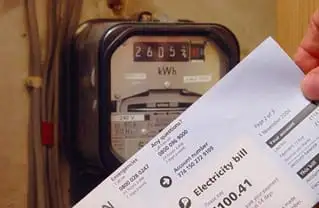
If accepted, rates would decrease by an average of 0.15 per cent on Aug. 1. The company would also rebate customers $3.6 million, starting in September with a credit on their bill, said company spokesman Bob Pike.

Earlier this year, Newfoundland Power had applied for a rate increase of 0.96 per cent starting in August, but the public utilities board turned down the request last month.

In its ruling, the board asked the company to give its customers a rebate from the company's $944,000 in excess revenues in 2001, which were a direct result of operating efficiencies and a tax refund.

The $944,000 rebate will be combined with an additional $2.7-million rebate related to interim electrical rates for 2003.

Pike said he expects the board to issue a decision on the company's new rate plan within the next few weeks.

"Overall, we feel the . . . ruling on the general rate application was a balance between the need to maintain reasonable electrical rates for customers and the need to preserve the financial integrity of the company," said Philip G. Hughes, president and chief executive of Newfoundland Power Inc.

Newfoundland Power is owned by Fortis Inc., a diversified electric utility holding company based in St. John's with assets of more than $2 billion Cdn and annual revenue over $700 million Cdn.

It has holdings in six electric distribution utilities in Newfoundland and Labrador, Prince Edward Island, Ontario, Belize and the Cayman. The firm also owns power companies in New York state and Belize and has real estate and hotel operations in Atlantic Canada.

Related News

Cooperation agreement for Rosatom and Russian Academy

Rosatom-RAS Cooperation drives joint R&D in nuclear energy, nuclear medicine, fusion, particle accelerators, laser technologies, fuel cycle safety, radioactive waste management, and supercomputing, aligning strategic planning and standards to accelerate innovation across Russia's nuclear sector.


Key Points

A pact uniting Rosatom and RAS on nuclear R&D, fusion, and medicine to advance nuclear technologies across Russia.

✅ Joint R&D in fusion, accelerators, lasers, and new materials

✅ Focus on fuel cycle closure, safety, and waste management

✅ Shared strategic planning, standards, and expert evaluation


Russian state atomic energy corporation Rosatom and the Russian State Academy of Sciences are to cooperate on joint scientific, technical and innovative activities in areas including nuclear energy, nuclear medicine and other areas of the electricity sector under an agreement signed in Moscow on 7 February.

The cooperation agreement was signed by Rosatom Director General Alexei Likhachov and President of the Russian Academy of Sciences Alexander Sergeev during a joint meeting to mark Russian Science Day. Under its terms, the partners will cooperate in organising research and development activities aimed at providing technological advantages in various sectors of the domestic industry, as well as creating and developing interdisciplinary scientific and technological centres and organisations supporting energy sector training and innovation. They will also jointly develop strategic planning documents, improve the technical and scientific regulatory and legal framework, and carry out expert evaluations of scientific and technical projects and scientific consultations.

Rosatom said the main areas of cooperation in the agreement are: the development of laser technologies and particle accelerators; the creation of modern diagnostic equipment, nuclear medicine and radiation therapy; controlled thermonuclear fusion; nuclear energy of the future; new materials; the nuclear fuel cycle and its closure; safety of nuclear energy and power sector pandemic response preparedness; environmental aspects of radioactive waste management; modern supercomputers, databases, application packages, and import-substituting codes; and also X-ray astronomy and nuclear planetology.

Likhachov said joint activities between Rosatom and the Academy would strengthen the Russian nuclear industry's "leadership" in the world and allow the creation of new technologies that would shape the future image of the nuclear industry in Russia. "Within the framework of the Agreement, we intend to expand work on the entire spectrum of advanced scientific research. The most important direction of our cooperation will be the integration of fundamental, exploratory and applied scientific research, including in the interests of the development of the nuclear industry. We will work together to form the nuclear energy industry of the future, and enhance grid resilience, to create new materials, new radiation technologies,” he said.

Sergeyev noted the "rich history" of cooperation between the Academy of Sciences and the nuclear industry, including modern safety practices such as arc flash training that support operations. “All major projects in the field of military and peaceful nuclear energy were carried out jointly by scientists and specialists of our organisations, which largely ensured their timeliness and success," he said.


Related News

View more

BC Hydro completes major milestone on Site C transmission line work

Site C 500 kV transmission lines strengthen the BC Hydro grid, linking the new substation and Peace Canyon via a 75 kilometre right-of-way to deliver clean energy, with 400 towers built and both circuits energized.


Key Points

High-voltage lines connecting Site C substation to the BC Hydro grid, delivering clean energy via Peace Canyon.

✅ Two 75 km circuits between Site C and Peace Canyon

✅ Connect new 500 kV substation to BC Hydro grid

✅ Over 400 towers built along existing right-of-way


The second and final 500 kilovolt, 75 kilometre transmission line on the Site C project, which has faced stability questions in recent years, has been completed and energized.

With this milestone, the work to connect the new Site C substation to the BC Hydro grid, amid treaty rights litigation that has at times shaped schedules, is complete. Once the Site C project begins generating electricity, much like when the Maritime Link first power flowed between Newfoundland and Nova Scotia, the transmission lines will help deliver clean energy to the rest of the province.

The two 75 kilometre transmission lines run along an existing right-of-way between Site C and the Peace Canyon generating station, a route that has seen community concerns from some northerners. The project’s first 500 kilovolt, 75 kilometre transmission line – along with the Site C substation – were both completed and energized in the fall of 2020.

BC Hydro awarded the Site C transmission line construction contract to Allteck Line Contractors Inc. (now Allteck Limited Partnership) in 2018. Since construction started on this part of the project in summer 2018, crews have built more than 400 towers and strung lines, even as other interties like the Manitoba-Minnesota line have faced scheduling uncertainty, over a total of 150 kilometres.

The two transmission lines are a major component of the Site C project, comparable to initiatives such as the New England Clean Power Link in scale, which also consists of the new 500 kilovolt substation and expanding the existing Peace Canyon 500 kilovolt gas-insulated switchgear to incorporate the two new 500 kilovolt transmission line terminals.

Work to complete three other 500 kilovolt transmission lines that will span one kilometre between the Site C generating station and Site C substation, similar to milestones on the Maritime Link project, is still underway. This work is expected to be complete in 2023.


Related News

View more

N.S. approves new attempt to harness Bay of Fundy's powerful tides

Bay of Fundy Tidal Energy advances as Nova Scotia permits Jupiter Hydro to test floating barge platforms with helical turbines in Minas Passage, supporting renewable power, grid-ready pilots, and green jobs in rural communities.


Key Points

A Nova Scotia tidal energy project using helical turbines to generate clean power and create local jobs.

✅ Permits enable 1-2 MW prototypes near Minas Passage

✅ Floating barge platforms with patented helical turbines

✅ PPA at $0.50/kWh with Nova Scotia Power


An Alberta-based company has been granted permission to try to harness electricity from the powerful tides of the Bay of Fundy.

Nova Scotia has issued two renewable energy permits to Jupiter Hydro.

Backers have long touted the massive energy potential of Fundy's tides -- they are among the world's most powerful -- but large-scale commercial efforts to harness them have borne little fruit so far, even as a Scottish tidal project recently generated enough power to supply nearly 4,000 homes elsewhere.

The Jupiter application says it will use three "floating barge type platforms" carrying its patented technology. The company says it uses helical turbines mounted as if they were outboard motors.

"Having another company test their technology in the Bay of Fundy shows that this early-stage industry continues to grow and create green jobs in our rural communities," Energy and Mines Minister Derek Mombourquette said in a statement.

The first permit allows the company to test a one-megawatt prototype that is not connected to the electricity grid.

The second -- a five-year permit for up to two megawatts -- is renewable if the company meets performance standards, environmental requirements and community engagement conditions.

Mombourquette also authorized a power purchase agreement that allows the company to sell the electricity it generates to the Nova Scotia grid through Nova Scotia Power for 50 cents per kilowatt hour.

On its web site, Jupiter says it believes its approach "will prove to be the most cost effective marine energy conversion technology in the world," even as other regional utilities consider initiatives like NB Power's Belledune concept for turning seawater into electricity.

The one megawatt unit would have screws which are about 5.5 metres in diameter.

The project is required to obtain all other necessary approvals, permits and authorizations.

It will be located near the Fundy Ocean Research Center for Energy in the Minas Passage and will use existing electricity grid connections.

A study commissioned by the Offshore Energy Research Association of Nova Scotia says by 2040, the tidal energy industry could contribute up to $1.7 billion to Nova Scotia's gross domestic product and create up to 22,000 full-time jobs, a transition that some argue should be planned by an independent body to ensure reliability.

Last month, Nova Scotia Power said it now generates 30 per cent of its power from renewables, as the province moves to increase wind and solar projects after abandoning the Atlantic Loop.

The utility says 18 per cent came from wind turbines, nine per cent from hydroelectric and tidal turbines and three per cent by burning biomass across its fleet.

However, over half of the province's electrical generation still comes from the burning of coal or petroleum coke, even as environmental advocates push to reduce biomass use in the mix. Another 13 per cent come from burning natural gas and five per cent from imports.


Related News

View more

ERCOT Issues RFP to Procure Capacity to Alleviate Winter Concerns

ERCOT Winter Capacity RFP seeks up to 3,000 MW through generation and demand response to bolster Texas grid reliability during peak load, leveraging Reliability Must-Run, incentive factors, and EEA risk mitigation for the 2023-24 season.


Key Points

An ERCOT initiative to procure 3,000 MW of generation and demand response to reduce EEA risk and improve reliability.

✅ Targets 3,000 MW from generation and demand response

✅ Uses RMR-style contracts with flexible incentive factors

✅ Aims to lower EEA probability below 10% this winter


The Electric Reliability Council of Texas (ERCOT) issued a request for proposals to stakeholders to procure up to 3,000 MW of generation or demand response capacity to meet load and reserve requirements during the winter 2023-24 peak load season (Dec. 1, 2023, through Feb. 29, 2024), amid ongoing Texas power grid challenges across the region.

ERCOT cited “several factors, including significant peak load growth since last winter, recent and proposed retirements of dispatchable Generation Resources, and recent extreme winter weather events, including Winter Storm Elliott in December 2022, Winter Storm Uri in February 2021, and the 2018 and 2011 winter storms, each of which resulted in abnormally high demand during winter weather.” It now seeks additional capacity under its “authority to prevent an anticipated Emergency Condition,” reflecting nationwide blackout risks identified by grid experts.

In its notice regarding the RFP, ERCOT identified a number of mothballed and recently decommissioned generation resources that may be eligible to offer capacity under the RFP. It further stated that offers must comport with the format of its “Reliability Must-Run” agreement but could include a proposed “Incentive Factor” that reflects the revenues the unit owners determine would be necessary to bring the unit back to operation. It added that the Incentive Factor is not necessarily limited to 10%. Providers of eligible demand response can submit offers based on similar principles that are not necessarily constrained by cost. The notice identifies potential acceptable sources of demand response, describes certain parameters for the kinds of demand response that are permitted to respond to the RFP, and outlines the time periods during which ERCOT must be able to deploy the demand response resources to improve electricity reliability across the system.

To meet the Dec. 1, 2023, service start date, ERCOT developed an aggressive timeline to solicit and evaluate proposals through the RFP. Responses to the RFP are due Nov. 6, 2023. ERCOT’s schedule provides that it will notify market participants that obtain awards on Nov. 23, 2023. Expect contracts to be executed by Nov. 30, 2023.

Unlike Regional Transmission Organizations in the Northeastern United States, ERCOT does not have a capacity market. Instead, ERCOT relies on a high price cap of $5,000 per MWh for its energy market (decreased from the $9,000 per MWh cap in effect during Winter Storm Uri) and an Operating Reserve Demand Curve adder that pays additional funds to generators supplying power and ancillary services, an area recently scrutinized for improper payments when supply conditions are tight. In the wake of Winter Storm Uri, some calls were made to have ERCOT adopt a capacity market for reliability reasons, and a number of legal battles continue to play out in the wake of Winter Storm Uri. (See recent McGuireWoods legal alert “Winter Storm Uri Power Dispute Reaches the Supreme Court of Texas.”) Though a capacity market was not adopted, the Texas Legislature approved a $7.2 billion loan program, widely described as an electricity market bailout for generators, to build up to 10,000 MW of dispatchable generation. The legislature also approved a version of the Public Utility Commission of Texas’ proposal to establish a “Performance Credit Mechanism,” but with a cost cap of $1 billion.

The loss of life and economic impacts of Winter Storm Uri in 2021, along with the energy crunches and calls for conservation this past summer, are driving changes to ERCOT’s “energy-only” market, including electricity market reforms under consideration. Texas policymakers are providing multiple financial incentives to promote investment in dispatchable on-demand generation, and voters will consider funding to modernize generation measures this year to make the Texas grid more reliable and able to deal with power demand from a growing economy and increased demand for electricity driven by weather. In the meantime, ERCOT’s plan to procure 3,000 MW through this RFP process is a stopgap measure intended to bolster reliability for the upcoming winter season and lower the probability of load shed in the event of severe winter weather.


Related News

View more

Heatwave Sparks Unprecedented Electricity Demand Across Eastern U.S

Eastern U.S. Heatwave Electricity Demand surges to record peak load, straining the power grid, lifting wholesale prices, and prompting demand response, conservation measures, and load shedding to protect grid reliability during extreme temperatures.


Key Points

It is the record peak load from extreme heat, straining grids, lifting wholesale prices, and prompting demand response.

✅ Peak electricity use stresses regional power grid.

✅ Prices surge; conservation and demand response urged.

✅ Utilities monitor load, avoid outages via load shedding.


As temperatures soar to unprecedented highs across the Eastern United States, a blistering heatwave has triggered record-breaking electricity demand. This article delves into the causes behind the surge in energy consumption, its impact on the power grid, and measures taken to manage the strain during this extraordinary weather event.

Intensifying Heatwave Conditions

The Eastern U.S. is currently experiencing one of its hottest summers on record, with temperatures climbing well above seasonal norms. This prolonged heatwave has prompted millions of residents to rely heavily on air conditioning and cooling systems to escape the sweltering heat, with electricity struggles worsening in several communities, driving up electricity usage to peak levels.

Strain on Power Grid Infrastructure

The surge in electricity demand during the heatwave has placed significant strain on the region's power grid infrastructure, with supply-chain constraints complicating maintenance and equipment availability during peak periods.

Record-breaking Energy Consumption

The combination of high temperatures and increased cooling demands has led to record-breaking energy consumption levels across the Eastern U.S. States like New York, Pennsylvania, and Maryland have reported peak electricity demand exceeding previous summer highs, with blackout risks drawing heightened attention from operators, highlighting the extraordinary nature of this heatwave event.

Impact on Energy Costs and Supply

The spike in electricity demand during the heatwave has also affected energy costs and supply dynamics. Wholesale electricity prices have surged in response to heightened demand, contributing to sky-high energy bills for many households, reflecting the market's response to supply constraints and increased operational costs for power generators and distributors.

Management Strategies and Response

Utility companies and grid operators have implemented various strategies to manage electricity demand and maintain grid reliability during the heatwave. These include voluntary conservation requests, load-shedding measures, and real-time monitoring of grid conditions to prevent power outages while avoiding potential blackouts or disruptions.

Community Outreach and Public Awareness

Amidst the heatwave, community outreach efforts play a crucial role in raising public awareness about energy conservation and safety measures. Residents are encouraged to conserve energy during peak hours, adjust thermostat settings, and utilize energy-efficient appliances to alleviate strain on the power grid and reduce overall energy costs.

Climate Change and Resilience

The intensity and frequency of heatwaves are exacerbated by climate change, underscoring the importance of building resilience in energy infrastructure and adopting sustainable practices. Investing in renewable energy sources, improving energy efficiency and demand response programs that can reduce peak demand, and implementing climate adaptation strategies are essential steps towards mitigating the impacts of extreme weather events like heatwaves.

Looking Ahead

As the Eastern U.S. navigates through this heatwave, stakeholders are focused on implementing lessons learned from California's grid response to enhance preparedness and resilience for future climate-related challenges. Collaborative efforts between government agencies, utility providers, and communities will be crucial in developing comprehensive strategies to manage energy demand, promote sustainability, and safeguard public health and well-being during extreme weather events.

Conclusion

The current heatwave in the Eastern United States has underscored the critical importance of reliable and resilient energy infrastructure in meeting the challenges posed by extreme weather conditions. By prioritizing energy efficiency, adopting sustainable energy practices, and fostering community resilience, stakeholders can work together to mitigate the impacts of heatwaves and ensure a sustainable energy future for generations to come.


Related News

View more

Hydro One reports $1.1B Q2 profit boosted by one-time gain due to court ruling

Hydro One Q2 Earnings surge on a one-time gain from a court ruling on a deferred tax asset, lifting profit, revenue, and adjusted EPS at Ontario's largest utility regulated by the Ontario Energy Board.


Key Points

Hydro One Q2 earnings jumped on an $867M court gain, with revenue at $1.67B and adjusted EPS improving to $0.39.

✅ One-time gain: $867M from tax appeal ruling.

✅ Revenue: $1.67B vs $1.41B last year.

✅ Adjusted EPS: $0.39 vs $0.26.


Hydro One Ltd., following the Peterborough Distribution sale transaction closing, reported a second-quarter profit of $1.1 billion, boosted by a one-time gain related to a court decision.

The power utility says it saw a one-time gain of $867 million in the quarter due to an Ontario court ruling on a deferred tax asset appeal that set aside an Ontario Energy Board decision earlier.

Hydro One says the profit amounted to $1.84 per share for the quarter ended June 30, amid investor concerns about uncertainties, up from $155 million or 26 cents per share a year earlier.

Shares also moved lower after the Ontario government announced leadership changes, as seen when Hydro One shares fell on the news in prior trading.

On an adjusted basis, it says it earned 39 cents per share for the quarter, despite earlier profit plunge headlines, up from an adjusted profit of 26 cents per share in the same quarter last year.

Revenue totalled $1.67 billion, up from $1.41 billion in the second quarter of 2019, while other Canadian utilities like Manitoba Hydro face heavy debt burdens.

Hydro One is Ontario’s largest electricity transmission and distribution provider, and its CEO compensation has drawn scrutiny in the province.


Related News

View more

Sign Up for Electricity Forum’s Newsletter

Stay informed with our FREE Newsletter — get the latest news, breakthrough technologies, and expert insights, delivered straight to your inbox.

Electricity Today T&D Magazine Subscribe for FREE

Stay informed with the latest T&D policies and technologies.
  • Timely insights from industry experts
  • Practical solutions T&D engineers
  • Free access to every issue

Live Online & In-person Group Training

Advantages To Instructor-Led Training – Instructor-Led Course, Customized Training, Multiple Locations, Economical, CEU Credits, Course Discounts.

Request For Quotation

Whether you would prefer Live Online or In-Person instruction, our electrical training courses can be tailored to meet your company's specific requirements and delivered to your employees in one location or at various locations.