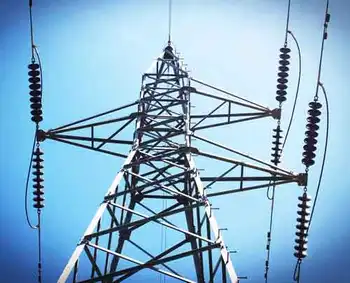
Power Cuts Loom In New Zealand's Electricity Crisis

By


Arc Flash Training CSA Z462 - Electrical Safety Essentials

Our customized live online or in‑person group training can be delivered to your staff at your location.

  • Live Online
  • 6 hours Instructor-led
  • Group Training Available
Regular Price:
$249
Coupon Price:
$199
Reserve Your Seat Today
ew Zealanders were bluntly warned Friday to brace for the shock of cold showers and other rationing measures if they don't radically cut their power use within two weeks.

Only rain or greater electricity conservation can stave off supply cuts, said Finance Minister Michael Cullen.

``Power will have to be rationed. There is no way round this,'' he said.

The government urged people last month to slash nationwide electricity use by 10 percent, as the Southern Hemisphere winter sets in. So they've managed only 4.5 percent.

Nearly three-quarters of New Zealand's power is hydroelectric. Water levels in lakes that drive power plants have dropped by about 55 percent after two years of dry weather.

Forecasters say the dry spell could continue for months.

Natural gas supplies also are under pressure because of lower-than-expected reserves at the giant Maui gas field.

Patrick Strange, head of the government's Winter Power Taskforce, said the 4.5 percent savings were ``the most encouraging sign so far'' that consumers were heeding calls to save power.

But he added the situation was ``serious,'' and ``we need the 10 percent saving.''

It is not only households that face the chill.

The country's industrial and commercial sectors have already reported nearly 35 million New Zealand dollars (US$20 million) in losses from production cuts made due to rocketing wholesale power prices.

Related News
Don't be taken in by scammers threatening to shut off electricity: Manitoba Hydro

Manitoba Hydro Phone Scam targets small businesses with disconnection threats, prepaid card payments, caller ID spoofing, phishing texts, and door-to-door fraud; hang up, verify your account directly, and never share banking information.


Key Points

A scam where callers threaten disconnection and demand prepaid cards; verify account status directly with Manitoba Hydro.

✅ Hang up and call Manitoba Hydro at 1-888-624-9376 to verify.

✅ Never pay by prepaid cards, gift cards, or crypto.

✅ Hydro will not cut power on one-hour notice.


Manitoba Hydro is warning customers, particularly small business owners, to be wary of high-pressure scammers, as Ontario utilities warn of scams in other provinces, threatening to shut off their electricity.

The callers demand the customer to make immediate payment by a prepaid card. Often, the calls are made in the middle of the day at a busy time, frightening the customer with aggressive threats about disconnection, as hydro disconnections have made headlines elsewhere, says hydro spokesman Bruce Owen.

"They tell them 'we have a truck on the way to cut off your power. If you don't pay in the next hour you're out of luck,'" he said.

"And because these folks have inventory in freezers and they have customers … they're willing to fork over several hundred or even several thousand dollars on a prepaid card to somebody they don't know to keep the lights on."

Maybe the business owners can't recall, with everything happening, including discussions about Hydro One peak rates in Ontario, if they've made their payments on time. They start second-guessing and believing the person on the other line, Owen says.

And they worry about losing thousands of dollars in business if they lose power. So they're more than willing to run out to a store, buy a prepaid debit card and provide the number to the caller.

"Their goal is to manipulate you into sending money before you figure out it's a scam," said Chris McColm, hydro's security and investigations supervisor. "These people are crooks and you should hang up on them."

For any customers that are in arrears, hydro will work with them to resolve the issue, Owen said.

"We do not have to take that extreme measure of cutting off or disconnecting anybody. That's not the business we're in — we don't strong arm people that way," he said.

"Anybody who's threatening to cut off your power with an hour or half-an-hour notice, well it's it's no better than someone waiting around the corner, waiting the club you over the head in the dark of night. That's what they are."


Fraud reports soar

The power utility has recorded a nearly-300 per cent jump in the number of fraud-related complaints this year over 2017. There have been 862 phone, text and e-mail scams and that could still go much higher.

The current statistics from 2018 have only calculated up to Oct. 31. In 2017, there were 221.

That jump in numbers doesn't necessarily mean there are more scammers out there.

It could simply mean people are finally getting wise to fraudsters and reporting it more, Owen says.

"At the same token, we don't hear of everybody who's been taking advantage of because once they've found out that they've been hoodwinked they don't want to tell anybody because they're so embarrassed," he said.

"These scammers can be very convincing and anyone can be victimized," McColm said.

If you are able to think clearly when some high-pressure caller gets you on the line, Owen suggests asking a few simple questions to challenge their legitimacy:

  • What street am I on?
  • What does my business look like? 
  • What's the weather outside right now?

Phone scammers can falsify their caller ID information to make it appear they're calling from a local number, but what you'll find is most of them aren't in Winnipeg or Manitoba and likely not even this country or continent, Owen says.

The key to being safe is simply to never give out banking information, Owen says. It's a message that has been stressed for years and 80-90 per cent of people understand it, but it's that other 10-20 per cent that are still being victimized.And it's not just phone calls. Many other fraud-related complaints to Manitoba Hydro this year concerned unsolicited text messages to customers saying they had been overbilled, or faced retroactive charges elsewhere, and were eligible for a refund.

This scam is also aimed at getting a customer's personal banking information, under the guise of having money put back into their account.

Also, many people, especially seniors living alone, continue to be targeted by aggressive door-to-door fraudsters, and cases like the electricity theft ring in Montreal underscore the risks, McColm says. However, he adds, hydro employees always display photo ID and will never demand to come into a home. 

If you're unsure whether a phone call, text or email is real or a scam, contact Manitoba Hydro at 1-888-624-9376.


Related News

View more

London Underground Power Outage Disrupts Rush Hour

London Underground Power Outage 2025 disrupted Tube lines citywide, with a National Grid voltage dip causing service suspensions, delays, and station closures; TfL recovery efforts spotlight infrastructure resilience, contingency planning, and commuter safety communications.


Key Points

A citywide Tube disruption on May 12, 2025, triggered by a National Grid voltage dip, exposing resilience gaps.

✅ Bakerloo, Waterloo & City, Northern suspended; Jubilee disrupted.

✅ Cause: brief National Grid fault leading to a voltage dip.

✅ TfL focuses on recovery, communication, and resilience upgrades.


On May 12, 2025, a significant power outage disrupted the London Underground during the afternoon rush hour, affecting thousands of commuters across the city. The incident highlighted vulnerabilities in the city's transport infrastructure, echoing a morning outage in London reported earlier, and raised concerns about the resilience of urban utilities.

The Outage and Its Immediate Impact

The power failure occurred around 2:30 PM, leading to widespread service suspensions and delays on several key Tube lines. The Bakerloo and Waterloo & City lines were completely halted, while the Jubilee line experienced disruptions between London Bridge and Finchley Road. The Northern line was also suspended between Euston and Kennington, as well as south of Stockwell. Additionally, Elizabeth Line services between Abbey Wood and Paddington were suspended. Some stations were closed for safety reasons due to the lack of power.

Commuters faced severe delays, with many stranded in tunnels or on platforms. The lack of information and communication added to the confusion, as passengers were left uncertain about the cause and duration of the disruptions.

Cause of the Power Failure

Transport for London (TfL) attributed the outage to a brief fault in the National Grid's transmission network. Although the fault was resolved within seconds, it caused a voltage dip that affected local distribution networks, leading to the power loss in the Underground system.

The incident underscored the fragility of the city's transport infrastructure, particularly the aging electrical and signaling systems that are vulnerable to such faults, as well as weather-driven events like a major windstorm outage that can trigger cascading failures. While backup systems exist, their capacity to handle sudden disruptions remains a concern.

Broader Implications for Urban Infrastructure

This power outage is part of a broader pattern of infrastructure challenges facing London. In March 2025, a fire at an electrical substation in Hayes led to the closure of Heathrow Airport, affecting over 200,000 passengers, while similar disruptions at BWI Airport have underscored aviation vulnerabilities. These incidents have prompted discussions about the resilience of the UK's energy and transport networks.

Experts argue that aging infrastructure, coupled with increasing demand and climate-related stresses, poses significant risks to urban operations, as seen in a North Seattle outage and in Toronto storm-related outages that tested local grids. There is a growing call for investment in modernization and diversification of energy sources to ensure reliability and sustainability.

TfL's Response and Recovery Efforts

Following the outage, TfL worked swiftly to restore services. By 11 PM, all but one line had resumed operations, with only the Elizabeth Line continuing to experience severe delays. TfL officials acknowledged the inconvenience caused to passengers and pledged to investigate the incident thoroughly, similar to the Atlanta airport blackout inquiry conducted after a major outage, to prevent future occurrences.

In the aftermath, TfL emphasized the importance of clear communication with passengers during disruptions and committed to enhancing its contingency planning and infrastructure resilience.

Public Reaction and Ongoing Concerns

The power outage sparked frustration among commuters, many of whom took to social media to express their dissatisfaction, echoing sentiments during Houston's extended outage about communication gaps and delays. Some passengers reported being trapped in tunnels for extended periods without clear guidance from staff.

The incident has reignited debates about the adequacy of London's transport infrastructure and the need for comprehensive upgrades. While TfL has initiated reviews and improvement plans, the public remains concerned about the potential for future disruptions and the city's preparedness to handle them.

The May 12 power outage serves as a stark reminder of the vulnerabilities inherent in urban infrastructure. As London continues to grow and modernize, ensuring the resilience of its transport and energy networks will be crucial. This includes investing in modern technologies, enhancing communication systems, and developing robust contingency plans to mitigate the impact of future disruptions. For now, Londoners are left reflecting on the lessons learned from this incident and hoping for a more reliable and resilient transport system in the future.


Related News

View more

Groups clash over NH hydropower project

Northern Pass Hydropower Project Rehearing faces review by New Hampshire's Site Evaluation Committee as Eversource seeks approval for a 192-mile transmission line, citing energy cost relief, while Massachusetts eyes Central Maine Power as an alternative.


Key Points

A review of Eversource's halted NH transmission plan, weighing impacts, costs, and alternatives.

✅ SEC denied project, Eversource seeks rehearing

✅ 192-mile line to bring Canadian hydropower to NE

✅ Alternative bids include Central Maine Power corridor


Groups supporting and opposing the Northern Pass hydropower project in New Hampshire filed statements Friday in advance of a state committee’s meeting next week on whether it should rehear the project.

The Site Evaluation Committee rejected the transmission proposal last month over concerns about potential negative impacts. It is scheduled to deliberate Monday on Eversource’s request for a rehearing.

The $1.6 billion project would deliver hydropower from Canada, including Hydro-Quebec exports, to customers in southern New England through a 192-mile transmission line in New Hampshire.

If the Northern Pass project fails to ultimately win New Hampshire approval, the Massachusetts Department of Energy Resources has announced it will begin negotiating with a team led by Central Maine Power Co. for a $950 million project through a 145-mile Maine transmission line as an alternative.

Separately, construction later began on the disputed $1 billion electricity corridor despite ongoing legal and political challenges.

The Business and Industry Association voted last month to endorse the project after remaining neutral on it since it was first proposed in 2010. A letter sent to the committee Friday urges it to resume deliberations. The association said it is concerned about the severe impact the committee’s decision could have on New Hampshire’s economic future, even as Connecticut overhauls electricity market structure across New England.

“The BIA believes this decision was premature and puts New Hampshire’s economy at risk,” organization President Jim Roche wrote. “New Hampshire’s electrical energy prices are consistently 50-60 percent higher than the national average. This has forced employers to explore options outside New Hampshire and new England to obtain lower electricity prices. Businesses from outside New Hampshire and others now here are reversing plans to grow in New Hampshire due to the Site Evaluation Committee’s decision.”

The International Brotherhood of Electrical Workers and the Coos County Business and Employers Group also filed a statement in support of rehearing the project.

The Society to Protect New Hampshire Forests, which is opposed to the project, said Eversource’s request is premature because the committee hasn’t issued a final written decision yet. It also said Eversource hasn’t proven committee members “made an unlawful or unreasonable decision or mistakenly overlooked matters it should have considered.”

As part of its request for reconsideration, Eversource said it is offering up to $300 million in reductions to low-income and business customers in the state.

It also is offering to allocate $95 million from a previously announced $200 million community fund — $25 million to compensate for declining property values, $25 million for economic development and $25 million to promote tourism in affected areas. Another $20 million would fund energy efficiency programs.


Related News

View more

British Columbia Accelerates Clean Energy Shift

BC Hydro Grid Modernization accelerates clean energy and electrification, upgrading transmission lines, substations, and hydro dams to deliver renewable power for EVs and heat pumps, strengthen grid reliability, and enable industrial decarbonization in British Columbia.


Key Points

A $36B, 10-year plan to expand and upgrade B.C.'s clean grid for electrification, reliability, and industrial growth.

✅ $36B for lines, substations, and hydro dam upgrades

✅ Enables EV charging, heat pumps, and smart demand response

✅ Prioritizes industrial electrification and Indigenous partnerships


In a significant move towards a clean energy transition, British Columbia has announced a substantial $36-billion investment to enlarge and upgrade its electricity grid over the next ten years. The announcement last Tuesday from BC Hydro indicates a substantial 50 percent increase from its prior capital plan. A major portion of this investment is directed towards new consumer connections and improving current infrastructure, including substations, transmission lines, and hydro dams for more efficient power generation.

The catalyst behind this major investment is the escalating demand for clean energy across residential, commercial, and industrial sectors in British Columbia. Projections show a 15 percent rise in electricity demand by 2030. According to the Canadian Climate Institute's models, achieving Canada’s climate goals will require extensive electrification across various sectors, raising questions about a net-zero grid by 2050 nationwide.

BC Hydro is planning substantial upgrades to the electrical grid to meet the needs of a growing population, decreasing industry carbon emissions, and the shift towards clean technology. This is vital, especially as the province works towards improving housing affordability and as households face escalating costs from the impacts of climate change and increasing exposure to harsh weather events. Affordable, reliable power and access to clean technologies such as electric vehicles and heat pumps are becoming increasingly important for households.

British Columbia is witnessing a significant shift from fossil fuels to clean electricity in powering homes, vehicles, and workplaces. Electric vehicle usage in B.C. has increased twentyfold in the past six years. Last year, one in every five new light-duty passenger vehicles sold in B.C. was electric – the highest rate in Canada. Additionally, over 200,000 B.C. homes are now equipped with heat pumps, indicating a growing preference for the province’s 98 percent renewable electricity.

The investment also targets reducing industrial emissions and attracting industrial investment. For instance, the demand for transmission along the North Coastline, from Prince George to Terrace, is expected to double this decade, especially from sectors like mining. Mining companies are increasingly looking for locations with access to clean power to reduce their carbon footprint.

This grid enhancement plan in B.C. is reflective of similar initiatives in provinces like Quebec and the legacy of Manitoba hydro history in building provincial systems. Hydro-Québec announced a substantial $155 to $185 billion investment in its 2035 Action Plan last year, aimed at supporting decarbonization and economic growth. By 2050, Hydro-Québec predicts a doubling of electricity demand in the province.

Both utilities’ strategies focus on constructing new facilities and enhancing existing assets, like upgrading dams and transmission lines. Hydro-Québec, for instance, includes energy efficiency goals in its plan to double customer savings and potentially save over 3,500 megawatts of power.

However, with this level of investment, provinces need to engage in dialogue about priorities and the optimal use of clean electricity resources, with concepts like macrogrids offering potential benefits. Quebec, for instance, has shifted from a first-come, first-served basis to a strategic review process for significant new industrial power requests.

B.C. is also moving towards strategic prioritization in its energy strategy, evident in its recent moratorium on new connections for virtual currency mining due to their high energy consumption.

Indigenous partnership and leadership are also key in this massive grid expansion. B.C.’s forthcoming Call for Power and Quebec’s financial partnerships with Indigenous communities indicate a commitment to collaborative approaches. British Columbia has also allocated $140 million to support Indigenous-led power projects.

Regarding the rest of Canada, electricity planning varies in provinces with deregulated markets like Ontario and Alberta. However, these provinces are adapting too, and the federal government has funded an Atlantic grid study to improve regional planning efforts. Ontario, for example, has provided clear guidance to its system operator, mirroring the ambition in B.C. and Quebec.

Utilities are rapidly working to not only expand and modernize energy grids but also to make them more resilient, affordable, and smarter, as demonstrated by recent California grid upgrades funding announcements across the sector. Hydro-Québec focuses on grid reliability and affordability, while B.C. experiments with smart-grid technologies.

Both Ontario and B.C. have programs encouraging consumers to reduce consumption in real-time, demonstrating the potential of demand-side management. A recent instance in Alberta showed how customer participation could prevent rolling blackouts by reducing demand by 150 megawatts.

This is a crucial time for all Canadian provinces to develop larger, smarter energy grids, including a coordinated western Canadian electricity grid approach for a sustainable future. Utilities are making significant strides towards this goal.


Related News

View more

Community-generated green electricity to be offered to all in UK

Community Power Tariff UK delivers clean electricity from community energy projects, sourcing renewable energy from local wind and solar farms, with carbon offset gas, transparent provenance, fair pricing, and reinvestment in local generators across Britain.


Key Points

UK energy plan delivering 100% community renewable power with carbon-offset gas, sourced from local wind and solar.

✅ 100% community-generated electricity from UK wind and solar

✅ Fair prices with profits reinvested in local projects

✅ Carbon-offset gas and verified, transparent provenance


UK homes will soon be able to plug into community wind and solar farms from anywhere in the country through the first energy tariff to offer clean electricity exclusively from community projects.

The deal from Co-op Energy comes as green energy suppliers race to prove their sustainability credentials amid rising competition for eco-conscious customers and “greenwashing” in the market.

The energy supplier will charge an extra £5 a month over Co-op’s regular tariff to provide electricity from community energy projects and gas which includes a carbon offset in the price.

Co-op, which is operated by Octopus Energy after it bought the business from the Midcounties Co-operative last year, will source the clean electricity for its new tariff directly from 90 local renewable energy generation projects across the UK, including the Westmill wind and solar farms in Oxfordshire. It plans to use all profits to reinvest in maintaining the community projects and building new ones.

Phil Ponsonby, the chief executive of Midcounties Co-operative, said the tariff is the UK’s only one to be powered by 100% community-generated electricity and would ensure a fair price is paid to community generators too, amid a renewable energy auction boost that supports wider deployment.

Customers on the Community Power tariff will be able to “see exactly where it is being generated at small scale sites across the UK, and, with new rights to sell solar power back to energy firms, they know it is benefiting local communities”, he said.

Co-op, which has about 300,000 customers, has set itself apart from a rising number of energy supply deals which are marked as 100% renewable, but are not as green as they seem, even as many renewable projects are on hold due to grid constraints.

Consumer group Which? has found that many suppliers offer renewable energy tariffs but do not generate renewable electricity themselves or have contracts to buy any renewable electricity directly from generators.

Instead, the “pale green” suppliers exploit a loophole in the energy market by snapping up cheap renewable energy certificates, without necessarily buying energy from renewables projects.

The certificates are issued by the regulator to renewable energy developers for each megawatt generated, but these can be sold separately from the electricity for a fraction of the price.

A survey conducted last year found that one in 10 people believe that a renewables tariff means that the supplier generates at least some of its electricity from its own renewable energy projects.

Ponsonby said the wind and solar schemes that generate electricity for the Community Power tariff “plough the profits they make back into their neighbourhoods or into helping other similar projects get off the ground”.

Greg Jackson, the chief executive of Octopus Energy, said being able to buy locally-sourced clean, green energy is “a massive jump in the right direction” which will help grow the UK’s green electricity capacity nationwide.

“Investing in more local energy infrastructure and getting Britain’s homes run by the sun when it’s shining and wind energy when it’s blowing can end our reliance on dirty fossil fuels sooner than we hoped,” he said.


Related News

View more

Saskatchewan to credit solar panel owners, but not as much as old program did

Saskatchewan Solar Net Metering Program lets rooftop solar users offset at retail rate while earning 7.5 cents/kWh credits for excess energy; rebates are removed, SaskPower balances grid costs with a 100 kW cap.


Key Points

An updated SaskPower plan crediting rooftop solar at 7.5 cents/kWh, offsetting usage at retail rate, without rebates.

✅ Excess energy credited at 7.5 cents/kWh

✅ Offsets on-site use at retail electricity rates

✅ Up to 100 kW generation; no program capacity cap


Saskatchewan has unveiled a new program that credits electricity customers for generating their own solar power, but it won’t pay as much as an older program did or reimburse them with rebates for their costs to buy and install equipment.

The new net metering program takes effect Nov. 1, and customers will be able to use solar to offset their own power use at the retail rate, similar to UK households' right to sell power in comparable schemes, though program details differ.

But they will only get 7.5 cents per kilowatt hour credit on their bills for excess energy they put back into the grid, as seen in Duke Energy payment changes in other jurisdictions, rather than the 14 cents in the previous program.

Dustin Duncan, the minister responsible for Crown-owned SaskPower, says the utility had to consider the interests of people wanting to use rooftop solar and everyone else who doesn’t have or can’t afford the panels, who he says would have to make up for the lost revenue.

Duncan says the idea is to create a green energy option, with wind power gains highlighting broader competitiveness, while also avoiding passing on more of the cost of the system to people who just cannot afford solar panels of their own.

Customers with solar panels will be allowed to generate up to 100 kilowatts of power against their bills.

“It’s certainly my hope that this is going to provide sustainability for the industry, as illustrated by Alberta's renewable surge creating jobs, that they have a program that they can take forward to their potential customers, while at the same time ensuring that we’re not passing onto customers that don’t have solar panels more cost to upkeep the grid,” Duncan said Tuesday.

Saskatchewan NDP leader Ryan Meili said he believes eliminating the rebate and cutting the excess power credit will kill the province’s solar energy, a concern consistent with lagging solar demand in Canada in recent national reports, he said.

“(Duncan) essentially made it so that any homeowner who wants to put up panels would take up to twice as long to pay it back, which effectively prices everybody in the small part of the solar production industry — the homeowners, the farms, the small businesses, the small towns — out of the market,” Meili said.

The province’s old net metering program hit its 16 megawatt capacity ahead of schedule, forcing the program to shut down, while disputes like the Manitoba Hydro solar lawsuit have raised questions about program management elsewhere. It also had a rebate of 20 per cent of the cost of the system, but that rebate has been discontinued.

The new net metering program won’t have any limit on program capacity, or an end date.

According to Duncan, the old program would have had a net negative impact to SaskPower of about $54 million by 2025, but this program will be much less — between $4 million and $5 million.

Duncan said other provinces either have already or are in the process of moving away from rebates for solar equipment, including Nova Scotia's proposed solar charge and similar reforms, and away from the one-to-one credits for power generation.


Related News

View more

Sign Up for Electricity Forum’s Newsletter

Stay informed with our FREE Newsletter — get the latest news, breakthrough technologies, and expert insights, delivered straight to your inbox.

Electricity Today T&D Magazine Subscribe for FREE

Stay informed with the latest T&D policies and technologies.
  • Timely insights from industry experts
  • Practical solutions T&D engineers
  • Free access to every issue

Live Online & In-person Group Training

Advantages To Instructor-Led Training – Instructor-Led Course, Customized Training, Multiple Locations, Economical, CEU Credits, Course Discounts.

Request For Quotation

Whether you would prefer Live Online or In-Person instruction, our electrical training courses can be tailored to meet your company's specific requirements and delivered to your employees in one location or at various locations.