Ontario Premier Admits Rebate

By The Ottawa Citizen


Protective Relay Training - Basic

Our customized live online or in‑person group training can be delivered to your staff at your location.
  • Live Online
  • 12 hours Instructor-led
  • Group Training Available
Regular Price:
$699
Coupon Price:
$599
Reserve Your Seat Today
Premier Ernie Eves acknowledged that some electricity users urgently need government help to pay their soaring bills and cannot wait until spring.

His comment was the clearest signal yet that the Ontario government is scrambling to fast-track rebates or some other short-term relief to help increasingly angry consumers.

"Certainly in terms of some individuals -- some individuals on fixed incomes especially -- can't, you know, sit there and wait until next March or April or May to have some redress for money that they've paid, and I understand that," Mr. Eves said.

Government rebates, that could pay from $130 to $250 per household if hydro costs rise above a set level, were originally intended to go out after May 1, 2003, the one-year anniversary of competition in the hydro marketplace. But an unusually hot summer, combined with the fact that four of eight nuclear reactors at Pickering are out of commission, has sent rates through the roof. As temperatures fall and many Ontarians rely on electricity for heat, there's no relief in sight.

Mr. Eves said he still has faith that the energy marketplace will, on its own, eventually bring power bills down. But he has ordered Energy Minister John Baird to bring to cabinet short-, medium- and long-term strategies to increase Ontario's power supply and mitigate rate shocks, which he admitted are battering his government's popularity.

On Wednesday, NDP Leader Howard Hampton tabled a private member's bill, the No Freezing in the Dark Act, that would ban utilities from cutting anyone's power between Oct. 1 and May 1 for non-payment. Utilities would face fines as high as $1 million if they refused to reconnect customers in arrears. Mr. Baird told reporters he'll take a "serious" look at the bill. He recalled the 1998 ice storm that knocked out power in eastern Ontario and parts of Quebec while noting how vital electricity is to many people, particularly those who rely on it for heat.

Mr. Baird wouldn't say when he'll present cabinet with hydro options, only that it will be "sooner rather than later."

Conservative MPP Gary Carr, the Speaker of the legislature, said about 500 of his Oakville constituents have signed a petition demanding the government freeze hydro rates until it figures out how to cope with deregulation.

"They seem to be coming in pretty fast," he said of the signatures, estimating there will be 750 by the time another MPP tables the petition on his behalf next week.

While the petition is clearly an embarrassment for the government, Mr. Eves said he can't blame Mr. Carr for passing on his constituents' views.

Related News
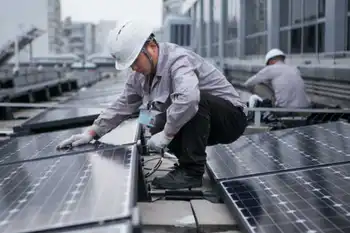
Amazon launches new clean energy projects in US, UK

Amazon Renewable Energy Projects advance net zero goals with a Scotland wind farm PPA and US solar farms in North Carolina and Virginia, delivering clean power, added capacity, and lower carbon emissions across cloud operations.


Key Points

Amazon initiatives adding wind and solar capacity in the UK and US to cut carbon and power cloud operations.

✅ Largest UK corporate wind PPA on Scotland Kintyre Peninsula

✅ Two US solar farms in North Carolina and Virginia

✅ 265 MW added capacity, 668,997 MWh clean power annually


Amazon is launching three renewable energy projects in the United States and the United Kingdom that support Amazon’s commitment to using net zero carbon energy by 2040.

The U.K. project is a wind farm on the Kintyre Peninsula in Scotland, aligned with a 10 GW renewables contract boosting the U.K. grid. It will generate 168,000 megawatt hours (MWh) of clean energy each year, enough to power 46,000 U.K. homes. It will be the largest corporate wind power purchase agreement (PPA) in the U.K.

Offshore wind energy in the UK is powering up rapidly, complementing onshore developments.

The other two are solar projects – one in Warren County, N.C, and the other in Prince George County, Va, reflecting broader US solar and wind growth trends nationwide. Together, they are expected to generate 500,997 MWh of energy annually. It is Amazon’s second renewable energy project in North Carolina, following the Amazon Wind Farm US East operated by Avangrid Renewables, and eighth in Virginia.

The three new Amazon wind and solar projects – which are expected to be in operation in 2012 — will provide 265 MW of additional renewable capacity, and align with U.K. wind power lessons for the U.S. market nationwide.

“In addition to the environmental benefits inherently associated with running applications in the cloud, Amazon is committed to minimizing our carbon emissions and reaching 80% renewable energy use across the company by 2024. We’ve announced eight projects this year and have more projects on the horizon – and we’re committed to investing in renewable energy as a critical step toward addressing our carbon footprint globally,” Kara Hurst, director of sustainability at Amazon, said. “With nearly 70 renewable energy projects around the globe – including 54 solar rooftops – we are making significant progress towards reaching Amazon’s company-wide commitment to reach 100% renewable energy by 2030.”

Amazon has launched 18 utility-scale wind and solar renewable energy projects to date, and in parallel, Duke Energy Renewables has acquired three California solar projects, underscoring sector momentum. They will generate over 1,600 MW of renewable capacity and deliver more than 4.6 million MWh of clean energy annually. Amazon has also installed more than 50 solar rooftops on fulfillment centers and sort centers around the world. They generate 98 MW of renewable capacity and deliver 130,000 MWh of clean energy annually.

“Today’s announcement by Amazon is another important step for North Carolina’s clean energy plan that will increase our reliance on renewables and reduce our greenhouse gas emissions,” North Carolina Governor Roy Cooper said. “Not only is this the right thing to do for our planet, it’s the right thing to do for our economy. More clean energy jobs means better jobs for North Carolina families.”

Amazon reports on its sustainability commitments, initiatives, and performance on a new web site the company recently launched. It includes information on Amazon’s carbon footprint and other metrics and updates the company’s progress towards reaching The Climate Pledge. 

“It’s wonderful to see the announcement of these new projects, helping bring more clean energy to the Commonwealth of Virginia where Amazon is already recognized as a leader in bringing renewable energy projects online,” Virginia Governor Ralph Northam said. “These solar farms help reaffirm the Commonwealth’s role as a leading producer of clean energy in the U.S., helping take the nation forward in responding to climate change.”


Related News

View more

Magnitude 5 quake strikes near Iran nuclear plant

Iran Bushehr Earthquake rattles southern province near the Bushehr nuclear power plant, USGS reports M5.1 at 38 km depth; seismic activity along major fault lines raises safety, damage, and monitoring concerns.


Key Points

A magnitude 5.1 quake near Bushehr nuclear plant at 38 km depth, with no damage reported, per USGS.

✅ USGS lists magnitude 5.1 at 38 km depth

✅ Near Bushehr nuclear power plant; built for stronger quakes

✅ Iran lies on major fault lines; quake risk is frequent


A magnitude 5 earthquake struck southern Iran early Friday near the Islamic Republic's only nuclear power plant. There were no immediate reports of damage or injuries as Iran continues combined-cycle conversions across its power sector.

The quake hit Iran's Bushehr province at 5:23 a.m., according to the U.S. Geological Survey. It put the magnitude at 5.1 and the depth of the earthquake at 38 kilometres (24 miles), in a province tied to efforts to transmit electricity to Europe in coming years.

Iranian state media did not immediately report on the quake. However, the Bushehr nuclear power plant was designed to withstand much stronger earthquakes, a notable consideration as Iraq plans nuclear power plants to address shortages.

A magnitude 5 earthquake can cause considerable damage, including power disruptions that have seen blackouts spark protests in some Iranian cities.

Iran sits on major fault lines and is prone to near-daily earthquakes, yet it remains a key player in regional power, with Iran-Iraq energy cooperation ongoing. In 2003, a 6.6-magnitude quake flattened the historic city of Bam, killing 26,000 people, and today Iran supplies 40% of Iraq's electricity through cross-border power deals. Bam is near the Bushehr nuclear plant, which wasn’t damaged at that time, while more recently Iran finalized deals to rehabilitate Iraq's power grid to improve resilience.


Related News

View more

Experts warn Albertans to lock in gas and electricity rates as prices set to soar

Alberta Energy Price Spike signals rising electricity and natural gas costs; lock in fixed rates as storage is low, demand surged in heat waves, and exports rose after Hurricane Ida, driving volatility and higher futures.


Key Points

An anticipated surge in Alberta electricity and natural gas prices, urging consumers to lock fixed rates to reduce risk.

✅ Fixed-rate gas near $3.79/GJ vs futures approaching $6/GJ

✅ Low storage after heat waves and U.S. export demand

✅ Switch providers or plans; UCA comparison tool helps


Energy economists are warning Albertans to review their gas and electricity bills and lock in a fixed rate if they haven't already done so because prices are expected to spike in the coming months.

"I have been urging anyone who will listen that every single Albertan should be on a fixed rate for this winter," University of Calgary energy economist Blake Shaffer said Monday. "And I say that for both natural gas and power."

Shaffer said people will rightly point out energy costs make up only roughly a third of their monthly bill. The rest of the costs for such things as delivery fees can't be avoided. 

But, he said, "there is an energy component and it is meaningful in terms of savings." 

For example, Shaffer said, when he checked last week, a consumer could sign a fixed rate gas contract for $3.79 a gigajoule and the current future price for gas is nearly $6 a gigajoule.

A typical household would use about 15 gigajoules a month, he said, so a consumer could save $30 to $45 a month for five months. For people on lower or fixed incomes, "that is a pretty significant saving."

Comparable savings can also be achieved with electricity, he said.

Shaffer said research has shown households that are least able to afford sharp increases in gas and electrical bills are less likely to pick up the phone and call their energy provider and either negotiate a lower fixed rate contract or jump to a new provider. 

But, he said, it is definitely worth the time and effort, particularly as Calgary electricity bills are rising across the city. Alberta's Utilities Consumer Advocate has a handy cost comparison tool on its website that allows consumers to conduct regional price comparisons that will assist in making an informed decision.

"Folks should know that for most providers you can change back to a floating rate any time you want," Shaffer said.

Summer heat wave affected natural gas supply
Why are energy prices set to spike in Alberta, which is a major producer of natural gas?

Sophie Simmonds, managing director of the brokerage firm Anova Energy, said Alberta is now generating the majority of its power using natural gas. 

The heat wave in June and July created record electrical demand. Normally, natural gas is stored in the summer for use in the winter. But this year, there was much greater gas consumption in the summer and so less was stored. 

Alberta also set a new electricity usage record during a recent deep freeze, underscoring system stress.

On top of that, Alberta has been exporting much more natural gas to the United States since August and September because Hurricane Ida knocked out natural gas assets in the Gulf of Mexico.

"So what this means is we are actually going into winter with very, very low storage numbers," Simmonds said.

Why natural gas prices have surged to some of their highest levels in years
Canadians to remain among world's top energy users even as government strives for net zero
Consultant Matt Ayres said he believes rising electricity prices also are being affected by Alberta's transition from carbon-intensive fuel sources to less carbon-intensive fuel sources.

"That transition is not always smooth," said Ayres, who is also an adjunct assistant professor at the University of Calgary's School of Public Policy. 

"It is my view that at least some of the price increases we are seeing on electricity comes down to difficulties imposed by that transition and also by a reduction in competition amongst generators, as well as power market overhaul debates shaping policy." 

In 2019, under the leadership of Premier Jason Kenney the UCP government removed the former NDP government's rate cap on electricity at the time.

The NDP has called for the government to reinstate the cap but the UCP government has dismissed that as unsustainable and unrealistic.


Related News

View more

Ontario confronts reality of being short of electricity in the coming years

Ontario electricity shortage is looming, RBC and IESO warn, as EV electrification surges, Pickering nuclear faces delays, and gas plants backstop expiring renewables, raising GHG emissions and grid reliability concerns across the province.


Key Points

A projected supply shortfall as demand rises from electrification, expiring contracts, and delayed nuclear capacity.

✅ RBC warns shortages as early as 2026, significant by 2030

✅ IESO sees EV-driven demand; 5,000-15,000 MW by 2035

✅ Gas reliance boosts GHGs; Pickering life extension assessed


In a fit of ideological pique, Doug Ford’s government spent more than $200 million to scrap more than 700 green energy projects soon after winning the 2018 election, amid calls to make clean, affordable power a central issue, portraying them as “unnecessary and expensive energy schemes.”

A year later, then Associate Energy Minister Bill Walker defended the decision, declaring, “Ontario has an adequate supply of power right now.”

Well, life moves fast. At the time, scrapping the renewable energy projects was criticized as short-sighted and wasteful, raising doubts about whether Ontario was embracing clean power in a meaningful way. It seems especially so now as Ontario confronts the reality of being short of electricity in the coming years.

How short? A recent report by RBC calls the situation “urgent,” saying that Canada’s most populous province could face energy shortages as early as 2026. As contracts for non-hydro renewables and gas plants expire, the shortages could be “significant” by 2030, the bank report said, with grid greening costs adding to the challenge.

The Independent Electricity System Operator (IESO), which manages the electrical supply in Ontario, says demand for electricity could rise at rates not seen in many years, as the government moves to add new gas plants to boost capacity. “Economic growth coming out of the pandemic, along with electrification in many sectors, is driving energy use up,” the agency said in a December assessment.

The good news is that demand is being driven, in part, by the transition to “green” power – carbon-emission-free electricity – by sectors such as transportation and manufacturing. That will help reduce emissions. Yet meeting that demand presents some challenges, prompting the province to outline a plan to address growing needs across the system. The shift to electric vehicles alone is expected to cause a spike in demand starting in 2030. By 2035, the province could need an additional 5,000 to 15,000 megawatts of electricity, the IESO estimates.

It was perhaps no surprise then to see the province announce last week that it wants to delay the long-planned closing of the Pickering nuclear plant by a year to 2026, even as others note the station is slated to close as planned. Operations beyond that would require refurbishing the facility. The province said it’s taking a fresh look at whether that would make sense to extend its life by another 30 years.

In the interim, the province will be forced to dramatically ramp up its reliance on natural gas plants for electricity generation – and, as analysts warn, Ontario’s power mix could get dirtier even before new non-emitting capacity is built, and in the process, increase greenhouse gas emissions from the energy grid by 400 per cent. Broader electrification is expected to produce “significant” GHG emissions reductions in Ontario over the next two decades, according to the IESO. Still, it’s working at cross-purposes if your electric car is charged by electricity generated by fossil fuels.


Related News

View more

The Great Debate About Bitcoin's Huge Appetite For Electricity Determining Its Future

Bitcoin Energy Debate examines electricity usage, mining costs, environmental impact, and blockchain efficiency, weighing renewable power, carbon footprint, scalability, and transaction throughput to clarify stakeholder claims from Tesla, Square, academics, and policymakers.


Key Points

Debate on Bitcoin mining's power use, environmental impact, efficiency, and scalability versus alternative blockchains.

✅ Compares energy intensity with transaction throughput and system outputs.

✅ Weighs renewables, stranded power, and carbon footprint in mining.

✅ Assesses PoS blockchains, stablecoins, and scalability tradeoffs.


There is a great debate underway about the electricity required to process Bitcoin transactions. The debate is significant, the stakes are high, the views are diverse, and there are smart people on both sides. Bitcoin generates a lot of emotion, thereby producing too much heat and not enough light. In this post, I explain the importance of identifying the key issues in the debate, and of understanding the nature and extent of disagreement about how much electrical energy Bitcoin consumes.

Consider the background against which the debate is taking place. Because of its unstable price, Bitcoin cannot serve as a global mainstream medium of exchange. The instability is apparent. On January 1, 2021, Bitcoin’s dollar price was just over $29,000. Its price rose above $63,000 in mid-April, and then fell below $35,000, where it has traded recently. Now the financial media is asking whether we are about to experience another “cyber winter” as the prices of cryptocurrencies continue their dramatic declines.

Central banks warns of bubble on bitcoins as it skyrockets
As bitcoins skyrocket to more than $12 000 for one BTC, many central banks as ECB or US Federal ... [+] NURPHOTO VIA GETTY IMAGES
Bitcoin is a high sentiment beta asset, and unless that changes, Bitcoin cannot serve as a global mainstream medium of exchange. Being a high sentiment beta asset means that Bitcoin’s market price is driven much more by investor psychology than by underlying fundamentals.

As a general matter, high sentiment beta assets are difficult to value and difficult to arbitrage. Bitcoin qualifies in this regard. As a general matter, there is great disagreement among investors about the fair values of high sentiment beta assets. Bitcoin qualifies in this regard.

One major disagreement about Bitcoin involves the very high demand for electrical power associated with Bitcoin transaction processing, an issue that came to light several years ago. In recent months, the issue has surfaced again, in a drama featuring disagreement between two prominent industry leaders, Elon Musk (from Tesla and SpaceX) and Jack Dorsey (from Square).

On one side of the argument, Musk contends that Bitcoin’s great need for electrical power is detrimental to the environment, especially amid disruptions in U.S. coal and nuclear power that increase supply strain.  On the other side, Dorsey argues that Bitcoin’s electricity profile is a benefit to the environment, in part because it provides a reliable customer base for clean electric power. This might make sense, in the absence of other motives for generating clean power; however, it seems to me that there has been a surge in investment in alternative technologies for producing electricity that has nothing to do with cryptocurrency. So I am not sure that the argument is especially strong, but will leave it there. In any event, this is a demand side argument.

A supply side argument favoring Bitcoin is that the processing of Bitcoin transactions, known as “Bitcoin mining,” already uses clean electrical power, power which has already been produced, as in hydroelectric plants at night, but not otherwise consumed in an era of flat electricity demand across mature markets.

Both Musk and Dorsey are serious Bitcoin investors. Earlier this year, Tesla purchased $1.5 billion of Bitcoin, agreed to accept Bitcoin as payment for automobile sales, and then reversed itself. This reversal appears to have pricked an expanding Bitcoin bubble. Square is a digital transaction processing firm, and Bitcoin is part of its long-term strategy.

Consider two big questions at the heart of the digital revolution in finance. First, to what degree will blockchain replace conventional transaction technologies? Second, to what degree will competing blockchain based digital assets, which are more efficient than Bitcoin, overcome Bitcoin’s first mover advantage as the first cryptocurrency?

To gain some insight about possible answers to these questions, and the nature of the issues related to the disagreement between Dorsey and Musk, I emailed a series of academics and/or authors who have expertise in blockchain technology.

David Yermack, a financial economist at New York University, has written and lectured extensively on blockchains. In 2019, Yermack wrote the following: “While Bitcoin and successor cryptocurrencies have grown remarkably, data indicates that many of their users have not tried to participate in the mainstream financial system. Instead they have deliberately avoided it in order to transact in black markets for drugs and other contraband … or evade capital controls in countries such as China.” In this regard, cyber-criminals demanding ransom for locking up their targets information systems often require payment in Bitcoin. Recent examples of cyber-criminal activity are not difficult to find, such as incidents involving Kaseya and Colonial Pipeline.

David Yermack continues: “However, the potential benefits of blockchain for improving data security and solving moral hazard problems throughout the financial system have become widely apparent as cryptocurrencies have grown.” In his recent correspondence with me, he argues that the electrical power issue associated with Bitcoin “mining,” is relatively minor because Bitcoin miners are incentivized to seek out cheap electric power, and patterns shifted as COVID-19 changed U.S. electricity consumption across sectors.

Thomas Philippon, also a financial economist at NYU, has done important work characterizing the impact of technology on the resource requirements of the financial sector. He has argued that historically, the financial sector has comprised about 6-to-7% of the economy on average, with variability over time. Unit costs, as a percentage of assets, have consistently been about 2%, even with technological advances. In respect to Bitcoin, he writes in his correspondence with me that Bitcoin is too energy inefficient to generate net positive social benefits, and that energy crisis pressures on U.S. electricity and fuels complicate the picture, but acknowledges that over time positive benefits might be possible.

Emin Gün Sirer is a computer scientist at Cornell University, whose venture AVA Labs has been developing alternative blockchain technology for the financial sector. In his correspondence with me, he writes that he rejects the argument that Bitcoin will spur investment in renewable energy relative to other stimuli. He also questions the social value of maintaining a fairly centralized ledger largely created by miners that had been in China and are now migrating to other locations such as El Salvador.

Bob Seeman is an engineer, lawyer, and businessman, who has written a book entitled Bitcoin: The Mother of All Scams. In his correspondence with me, he writes that his professional experience with Bitcoin led him to conclude that Bitcoin is nothing more than unlicensed gambling, a point he makes in his book.

David Gautschi is an academic at Fordham University with expertise in global energy. I asked him about studies that compare Bitcoin’s use of energy with that of the U.S. financial sector. In correspondence with me, he cautioned that the issues are complex, and noted that online technology generally consumes a lot of power, with electricity demand during COVID-19 highlighting shifting load profiles.

My question to David Gautschi was prompted by a study undertaken by the cryptocurrency firm Galaxy Digital. This study found that the financial sector together with the gold industry consumes twice as much electrical power as Bitcoin transaction processing. The claim by Galaxy is that Bitcoin’s electrical power needs are “at least two times lower than the total energy consumed by the banking system as well as the gold industry on an annual basis.”

Galaxy’s analysis is detailed and bottom up based. In order to assess the plausibility of its claims, I did a rough top down analysis whose results were roughly consistent with the claims in the Galaxy study. For sake of disclosure, I placed the heuristic calculations I ran in a footnote.1 If we accept the Galaxy numbers, there remains the question of understanding the outputs produced by the electrical consumption associated with both Bitcoin mining and U.S. banks’ production of financial services. I did not see that the Galaxy study addresses the output issue, and it is important.

Consider some quick statistics which relate to the issue of outputs. The total market for global financial services was about $20 trillion in 2020. The number of Bitcoin transactions processed per day was about 330,000 in December 2020, and about 400,000 in January 2021. The corresponding number for Bitcoin’s digital rival Ethereum during this time was about 1.1 million transactions per day. In contrast, the global number of credit card transactions per day in 2018 was about 1 billion.2

Bitcoin Value Falls
LONDON, ENGLAND - NOVEMBER 20: A visual representation of the cryptocurrencies Bitcoin and Ethereum ... [+] GETTY IMAGES
These numbers tell us that Bitcoin transactions comprise a small share, on the order of 0.04%, of global transactions, but use something like a third of the electricity needed for these transactions. That said, the associated costs of processing Bitcoin transactions relate to tying blocks of transactions together in a blockchain, not to the number of transactions. Nevertheless, even if the financial sector does indeed consume twice as much electrical power as Bitcoin, the disparity between Bitcoin and traditional financial technology is striking, and the experience of Texas grid reliability underscores system constraints when it comes to output relative to input.  This, I suggest, weakens the argument that Bitcoin’s electricity demand profile is inconsequential because Bitcoin mining uses slack electricity.

A big question is how much electrical power Bitcoin mining would require, if Bitcoin were to capture a major share of the transactions involved in world commerce. Certainly much more than it does today; but how much more?

Given that Bitcoin is a high sentiment beta asset, there will be a lot of disagreement about the answers to these two questions. Eventually we might get answers.

At the same time, a high sentiment beta asset is ill suited to being a medium of exchange and a store of value. This is why stablecoins have emerged, such as Diem, Tether, USD Coin, and Dai. Increased use of these stable alternatives might prevent Bitcoin from ever achieving a major share of the transactions involved in world commerce.

We shall see what the future brings. Certainly El Salvador’s recent decision to make Bitcoin its legal tender, and to become a leader in Bitcoin mining, is something to watch carefully. Just keep in mind that there is significant downside to experiencing foreign exchange rate volatility. This is why global financial institutions such as the World Bank and IMF do not support El Salvador’s decision; and as I keep saying, Bitcoin is a very high sentiment beta asset.

In the past I suggested that Bitcoin bubble would burst when Bitcoin investors conclude that its associated processing is too energy inefficient. Of course, many Bitcoin investors are passionate devotees, who are vulnerable to the psychological bias known as motivated reasoning. Motivated reasoning-based sentiment, featuring denial,3 can keep a bubble from bursting, or generate a series of bubbles, a pattern we can see from Bitcoin’s history.

I find the argument that Bitcoin is necessary to provide the right incentives for the development of clean alternatives for generating electricity to be interesting, but less than compelling. Are there no other incentives, such as evolving utility trends, or more efficient blockchain technologies? Bitcoin does have a first mover advantage relative to other cryptocurrencies. I just think we need to be concerned about getting locked into an technologically inferior solution because of switching costs.

There is an argument to made that decisions, such as how to use electric power, are made in markets with self-interested agents properly evaluating the tradeoffs. That said, think about why most of the world adopted the Windows operating system in the 1980s over the superior Mac operating system offered by Apple. Yes, we left it to markets to determine the outcome. People did make choices; and it took years for Windows to catch up with the Mac’s operating system.

My experience as a behavioral economist has taught me that the world is far from perfect, to expect to be surprised, and to expect people to make mistakes. We shall see what happens with Bitcoin going forward.

As things stand now, Bitcoin is well suited as an asset for fulfilling some people’s urge to engage in high stakes gambling. Indeed, many people have a strong need to engage in gambling. Last year, per capita expenditure on lottery tickets in Massachusetts was the highest in the U.S. at over $930.

High sentiment beta assets offer lottery-like payoffs. While Bitcoin certainly does a good job of that, it cannot simultaneously serve as an effective medium of exchange and reliable store of value, even setting aside the issue at the heart of the electricity debate.


Related News

View more

Want Clean And Universal Electricity? Create The Incentives To Double The Investment, World Leaders Say

IRENA Climate Investment Platform accelerates renewable energy financing through de-risking, bankable projects, and public-private partnerships, advancing Paris Agreement goals via grid integration, microgrids, and decarbonization while expanding access, jobs, and sustainable economic growth.


Key Points

A global platform linking bankable renewable projects with finance, derisking and partners to scale decarbonization.

✅ Connects developers with banks, funds, and insurers

✅ Promotes de-risking via policy, PPAs, and legal frameworks

✅ Targets Paris goals with grid, microgrids, and off-grid access


The heads-of-state and energy ministers from more than 120 nations just met in Abu Dhabi and they had one thing in common: a passion to increase the use of renewable energy to reduce the threat from global warming — one that will also boost economic output and spread prosperity. Access to finance, though, is critical to this goal. 

Indeed, the central message to emerge from the conference hosted by the International Renewable Energy Agency (IRENA) this week in the United Arab Emirates is that a global energy transition is underway that has the potential to revitalize economies and to lift people out of poverty. But such a conversion requires international cooperation and a common desire to address the climate cause. 

“The renewable energy sector created jobs employing 11 million people in 2019 and provided off-grid solutions, having helped bring the number of people with no access to electricity to under 1 billion,” the current president of the UN General Assembly Tiijani Muhammad-Bande of Nigeria told the audience. 

Today In: Business
While renewables are improving energy access and reducing inequities, they also have the potential to curb CO2 emissions globally. The goal is to shrink them by 45% by 2030 and 90% by 2050, with Canada's net-zero race highlighting the role of renewable energy in achieving those targets. Getting there, though, requires progressive government policies that will help to attract financing. 

According to IRENA, investment in the clean energy sector is now at $330 billion a year. But if the 2050 goals are to be reached, those levels must nearly double to $750 billion annually. The green energy sector does not want to compete with the oil and gas sectors but rather, it is seeking to diversify fuel sources — a strategy that could help make electricity systems more resilient to climate risks. To hit the Paris agreement’s targets, it says that renewable energy deployment must increase by a factor of six.  

To that end, IRENA is forming a “climate investment platform” that will bring ideas to the table and then introduce prospective parties. It will focus on those projects that it believes are “bankable.”

It’s about helping project developers find banks, private companies and pension funds to finance their worthy projects, IRENA Director General Francesco La Camera said in response to this reporter’s question. Moreover, he said that the platform would work to ensure there is a sound legal structure and that there is legislative support to “de-risk” the investments. 

“Overcoming investment needs for energy transformation infrastructure is one of the most notable barriers to the achievement of national goals,” La Camera says. “Therefore, the provision of capital to support the adoption of renewable energy is key to low-carbon sustainable economic development and plays a central role in bringing about positive social outcomes.”

If the monies are to flow into new projects, governments have to create an environment where innovation is to be rewarded: tax incentives for renewables along with the design and implementation of transition plans. The aim is to scale up which in turn, leads to new jobs and greater economic productivity — a payback of three-to-seven times the initial investment.  

The path of least resistance, for now, is off-grid green energy solutions, or providing electricity to rural areas by installing solar panels that may connect to localized microgrids. Africa, which has a half-billion people without reliable electricity, would benefit. However, “If you want to go to scale and have bankable projects, you have to be connected to the grid,” Moira Wahba, with the UN Development Program, told this writer. “That requires large capital and private enterprise.”

Public policy must thus work to create the knowledge base and the advocacy to help de-risk the investments. Government’s role is to reassure investors that they will not be subject to arbitrary laws or the crony allocation of contracts. Risk takers know there are no guarantees. But they want to compete on a level playing. 

Analyzing Risk Profiles

He is speaking during the World Energy Future Summit. 
Sultan Al Jabber, chief executive of Abu Dhabi’s national oil company, Adnoc, who is also the former ... [+]ABU DHABI SUSTAINABILITY WEEK
How do foreign investors square the role of utilities that are considered safe and sound with their potential expansion into new fields such as investing in carbon-free electricity and in new places? The elimination of risk is not possible, says Mohamed Jameel Al Ramahi, chief executive officer of UAE-based Masdar. But the need to decarbonize is paramount. The head of the renewable energy company says that every jurisdiction has its own risk profile but that each one must be fully transparent while also properly structuring their policies and regulations. And there needs to be insurance for political risks. 

The United States and China, for example, are already “de-risked,” because they are deploying “gigawatts of renewables,” he told this writer. “When we talk about doubling the amount of needed investment, we have to take into account the risk profile of the whole world. If it is a high-risk jurisdiction, it will be difficult to bring in foreign capital.” 

The most compelling factor that will drive investment is whether the global community can comply with the Paris agreement, says Dr. Thani Ahmed Al Zeyoudi, Minister of the Ministry of Climate Change and the Environment for the United Arab Emirates. The goal is to limit increases to 2 degrees Celsius by mid-century, with the understanding that the UN’s latest climate report emphasizes that positive results are urgently needed. 

One of the most effective mechanisms is the public-private model. Governments, for example, are signing long-term power purchase agreements, giving project developers the necessary income they need to operate, and in the EU plans to double electricity use by 2050 are reinforcing these commitments. They can also provide grants and bring in international partners such as the World Bank. 

“We are seeing the impact of climate change with the various extreme events: the Australian fires, the cyclones and the droughts,” the minister told reporters. “We can no longer pass this to future generations to deal with.” 

The United Arab Emirates is not just talking about it, adds Sultan Al Jabber, chief executive of Abu Dhabi’s national oil company, Adnoc, who is also the former head of subsidiary Masdar. It is acting now, and across Europe Big Oil is turning electric as traditional players pivot too. His comments came during Abu Dhabi’s Sustainability Week at the World Future Energy Summit. The country is “walking the walk” by investing in renewable projects around the globe and it is growing its own green energy portfolio. Addressing climate change is “right” while it is also making “perfect economic sense.” 

The green energy transition has taken root in advanced economies while it is making inroads in the developing world — a movement that has the twin effect of addressing climate change and creating economic opportunities, and one that aligns with calls to transform into a sustainable electric planet for long-term prosperity. But private investment must double, which requires proactive governments to limit unnecessary risks and to craft the incentives to attract risk-takers. 


Related News

View more

Sign Up for Electricity Forum’s Newsletter

Stay informed with our FREE Newsletter — get the latest news, breakthrough technologies, and expert insights, delivered straight to your inbox.

Electricity Today T&D Magazine Subscribe for FREE

Stay informed with the latest T&D policies and technologies.
  • Timely insights from industry experts
  • Practical solutions T&D engineers
  • Free access to every issue

Download the 2025 Electrical Training Catalog

Explore 50+ live, expert-led electrical training courses –

  • Interactive
  • Flexible
  • CEU-cerified