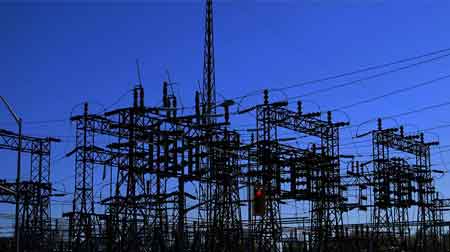
Atco Seeks Fluctuating Rate Permission

By The Edmonton Journal


Arc Flash Training CSA Z462 - Electrical Safety Essentials

Our customized live online or in‑person group training can be delivered to your staff at your location.

  • Live Online
  • 6 hours Instructor-led
  • Group Training Available
Regular Price:
$249
Coupon Price:
$199
Reserve Your Seat Today
Atco Electric has asked regulators for permission to charge electricity customers on fluctuating monthly rates in 2003, the same way Atco charges for natural gas.

"We think the timing is very good right now," said Jim Beckett, Atco executive vice-president of regulatory matters. Electricity supply is adequate, prices are low and customers are ready to make choices on electricity.

Atco would be the first Alberta utility to eliminate an annual regulated rate option or RRO. Atco has 160,000 customers east and north of Edmonton.

The RRO system provides security of price over a longer period, Beckett says. But, he adds, "You always pay more by locking in price certainty." Monthly rates would fluctuate in line with wholesale Power Pool prices. That might make it easier for competitors to offer deregulated retail options, such as long-term, fixed-rate contracts, Beckett said.

Atco decided three years ago it would not compete in the deregulated retail marketplace. Instead, it would "focus on pipes and wires and let others find the retail solutions," Beckett said.

Atco's application appeared to receive support in an Aug. 28 letter by Alberta Energy's electricity branch executive director, Larry Charach, who wrote, "We support having the market provide access for residential and small commercial customers to the pool price."

But several institutional groups have withheld approval of Atco's proposal, making public hearings before an EUB panel a near certainty.

Municipalities, for example, need predictable energy bills to produce stable budgets, said Leduc Mayor George Rogers, president of the Alberta Urban Municipalities Association.

The association will intervene in the hearings but has not yet settled on a response.

Edmonton-owned Epcor Inc. will not follow Atco's lead, said Guy Bridgeman, senior vice-president of the Epcor Energy division.

The company will continue to set regulated rates annually, with occasional readjustments. Epcor also offers five- and three-year fixed-rate deregulated contracts, including in the Atco region.

"The RRO was designed as a transition instrument while customers learned about a developing (electricity) market," Bridgeman said. "It was felt it wasn't appropriate to throw customers out on the open spot price market right from day one."

Epcor has 650,000 customers in Edmonton and the surrounding area previously served by TransAlta Utilities.

The average wholesale price this year has been 3.8 cents per kilowatt-hour, compared to 7.1 cents in 2001 and 13.3 cents in 2000.

"The risk of high electricity prices in 2003 is low due to the current supply/demand position of the province," Atco argued in its application. "(Atco) will not enter into any fixed price hedges in 2003 and beyond."

Atco is requesting a decision from the EUB on the new rate system by the end of the year. But EUB spokesman Bob Curran said the board has not yet struck a panel to hold hearings, and the body often takes 90 days to deliberate.

Related News

China's nuclear energy on steady development track, say experts

China Nuclear Power Expansion accelerates with reactor approvals, Hualong One and CAP1400 deployments, rising gigawatts, clean energy targets, carbon neutrality goals, and grid reliability benefits to meet coastal demand and reduce emissions.


Key Points

An accelerated reactor buildout to add clean capacity, curb emissions, and improve grid reliability nationwide.

✅ Approvals surge for Hualong One and CAP1400 third-gen reactors

✅ Capacity targets approach 100 GW installed by 2030

✅ Supports carbon neutrality, energy security, and lower costs


While China has failed to accomplish its 2020 nuclear target of 58 gigawatts under operation and 30 GW under construction, insiders are optimistic about prospects for the nonpolluting energy resource in China over the next five years as the country has stepped up nuclear approvals and construction since 2020.

China expects to record 49 operating nuclear facilities and capacity of more than 51 GW as of the end of 2020. Nuclear power currently makes up around 2.4 percent of the country's total installed energy capacity, said the China Nuclear Energy Association. There are 19 facilities that have received approval and are under construction, with capacity exceeding 20 GW, ranking top globally as nuclear project milestones worldwide continue, it said.

"With surging power demand from coastal regions, more domestic technology, including next-gen nuclear, will be adopted with installations likely nearing 100 GW by the end of 2030," said Wei Hanyang, a power market analyst at Bloomberg New Energy.

Following the Fukushima nuclear reactor disaster in 2011 in Japan, China has, like many countries including Japan, Germany and Switzerland, suspended nuclear power project approvals for a period, including construction of the pilot project of Shidaowan nuclear power plant in Shandong province that uses CAP1400 technology, based on third-generation Westinghouse AP1000 reactor technology.

As China promotes greener development and prioritizes safety and security of nuclear power plant construction, it has pledged to hit peak emissions before 2030 and achieve carbon neutrality by 2060, with electricity meeting 60% of energy use by 2060 according to Shell, the Shidaowan plant, originally scheduled to launch construction in 2014 and enter service in 2018, is expected to start fuel loading and begin operations this year.

Joseph Jacobelli, an independent energy analyst and executive vice-president for Asia business at Cenfura Ltd, a smart energy services company, said recent developments confirm China's ongoing commitment to further boost the country's nuclear sector.

"The nuclear plants can help meet China's goal of reducing greenhouse gas emissions as the country reduces coal power production and provide air pollution-free energy at a lower cost to consumers. China's need for clean energy means that nuclear power generation definitely has an important place in the long-term energy mix," Jacobelli said.

He added that Chinese companies' cost control capabilities and technological advancements, and operational performance improvements such as the AP1000 refueling outage record, are also likely to continue providing domestic companies with advantages, as the cost per kilowatt-hour is very important, especially as solar, wind and other clean energy solutions become even cheaper over the next few years.

China approved two nuclear projects in 2020- Hainan Changjiang nuclear power plant unit 2 and Zhejiang San'ao nuclear power plant unit 1. This is after the country launched three new nuclear power plants in 2019 in the provinces of Shandong, Fujian and Guangdong, which marked the end of a moratorium on new projects.

The Zhejiang San'ao nuclear power plant saw concrete poured for unit 1 on Dec 31, according to its operator China General Nuclear. It will be the first of six Hualong One pressurized water reactors to be built at the site as well as the first Chinese nuclear power plant project to involve private capital.

Jointly invested, constructed and operated by CGN, Zheneng Electric Power, Wenzhou Nuclear Energy Development, Cangnan County Haixi Construction Development and Geely Maijie Investment, the project creates a new model of mixed ownership of nuclear power enterprises, said CGN.

The world's first Hualong One reactor at unit 5 of China National Nuclear Corp's Fuqing nuclear plant in Fujian province was connected to the grid in November. With the start of work on San'ao unit 1, China now has further seven Hualong One units under construction, including Fuqing 6, which is scheduled to go online this year.

CNNC is also constructing one unit at Taipingling in Guangdong and two at Zhangzhou in Fujian province. CGN is building two at its Fangchenggang site in Guangxi Zhuang autonomous region. In addition, two Hualong One units are under construction at Karachi in Pakistan, while CGN proposes to use a UK version of the Hualong One at Bradwell in the United Kingdom, aligning with the country's green industrial revolution strategy.


Related News

View more

China's electric power woes cast clouds on U.S. solar's near-term future

China Power Rationing disrupts the solar supply chain as coal shortages, price controls, and dual-control emissions policy curb electricity, squeezing polysilicon, aluminum, and module production and raising equipment costs amid surging post-Covid industrial demand.


Key Points

China's electricity curbs from coal shortages, price caps, and emissions targets disrupt solar output and materials.

✅ Polysilicon and aluminum output cut by power rationing

✅ Coal price spikes and power price caps squeeze generators

✅ Dual-control emissions policy triggers provincial curbs


The solar manufacturing supply chain is among the industries being affected by a combination of soaring power demand, coal shortages, and carbon emission reduction measures which have seen widespread power cuts in China.

In Yunnan province, in southwest China, producers of the silicon metal which feeds polysilicon have been operating at 10% of the output they achieved in August. They are expected to continue to do so for the rest of the year as provincial authorities try to control electricity demand with a measure that is also affecting the phosphorus industry.

Fellow solar supply chain members from the aluminum industry in Guangxi province, in the south, have been forced to operate just two days per week, alongside peers in the concrete, steel, lime, and ceramics segments. Manufacturers in neighboring Guangdong have access to normal power supplies only on Fridays and Saturdays with electricity rationed to a 15% grid security load for the rest of the time.

pv magazine USA reported that a Tier 1 solar module manufacturer warned customers in an email that energy shortages in China have forced it to reduce or stop production at its Chinese manufacturing sites. The company warned the event will also affect output from its downstream cell and module production facilities in Southeast Asia.

The memo said that in order to recover from the effects of the “potential Force Majeure event,” it may delay or stop equipment delivery or seek to renegotiate contracts to pass through higher prices.

Raw material sourcing
With reports of drastic power shortages emerging from China in recent days, the country has actually been experiencing problems since late June, and similar pressures have seen India ration coal supplies this year, but rationing is not unusual during the peak summer hours.

What has changed this time is that the outages have continued and prompted rationing measures across 19 of the nation’s provinces for the rest of the year. The problems have been caused by a combination of rising post-Covid electricity demand at a time when the politically-motivated ban on imports of Australian coal has tightened supply; and the manner in which Beijing controls power prices, with the situation further exacerbated by carbon emissions reduction policy.

Demand
Electricity demand from industry, underscoring China’s electricity appetite, was 13.5 percentage points higher in the first eight months of the year than in the same period of 2020, at 3,585 TWh. That reflected a 13.8% year-on-year rise in total consumption, following earlier power demand drops when coronavirus shuttered plants, to 5.47 PWh, according to data from state energy industry trade body the China Electricity Council.

Figures produced by the China General Administration of Customs tell the same story: a rebound driven by the global recovery from the pandemic, as global power demand surges above pre-pandemic levels, with China recording import and export trade worth RMB2.48 trillion ($385 billion) in January-to-August. That was up 23.7% on the same period of last year and 22.8% higher than in the first eight months of 2019.

With Beijing having enforced an unofficial ban on imports of Australian coal for the last year or so – as the result of an ongoing diplomatic spat with Australia – rising demand for coal (which provided around 73% of Chinese electricity in the first half of the year) has further raised prices for the fossil fuel.

The problem for Chinese coal-fired power generators is that Beijing maintains strict controls on the price of electricity. As a result, input costs cannot be passed on to consumers. The mismatch between a liberalized coal market and centrally controlled end-user prices is illustrated by the current situation in Guangdong. There, a coal price of RMB1,560 per ton ($242) has pushed the cost of coal-fired electricity up to RMB0.472 per kilowatt-hour ($0.073). With coal power companies facing an electricity price ceiling of around RMB0.463/kWh ($0.071), generators are losing around RMB0.12 for every kilowatt-hour they generate. In that situation, rationing electricity supplies is an obvious remedy.

The crisis has been worsened by the introduction of China’s “dual control” energy policy, which aims to help meet President Xi Jinping’s climate change pledge of hitting peak carbon emissions this decade and a net zero economy by 2060, and to reduce coal power production over time. Dual control refers to attempts to wind down greenhouse gas emissions at both a national level and in more local areas, such as provinces and cities.

Red status
With the finer details of the carbon reduction policy yet to be ironed out, government departments and provincial and city authorities have started to set their own emission-reduction targets. In mid-August, state planning body the China National Development and Reform Commission (NDRC) published a table of the energy control situation across the nation. With nine provinces marked red for their energy consumption, and a further 10 highlighted as yellow, officials received another motivation to introduce power rationing.

China’s solar industry is being impacted by coal shortages for electric power generation. In this 2014 photo, a thermal generating plant’s cooling towers loom over a street in Henan Province.
Image: flickr/V.T. Polywoda

The current approach of rolling blackouts seems unlikely to be a sustainable solution, as surging electricity demand strains power systems worldwide, given the damage it could inflict on industry and the resentment it would cause in parts of the nation already preparing for winter.

The choice facing China’s policymakers is whether to ramp up coal supplies to force prices down by using decommissioned domestic supplies and halting the ban on Australian imports, or to raise electricity prices to prompt generators to get the lights back on. While the drawbacks of raising household electricity bills seem obvious, the first approach of using more coal could endanger the nation’s climate change commitments on the even of the COP26 meeting in Glasgow, Scotland, in November. Sources close to the NDRC have suggested the electricity price may be set to rise soon.

GDP
What is clear is the effect the energy crisis is having on the Chinese economy and on the solar supply chain. Leading up to a  national day holiday in China, the coal price in northern China rose to around RMB2,000 per ton ($310), three times higher than at the beginning of the year.

Investment bank China International Capital Corp. blamed the dual control emission reduction policy for the electricity shortages. It predicted a 0.1-0.15 percentage point impact on economic growth in the last quarter of 2021.  Morgan Stanley has put that figure at 1% in the current quarter, if industrial output restrictions continue. And Japan’s Nomura Securities revised down its annual forecast on Chinese growth from 8.2% to 7.7%. It now expects GDP gains in the third and fourth quarters to cool from 5.1% to 4.7%, and from 4.4% to 3%, respectively.


Related News

View more

Town of Gander forgives $250K debt from local curling club

Gander Curling Club Debt Forgiveness Agreement explained: town council tax relief, loan write-off conditions, community benefits, and economic impact, covering long-standing taxes and loans while protecting the facility with asset clauses and compliance terms.


Key Points

Town plan erasing 25 years of tax and loan debt, with conditions to keep the curling facility open for residents.

✅ Conditions: no borrowing against property without consent.

✅ Water and sewer taxes must be paid annually.

✅ If sold or use changes, debt due; transfer for $1.


Gander town council has agreed to forgive the local curling club's debt of over $250,000.

Gina Brown, chair of the town council's finance committee, says the agreement has been put in place to help the curling club survive, amid broader discussions on electricity affordability in Newfoundland and Labrador.

"When we took a look at this and realized there was a significant outstanding debt for Gander curling club … we have to mitigate," Brown told CBC Newfoundland Morning. "[Getting] what the taxpayers are owed, with also understanding and appreciating the role that that recreational facility plays in our community."

According to Brown, the debt comes from a combination of taxes and loans, going back about 25 years. She says the curling club understood there was debt, but didn't know the number was so high. The club has been in the black since 2007, but used their profits for other items like renovations.

"Like so many cases when you're dealing with an organization with a changing board, and the same for council … [people are] coming in and coming out," Brown said. "And as a result, my understanding from the curling club's perspective is they weren't aware of how much was outstanding."

Chris McLeod, president of the Gander Curling Club, told CBC the club had been trying to address the debt since he became president in 2014.

Terms of agreement
The town's agreement with the club comes with the following stipulations:

The club will not use the property as security for any form of borrowing without the town's consent.
 
The club will continue to pay water and sewer tax annually.
 
If the club sells the property, the town reserves the right to void the agreement and the debt will immediately become due in full.
 
If the club stops using the facility as a curling club, the property will be transferred to the town for $1.
McLeod says the club will not attempt to pay back the debt, as it is not part of the agreement. The only way the debt would be paid is if the building is sold, which McLeod says it won't be, and there are also no plans to use the building for anything other than a curling club.

"[The debt] is basically gone now," McLeod said.

McLeod says the move was made to help get the debt off the books, and make sure the curling club can be financially responsible in the future, similar to relief programs some utilities offered during the pandemic.

The curling club is something that encourages people. So we felt that this has to be maintained.
- Gina Brown

Brown says keeping the curling club in Gander is important for the town, and brings different benefits to the area, as regional power cooperation debates illustrate broader trends.

"They are servicing people from as young as Grade 1 to seniors," Brown said. "You need little to no equipment, you need no background. So for the town itself, for its social and health implications, as provinces advance emissions plans that can affect communities, is one. But the other thing is the economic benefit that comes from having this facility here."


The Gander Curling Club's debt forgiveness comes with several conditions. (Google Maps)
The curling club can help attract people into the community, as recreational facilities are often a key draw for families, she added, while other provinces are creating transition funds to support communities.

"When you're as a town, trying to attract people coming in … whether you're a doctor, nurse, anybody looking at the recreational facilities, the curling club is something that encourages people," Brown said. "So we felt that this has to be maintained."

Brown says the town understands they might be setting a precedent with other businesses in forgiving the debts of the curling club, as major infrastructure like B.C.'s Site C dam has faced budget overruns.

"That's another thing we had to consider, what kind of precedents are [we] establishing?" Brown said. "From our standpoint, I think one of the things about this agreement that we felt was beneficial to the town is that they have an asset, helping to avoid costly delays seen with large projects. And the asset is a great building. To us, the taxpayers are in a win-win situation."


Related News

View more

Georgia Power warns customers of scams during pandemic

Georgia Power Scam Alert cautions customers about phone scams, phishing, and fraud during COVID-19, urging identity verification, refusal of prepaid card payments, use of Authorized Payment Locations, and customer service contact to avoid disconnection threats.


Key Points

A warning initiative on fraud, phone scams, and safe payments to protect Georgia Power customers during COVID-19.

✅ Never pay by phone with prepaid cards or credit card numbers.

✅ Verify employee ID, badge, and marked vehicle before opening.

✅ Call 888-660-5890 or use Authorized Payment Locations only.


With continued reports of attempted scams and fraud, including holiday scam warnings in other regions, by criminals posing as Georgia Power employees during the COVID-19 pandemic, the company reminds customers to be aware and follow simple tips to avoid becoming a victim.

Customers should beware of phone calls demanding payment via phone to avoid pandemic-related electricity shut-offs and penalties.

In other regions, Texas utilities waived fees to support customers during the pandemic.

Last month, Georgia Power and the Georgia Public Service Commission extended the suspension of disconnections due to the impact of the pandemic on customers. In addition, the company will never ask for a credit card or pre-paid debit card number over the phone. The company will also never send employees into the field to collect payment in person or ask a customer to pay anywhere other than an Authorized Payment Location.

Similarly, Gulf Power offered a one-time bill decrease to ease customer costs.

If an account becomes past due, Georgia Power will contact the customer via a pre-recorded message to the primary account telephone number or by letter requesting that the customer call to discuss the account, including available June bill reductions where applicable.

If a customer receives a suspicious call from someone claiming to be from Georgia Power and demanding payment to avoid disconnection despite utility moratoriums on shutoffs, the customer should hang up and contact the company's customer service line at 888-660-5890.

If an employee needs to visit a customer's home or business for a service-related issue, they will be in uniform and present a badge with a photo, their name and the company's name and logo. They will also be in a vehicle marked with the company's logo.

During the pandemic, visiting a customer's home or business will be even less likely, so identity verification should be completed before opening the door to anyone.

Georgia Power continues to work with law enforcement agencies throughout the state to identify and prosecute criminals who pose as Georgia Power employees to defraud customers.


Related News

View more

Berlin Electric Utility Wins National Safety Award

Berlin Electric Utility APPA Safety Award recognizes Gold Designation performance in public power, highlighting OSHA-aligned incident rates, robust safety culture, worker safety training, and operational reliability that keeps the community's electric service resilient.


Key Points

A national honor for Berlin's Gold Designation recognizing safety performance, worker protection, and reliable service.

✅ Gold Designation in 15,000-29,999 worker hours APPA category

✅ OSHA-based incident rate and robust safety culture

✅ Training, PPE, and reliability focus in public power operations


The Town of Berlin Electric Utility Department has been recognized for its outstanding safety practices with the prestigious Safety Award of Excellence from the American Public Power Association (APPA), a distinction also reflected in Medicine Hat Electric Utility for health and safety excellence, highlighting industry-wide commitment to worker protection.

Recognition for Excellence

In an era when workplace safety is a critical concern, with organizations highlighting leadership in worker safety across the sector, the Town of Berlin Electric Utility Department’s achievement stands out. The department earned the Gold Designation award in the category for utilities with 15,000 to 29,999 worker hours of annual worker exposure. This category is part of the APPA’s annual Safety Awards, which are designed to recognize the safety performance of public power utilities across the United States.

Out of more than 200 utilities that participated in the 2024 Safety Awards, Berlin's Electric Utility Department distinguished itself with an exemplary safety record. The utility’s ranking was based on its low incidence of work-related injuries and illnesses, alongside its robust safety programs and strong safety culture.

What the Award Represents

The Safety Award of Excellence is given to utilities that demonstrate effective safety protocols and practices over the course of the year. The APPA evaluates utilities based on their incident rate, which is calculated using the number of work-related reportable injuries or illnesses relative to worker hours. This measurement adheres to guidelines established by the Occupational Safety and Health Administration (OSHA), ensuring a standardized approach to assessing safety.

For the Town of Berlin Electric Utility Department, achieving the Gold Designation award signifies a year of outstanding safety performance. The award reflects the department’s dedication to preventing accidents and creating a work environment where safety is prioritized at every level.

Why Safety Matters

For utilities like the one in Berlin, safety is not just about preventing injuries—it's about fostering a culture of care and responsibility. Electric utility workers face unique and significant risks, ranging from the dangers of working with high-voltage systems, including hazards near downed power lines that require extreme caution, to the physical demands of the job. A utility’s ability to minimize these risks and keep its workforce safe is a direct reflection of its safety practices, training, and overall management.

The commitment to safety extends beyond just the immediate work environment. Utilities that place a high value on safety typically invest in ongoing training, safety gear, and processes, and even contingency measures like staff living on site during outbreaks, that ensure all employees are well-prepared to handle the challenges of their roles. The Town of Berlin Electric Utility Department has taken these steps seriously, providing its workers with the resources they need to stay safe while maintaining the power supply for the local community.

The Importance of Worker Safety in Public Power

The American Public Power Association’s Safety Award program highlights the best practices in public utilities, which, as the U.S. grid overseer's pandemic warning reminded the sector, play a crucial role in providing essential services to communities across the country. Public power utilities, like Berlin’s, are governed by local or municipal entities rather than for-profit corporations, which often allows them to have a closer relationship with their communities. As a result, these utilities often go above and beyond when it comes to worker safety, understanding that the well-being of employees directly impacts the quality of service provided to residents.

For the Town of Berlin, this award not only highlights the utility's commitment to its employees but also reinforces the importance of the work that public utilities do in keeping communities safe and powered. Berlin's recognition underscores the significance of maintaining a safe work environment, especially when the safety of first responders and utility workers, as seen when nuclear plant workers raised concerns over virus precautions, directly impacts the public’s access to reliable services.

What’s Next for Berlin’s Electric Utility Department

Receiving the Safety Award of Excellence is a remarkable achievement, but for the Town of Berlin Electric Utility Department, it’s not the end of their safety journey—it’s just one more step in their ongoing commitment to improvement. The department’s leadership, including the safety team, has emphasized the importance of continually evaluating and enhancing safety protocols to stay ahead of potential risks. This includes adopting new safety technologies, refining training programs, and ensuring that all employees are involved in the process of safety.

As the Town of Berlin looks forward to the future, its focus on worker safety will remain a top priority. Maintaining this level of safety is not only crucial for the health and well-being of employees but also for ensuring the continued success of the community’s utility services.

Community Impact

This recognition also serves as an example for other utilities in the region and across the country. By prioritizing safety, the Town of Berlin Electric Utility Department sets a standard that other utilities can aspire to. In a time when worker safety is more important than ever, Berlin’s commitment to best practices provides a model for others to follow.

Ultimately, the safety of utility workers is a reflection of a community’s dedication to its workforce and its commitment to providing reliable, uninterrupted services. For the residents of Berlin, the recognition of their local electric utility department’s safety practices means that they can continue to rely on a safe, secure, and resilient power infrastructure, while staying mindful of home risks such as overheated power strips that can spark fires.


Related News

View more

Ontario Businesses To See Full Impact of 2021 Electricity Rate Reductions

Ontario Comprehensive Electricity Plan delivers Global Adjustment reductions for industrial and commercial non-RPP customers, lowering electricity rates, shifting renewable energy costs, and enhancing competitiveness across Ontario businesses in 2022, with additional 4 percent savings.


Key Points

Ontario's plan lowers Global Adjustment by shifting renewable costs, cutting industrial and commercial bills 15-17%.

✅ Shifts above-market non-hydro renewable costs to the Province

✅ Reduces GA for industrial and commercial non-RPP customers

✅ Additional 4% savings on 2022 bills after GA deferral


As of January 1, 2022, industrial and commercial electricity customers will benefit from the full savings introduced through the Ontario government’s Comprehensive Electricity Plan, which supports stable electricity pricing for industrial and commercial companies, announced in Budget 2020, and first implemented in January 2021. This year customers could see an additional four percent savings compared to their bills last year, bringing the full savings from the Comprehensive Electricity Plan to between 15 and 17 per cent, making Ontario a more competitive place to do business.

“Our Comprehensive Electricity Plan has helped reverse the trend of skyrocketing electricity prices that drove jobs out of Ontario,” said Todd Smith, Minister of Energy. “Over 50,000 customers are benefiting from our government’s plan which has reduced electricity rates on clean and reliable power, allowing them to focus on reinvesting in their operations and creating jobs here at home.”

Starting on January 1, 2021, the Comprehensive Electricity Plan reduced overall Global Adjustment (GA) costs for industrial and commercial customers who do not participate in the Regulated Price Plan (RPP) by shifting the forecast above-market costs of non-hydro renewable energy, such as wind, solar and bioenergy, from the rate base to the Province, alongside energy-efficiency programs that complement demand reduction efforts.

“Since taking office, our government has listened to job creators and worked to lower the costs of doing business in the province. Through these significant reductions in electricity prices through the Comprehensive Electricity Plan, customers all across Ontario will benefit from significant savings in their business operations in 2022,” said Vic Fedeli, Minister of Economic Development, Job Creation and Trade. “By continuing to reduce electricity costs, lowering taxes, and cutting red tape our government has reduced the cost of doing business in Ontario by nearly $7 billion annually to ensure that we remain competitive, innovative and poised for economic recovery.”

As part of its COVID response, including electricity relief for families and small businesses, Ontario had deferred a portion of GA between April and June 2020 for industrial and non-RPP commercial customers, with more than 50,000 customers benefiting. Those same businesses paid back these deferred GA costs over 12 months, between January 2021 and December 2021, while the province prepared to extend disconnect moratoriums for residential customers.

During the pandemic, residential electricity use rose even as overall consumption dropped, underscoring shifts in load patterns.

Now that the GA deferral repayment period is over, industrial and non-RPP commercial customers will benefit from the full cost reductions provided to them by the Comprehensive Electricity Plan, alongside temporary off-peak rate relief that supported families and small businesses. This means that, beginning January 1, 2022, these businesses could see an additional four per cent savings on their bills compared to 2021, as new ultra-low overnight pricing options emerge depending on their location and consumption.


Related News

View more

Sign Up for Electricity Forum’s Newsletter

Stay informed with our FREE Newsletter — get the latest news, breakthrough technologies, and expert insights, delivered straight to your inbox.

Electricity Today T&D Magazine Subscribe for FREE

Stay informed with the latest T&D policies and technologies.
  • Timely insights from industry experts
  • Practical solutions T&D engineers
  • Free access to every issue

Live Online & In-person Group Training

Advantages To Instructor-Led Training – Instructor-Led Course, Customized Training, Multiple Locations, Economical, CEU Credits, Course Discounts.

Request For Quotation

Whether you would prefer Live Online or In-Person instruction, our electrical training courses can be tailored to meet your company's specific requirements and delivered to your employees in one location or at various locations.