Ontario Agency To Sell Its Debt

By Reuters


NFPA 70e Training - Arc Flash

Our customized live online or in‑person group training can be delivered to your staff at your location.

  • Live Online
  • 6 hours Instructor-led
  • Group Training Available
Regular Price:
$199
Coupon Price:
$149
Reserve Your Seat Today
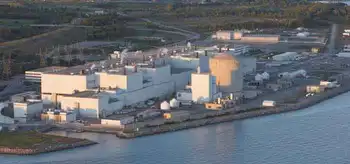
Hydro One Inc. said that the Ontario Electricity Financial Corporation plans to sell some or all of its Hydro One debt in the public markets, starting in the first quarter of 2003.

OEFC, the funding agency for debt financing of electrical works in Ontario, holds about CAN$2.53 billion of Hydro One debt, which matures between 2003 and 2007.

The OEFC is the provincial agency responsible for servicing and retiring the former Ontario Hydro's provincially guaranteed debt and managing certain other legacy liabilities.

Hydro One, which has a total debt of CAN$4.6 billion of which CAN$2.05 billion is public debt, has also agreed to restructure some or all of the debt.

Related News
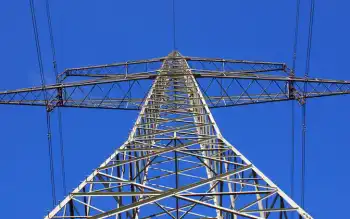
Failed PG&E power line blamed for Drum fire off Hwy 246 last June

PG&E Drum Fire Cause identified as a power line failure in Santa Barbara County, with arcing electricity igniting vegetation near Buellton on Drum Canyon Road; 696 acres burned as investigators and CPUC review PG&E safety.


Key Points

A failed PG&E power line sparked the 696-acre Drum Fire near Buellton; the utility is conducting its own probe.

✅ Power line failed between poles, arcing ignited vegetation.

✅ 696 acres burned; no structures damaged or injuries.

✅ PG&E filed CPUC incident report; ongoing investigation.


A downed Pacific Gas and Electric Co. power line was the cause of the Drum fire that broke out June 14 on Drum Canyon Road northwest of Buellton, a reminder that a transformer explosion can also spark multiple fires, the Santa Barbara County Fire Department announced Thursday.

The fire broke out about 12:50 p.m. north of Highway 246 and burned about 696 acres of wildland before firefighters brought it under control, although no structures were damaged or mass outages like the Los Angeles power outage occurred, according to an incident summary.

A team of investigators pinpointed the official cause as a power line that failed between two utility poles and fell to the ground, and as downed line safety tips emphasize, arcing electricity ignited the surrounding vegetation, said County Fire Department spokesman Capt. Daniel Bertucelli.

In response, a PG&E spokesman said the utility is conducting its own investigation and does not have access to whatever data investigators used, and, as the ATCO regulatory penalty illustrates, such matters can draw significant oversight, but he noted the company filed an electric incident report on the wire with the California Public Utilities Commission on June 14.

"We are grateful to the first responders who fought the 2020 Drum fire in Santa Barbara County and helped make sure that there were no injuries or fatalities, outcomes not always seen in copper theft incidents, and no reports of structures damaged or burned," PG&E spokesman Mark Mesesan said.

"While we are continuing to conduct our own investigation into the events that led to the Drum fire, and as the Site C watchdog inquiry shows, oversight bodies can seek more transparency, PG&E does not have access to the Santa Barbara County Fire Department's report."

He said PG&E remains focused on reducing wildfire risk across its service area while limiting the scope and duration of public safety power shutoffs, including strategies like line-burying decisions adopted by other utilities, and that the safety of customers and communities it serves are its most important responsibility.


Related News

View more

New Program Set to Fight for 'Electricity Future That Works for People and the Planet'

Energy Justice Program drives a renewables-based transition, challenging utility monopolies with legal action, promoting rooftop solar, distributed energy, public power, and climate justice to decarbonize the grid and protect communities and wildlife nationwide.


Key Points

A climate justice initiative advancing renewables, legal action, and public power to challenge utility monopolies.

✅ Challenges utility barriers to rooftop solar and distributed energy

✅ Advances state and federal policies for equitable, public power

✅ Uses litigation to curb fossil fuel dependence and protect communities


The Center for Biological Diversity on Monday rolled out a new program to push back against the nation's community- and wildlife-harming energy system that the climate advocacy group says is based on fossil fuels and a "centralized monopoly on power."

The goal of the new effort, the Energy Justice Program, is to help forge a path towards a just and renewables-based energy future informed by equitable regulation principles.

"Our broken energy system threatens our climate and our future," said Jean Su, the Energy Justice Program's new director, in a statement. "Utilities were given monopolies to ensure public access to electricity, but these dinosaur corporations are now hurting the public interest by blocking the clean energy transition, including via coal and nuclear subsidy schemes that profit off the fossil fuel era."

"In this era of climate catastrophe," she continued, "we have to stop these outdated monopolies and usher in a new electricity future that works for people and the planet."

To meet those goals, the new program will pursue a number of avenues, including using legal action to fight utilities' obstruction of clean energy efforts, helping communities advance local solar programs through energy freedom strategies in the South, and crafting energy policies on the state, federal, and international levels in step with commitments from major energy buyers to achieve a 90% carbon-free goal by 2030.

Some of that work is already underway. In June the Center filed a brief with a federal court in a bid to block Arizona power utility Salt River Project from slapping a 60-percent electricity rate hike on rooftop solar customers—amid federal efforts to reshape electricity pricing that critics say are being rushed—a move the group described (pdf) as an obstacle to achieving "the energy transition demanded by climate science."

The Center is among the groups in Energy Justice NC. The diverse coalition seeks to end the energy stranglehold in North Carolina held by Duke Energy, which continues to invest in fossil fuel projects even as it touts clean energy and grid investments in the region.

The time for a new energy system, says the Energy Justice Program, is now, as climate change impacts increasingly strain the grid.

"Amid this climate and extinction emergency," said Su, "the U.S. can't afford to stick with the same centralized, profit-driven electricity system that drove us here in the first place. We have to seize this once-in-a-generation opportunity to design a new system of accountable, equitable, truly public power."


Related News

View more

TTC Introduces Battery Electric Buses

TTC Battery-Electric Buses lead Toronto transit toward zero-emission mobility, improving air quality and climate goals with sustainable operations, advanced charging infrastructure, lower maintenance, energy efficiency, and reliable public transportation across the Toronto Transit Commission network.


Key Points

TTC battery-electric buses are zero-emission vehicles improving quality, lowering costs, and providing efficient service.

✅ Zero tailpipe emissions improve urban air quality

✅ Lower maintenance and energy costs increase savings

✅ Charging infrastructure enables reliable operations


The Toronto Transit Commission (TTC) has embarked on an exciting new chapter in its commitment to sustainability with the introduction of battery-electric buses to its fleet. This strategic move not only highlights the TTC's dedication to reducing its environmental impact but also positions Toronto as a leader in the evolution of public transportation. As cities worldwide strive for greener solutions, the TTC’s initiative stands as a significant milestone toward a more sustainable urban future.

Embracing Green Technology

The decision to integrate battery-electric buses into Toronto's transit system aligns with a growing trend among urban centers to adopt cleaner, more efficient technologies, including Metro Vancouver electric buses now in service. With climate change posing urgent challenges, transit authorities are rethinking their operations to foster cleaner air and reduce greenhouse gas emissions. The TTC’s new fleet of battery-electric buses represents a proactive approach to addressing these concerns, aiming to create a cleaner, healthier environment for all Torontonians.

Battery-electric buses operate without producing tailpipe emissions, and deployments like Edmonton's first electric bus illustrate this shift, offering a stark contrast to traditional diesel-powered vehicles. This transition is crucial for improving air quality in urban areas, where transportation is a leading source of air pollution. By choosing electric options, the TTC not only enhances the city’s air quality but also contributes to the global effort to combat climate change.

Economic and Operational Advantages

Beyond environmental benefits, battery-electric buses present significant economic advantages. Although the initial investment for electric buses may be higher than that for conventional diesel buses, and broader adoption challenges persist, the long-term savings are substantial. Electric buses have lower operating costs due to reduced fuel expenses and less frequent maintenance requirements. The electric propulsion system generally involves fewer moving parts than traditional engines, resulting in lower overall maintenance costs and improved service reliability.

Moreover, the increased efficiency of electric buses translates into reduced energy consumption. Electric buses convert a larger proportion of energy from the grid into motion, minimizing waste and optimizing operational effectiveness. This not only benefits the TTC financially but also enhances the overall experience for riders by providing a more reliable and punctual service.

Infrastructure Development

To support the introduction of battery-electric buses, the TTC is also investing in necessary infrastructure upgrades, including the installation of charging stations throughout the city. These charging facilities are essential for ensuring that the electric fleet can operate smoothly and efficiently. By strategically placing charging stations at transit hubs and along bus routes, the TTC aims to create a seamless transition for both operators and riders.

This infrastructure development is critical not just for the operational capacity of the electric buses but also for fostering public confidence in this new technology, and consistent safety measures such as the TTC's winter safety policy on lithium-ion devices reinforce that trust. As the TTC rolls out these vehicles, clear communication regarding their operational logistics, including charging times and routes, will be essential to inform and engage the community.

Engaging the Community

The TTC is committed to engaging with Toronto’s diverse communities throughout the rollout of its battery-electric bus program. Community outreach initiatives will help educate residents about the benefits of electric transit, addressing any concerns and building public support, and will also discuss emerging alternatives like Mississauga fuel cell buses in the region. Informational campaigns, workshops, and public forums will provide opportunities for dialogue, allowing residents to voice their opinions and learn more about the technology.

This engagement is vital for ensuring that the transition is not just a top-down initiative but a collaborative effort that reflects the needs and interests of the community. By fostering a sense of ownership among residents, the TTC can cultivate support for its sustainable transit goals.

A Vision for the Future

The TTC’s introduction of battery-electric buses marks a transformative moment in Toronto’s public transit landscape. This initiative exemplifies the commission's broader vision of creating a more sustainable, efficient, and user-friendly transportation network. As the city continues to grow, the need for innovative solutions to urban mobility challenges becomes increasingly critical.

By embracing electric technology, the TTC is setting an example for other transit agencies across Canada and beyond, and piloting driverless EV shuttles locally underscores that leadership. This initiative is not just about introducing new vehicles; it is about reimagining public transportation in a way that prioritizes environmental responsibility and community engagement. As Toronto moves forward, the integration of battery-electric buses will play a crucial role in shaping a cleaner, greener future for urban transit, ultimately benefitting residents and the planet alike.


Related News

View more

Opponent of Site C dam sharing concerns with northerners

Site C Dam Controversy highlights Peace River risks, BC Hydro claims, Indigenous rights under Treaty 8, environmental assessment findings, and potential impacts to agriculture and the Peace-Athabasca Delta across Alberta and the Northwest Territories.


Key Points

Debate over BC Hydro's Site C dam: clean energy vs Indigenous rights, Peace-Athabasca Delta impacts, and agriculture.

✅ Potential drying of Peace-Athabasca Delta and wildlife habitat

✅ Treaty 8 rights and First Nations legal challenges

✅ Loss of prime Peace Valley farmland; alternatives in renewables


One of the leading opponents of the Site C dam in northeastern B.C. is sharing her concerns with northerners this week.

Proponents of the Site C dam say it will be a cost-effective source of clean electricity, even as a major Alberta wind farm was scrapped elsewhere in Canada, and that it will be able to produce enough energy to power the equivalent of 450,000 homes per year in B.C. But a number of Indigenous groups and environmentalists are against the project.

Wendy Holm is an economist and agronomist who did an environmental assessment of the dam focusing on its potential impacts on agriculture.

On Tuesday she spoke at a town hall presentation in Fort Smith, N.W.T., organized by the Slave River Coalition. She is also speaking at an event in Yellowknife on Friday, as small modular reactors in Yukon receive study as a potential long-term option.


Worried about downstream impacts, Northern leaders urge action on Site C dam

"I learned that people outside of British Columbia are as concerned with this dam as we are," Holm said.

"There's just a lot of concern with what's happening on the Peace River and this dam and the implications for Alberta, where hydro's share has diminished in recent decades, and the Northwest Territories."

If completed, BC Hydro's Site C energy project will be the third dam on the Peace River in northeast B.C. and the largest public works project in B.C. history. The $10.7-billion project was approved by both the provincial and federal governments as B.C. moves to streamline clean energy permitting for future projects.

Amy Lusk, co-ordinator of the Slave River Coalition, said many issues were discussed at the town hall, but she also left with a sense of hope.

"I think sometimes in our little corner of the world, we are up against so much when it comes to industrial development and threats to our water," she said.

"To kind of take away that message of, this is not a done deal, and that we do have a few options in place to try and stop this and not to lose hope, I think was a very important message for the community."


Drying of the Peace-Athabasca Delta

Holm said her main concern for the Northwest Territories is how it could affect the Peace-Athabasca Delta. She said the two dams already on the river are responsible for two-thirds of the drying that's happening in the delta.

"These are very real issues and very present in the minds of northerners who want to stay connected to a traditional lifestyle, want to have access to those wild foods," she said.

Lusk said northerners are fed up with defending waters "time after time after time."

BC Hydro, however, said studies commissioned during the environmental assessment of Site C show the project will have no measurable effect on the delta, which is located 1,100 kilometres away.

Holm said the fight against the Site C dam is also important when it comes to First Nations treaty rights.

The West Moberly and Prophet River First Nations applied for an injunction to halt construction on Site C, as well as a treaty infringement lawsuit against the B.C. government. They argue the dam would cause irreparable harm to their territories and way of life, which are rights protected under Treaty 8.


Agricultural land

While the project is located in B.C., Holm said its impacts on prime horticulture land would also affect northerners, something that's important given issues of food security and nutrition.

"This is some of the best agriculture land in all of Canada," she said of the Peace Valley.

According to BC Hydro, around 2.6 million hectares of land in the Peace agricultural region would remain available for agricultural production while 3,800 hectares would be unavailable. It has also proposed a number of mitigation efforts, including a $20-million agricultural compensation fund.

Holm said renewable energy, including tidal energy for remote communities, will be cheaper and less destructive than the dam, and there's a connection between the dams on the Peace River and water sharing with the U.S.

"When you run out of water there's nothing else you can use. You can't use orange juice to irrigate your fields or to run your industries or to power your homes," she said.


Related News

View more

France’s first offshore wind turbine produces electricity

Floatgen Floating Offshore Wind Turbine exports first kWh to France's grid from SEM-REV off Le Croisic, showcasing Ideol's concrete floating foundation by Bouygues and advancing marine renewable energy leadership ambitions.


Key Points

A grid-connected demo turbine off Le Croisic, proving Ideol's floating foundation at SEM-REV.

✅ First power exported to French grid from SEM-REV site

✅ Ideol concrete floating base built by Bouygues

✅ Demonstrator can supply up to 5,000 inhabitants


Floating offshore wind turbine Floatgen, the first offshore wind turbine installed off the French coast, exported its first KWh to the electricity grid, echoing the offshore wind power milestone experienced by U.S. customers recently.

The connection of the electricity export cable, similar in ambition to the UK's 2 GW substation program, and a final series of tests carried out in recent days enabled the Floatgen wind turbine, which is installed 22 km off Le Croisic (Loire-Atlantique), to become fully operational on Tuesday 18 September.

This announcement is a highly symbolic step for the partners involved in this project. This wind turbine is the first operational unit of the floating foundation concept patented by Ideol and built in concrete by Bouygues Travaux Publics. A second unit of the Ideol foundation will soon be operational off Japan. For Centrale Nantes, this is the first production tool and the first injection of electricity into its export cable at its SEM-REV test site dedicated to marine renewable energies, alongside projects such as the Scotland-England subsea power link that expand transmission capacity (third installation after tests on acoustic sensors and cable weights).

This announcement is also symbolic for France since Floatgen lays the foundation for an industrial offshore wind energy sector and represents a unique opportunity to become the global leader in floating wind, as major clean energy corridors like the Canadian hydropower line to New York illustrate growing demand.

With its connection to the grid, SEM-REV will enable the wind turbine to supply electricity to 5000 inhabitants, and similar integrated microgrid initiatives show how local reliability can be enhanced.


Related News

View more

Bangladesh develops nuclear power with IAEA Assistance

Bangladesh Rooppur Nuclear Power Plant advances nuclear energy with IAEA support and ROSATOM construction, boosting energy security, baseload capacity, and grid reliability; 2400 MW units aid development, regulatory compliance, and newcomer infrastructure milestones.


Key Points

A 2400 MW nuclear project in Rooppur, built with IAEA guidance and ROSATOM, to boost Bangladesh's reliable power.

✅ Two units totaling 2400 MW for stable baseload supply

✅ IAEA Milestones and INIR reviews guide safe deployment

✅ ROSATOM builds; national regulator strengthens oversight


The beginning of construction at Bangladesh’s first nuclear power reactor on 30 November 2017 marked a significant milestone in the decade-long process to bring the benefits of nuclear energy to the world’s eighth most populous country. The IAEA has been supporting Bangladesh on its way to becoming the third ‘newcomer’ country to nuclear power in 30 years, following the United Arab Emirates in 2012 and Belarus in 2013.

Bangladesh is in the process of implementing an ambitious, multifaceted development programme to become a middle-income country by 2021 and a developed country by 2041. Vastly increased electricity production, with the goal of connecting 2.7 million more homes to the grid by 2021, is a cornerstone of this push for development, and nuclear energy will play a key role in this area, said Mohammad Shawkat Akbar, Managing Director of Nuclear Power Plant Company Bangladesh Limited. Bangladesh is also working to diversify its energy supply to enhance energy security, reduce its dependence on imports and on its limited domestic resources, he added.

#google# In the region, India's nuclear program is taking steps to get back on track, underscoring broader momentum.

“Bangladesh is introducing nuclear energy as a safe, environmentally friendly and economically viable source of electricity generation,” said Akbar.  The plant in Rooppur, 160 kilometres north-west of Dhaka, will consist of two units, with a combined power capacity of 2400 MW(e). It is being built by a subsidiary of Russia’s State Atomic Energy Corporation ROSATOM. The first unit is scheduled to come online in 2023 and the second in 2024, reflecting progress similar to the UK's latest nuclear power station developments.  “This project will enhance the development of the social, economic, scientific and technological potential of the country,” Akbar said.

The country’s goal of increased electricity production via nuclear energy will soon be a reality, Akbar said. “For 60 years, Bangladesh has had a dream of building its own nuclear power plant. The Rooppur Nuclear Power Plant will provide not only a stable baseload of electricity, but it will enhance our knowledge and allow us to increase our economic efficiency.


Milestones for nuclear

Bangladesh is among around 30 countries that are considering, planning or starting the introduction of nuclear power, with milestones at nuclear projects worldwide offering context for this progress. The IAEA assists them in developing their programmes through the Milestones Approach — a methodology that provides guidance on working towards the establishment of nuclear power in a newcomer country, including the associated infrastructure. It focuses on pointing out gaps, if any, in countries’ progress towards the introduction of nuclear power.

The IAEA has been supporting Bangladesh in developing its nuclear power infrastructure, including in establishing a regulatory framework and developing a radioactive waste-management system. This support has been delivered under the IAEA technical cooperation programme and is partially funded through the Peaceful Uses Initiative.

Nuclear infrastructure is multifaceted, containing governmental, legal, regulatory and managerial components, in addition to the physical infrastructure. The Milestones Approach consists of three phases, with a milestone to be reached at the end of each.

The first phase involves considerations before a decision is taken to start a nuclear power programme and concludes with the official commitment to the programme. The second phase entails preparatory work for the contracting and construction of a nuclear power plant, as seen in Bulgaria's nuclear project planning, ending with the commencement of bids or contract negotiations for the construction. The final phase includes activities to implement the nuclear power plant, such as the final investment decision, contracting and construction. The duration of these phases varies by country, but they typically take between 10 and 15 years.

“The IAEA Milestones Approach is a guiding document and the Integrated Work Plan (IWP) is the important means of bringing all of the stakeholders in Bangladesh together to ensure the fulfilment of all safety, security, and safeguards requirements of the Rooppur NPP project,” said Akbar. “This IWP enabled Bangladesh to develop a holistic approach to implementing IAEA guidance as well as cooperating with national stakeholders and other bilateral partners towards the development of a national nuclear power programme.”

When completed, the two units of the Rooppur Nuclear Power Plant will have a combined power capacity of 2400 MW(e). (Photo: Arkady Sukhonin/Rosatom)


INIR Mission

The Integrated Nuclear Infrastructure Review (INIR) is a holistic peer review to assist Member States in assessing the status of their national infrastructure for introducing nuclear power. The IAEA completed its first INIR mission to Bangladesh in November 2011, making recommendations on how to develop a plan to establish the nuclear infrastructure. Nearly five years later, in May 2016, a follow-up mission was conducted, which noted the progress made — Bangladesh had established a nuclear regulatory body, had chosen a site for the power plant and had completed site characterization and environmental impact assessment.

“The IAEA and other bodies, including those from experienced countries, can and do provide support, but the responsibility for safety and security will lie with the Government,” said Dohee Hahn, Director of the IAEA’s Division of Nuclear Power, at the ceremony for the pouring of the first nuclear safety-related concrete at Rooppur on 30 November 2017. “The IAEA stands ready to continue supporting Bangladesh in developing a safe, secure, peaceful and sustainable nuclear power programme.”

Supporting Infrastructure for Introducing a Nuclear Power Plant in Bangladesh: the IAEA Assists with the Review of Regulatory Guidance on Site Evaluation

How the IAEA Assists Newcomer Countries in Building Their Way to Sustainable Energy

"Exciting times for nuclear power," IAEA Director General Says


Related News

View more

Sign Up for Electricity Forum’s Newsletter

Stay informed with our FREE Newsletter — get the latest news, breakthrough technologies, and expert insights, delivered straight to your inbox.

Electricity Today T&D Magazine Subscribe for FREE

Stay informed with the latest T&D policies and technologies.
  • Timely insights from industry experts
  • Practical solutions T&D engineers
  • Free access to every issue

Download the 2025 Electrical Training Catalog

Explore 50+ live, expert-led electrical training courses –

  • Interactive
  • Flexible
  • CEU-cerified