



By Both the Liberals and New Democrats have called for a general election to be called over the issue.


NFPA 70e Training - Arc Flash

Our customized live online or in‑person group training can be delivered to your staff at your location.

  • Live Online
  • 6 hours Instructor-led
  • Group Training Available
Regular Price:
$199
Coupon Price:
$149
Reserve Your Seat Today
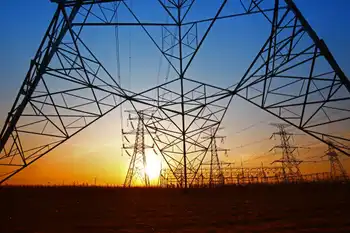
TORONTO -- Ontario plans to go ahead with the controversial sale of its $5.5 billion electricity transmission grid.

The government will appeal a court ruling last week that halted the planned sale of Hydro One, Premier Ernie Eves, has announced.

And in the meantime, just to make sure there are no further hold-ups, it will pass legislation allowing the sale, Eves said.

"It's important to send a signal that we are proceeding with the restructuring of the electricity sector," Eves said after a cabinet and caucus meeting.

"It's important that Hydro One be privatized."

Energy Minister Chris Stockwell was handed the job of travelling the province to sell the idea to the public. The sale will be the largest privatization of a publicly owned asset in Canadian history.

The planned legislation is expected to be rushed through during this spring's legislative session. A Legislature committee could hold public hearings on the legislation.

"If there are some suggestions and improvements ... we will consider them, however, we also believe it important to proceed with the Hydro One initiative," Eves said.

The government plans the sale of shares in the fall.

Two unions stopped the sale of the electricity grid last week when Ontario Superior Court Judge Arthur Gans ruled the government didn't have the legal authority to proceed with it.

Even though the government will be rewriting the legislation, Eves said it's important to appeal the court ruling to clarify the rights of the provincial government.

Both Eves and Stockwell argued that the old Ontario Hydro had racked up $38 billion in debt and had become a fiscal albatross.

They said privatization of Hydro One is in "the best interests" of taxpayers. Hydro One is one of three major companies created when the Ontario government broke up the former Ontario Hydro in the late 1990s.

Eves called Stockwell's planned tour a "meaningful consultation" he hopes will clear up the confusion in the public's mind surrounding the privatization of Hydro One and the opening up of the electricity generating market to competition on May 1.

Eves said the two are separate issues and admitted the government has done a poor job of explaining the changes in the electricity market to the public. The plan to sell Hydro One was announced with little fanfare by then-Premier Mike Harris in mid-December.

The deregulated sale of power to consumers, which has been in the works for years, will proceed as planned on May 1.

Opposition politicians accused the Tory government of only going through the motions of seeking public input and said if it were not for the unions' court challenge, the sale would have gone ahead without a word from the public.

NDP Leader Howard Hampton accused the Tories of planning a taxpayer-funded propaganda campaign to sell the idea.

"As for their consultation process, this is nothing but a sales job, this isn't going to be an honest question and answer (session) with the people of Ontario, it's going to be this government doing another propaganda campaign," Hampton said.

"Ernie Eves says he is going to consult with Main Street, but he is listening to Bay Street," Liberal Leader Dalton McGuinty said.

Eves defended the move, saying the private sector is best positioned to spend the money needed to improve the expansive electricity grid in Ontario.

"I don't think we can continue to go down the road that we've been going with respect to building up debt and not operating efficiently," he said.

"We believe it is important to the future of the province of Ontario that they have a supply of energy ... at a reasonable cost and we believe that should be the primary concern."

Attorney-General David Young said the government will appeal the court ruling because it is concerned the decision will set a precedent so that unions and other government critics can take them to court on any of their policies without proving they are directly affected.

In this case it was the Canadian Union of Public Employees (CUPE) and the Communications, Energy and Paperworkers Union that brought the issue before the courts and ultimately halted the planned share offering this spring.

CUPE president Judy Darcy said the government's plan to appeal the ruling is both arrogant and wrong. She said case law is clear that unions have a role to play beyond negotiating contracts.

She accused the government of trying to silence its critics using taxpayer dollars for both the appeal and the consultation exercise.

"It seems to me they don't like the fact they are being challenged," Darcy said of her union's involvement in the court case.

"The judge was very clear in his ruling," she said, adding Gans referred to a Supreme Court of Canada precedent that allows unions and other third parties to challenge governments.

André Foucault, secretary-treasurer of the Communications, Energy and Paperworkers Union, said Eves' plan to sell Hydro One regardless of what is said in public consultations is a sham.

"This government is ambivalent, it doesn't have any direction and it's not prepared to accept and deal with the facts as they stand before them," Foucault said.

The court challenge to date has cost the unions almost $180,000 in legal fees and research costs. Stockwell said he plans to explain the Tories' plans to the public and "alleviate their concerns."

He said provincial governments have been talking for decades about making the hydro system work better, but have failed -- so now it's the private sectors' turn.

"We believe ... they will be run it more efficiently and that with regulatory bodies put in place to monitor it, they will provide a better and more efficient service to the people of Ontario," he said.

But when asked to outline the benefits of privatizing Hydro One, Stockwell was at a loss for answers.

McGuinty said Stockwell's public consultations are "a farce."

He said Eves' insistence that Hydro One will be sold regardless of what his government hears in public consultations makes a mockery of the entire process.

Related News

International Atomic Energy Agency agency commends China's nuclear security

IAEA Nuclear Security Mission in China reviews regulatory frameworks, physical protection, and compliance at nuclear power plants, endorsing CAEA efforts, IPPAS guidance, and capacity building to strengthen safeguards, risk management, and global cooperation.


Key Points

An IAEA advisory visit assessing China's nuclear security, physical protection, and regulatory frameworks.

✅ Reviews laws, regulations, and physical protection measures

✅ Endorses CAEA, COE, and IPPAS-aligned best practices

✅ Recommends accelerated rulemaking for expanding reactors


The International Atomic Energy Agency commended China's efforts and accomplishments in nuclear security after conducting its first nuclear security advisory mission to the nation, according to the China Atomic Energy Authority.

The two-week International Physical Protection Advisory Service mission, from Aug 28to Saturday, reviewed the legislative and regulatory framework for nuclear security as well as the physical protection of nuclear material and facilities, including worker safety protocols during health emergencies.

An eight-member expert team led by Joseph Sandoval of the United States' Sandia National Laboratories visited Fangjiashan Nuclear Power Plant, part of the Qinshan Nuclear Power Station in Zhejiang province, to examine security arrangements and observe physical protection measures, where recognized safety culture practices can reinforce performance.

The experts also met with officials from several Chinese government bodies involved in nuclear security such as the China Atomic Energy Authority, National Nuclear Safety Administration and Ministry of Public Security.

The international agency has carried out 78 of the protection missions in 48 member states since 1995. This was the first in China, it said.

The China Atomic Energy Authority said on Tuesday that a report by the experts highly approves of the Chinese government's continuous efforts to strengthen nuclear safety, to boost the sustainable development of the nuclear power industry and to help establish a global nuclear security system.

The report identifies the positive roles played by the State Nuclear Security Technology Center and its subsidiary, the Center of Excellence on Nuclear Security, in enhancing China's nuclear security capability and supporting regional and global cooperation in the field, such as bilateral cooperation agreements that advance research and standards, officials at the China Atomic Energy Authority said.

"A strong commitment to nuclear security is a must for any state that uses nuclear power for electricity generation and that is planning to significantly expand this capacity by constructing new power reactors," said Muhammad Khaliq, head of the international agency's nuclear security of materials and facilities section. "China'sexample in applying IAEA nuclear security guidance and using IAEA advisory services demonstrates its strong commitment to nuclear security and its enhancement worldwide."

The report notes that along with the rapid growth of China's nuclear power sector, challenges have emerged when it comes to the country's nuclear security mechanism and management, as highlighted by grid reliability warnings during pandemics in other markets.

It suggests that the Chinese government accelerate the making of laws and regulations to better govern this sector.

Deng Ge, director of the State Nuclear Security Technology Center, said the IAEAmission would help China strengthen its nuclear security since the nation could learn from other countries' successful experience, including on-site staffing measures to maintain critical operations, and find out its weaknesses for rectification.

Deng added that the mission's report can help the international community understand China's contributions to the global nuclear security system and also offer China's best practices to other nations.


Related News

View more

Ontario Supports Plan to Safely Continue Operating the Pickering Nuclear Generating Station

Pickering Nuclear Generating Station Refurbishment will enable OPG to deliver reliable, clean electricity in Ontario, cut CO2 emissions, support jobs, boost Cobalt-60 medical isotopes supply, and proceed under CNSC oversight alongside small modular reactor leadership.


Key Points

A plan to assess and renew Pickering's B units, extending safe, clean, low-cost power in Ontario for up to 30 years.

✅ Extends zero-emissions baseload by up to 30 years

✅ Requires CNSC approval and rigorous safety oversight

✅ Supports Ontario jobs and Cobalt-60 isotope production


The Ontario government is supporting Ontario Power Generation’s (OPG) continued safe operation of the Pickering Nuclear Generating Station. At the Ontario government’s request, as a formal extension request deadline approaches, OPG reviewed their operational plans and concluded that the facility could continue to safely generate electricity.

“Keeping Pickering safely operating will provide clean, low-cost, and reliable electricity to support the incredible economic growth and new jobs we’re seeing, while building a healthier Ontario for everyone,” said Todd Smith, Minister of Energy. “Nuclear power has been the safe and reliable backbone of Ontario’s electricity system since the 1970s and our government is working to secure that legacy for the future. Our leadership on Small Modular Reactors and consideration of a refurbishment of Pickering Nuclear Generating Station are critical steps on that path.”

Maintaining operations of Pickering Nuclear Generation Station will also protect good-paying jobs for thousands of workers in the region and across the province. OPG, which reported 2016 financial results that provide context for its operations, employs approximately 4,500 staff to support ongoing operation at its Pickering Nuclear Generating Station. In total, there are about 7,500 jobs across Ontario related to the Pickering Nuclear Generating Station.

Further operation of Pickering Nuclear Generating Station beyond September 2026 would require a complete refurbishment. The last feasibility study was conducted between 2006 and 2009. With significant economic growth and increasing electrification of industry and transportation, and a growing electricity supply gap across the province, Ontario has asked OPG to update its feasibility assessment for refurbishing Pickering “B” units at the Nuclear Generating Station, based on the latest information, as a prudent due diligence measure to support future electricity planning decisions. Refurbishment of Pickering Nuclear Generating Station could result in an additional 30 years of reliable, clean and zero-emissions electricity from the facility.

“Pickering Nuclear Generating Station has never been stronger in terms of both safety and performance,” said Ken Hartwick, OPG President and CEO. “Due to ongoing investments and the efforts of highly skilled and dedicated employees, Pickering can continue to safely and reliably produce the clean electricity Ontarians need.”

Keeping Pickering Nuclear Generating Station operational would ensure Ontario has reliable, clean, and low-cost energy, even as planning for clean energy when Pickering closes continues across the system, while reducing CO2 emissions by 2.1 megatonnes in 2026. This represents an approximate 20 per cent reduction in projected emissions from the electricity sector in that year, which is the equivalent of taking up to 643,000 cars off the road annually. It would also increase North America’s supply of Cobalt-60, a medical isotope used in cancer treatments and medical equipment sterilization, by about 10 to 20 per cent.

OPG requires approval from the Canadian Nuclear Safety Commission (CNSC) for its revised schedule. The CNSC, which employs a rigorous and transparent decision-making process, will make the final decision regarding Pickering’s safe operating life, even though the station was slated to close as planned earlier. OPG will continue to ensure the safety of the Pickering facility through rigorous monitoring, inspections, and testing.


Related News

View more

US judge orders PG&E to use dividends to pay for efforts to reduce wildfire risks

PG&E dividend halt for wildfire mitigation directs cash from shareholders to tree clearing, wildfire risk reduction, and probation compliance under Judge William Alsup, amid bankruptcy, Camp Fire liabilities, and power line vegetation management mandates.


Key Points

A court-ordered dividend halt funding vegetation clearance and wildfire mitigation as PG&E meets probation terms.

✅ Judge Alsup bars dividends until mitigation targets met

✅ 375,000 trees cleared near power lines in high-risk zones

✅ Measures tied to probation amid bankruptcy and liabilities


A U.S. judge said on Tuesday that PG&E may not resume paying dividends and must use the money to fund its plan for cutting down trees to reduce the risk of wildfires in California, stopping short of more costly measures he proposed earlier this year.

The new criminal probation terms for PG&E are modest compared with ones the judge had in mind in January and that PG&E said could have cost upwards of $150 billion.

The terms will, however, keep PG&E under the supervision of Judge William Alsup of the U.S. District Court for the Northern District of California and hold the company, which also is in Chapter 11 bankruptcy and whose bankruptcy plan has drawn support from wildfire victims, to its target for clearing areas around its power lines of some 375,000 trees this year.

PG&E's probation stems from its felony conviction after a deadly 2010 natural gas pipeline blast in San Bruno, California, near San Francisco, that killed eight people and injured 58 others.

PG&E filed for bankruptcy protection on Jan. 29 in anticipation of liabilities from wildfires, including a catastrophic 2018 blaze, the Camp Fire, for which PG&E later pleaded guilty to 85 counts in state court. It killed 86 people in the deadliest and most destructive wildfire in California history.

At a January hearing, Alsup, who is overseeing PG&E's probation, said he felt compelled to propose additional probation terms in the aftermath of Camp Fire. San Francisco-based PG&E expects its equipment will be found to have caused the blaze.

The probation process is separate from San Francisco-based PG&E's bankruptcy filing and from operational measures such as its pandemic response and shutoff moratorium implemented to protect customers.

As the company faces $30 billion in wildfire liabilities and bankruptcy proceedings and has opened a wildfire assistance program for affected residents, the energy company is expected to name as its new chief executive Bill Johnson, a source said on Tuesday. Johnson has been the CEO of the Tennessee Valley Authority since 2013 and is retiring on Friday.

Additional probation terms imposed by Alsup on Tuesday will require PG&E to meet goals in a wildfire mitigation plan it unveiled in February.

The goals include removing 375,000 dead, dying or hazardous trees from areas at high risk of wildfires in 2019, compared with 160,000 last year.

The judge said PG&E will not be able to pay shareholders until it complies with his new probation terms.

Shares fell 2% on Tuesday to close at $17.66 on the New York Stock Exchange and are down 63% since November 2018 due to concerns about the company's bankruptcy and wildfire liabilities, though the utility has said rates are set to stabilize in 2025 as part of its long-term plan. The shares traded as low as $5.07 in January.

PG&E in December 2017 suspended its quarterly cash dividend, while continuing to pay significant property taxes to California counties, citing uncertainty about liabilities from wildfires in October of that year that struck Northern California.

PG&E paid $798 million in dividends in 2017 and $925 million in 2016, a period in which the company did a poor job of clearing areas around its power lines of hazardous trees, according to Alsup.

Money meant for shareholders should have been spent on efforts to reduce wildfire risks in recent years, Alsup said at Tuesday's hearing.

"PG&E has started way more than its share of these fires," Alsup said.

"I want to see the people of California safe," the judge added.

Lawyers for PG&E did not contest the new terms, which the company considers more feasible than terms Alsup proposed in January.

To comply with the terms Alsup proposed in January, PG&E said it would have to remove 100 million trees. The company added that shutting power lines during high winds as Alsup proposed would not be feasible because the lines traverse rural areas to service cities and suburbs.

Idling lines could also affect the power grid in other states, PG&E said.

Alsup on Tuesday said he was still considering his proposal to require PG&E to shut down power lines during windy weather to prevent tree branches from making contact and sparking wildfires linked to power lines in the region.


Related News

View more

Altmaier's new electricity forecast: the main driver is e-mobility

Germany 2030 Electricity Demand Forecast projects 658 TWh, driven by e-mobility, heat pumps, and green hydrogen. BMWi and BDEW see higher renewables, onshore wind, photovoltaics, and faster grid expansion to meet climate targets.


Key Points

A BMWi outlook to 658 TWh by 2030, led by e-mobility, plus demand from heat pumps, green hydrogen, and industry.

✅ Transport adds ~70 TWh; cars take 44 TWh by 2030

✅ Heat pumps add 35 TWh; green hydrogen needs ~20 TWh

✅ BDEW urges 70% renewables and faster grid expansion


Gross electricity consumption in Germany will increase from 595 terawatt hours (TWh) in 2018 to 658 TWh in 2030. That is an increase of eleven percent. This emerges from the detailed analysis of the development of electricity demand that the Federal Ministry of Economics (BMWi) published on Tuesday. The main driver of the increase is therefore the transport sector. According to the paper, increased electric mobility in particular contributes 68 TWh to the increase, in line with rising EV power demand trends across markets. Around 44 TWh of this should be for cars, 7 TWh for light commercial vehicles and 17 TWh for heavy trucks. If the electricity consumption for buses and two-wheelers is added, this results in electricity consumption for e-mobility of around 70 TWh.

The number of purely battery-powered vehicles is increasing according to the investigation by the BMWi to 16 million by 2030, reflecting the global electric car market momentum, plus 2.2 million plug-in hybrids. In 2018 there were only around 100,000 electric cars, the associated electricity consumption was an estimated 0.3 TWh, and plug-in mileage in 2021 highlighted the rapid uptake elsewhere. For heat pumps, the researchers predict an increase in demand by 35 TWh to around 42 TWh. They estimate the electricity consumption for the production of around 12.5 TWh of green hydrogen in 2030 to be just under 20 TWh. The demand at battery factories and data centers will increase by 13 TWh compared to 2018 by this point in time. In the data centers, there is no higher consumption due to more efficient hardware despite advancing digitization.

The updated figures are based on ongoing scenario calculations by Prognos, in which the market researchers took into account the goals of the Climate Protection Act for 2030 and the wider European electrification push for decarbonization. In the preliminary estimate presented by Federal Economics Minister Peter Altmaier (CDU) in July, a range of 645 to 665 TWh was determined for gross electricity consumption in 2030. Previously, Altmaier officially said that electricity demand in this country would remain constant for the next ten years. In June, Chancellor Angela Merkel (CDU) called for an expanded forecast that would have to include trends in e-mobility adoption within a decade and the Internet of Things, for example.

Higher electricity demand
The Federal Association of Energy and Water Management (BDEW) is assuming an even higher electricity demand of around 700 TWh in nine years. In any case, a higher share of renewable energies in electricity generation of 70 percent by 2030 is necessary in order to be able to achieve the climate targets and to address electricity price volatility risks. The expansion paths urgently need to be increased and obstacles removed. This could mean around 100 gigawatts (GW) for onshore wind turbines, 11 GW for biomass and at least 150 GW for photovoltaics by 2030. Faster network expansion and renovation will also become even more urgent, as electric cars challenge grids in many regions.


Related News

View more

Basin Electric and Clenera Renewable Energy Announce Power Purchase Agreement for Montana Solar Project

Cabin Creek Solar Project Montana delivers 150 MW of utility-scale solar under a Power Purchase Agreement, with Basin Electric and Clenera supplying renewable energy, enhancing grid reliability, and reducing carbon emissions for 30,000 homes.


Key Points

A 150 MW solar PPA near Baker by Basin Electric and Clenera, delivering reliable renewable power and carbon reduction.

✅ 150 MW across two 75 MW sites near Baker, Montana

✅ PPA supports Basin Electric's diverse, cost-effective portfolio

✅ Cuts 265,000 tons CO2 and powers 30,000 homes


A new solar project in Montana will provide another 150 megawatts (MW) of affordable, renewable power to Basin Electric customers and co-op members across the region.

Basin Electric Power Cooperative (Basin Electric) and Clenera Renewable Energy, announced today the execution of a Power Purchase Agreement (PPA) for the Cabin Creek Solar Project. Cabin Creek is Basin Electric's second solar PPA, and the result of the cooperative's continuing goal of providing a diverse mix of energy sources that are cost-effective for its members.

When completed, Cabin Creek will consist of two, 75-MW projects in southeastern Montana, five miles west of Baker. According to Clenera, the project will eliminate 265,000 tons of carbon dioxide per year and power 30,000 homes, while communities such as the Ermineskin First Nation advance their own generation efforts.

"Renewable technology has advanced dramatically in recent years, with rapid growth in Alberta underscoring broader trends, which means even more affordable power for Basin Electric's customers," said Paul Sukut, CEO and general manager of Basin Electric. "Basin Electric is excited to purchase the output from this project to help serve our members' growing energy needs. Adding solar further promotes our all-of-the-above energy solution as we generate energy using a diverse resource portfolio including coal, natural gas, and other renewable resources to provide reliable, affordable, and environmentally safe generation.

"Clenera is proud to partner with Basin Electric Power Cooperative to support the construction of the Cabin Creek Solar projects in Montana," said Jared McKee, Clenera's director of Business Development. "We truly believe that Basin Electric will be a valuable partner as we aim to deliver today's new era of reliable, battery storage increasingly enabling round-the-clock service, affordable, and clean energy."

"We're pleased that Southeast Electric will be home to the Cabin Creek Solar Project," said Jack Hamblin, manager of Southeast Electric Cooperative, a Basin Electric Class C member headquartered in Ekalaka, Montana. "This project is one more example of cooperatives working together to use economies of scale to add affordable generation for all their members - similar to what was done 70 years ago when cooperatives were first built."

Basin Electric Class A member Upper Missouri Power Cooperative, headquartered in Sidney, Montana, provides wholesale power to Southeast Electric and 10 other distribution cooperatives in western North Dakota and eastern Montana. "It is encouraging to witness the development of cost-competitive energy, including projects in Alberta contracted at lower cost than natural gas that demonstrate market shifts, like the Cabin Creek Solar Project, which will be part of the energy mix we purchase from Basin Electric for our member systems, said Claire Vigesaa, Upper Missouri's general manager. "The energy needs in our region are growing and this project will help us serve both our members, and our communities as a whole."

Cabin Creek will bring significant economic benefits to the local area. According to Clenera, the project will contribute $8 million in property taxes to Fallon County and $5 million for the state of Montana over 35 years. They say it will also create approximately 300 construction jobs and two to three full-time jobs.

"This project underscores the efforts by Montana's electric cooperatives to continue to embrace more carbon-free technology," said Gary Wiens, CEO of Montana Electric Cooperatives' Association. "It also demonstrates Basin Electric's commitment to seek development of renewable energy projects in our state. It's exciting that these two projects combined are 50 times larger than our current largest solar array in Montana."

Cabin Creek is anticipated to begin operations in late 2023.


Related News

View more

Warning: Manitoba Hydro can't service new 'energy intensive' customers

Manitoba Hydro capacity constraints challenge clean energy growth as industrial demand, hydrogen projects, EV batteries, and electrification strain the grid; limited surplus, renewables, storage, and transmission bottlenecks hinder new high-load connections.


Key Points

Limited surplus power blocks new energy-intensive loads until added generation and transmission expand Manitoba's grid.

✅ No firm commitments for new energy-intensive industrial customers

✅ Single large load could consume remaining surplus capacity

✅ New renewables need transmission; gas, nuclear face trade-offs


Manitoba Hydro lacks the capacity to provide electricity to any new "energy intensive" industrial customers, the Crown corporation warns in a confidential briefing note that undercuts the idea this province can lure large businesses with an ample supply of clean, green energy, as the need for new power generation looms for the utility.

On July 28, provincial economic development officials unveiled an "energy roadmap" that said Manitoba Hydro must double or triple its generating capacity, as electrical demand could double over the next two decades in order to meet industrial and consumer demand for electricity produced without burning fossil fuels.

Those officials said 18 potential new customers with high energy needs were looking at setting up operations in Manitoba — and warned the province must be careful to choose businesses that provide the greatest economic benefit as well as the lowest environmental impact.

In a briefing note dated Sept. 13, obtained by CBC News, Manitoba Hydro warns it doesn't have enough excess power to hook up any of these new heavy electricity-using customers to the provincial power grid.

There are actually 57 proposals to use large volumes of electricity, Hydro says in the note, including eight projects already in the detailed study phase and nine where the proponents are working on construction agreements.

"Manitoba Hydro is unable to offer firm commitments to prospective customers that may align with Manitoba's energy roadmap and/or provincial economic development objectives," Hydro warns in the note, explaining it is legally obliged to serve all existing customers who need more electricity.

"As such, Manitoba Hydro cannot reserve electric supply for particular projects."

Hydro says in the note its "near-term surplus electricity supply" is so limited amid a Western Canada drought that "a single energy-intensive connection may consume all remaining electrical capacity."

Adding more electrical generating capacity won't be easy, even with new turbine investments underway, and will not happen in time to meet demands from customers looking to set up shop in the province, Hydro warns.

The Crown corporation goes on to say it's grappling with numerous requests from existing and prospective energy-intensive customers, mainly for producing hydrogen, manufacturing electric vehicle batteries and switching from fossil fuels to electricity, such as to use electricity for heat in buildings.

In a statement, Hydro said it wants to ensure Manitobans know the corporation is not running out of power — just the ability to meet the needs of large new customers, and continues to provide clean energy to neighboring provinces today.

"The size of loads looking to come to Manitoba are significantly larger than we typically see, and until additional supply is available, that limits our ability to connect them," Hydro spokesperson Bruce Owen said in a statement.

Adding wind power or battery storage, for example, would require the construction of more transmission lines, and deals such as SaskPower's purchase depend on that interprovincial infrastructure as well.

Natural gas plants are relatively inexpensive to build but do not align with efforts to reduce carbon emissions. Nuclear power plants require at least a decade of lead time to build, and tend to generate local opposition.

Hydro has also ruled out building another hydroelectric dam on the Nelson River, where the Conawapa project was put on hold in 2014.


Related News

View more

Sign Up for Electricity Forum’s Newsletter

Stay informed with our FREE Newsletter — get the latest news, breakthrough technologies, and expert insights, delivered straight to your inbox.

Electricity Today T&D Magazine Subscribe for FREE

Stay informed with the latest T&D policies and technologies.
  • Timely insights from industry experts
  • Practical solutions T&D engineers
  • Free access to every issue

Download the 2025 Electrical Training Catalog

Explore 50+ live, expert-led electrical training courses –

  • Interactive
  • Flexible
  • CEU-cerified