Arroyo approves sale of Philippine power plants

By Reuters


NFPA 70e Training - Arc Flash

Our customized live online or in‑person group training can be delivered to your staff at your location.

  • Live Online
  • 6 hours Instructor-led
  • Group Training Available
Regular Price:
$199
Coupon Price:
$149
Reserve Your Seat Today
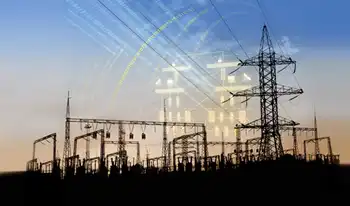
Philippine President Gloria Macapagal Arroyo approved the immediate sale of the generating assets of National Power Corp (Napocor) to cut the government's budget deficit and avert looming electricity shortages, an official said recently.

Arroyo also ordered officials working to privatise the assets of state-run and cash-strapped Napocor to resolve -- by this week -- whether to negotiate a contract or hold another bidding round to lease its transmission assets after a second attempt failed.

The first round in July saw Singapore Power Corp as the lone company to show an interest in the transmission facilities. At least two parties must be willing to bid for a round to proceed.

The government is expected to raise at least 50 billion pesos ($902 million) from the privatisation of power plants and transmission facilities -- it it can find the buyers.

"This morning, the president endorsed and approved the sale of the gencos (generating companies) and that they will start advertising them tomorrow," Allan Ortiz, president of National Transmission Corp, said in a speech.

The government originally planned to privatise the transmission assets of Napocor before it sold the power plants.

Foreign investors have shown little appetite for Philippine power assets, scared off by the uncertain regulatory environment and delays in passing a law granting a franchise to the firm that leases the transmission assets.

Ortiz said Arroyo wanted to privatise Napocor before next May's election. The government also realised it needed to upgrade facilities to avoid a power crisis and cut its deficit, he said.

"Napocor is a major contributor to that deficit and therefore we need to reduce Napocor's operating expenses," Ortiz said.

The government, which has managed to keep its fiscal shortfall in check so far this year after three blow-outs in 2002, has been subsidising the operations of Napocor. Next year, the power firm has debts falling due of $2.071 billion.

Ortiz said the country needed private firms to help it fund the nearly 97 billion pesos required to upgrade transmission facilities through 2011.

"We are not the best deal in the world as far as we can tell. We don't have a good story to tell," he said, adding the July 27 mutiny by rogue soldiers and a daylight robbery on August 25 of the main Citibank branch hurt the country's image overseas.

"We need to sell the country as an investment destination," Ortiz said. "That is our only way out." He said the government was working to address a power shortage on Panay island in the Visayas. The main island of Luzon will experience a power crisis in 2007 and Mindanao island by 2008 if no new facilities are built, he said.

Early this year, Arroyo said the Philippines, whose consumers pay some of the highest power charges in Asia, will need an additional 6,000 megawatts or more of generating capacity over the next 10 years.

Related News
Ontario Energy Board prohibiting electricity shutoffs during latest stay-at-home order

OEB Disconnection Ban shields Ontario residential customers under the stay-at-home order, pausing electricity distributor shutoffs for non-payment and linking COVID-19 Energy Assistance Program credits for small businesses, charities, and overdue utility bills.


Key Points

A pause on electricity shutoff notices during Ontario's stay-at-home order, with COVID-19 bill credits for customers.

✅ Distributors cannot issue residential disconnection notices.

✅ Applies through the stay-at-home order timeline.

✅ CEAP credits: $750 residential; $1,500 small biz and charities.


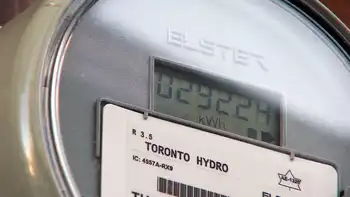
With Ontario now into the third province-wide lockdown, the Ontario Energy Board (OEB) has promised residents won't have to worry about their power being shut off.

On April 8, the Province issued the third stay-at-home order in the last 13 months which is scheduled to last for 28 days until at least May 6, as electricity rates and policies continue to shift.

On April 30, the annual winter disconnection ban is set to expire, meaning electricity distributors like Hydro One would normally be permitted to issue disconnection notices for non-payment as early as 14 days before the end of the ban.

However, the OEB has announced changes for electricity consumers that prohibit electricity distributors from issuing disconnection notices to residential customers for the entirety of the stay-at-home order.

Additionally, the COVID-19 Energy Assistance Program is available for residential, small business, and registered charity customers who have overdue amounts on their electricity or gas bills as a result of the pandemic, complementing support for electric bills introduced during COVID-19, and the fixed COVID-19 hydro rate that helped stabilize costs.

Those who meet these criteria are eligible for credits up to a maximum of $750 for residential customers and $1,500 for small businesses and charities, alongside earlier moves to set an off-peak price to ease costs.


Related News

View more

New Jersey, New York suspending utility shut-offs amid coronavirus pandemic

NY & NJ Utility Shutoff Moratorium suspends power, heat, and water disconnections amid COVID-19, as PSEG, Con Edison, Avangrid, and American Water pledge relief, supporting vulnerable customers with payment plans and health protections.


Key Points

A temporary pause on power, heat, and water shutoffs during COVID-19, as major utilities act to protect affected customers.

✅ Applies to power, gas, and water; restores prior shutoffs.

✅ Voluntary utility action; no PSC order required in NY.

✅ Initial moratorium runs through April; payment plans available.


New Jersey and New York utilities will keep the power, heat and water on for all customers in response to the coronavirus emergency, both states announced Friday.

Major utilities have agreed to suspend utility shut-offs, a particular concern for people who may be out of work and cannot afford to pay their bills.

“No utility can turn off service … if a person cannot pay their bill as a result of responding to this virus situation,” said New York Gov. Andrew Cuomo during a press conference Friday.

Utilities in New York have voluntarily agreed to this measure, according to the governor’s office, reflecting a broader state moratorium on disconnections during emergencies. No order from the Public Service Commission is expected.

With growing concerns about the economic impacts of a virtual shutdown of businesses and large events to curtail the spread of the novel coronavirus, advocates are increasingly pushing financial relief for families amid pandemic energy insecurity pressures. There’s a campaign in New York to suspend evictions and foreclosures, with growing political support. A similar call has gone out in New Jersey.

As the weather warms, shut-offs of electric and gas service due to nonpayment tend to pick up. If people are quarantined or out of work due to a widespread economic slowdown, some advocates say they shouldn’t have to worry about having the lights or heat turned off, especially as examples of unpaid utility bills straining cities have emerged elsewhere.

“We recognize that customers may experience financial difficulty as a result of the outbreak, whether they or a family member fall ill, are required to quarantine, or because their income is otherwise affected,” said Michael Jennings, a spokesperson for Public Service Enterprise Group — the parent company of Public Service Electric and Gas Company, New Jersey’s largest utility — in a statement.

The company’s policy will be in place at least through the end of April, as will Atlantic City Electric’s, and other utilities such as PG&E's pandemic response included a similar moratorium during the outbreak.

“Curtailing shut-offs is good public policy to make sure New Jersey residents aren’t left in the lurch as they’re dealing with coronavirus,” said Eric Miller, director of the Natural Resources Defense Council’s New Jersey energy policy program. “Not having a safe place to be because you don't have electricity, gas or water doesn’t do anything to help address the coronavirus.”

Water service has also drawn attention. Major cities, including Atlanta and Detroit, have suspended shut-offs to ensure residents have water to wash their hands, while Texas utilities waived fees to support customers as well. Seattle suspended water and electric shutoffs.

American Water, which operates in 16 states and has 650,000 customers in New Jersey and 350,000 in New York, has halted any shutoffs amid the coronavirus pandemic and will also restore service, and similarly Hydro One reconnected customers in Canada to maintain access. New York City does not shut off service for nonpayment, but does issue liens against people’s property.

“Everyone, regardless as to what industry, has to have a heightened responsibility that’s encompassed in compassion and take everything into consideration,” New Jersey state Sen. Teresa Ruiz (D-Essex) told POLITICO. “Now is not the time to be worrying about late payments or bills. We need to get past this, hopefully, to see what we’re facing and then deal with other things.”

PSEG Long Island, a subsidiary of PSEG that handles day-to-day operations for the Long Island Power Authority, was the first New York utility to announce it is also suspending shutoffs before the governor’s announcement. The moratorium will remain in place through the end of April.

Rich Berkley, with the Public Utility Law Project, which advocates for low-income customers in New York, said he’s been in touch with state officials to make sure the issue of utility bills is considered during the pandemic. New York already has requirements for utilities to offer deferred payment agreements before shutting off service, he noted.

“The state has to act to protect the most vulnerable households first,” he said. “To the extent that the state is declaring areas of emergency, this should be part of the remedies the state deploys.”

But he noted that not everyone will have trouble paying their utility bills if they’re under quarantine.

“Given the background of a collapsing stock and equity market, all of which matters to the utilities, and shifts in electricity demand during COVID-19, we have to be careful about blanket moratoriums [on shutoffs] in New York,” Berkley said.

Con Edison, the largest utility in the state serving most of New York City, had already informed the Department of Public Service it will suspend all shut-offs in the one-mile radius New Rochelle containment area, spokesperson Michael Clendenin said on Thursday. The moratorium on shutoffs now includes its entire New York City and Westchester County territory.

Avangrid, which owns New York State Electric & Gas and Rochester Gas & Electric, serving broad swathes of upstate New York, will suspend shut-offs due to unpaid bills for 30 days, spokesperson Michael Jamison said.


Related News

View more

Europe Is Losing Nuclear Power Just When It Really Needs Energy

Europe's Nuclear Energy Policy shapes responses to the energy crisis, soaring gas prices, EU taxonomy rules, net-zero goals, renewables integration, baseload security, SMRs, and Russia-Ukraine geopolitics, exposing cultural, financial, and environmental divides.


Key Points

A policy guiding nuclear exits or expansion to balance energy security, net-zero goals, costs, and EU taxonomy.

✅ Divergent national stances: phase-outs vs. new builds

✅ Costs, delays, and waste challenge large reactors

✅ SMRs, renewables, and gas shape net-zero pathways


As the Fukushima disaster unfolded in Japan in 2011, then-German Chancellor Angela Merkel made a dramatic decision that delighted her country’s anti-nuclear movement: all reactors would be ditched.

What couldn’t have been predicted was that Europe would find itself mired in one of the worst energy crises in its history. A decade later, the continent’s biggest economy has shut down almost all its capacity already. The rest will be switched off at the end of 2022 — at the worst possible time.

Wholesale power prices are more than four times what they were at the start of the coronavirus pandemic. Governments are having to take emergency action to support domestic and industrial consumers faced with crippling bills, which could rise higher if the tension over Ukraine escalates. The crunch has not only exposed Europe’s supply vulnerabilities, but also the entrenched cultural and political divisions over the nuclear industry and a failure to forge a collective vision. 

Other regions meanwhile are cracking on, challenging the idea that nuclear power is in decline worldwide. China is moving fast on nuclear to try to clean up its air quality. Its suite of reactors is on track to surpass that of the U.S., the world’s largest, by as soon as the middle of this decade. Russia is moving forward with new stations at home and has more than 20 reactors confirmed or planned for export construction, according to the World Nuclear Association.

“I don’t think we’re ever going to see consensus across Europe with regards to the continued running of existing assets, let alone the construction of new ones,” said Peter Osbaldstone, research director for power and renewables at Wood Mackenzie Group Ltd. in the U.K. “It’s such a massive polarizer of opinions that national energy policy is required in strength over a sustained period to support new nuclear investment.” 

France, Europe’s most prolific nuclear energy producer, is promising an atomic renaissance as its output becomes less reliable. Britain plans to replace aging plants in the quest for cleaner, more reliable energy sources. The Netherlands wants to add more capacity, Poland also is seeking to join the nuclear club, and Finland is starting to produce electricity later this month from its first new plant in four decades. 

Belgium and Spain, meanwhile, are following Germany’s lead in abandoning nuclear, albeit on different timeframes. Austria rejected it in a referendum in 1978.

Nuclear power is seen by its proponents as vital to reaching net-zero targets worldwide. Once built, reactors supply low-carbon electricity all the time, unlike intermittent wind or solar.

Plants, though, take a decade or more to construct at best and the risk is high of running over time and over budget. Finland’s new Olkiluoto-3 unit is coming on line after a 12-year delay and billions of euros in financial overruns. 

Then there’s the waste, which stays hazardous for 100,000 years. For those reasons European Union members are still quarreling over whether nuclear even counts as sustainable.

Electorates are also split. Polling by YouGov Plc published in December found that Danes, Germans and Italians were far more nuclear-skeptic than the French, British or Spanish. 

“It comes down to politics,” said Vince Zabielski, partner at New York-based law firm Pillsbury Winthrop Shaw Pittman LLP, who was a nuclear engineer for 15 years. “Everything political ebbs and flows, but when the lights start going off people have a completely different perspective.”


What’s Behind Europe’s Skyrocketing Energy Prices

Indeed, there’s a risk of rolling blackouts this winter. Supply concerns plaguing Europe have sent gas and electricity prices to record levels and inflation has ballooned. There’s also mounting tension with Russia over a possible invasion of Ukraine, which could lead to disrupted supplies of gas. All this is strengthening the argument that Europe needs to reduce its dependence on international sources of gas.

Europe will need to invest 500 billion euros ($568 billion) in nuclear over the next 30 years to meet growing demand for electricity and achieve its carbon reduction targets, according to Thierry Breton, the EU’s internal market commissioner. His comments come after the bloc unveiled plans last month to allow certain natural gas and nuclear energy projects to be classified as sustainable investments. 

“Nuclear power is a very long-term investment and investors need some kind of guarantee that it will generate a payoff,” said Elina Brutschin at the International Institute for Applied Systems Analysis. In order to survive in liberalized economies like the EU, the technology needs policy support to help protect investors, she said.

That already looks like a tall order. The European Commission has been told by a key expert group that the labeling risks raising greenhouse gas emissions and undermining the bloc’s reputation as a bastion for environmentally friendly finance.

Austria has threatened to sue the European Commission over attempts to label atomic energy as green. The nation previously attempted a legal challenge, when the U.K. was still an EU member, to stop the construction of Electricite de France SA’s Hinkley Point C plant, in the west of England. It has also commenced litigation against new Russia-backed projects in neighboring Hungary.

Germany, which has missed its carbon emissions targets for the past two years, has been criticized by some environmentalists and climate scientists for shutting down a supply of clean power at the worst time, despite arguments for a nuclear option for climate policy. Its final three reactors will be halted this year. Yet that was never going to be reversed with the Greens part of the new coalition government. 

The contribution of renewables in Germany has almost tripled since the year before Fukushima, and was 42% of supply last year. That’s a drop from 46% from the year before and means the country’s new government will have to install some 3 gigawatts of renewables — equivalent to the generating capacity of three nuclear reactors — every year this decade to hit the country's 80% goal.

“Other countries don’t have this strong political background that goes back to three decades of anti-nuclear protests,” said Manuel Koehler, managing director of Aurora Energy Research Ltd., a company analyzing power markets and founded by Oxford University academics. 

At the heart of the issue is that countries with a history of nuclear weapons will be more likely to use the fuel for power generation. They will also have built an industry and jobs in civil engineering around that.

Germany’s Greens grew out of anti-nuclear protest movements against the stationing of U.S. nuclear missiles in West Germany. The 1986 Chernobyl meltdown, which sent plumes of radioactive fallout wafting over parts of western Europe, helped galvanize the broader population. Nuclear phase-out plans were originally laid out in 2002, but were put on hold by the country's conservative governments. The 2011 Fukushima meltdowns reinvigorated public debate, ultimately prompting Merkel to implement them.

It’s not easy to undo that commitment, said Mark Hibbs, a Bonn, Germany-based nuclear analyst at Carnegie Endowment for International Peace, or to envision any resurgence of nuclear in Germany soon: “These are strategic decisions, that have been taken long in advance.”

In France, President Emmanuel Macron is about to embark on a renewed embrace of nuclear power, even as a Franco-German nuclear dispute complicates the debate. The nation produces about two-thirds of its power from reactors and is the biggest exporter of electricity in Europe. Notably, that includes anti-nuclear Germany and Austria.

EDF, the world’s biggest nuclear plant operator, is urging the French government to support construction of six new large-scale reactors at an estimated cost of about 50 billion euros. The first of them would start generating in 2035.

But even France has faced setbacks. Development of new projects has been put on hold after years of technical issues at the Flamanville-3 project in Normandy. The plant is now scheduled to be completed next year. 

In the U.K., Business Secretary Kwasi Kwarteng said that the global gas price crisis underscores the need for more home-generated clean power. By 2024, five of Britain’s eight plants will be shuttered because they are too old. Hinkley Point C is due to be finished in 2026 and the government will make a final decision on another station before an election due in 2024. 

One solution is to build small modular reactors, or SMRs, which are quicker to construct and cheaper. The U.S. is at the forefront of efforts to design smaller nuclear systems with plans also underway in the U.K. and France. Yet they too have faced delays. SMR designs have existed for decades though face the same challenging economic metrics and safety and security regulations of big plants.

The trouble, as ever, is time. “Any investment decisions you make now aren’t going to come to fruition until the 2030s,” said Osbaldstone, the research director at Wood Mackenzie. “Nuclear isn’t an answer to the current energy crisis.”


Related News

View more

Ukraine has electricity reserves, no more outages planned if no new strikes

Ukraine Electricity Outages may pause as the grid stabilizes, with energy infrastructure repairs, generators, and reserves supporting supply; officials cite no rationing absent new Russian strikes, while Odesa networks recover and Ukrenergo completes restoration works.


Key Points

Planned power cuts in Ukraine paused as grid capacity, repairs, and reserves improve, barring new strikes.

✅ No rationing if Russia halts strikes on energy infrastructure

✅ Grid repairs and reserves meet demand for third straight week

✅ Odesa networks restored; Ukrenergo crews redeploy to repairs


Ukraine plans no more outages to ration electricity if there are no new strikes and has been able to amass some power reserves, the energy minister said on Saturday, as it continues to keep the lights on despite months of interruptions caused by Russian bombings.

"Electricity restrictions will not be introduced, provided there are no Russian strikes on infrastructure facilities," Energy Minister Herman Halushchenko said in remarks posted on the ministry's Telegram messaging platform.

"Outages will only be used for repairs."

After multiple battlefield setbacks and scaling down its troop operation to Ukraine's east and south, Russia in October began bombing the country's energy infrastructure, as winter loomed over the battlefront, leaving millions without power and heat for days on end.

The temperature in winter months often stays below freezing across most of Ukraine. Halushchenko said this heating season has been extremely difficult.

"But our power engineers managed to maintain the power system, and for the third week in a row, electricity generation has ensured consumption needs, we have reserves," Halushchenko said.

Ukraine, which does not produce power generators itself, has imported and received thousands of them over the past few years, with the U.S. pledging a further $10 billion on Friday to aid Kyiv's energy needs, despite ended grid restoration support reported earlier.

Separately, the chief executive of state grid operator Ukrenergo, Volodymyr Kudrytskyi, said that repair works on the damaged infrastructure in the city of Odesa suffered earlier this month, has been finished, highlighting how Ukraine has even helped Spain amid blackouts while managing its own network challenges.

"Starting this evening, there is more light in Odesa," Kudrytskyi wrote on his Facebook page. "The crews that worked on restoring networks are moving to other facilities."

A Feb. 4 fire that broke out at an overloaded power station left hundreds of thousands of residents without electricity, prompting many to adopt new energy solutions to cope with outages.


Related News

View more

Toshiba, Tohoku Electric Power and Iwatani start development of large H2 energy system

Fukushima Hydrogen Energy System leverages a 10,000 kW H2 production hub for grid balancing, demand response, and renewable integration, delivering hydrogen supply across Tohoku while supporting storage, forecasting, and flexible power management.


Key Points

A 10,000 kW H2 project in Namie for grid balancing, renewable integration, and regional hydrogen supply.

✅ 10,000 kW H2 production hub in Namie, Fukushima

✅ Balances renewable-heavy grids via demand response

✅ Supported by NEDO; partners Toshiba, Tohoku Electric, Iwatani


Toshiba Corporation, Tohoku Electric Power Co. and Iwatani Corporation have announced they will construct and operate a large-scale hydrogen (H2) energy system in Japan, based on a 10,000 kilowat class H2 production facility, which reflects advances in PEM hydrogen R&D worldwide.

The system, which will be built in Namie-Cho, Fukushima, will use H2 to offset grid loads and deliver H2 to locations in Tohoku and beyond, while complementary approaches like power-to-gas storage in Europe demonstrate broader storage options, and will seek to demonstrate the advantages of H2 as a solution in grid balancing and as a H2 gas supply.

The product has won a positive evaluation from Japan’s New Energy and Industrial Technology Development Organisation (NEDO), and its continued support for the transition to the technical demonstration phase. The practical effectiveness of the large-scale system will be determined by verification testing in financial year 2020, even as interest grows in nuclear beyond electricity for complementary services.

The main objectives of the partners are to promote expanded use of renewable energy in the electricity grid, including UK offshore wind investment by Japanese utilities, in order to balance supply and demand and process load management; and to realise a new control system that optimises H2 production and supply with demand forecasting for H2.

Hiroyuki Ota, General Manager of Toshiba’s Energy Systems and Solutions Company, said, “Through this project, Toshiba will continue to provide comprehensive H2 solutions, encompassing all processes from the production to utilisation of hydrogen.”

Manager of Tohoku Electric Power Co., Ltd, Mitsuhiro Matsumoto, added, “We will study how to use H2 energy systems to stabilize electricity grids with the aim of increasing the use of renewable energy and contributing to Fukushima.”

Moriyuki Fujimoto, General Manager of Iwatani Corporation, commented, “Iwatani considers that this project will contribute to the early establishment of a H2 economy that draws on our experience in the transportation, storage and supply of industrial H2, and the construction and operation of H2stations.”

Japan’s Ministry of Economy, Trade and Industry’s ‘Long-term Energy Supply and Demand Outlook’ targets increasing the share of renewable energy in Japan’s overall power generation mix from 10.7% in 2013 to 22-24% by 2030. Since output from renewable energy sources is intermittent and fluctuates widely with the weather and season, grid management requires another compensatory power source, as highlighted by a near-blackout event in Japan. The large hydrogen energy system is expected to provide a solution for grids with a high penetration of renewables.


Related News

View more

US January power generation jumps 9.3% on year: EIA

US January power generation climbed to 373.2 TWh, EIA data shows, with coal edging natural gas, record wind output, record nuclear generation, rising hydro, and stable utility-scale solar amid higher Henry Hub prices.


Key Points

US January power generation hit 373.2 TWh; coal led gas, wind and nuclear set records, with solar edging higher.

✅ Coal 31.8% share; gas 29.4%; coal output 118.7 TWh, gas 109.6 TWh.

✅ Wind hit record 26.8 TWh; nuclear record 74.6 TWh.

✅ Total generation 373.2 TWh, highest January since 2014.


The US generated 373.2 TWh of power in January, up 7.9% from 345.9 TWh in December and 9.3% higher than the same month in 2017, Energy Information Administration data shows.

The monthly total was the highest amount in January since 377.3 TWh was generated in January 2014.

Coal generation totaled 118.7 TWh in January, up 11.4% from 106.58 TWh in December and up 2.8% from the year-ago month, consistent with projections of a coal-fired generation increase for the first time since 2014. It was also the highest amount generated in January since 132.4 TWh in 2015.

For the second straight month, more power was generated from coal than natural gas, as 109.6 TWh came from gas, up 3.3% from 106.14 TWh in December and up 19.9% on the year.

However, the 118.7 TWh generated from coal was down 9.6% from the five-year average for the month, due to the higher usage of gas and renewables and a rising share of non-fossil generation in the overall mix.

#google#

Coal made up 31.8% of the total US power generation in January, up from 30.8% in December but down from 33.8% in January 2017.

Gas` generation share was at 29.4% in the latest month, with momentum from record gas-fired electricity earlier in the period, down from 30.7% in December but up from 26.8% in the year-ago month.

In January, the NYMEX Henry Hub gas futures price averaged $3.16/MMBtu, up 13.9% from $2.78/MMBtu averaged in December but down 4% from $3.29/MMBtu averaged in the year-ago month.


WIND, NUCLEAR GENERATION AT RECORD HIGHS

Wind generation was at a record-high 26.8 TWh in January, up 29.3% from 22.8 TWh in December and the highest amount on record, according to EIA data going back to January 2001. Wind generated 7.2% of the nation`s power in January, as an EIA summer outlook anticipates larger wind and solar contributions, up from 6.6% in December and 6.1% in the year-ago month.

Utility-scale solar generated 3.3 TWh in January, up 1.3% from 3.1 TWh in December and up 51.6% on the year. In January, utility-scale solar generation made up 0.9% of US power generation, during a period when solar and wind supplied 10% of US electricity in early 2018, flat from December but up from 0.6% in January 2017.

Nuclear generation was also at a record-high 74.6 TWh in January, up 1.3% month on month and the highest monthly total since the EIA started tracking it in January 2001, eclipsing the previous record of 74.3 TWh set in July 2008. Nuclear generation made up 20% of the US power in January, down from 21.3% in December and 21.4% in the year-ago month.

Hydro power totaled 25.4 TWh in January, making up 6.8% of US power generation during the month, up from 6.5% in December but down from 8.2% in January 2017.


Related News

View more

Sign Up for Electricity Forum’s Newsletter

Stay informed with our FREE Newsletter — get the latest news, breakthrough technologies, and expert insights, delivered straight to your inbox.

Electricity Today T&D Magazine Subscribe for FREE

Stay informed with the latest T&D policies and technologies.
  • Timely insights from industry experts
  • Practical solutions T&D engineers
  • Free access to every issue

Download the 2025 Electrical Training Catalog

Explore 50+ live, expert-led electrical training courses –

  • Interactive
  • Flexible
  • CEU-cerified