Aging plants 'jeopardize' Ontario's electrical future

By The Toronto Star


Arc Flash Training CSA Z462 - Electrical Safety Essentials

Our customized live online or in‑person group training can be delivered to your staff at your location.

  • Live Online
  • 6 hours Instructor-led
  • Group Training Available
Regular Price:
$249
Coupon Price:
$199
Reserve Your Seat Today
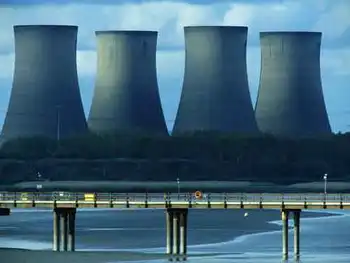
Canada's aging nuclear power plants will either have to be shut down within 15 years or cost up to $20 billion to keep them producing electricity, a report by an anti-nuclear group says.

However, the study released today concludes the plants wouldn't be needed at all if the three affected provinces embark on aggressive conservation and efficiency programs and develop new environmentally friendly power sources.

In Ontario, which is already struggling to produce enough electricity and came close to running short during a hot spell last month, nuclear power supplies about 35 to 40 per cent of its power needs.

"The crisis is looming and it will make what we've been through this summer look like a Sunday school picnic if we don't start addressing it now," said Ralph Torrie, who wrote the report for the group Campaign for Nuclear Phaseout.

Canada's other nuclear reactors - the Gentilly-2 in Quebec and New Brunswick's Point Lepreau - face a similar problem by the end of the decade, the study finds.

For Quebec, scrapping its nuclear plant would be painless given its abundance of emission-free hydro-electric power but Ontario and New Brunswick face bigger challenges.

Still, the report argues the two provinces could phase out both their nuclear and smog-producing coal plants, drastically cutting greenhouse gas emissions in the process.

For Ontario, that would mean losing about 60 per cent of its current domestic production.

The report says savings of 50 per cent in consumption could be achieved with more energy efficient appliances, homes and buildings. In addition, new wind, solar and other environmentally friendly generation sources would ensure an adequate supply.

"I don't know if it's dreaming in Technicolor (but) this is a dream worth working for, this is a dream worth fighting for, this is a dream for a sustainable and environmentally acceptable energy future," said Torrie.

A NB Power spokesman said the study underestimates New Brunswick's future energy needs and Lepreau will be essential to meeting the demand.

The cost of refurbishing the province's lone reactor is estimated at more than $850 million but the government of Premier Bernard Lord has yet to give the go-ahead.

The core of the problem, critics argue, is that nuclear plants are expensive and potentially dangerous, while the radioactive waste they produce makes them anything but environmentally friendly.

The plants can be notoriously unreliable. Eight of Ontario's 20 reactors were out of commission between 1995 and 1998 for safety reasons and getting them back online has been a taxpayer and engineering nightmare.

"So the question really is what else could we do with $15 billion or $20 billion that will be better for the environment, better for the economy, better for public health," said Torrie.

Ontario's publicly owned power producer defended its reactors.

"These plants operate continuously, day and night, helping to keep the homeowners' lights on and the motors of industry turning," Ontario Power Generation said in a written statement.

"These plants produce virtually no smog, acid gas or greenhouse gas emissions, so they are helping Canada meet its environmental commitments."

Related News
Washington County planning officials develop proposed recommendations for solar farms

Washington County solar farm incentives aim to steer projects to industrial sites with tax breaks, underground grid connections, decommissioning bonds, and wildlife corridors, balancing zoning, historic preservation, and Maryland renewable energy mandates.


Key Points

Policies steer solar to industrial sites with tax breaks, buried lines, and bonds, aligning with zoning and state goals.

✅ Tax breaks to favor rooftops and parking canopies

✅ Bury new grid lines to shift projects to industrial parks

✅ Require decommissioning bonds and wildlife corridors


Incentives for establishing solar farms at industrial spaces instead of on prime farmland are among the ideas the Washington County Planning Commission is recommending for the county to update its policies regarding solar farms.

Potential incentives would include tax breaks on solar equipment and requiring developers to put power-grid connections and line extensions underground, a move tied to grid upgrade cost debates in other regions, Planning Commission members said during a Monday meeting.

The tax break could make it more attractive for a developer to put a solar farm on a roof or over a parking lot, similar to California's building-solar requirement policies that favor rooftop generation, which could cost more than putting it on farmland, said Commission member Dave Kline, who works for FirstEnergy.

Requiring a company to bury new transmission lines could steer them to industrial or business parks where, theoretically, transmission lines are more readily available, Kline said Wednesday in a phone interview.

Chairman Clint Wiley suggested talking to industrial property owners to create a list of industrial sites that make sense for a solar site, which could generate extra income for the property owner.

Commission members also talked about requiring a wildlife corridor. Anne Arundel County requires such a corridor if a solar site is over 15 acres, according to Jill Baker, deputy director of planning and zoning. The solar site is broken into sections so animals such as deer can get through, she said.

However, that means the solar farm would take up more agricultural land, Commission member Jeremiah Weddle said. Weddle, a farmer, has repeatedly voiced concerns about solar farms using prime farmland.

County zoning law already states solar farms are prohibited in Rural Legacy Areas, Priority Preservation Areas, and within Antietam Overlay zones that preserve the Antietam National Battlefield viewshed. They also cannot be built on land with permanent preservation easements, Baker said.

However, a big reason county officials are looking to strengthen county policies for solar generating systems, or solar farms, is a recent court decision that ruled the Maryland Public Service Commission can preempt county zoning law when it comes to large solar farms.

County zoning law defines a solar energy generating system as a solar facility, with multiple solar arrays, tied into the power grid and whose primary purpose is to generate power to distribute and/or sell into the public utility grid rather than consuming that power on site.

The Maryland Court of Appeals ruled in July that the Public Service Commission can preempt local zoning regarding solar farms larger than 2 megawatts. But the ruling also stated local government is a "significant participant in the process" and the state commission must give "due consideration" to local zoning laws.

County officials are looking at recommendations for solar farms, whether they are over 2 megawatts or not.

Solar farms are a popular issue statewide, especially with Maryland solar subscriptions expanding, and were discussed at a recent Maryland Association of Counties meeting for planners, Planning and Zoning Director Stephen Goodrich said.

The thinking is the best way for counties to express their opinions about a solar project is to participate in the state commission's local public hearings, where issues like how solar owners are paid often arise, Goodrich said. Another popular idea is for the county to continue to follow its process, which requires a public hearing for a special exception to establish a solar farm. That will help the county form an opinion, on individual cases, to offer the state commission, he said.

Recommendations discussed by the Planning Commission include:

A break on personal property taxes, which is on equipment, including affordable battery storage that can firm output, to steer developers away from areas where the county doesn't want solar farms. The Board of County Commissioners have been split on tax-break agreements for solar farms, with a majority recently granting a few.


Protecting valuable historic sites.

Requiring a decommissioning bond for removing the equipment at the end of the solar farm's life. The bond is protection in case the company goes bankrupt. The county commissioners have been making such a bond a requirement when granting recent tax breaks.

Looking at allowing solar farms in stormwater-management areas.

Other counties, particularly in Western Maryland and on the Eastern Shore, are having issues with solar farms even as research to improve solar and wind advances, because land is cheaper and there are wide-open spaces, Goodrich said.

Many solar projects are being developed or proposed because state lawmakers passed legislation requiring 50% of electricity produced in the state to come from renewable sources by 2030, and a federal plan to expand solar is also shaping expectations. Of that 50%, 14.5% is to come from solar energy.

In Maryland, the average number of homes that can be powered by 1 megawatt of solar energy is about 110, according to the Solar Energy Industries Association's website.


Related News

View more

Can Canada actually produce enough clean electricity to power a net-zero grid by 2050?

Canada Clean Electricity drives a net-zero grid by 2035, scaling renewables like wind, solar, and hydro, with storage, smart grids, interprovincial transmission, and electrification of vehicles, buildings, and industry to cut emissions and costs.


Key Points

Canada Clean Electricity is a shift to a net-zero grid by 2035 using renewables, storage, and smart grids to decarbonize

✅ Doubles non-emitting generation for electrified transport and heating

✅ Expands wind, solar, hydro with storage and smart-grid balancing

✅ Builds interprovincial lines and faster permitting with Indigenous partners


By Merran Smith and Mark Zacharias

Canada is an electricity heavyweight. In addition to being the world’s sixth-largest electricity producer and third-largest electricity exporter in the global electricity market today, Canada can boast an electricity grid that is now 83 per cent emission-free, not to mention residential electricity rates that are the cheapest in the Group of Seven countries.

Indeed, on the face of it, the country’s clean electricity system appears poised for success. With an abundance of sunshine and blustery plains, Alberta and Saskatchewan, the Prairie provinces most often cited for wind and solar, have wind- and solar-power potential that rivals the best on the continent. Meanwhile, British Columbia, Manitoba, Quebec, and Newfoundland and Labrador have long excelled at generating low-cost hydro power.

So it would only be natural to assume that Canada, with this solid head start and its generous geography, is already positioned to provide enough affordable clean electricity to power our much-touted net-zero and economic ambitions.

But the reality is that Canada, like most countries, is not yet prepared for a world increasingly committed to carbon neutrality, in part because demand for solar electricity has lagged, even as overall momentum grows.

The federal government’s forthcoming Clean Electricity Standard – a policy promised by the governing Liberals during the most recent election campaign and restated for an international audience by Prime Minister Justin Trudeau at the United Nations’ COP26 climate summit – would require all electricity in the country to be net zero by 2035 nationwide, setting a new benchmark. But while that’s an encouraging start, it is by no means the end goal. Electrification – that is, hooking up our vehicles, heating systems and industry to a clean electricity grid – will require Canada to produce roughly twice as much non-emitting electricity as it does today in just under three decades.

This massive ramp-up in clean electricity will require significant investment from governments and utilities, along with their co-operation on measures and projects such as interprovincial power lines to build an electric, connected and clean system that can deliver benefits nationwide. It will require energy storage solutions, smart grids to balance supply and demand, and energy-efficient buildings and appliances to cut energy waste.

While Canada has mostly relied on large-scale hydroelectric and nuclear power in the past, newer sources of electricity such as solar, wind, geothermal, and biomass with carbon capture and storage will, in many cases, be the superior option going forward, thanks to the rapidly falling costs of such technology and shorter construction times. And yet Canada added less solar and wind generation in the past five years than all but three G20 countries – Indonesia, Russia and Saudi Arabia, with some experts calling it a solar power laggard in recent years. That will need to change, quickly.

In addition, Canada’s Constitution places electricity policy under provincial jurisdiction, which has produced a patchwork of electricity systems across the country that use different energy sources, regulatory models, and approaches to trade and collaboration. While this model has worked to date, given our low consumer rates and high power reliability, collaborative action and a cohesive vision will be needed – not just for a 100-per-cent clean grid by 2035, but for a net-zero-enabling one by 2050.

Right now, it takes too long to move a clean power project from the proposal stage to operation – and far too long if we hope to attain a clean grid by 2035 and a net-zero-enabling one by 2050. This means that federal, provincial, territorial and Indigenous governments must work with rural communities and industry stakeholders to accelerate the approvals, financing and construction of clean energy projects and provide investor certainty.

In doing so, Canada can set a course to carbon neutrality while driving job creation and economic competitiveness, a transition many analyses deem practical and profitable in the long run. Our closest trading partners and many of the world’s largest companies and investors are demanding cleaner goods. A clean grid underpins clean production, just as it underpins our climate goals.

The International Energy Agency estimates that, for the world to reach net zero by 2050, clean electricity generation worldwide must increase by more than 2.5 times between today and 2050. Countries are already plotting their energy pathways, and there is much to learn from each other.

Consider South Australia. The state currently gets 62 per cent of its electricity from wind and solar and, combined with grid-scale battery storage, has not lost a single hour of electricity in the past five years. South Australia expects 100 per cent of its electricity to come from renewable sources before 2030. An added bonus given today’s high energy prices: Annual household electricity costs have declined there by 303 Australian dollars ($276) since 2018.

The transition to clean energy is not about sacrificing our way of life – it’s about improving it. But we’ll need the power to make it happen. That work needs to start now.

Merran Smith is the executive director of Clean Energy Canada, a program at the Morris J. Wosk Centre for Dialogue at Simon Fraser University in Vancouver. Mark Zacharias is a special adviser at Clean Energy Canada and visiting professor at the Simon Fraser University School of Public Policy.


Related News

View more

Energy Vault Secures $28M for California Green Hydrogen Microgrid

Calistoga Resiliency Centre Microgrid delivers grid resilience via green hydrogen and BESS, providing island-mode backup during PSPS events, wildfire risk, and outages, with black-start and grid-forming capabilities for reliable community power.


Key Points

A hybrid green hydrogen and BESS facility ensuring resilient, islanded power for Calistoga during PSPS and outages.

✅ 293 MWh capacity with 8.5 MW peak for critical backup

✅ Hybrid lithium-ion BESS plus green hydrogen fuel cells

✅ Island mode with black-start and grid-forming support


Energy Vault, a prominent energy storage and technology company known for its gravity storage, recently secured US$28 million in project financing for its innovative Calistoga Resiliency Centre (CRC) in California. This funding will enable the development of a microgrid powered by a unique combination of green hydrogen and battery energy storage systems (BESS), marking a significant step forward in enhancing grid resilience in the face of natural disasters such as wildfires.

Located in California's fire-prone regions, the CRC is designed to provide critical backup power during Public Safety Power Shutoff (PSPS) events—periods when utility companies proactively cut power to prevent wildfires. These events can leave communities without electricity for extended periods, making the need for reliable, independent power sources more urgent as many utilities see benefits in energy storage today. The CRC, with a capacity of 293 MWh and a peak output of 8.5 MW, will ensure that the Calistoga community maintains power even when the grid is disconnected.

The CRC features an integrated hybrid system that combines lithium-ion batteries and green hydrogen fuel cells, even as some grid-scale projects adopt vanadium flow batteries for long-duration needs. During a PSPS event or other grid outages, the system will operate in "island mode," using hydrogen to generate electricity. This setup not only guarantees power supply but also contributes to grid stability by supporting black-start and grid-forming functions. Energy Vault's proprietary B-VAULT DC battery technology complements the hydrogen fuel cells, enhancing the overall performance and resilience of the microgrid.

One of the key aspects of the CRC project is the utilization of green hydrogen. Unlike traditional hydrogen, which is often produced using fossil fuels, green hydrogen is generated through renewable energy sources like solar or wind power, with large-scale initiatives such as British Columbia hydrogen project accelerating supply, making it a cleaner and more sustainable alternative. This aligns with California’s ambitious clean energy goals and is expected to reduce the carbon footprint of the region’s energy infrastructure.

The CRC project also sets a precedent for future hybrid microgrid deployments across California and other wildfire-prone areas, with utilities like SDG&E Emerald Storage highlighting growing adoption. Energy Vault has positioned the CRC as a model for scalable, utility-scale microgrids that can be adapted to various locations facing similar challenges. Following the success of this project, Energy Vault is expanding its portfolio with additional projects in Texas, where it anticipates securing up to US$25 million in financing.

The funding for the CRC also includes the sale of an investment tax credit (ITC), a key component of the financing structure that helps make such ambitious projects financially viable. This structure is crucial as it allows companies to leverage government incentives to offset development costs, including CEC long-duration storage funding, thus encouraging further investment in green energy infrastructure.

Despite some skepticism regarding the transportation of hydrogen rather than producing it onsite, the project has garnered strong support. California’s Public Utilities Commission (CPUC) acknowledged the potential risks of transporting green hydrogen but emphasized that it is still preferable to using more harmful fuel sources. This recognition is important as it validates Energy Vault’s approach to using hydrogen as part of a broader strategy to transition to clean, reliable energy solutions.

Energy Vault's shift from its traditional gravity-based energy storage systems to battery energy storage systems, such as BESS in New York, reflects the company's adaptation to the growing demand for versatile, efficient energy solutions. The hybrid approach of combining BESS with green hydrogen represents an innovative way to address the challenges of energy storage, especially in regions vulnerable to natural disasters and power outages.

As the CRC nears mechanical completion and aims for full commercial operations by Q2 2025, it is poised to become a critical part of California’s grid resilience strategy. The microgrid's ability to function autonomously during emergencies will provide invaluable benefits not only to Calistoga but also to other communities that may face similar grid disruptions in the future.

Energy Vault’s US$28 million financing for the Calistoga Resiliency Centre marks a significant milestone in the development of hybrid microgrids that combine the power of green hydrogen and battery energy storage. This project exemplifies the future of energy resilience, showcasing a forward-thinking approach to mitigating the impact of natural disasters and ensuring a reliable, sustainable energy future for communities at risk. With its innovative use of renewable energy sources and cutting-edge technology, the CRC sets a strong example for future energy storage projects worldwide.


Related News

View more

B.C. residents and businesses get break on electricity bills for three months

BC Hydro COVID-19 Bill Relief offers pandemic support with bill credits, rate cuts, and deferred payments for residential, small business, and industrial customers across B.C., easing utilities costs during COVID-19 economic hardship.


Key Points

COVID-19 bill credits, a rate cut, and deferred payments for eligible B.C. homes, small businesses, and industrial customers.

✅ Non-repayable credits equal to 3 months of average bills.

✅ Small businesses closed can skip bills for three months.

✅ Large industry may defer 50% of electricity costs.


B.C. residents who have lost their jobs or had their wages cut will get a three-month break on BC Hydro bills, while small businesses, amid commercial consumption plummets during COVID-19, are also eligible to apply for similar relief.

Premier John Horgan said Wednesday the credit for residential customers will be three times a household’s average monthly bill over the past year and does not have to be repaid as part of the government’s support package during the COVID-19 pandemic, as BC Hydro demand down 10% highlights the wider market pressures.

He said small businesses that are closed will not have to pay their power bills for three months, and in Ontario an Ontario COVID-19 hydro rebate complemented similar relief, and large industrial customers, including those operating mines and pulp mills, can opt to have 50 per cent of their electricity costs deferred, though a deferred costs report warned of long-term liabilities.

BC Hydro rates will be cut for all customers by one per cent as of April 1, a move similar to Ontario 2021 rate reductions that manufacturers supported lower rates at the time, after the B.C. Utilities Commission provided interim approval of an application the utility submitted last August.

Eligible residential customers can apply for bill relief starting next week and small business applications will be accepted as of April 14, while staying alert to BC Hydro scam attempts during this period, with the deadline for both categories set at June 30.


Related News

View more

Parsing Ontario's electricity cost allocation

Ontario Global Adjustment and ICI balance hydro rates, renewable cost shift, and peak demand. Class A and Class B customers face demand response decisions amid pandemic occupancy uncertainty and volatile GA charges through 2022.


Key Points

A pricing model where GA costs and ICI peak allocation shape Class A/B bills, driven by renewables cost shifts.

✅ Renewable cost shift trims GA; larger Class A savings expected.

✅ Class A peak strategy returns; occupancy uncertainty persists.

✅ Class B faces volatile GA; limited levers beyond efficiency.


Ontario’s large commercial electricity customers can approach the looming annual decision about their billing structure for the 12 months beginning July 1 with the assurance of long-term relief on a portion of their costs, amid changes coming for electricity consumers that could affect planning. That’s to be weighed against uncertainties around energy demand and whether a locked-in cost allocation formula that looked favourable in pre-pandemic times will remain so until June 30, 2022.

“The biggest unknown is we just don’t know when the people are coming back,” Jon Douglas, director of sustainability with Menkes Property Management Services, reflected during a webinar sponsored by the Building Owners and Managers Association (BOMA) of Greater Toronto last week. “The occupancy in our office buildings this fall, and going into the new year, could really impact the outcome of the decision.”

After a year of operational upheaval and more modifications to provincial electricity pricing policies, BOMA Toronto’s regularly scheduled workshop ahead of the June 15 deadline for eligible customers to opt into the Industrial Conservation Initiative (ICI) program had a lot of ground to cover. Notably, beginning in January, all commercial customers have seen a reduction in the global adjustment (GA) component of their monthly hydro bills after the Ontario government shifted costs associated with contracted non-hydroelectric renewable supply to reduce the burden on industrial ratepayers from electricity rates to the general provincial account — a move that trims approximately $258 million per month from the total GA charged to industrial and commercial customers. However, they won’t garner the full benefit of that until 2022 since they’re currently repaying about $333 million in GA costs that were deferred in April, May and June of 2020.

Renewable cost shift pares the global adjustment
For now, Ontario government officials estimate the renewable cost shift equates to a 12 per cent discount relative to 2020 prices, even as typical bills may rise about 2% as fixed pricing ends in some cases. Once last year’s GA deferral is repaid at the end of 2021, they project the average Class A customer participating in the ICI program should realize a 16 per cent saving on the total hydro bill, while Class B customers paying the GA on a volumetric per kilowatt-hour (kWh) basis will see a slightly more moderate 15 per cent decrease.

“This is the biggest change to electricity pricing that’s happened since the introduction of ICI,” Tim Christie, director of electricity policy, economics and system planning for Ontario’s Ministry of Energy, Northern Development and Mines, told online workshop attendees. “The government is funding the out-of-market costs of renewables. It does tail off into the 2030s as those contracts (for wind, solar and biomass generation) expire, but over the next eight-ish years, it’s pretty steady at around just over $3 billion per year.”

Extrapolating from 2020 costs, he pegged average electricity costs at roughly 9.1 cents/kWh for Class A commercial customers and 13.2 cents/kWh for Class B, a point of concern for Ontario manufacturers facing high rates as well. However, energy management specialists suggest actual 2021 numbers haven’t proved that out.

“In commercial buildings, we’re averaging 10 to 12 cents for Class A in 2021, and we’re seeing more than that for about 14, 15 cents for Class B,” reported Scott Rouse, managing partner with the consulting firm, Energy@Work.

GA costs for Class B customers dropped nearly 30 per cent in the first four months of 2021 compared to the last four months of 2020, when they averaged 11.8 cents/kWh. Thus far, though, there have been significant month-to-month fluctuations, with a low of 5.04 cents/kWh in February and a high of 10.9 cents/kWh in April contributing to the four-month average of 8.3 cents/kWh.

“In 2020, system-wide GA very often averaged more than $1 billion per month,” Rouse said. “This February it dropped to $500 million, which was really quite surprising. So it is a very volatile cost.”

Although welcome, the renewable cost shift does alter the payback on energy-saving investments, particularly for demand response mechanisms like energy storage. When combined with pandemic-related uncertainty and a series of policy and program reversals alongside calls to clean up Ontario’s hydro policy in recent years, the industry’s appetite for some more capital-intensive technologies appears to be flagging.

“Volatility puts a pause on some of the innovation,” said Terry Flynn, general manager with BentallGreenOak and chair of BOMA Toronto’s energy committee. “It could be a leading edge, but it might be a bleeding edge that won’t bear any fruit because the way the commodity costs are structured will change.”

“There’s kind of a wait-and-see approach on some of these bigger investments,” Douglas concurred.

Industrial Conservation Initiative underpins commercial class divide
Turning to the ICI, Class A customers — defined as those with average monthly energy demand of at least 1 megawatt (MW) — encountered some unexpected changes to the program rules during 2020. Meanwhile, Class B customers — encompassing the vast share of commercial properties smaller than about 350,000 square feet — confront the persistent reality of electricity cost allocation that offloads the burden from larger players onto them.

Through the ICI, participating Class A customers pay a share of the global adjustment that’s prorated to their energy use during the five hours of the period from May 1 to April 30 when the highest overall system demand is recorded. This gives Class A customers the opportunity to lock in a favourable factor for calculating their share of monthly system-wide global adjustment costs if they can successful project and curtail energy loads during those five hours of peak demand. On the flipside, Class B customers pay the remainder of those system-wide costs, on a straightforward per-kWh basis, once Class A payments have been reconciled.

“Class B has sometimes been regarded as the forgotten middle child of the customer classes in Ontario where all the shifted costs in the system kind of pile up,” acknowledged Mark Olsheski, vice president, energy and environment, with Sussex Strategy Group. “Likewise, there can be big unpredictable and uncontrollable swings in the global adjustment rate from month to month and, outside of pure energy efficiency, there really is precious little opportunity or empowerment for a Class B customer to take actions to lower their bills.”

Nevertheless, COVID-19 presents a few extra hiccups for Class A customers this year. Conventionally, late May is when they receive notification of the cost allocation factor that would be used to determine their GA for the upcoming July 1 to June 30 period. This year, though, all current ICI participants will retain the factor they secured by responding to the five hours of peak demand during the 12 months from May 1, 2019 to April 30, 2020 after the Ontario government placed a temporary halt on the peak demand response aspect of the program last summer. Regardless, eligible ICI participants must formally opt into the program by June 15 or they will be billed as Class B customers.

Peak chasing resumes for summer 2021
Since peak demand hours conventionally occur from June to September, Class A customers will once again be studying forecasts intently and preparing to respond via Peak Perks as the heat wave season sets in. That should help alleviate some of the system stresses that arose last summer — prompting policy-makers to reject lobbying for a continued pause on peak demand response.

“The policy rationale was to allow consumers to focus on their operations when recovering from COVID as opposed to reducing peaks. The other issue was that we did not expect the peaks to be high last summer given COVID shutdowns,” Christie recounted. “But due to some hot weather, more people at home and also the lack of ICI response, we saw peaks we haven’t seen in many, many years come up last summer. So the peak hiatus has ended and this summer we’ll be back to responding to ICI as per normal.”

Among Class A customers, owners/managers of office and retail facilities generally have the most to lose from a billing formula tied to the energy demand of more densely occupied buildings in the summer of 2019. However, they could be much more competitively positioned for 2022-23 if their buildings remain below full occupancy and energy demand stays lower than usual this summer.

“Where we can improve is the IESO (Independent Electricity System Operator) and the LDCs (local distribution companies) need to help customers get their real-time data, especially in light of the phantom demand issue, interpret their bills and their Class A versus B scenarios much more easily and comprehensively,” urged Lee Hodgkinson, vice president, technical services, sustainability and ESG, with Dream Unlimited. “ I look for APIs (application programming interface) and direct data flow from the LDCs to the building owners so that we can access that data really easily.”

Given Class A’s historic advantages, few eligible ICI participants are expected to migrate out to Class B. From a sustainability perspective, there’s perhaps more cause to question how the ICI’s 1-MW threshold encourages strategies to move in the other direction.

“You could jack up demand in some buildings and get them into Class A basically by firing up the chillers on the weekend and then pouring cooling outside to get rid of it,” Douglas noted. “That has nothing to do with climate change strategy or sustainability, but it’s a cost- saving strategy, and, sometimes, when you look at the math, it’s hundreds of thousands of dollars you can save.”

Brian Hewson, vice president, consumer protection and industry performance with the Ontario Energy Board (OEB), confirmed the OEB is currently scrutinizing the discrepancy that leaves Class B as the only consumer group with no flexibility to curtail energy load during higher-priced periods, and will be providing advice to the Ministry of Energy. In the interim, that status does, at least, simplify tactics.

“Just reduce your kWh and it doesn’t matter what time of day because you’re paying that fixed rate for 24 hours a day. So if you can curb your demand at night, you get a big bang for your dollar,” Rouse advised.

“We do talk about rates a lot, but if you’re not using it, you’re not paying for it,” Flynn agreed. “A lot of our focus is still on really to try to reduce the number of kilowatts that we use. That seems to be the best thing to do.”


Related News

View more

Iran Says Deals to Rehabilitate, Develop Iraq Power Grid Finalized

Iran-Iraq Power Grid Deals reinforce electricity and natural gas ties, upgrading transmission in Karbala and Najaf, repairing transformers, easing sanctions bottlenecks, and weighing GCC interconnection to diversify supply and reduce distribution losses across Iraq.


Key Points

Agreements to rehabilitate Iraq's grid, cut losses, and secure power via Iranian gas, electricity, and upgrades.

✅ Reduce distribution losses in Karbala and Najaf

✅ Repair and replace damaged distribution transformers

✅ Coordinate payments to TAVANIR amid US sanctions


Iran and Iraq have finalized two deals to rehabilitate and develop the power grid of Iraq, while Iran is upgrading thermal plants to combined cycle at home to save energy, IRNA cited the Iranian Energy Minister Reza Ardakanian.

Ardakanian met his Iraqi counterpart Majid Mahdi Hantoush in Tehran on Tuesday evening for talks on further energy cooperation on the sidelines of Prime Minister Mustafa al-Kadhimi’s trip to the Islamic Republic on his first foreign visit.

“It was decided that the contracts related to reducing losses on the electricity distribution network in the provinces of Karbala and Najaf, as well as the contract for repairing Iraq’s distribution transformers would be finalized and signed,” the Iranian minister said.

Iraq relies on Iran for natural gas that generates as much as 45 percent of its electricity, with Iran supplying 40% of Iraq’s power according to sector reports. Iran transmits another 1,200 MW directly, and has regional power hub plans as well, making itself an indispensable energy source for its Arab neighbor, but the United States is trying to pry Baghdad away from Tehran’s orbit.

The US has been enlisting its companies and allies such as Saudi Arabia to replace Iran as Iraq’s source of energy.

Iran’s money from exports of gas and electricity has accumulated in bank accounts in Iraq, because US sanctions are preventing Tehran from repatriating it.

In January, an official said the sanctions were giving Iran a run for five billion dollars, “sedimenting” at the Central Bank of Iraq, because Tehran could not access it.

Ardakanian said the issue was brought up in the discussions on Tuesday and it was agreed that “the payment of part of TAVANIR (Iran Power Generation and Transmission Company)’s claims will start from the end of July”.

The US administration is pushing for a deal between Washington, Baghdad and six Persian Gulf states to connect Iraq’s nationwide power grid to that of the Persian Gulf Cooperation Council, while Uzbekistan looks to export power to Afghanistan as regional linkages expand.

The US State Department said in a statement last Thursday that the six countries that make up the (Persian) Gulf Cooperation Council Interconnection Authority (GCCIA) — Saudi Arabia, Kuwait, Bahrain, Qatar, Oman and the UAE — had affirmed their shared support for the project to supply electricity to Iraq.

Iraq needs more than 23,000 MW of electricity to meet its domestic demand, and is exploring nuclear power plans to tackle shortages, but years of war following the 2003 US invasion have left its power infrastructure in tatters and a deficit of some 7,000 MW.

In the past, officials in Baghdad have said there is no easy substitute to imports from Iran because it will take years to adequately build up Iraq’s energy infrastructure, and meeting summer electricity needs remains a persistent challenge.

They have said American demand acknowledges neither Iraq’s energy needs nor the complex relations between Baghdad and Tehran.

In addition to natural gas and electricity, Iraq imports a wide range of goods from Iran including food, agricultural products, home appliances, and air conditioners.

On Tuesday, the Iraqi prime minister said during a joint news conference with Iranian President Hassan Rouhani that the purpose of his trip to Tehran was to strengthen historical ties between the two countries, especially in light of the challenges they faced as a result of the coronavirus outbreak and the fall of oil prices.

“In the face of such challenges, we need coordination between the two countries in a way that serves the interests of Iran and Iraq.”

Both Iran and Iraq, Kadhimi said, suffer from economic problems, adding the two countries need comprehensive and inclusive cooperation to overcome them.

Kadhimi said Iran-Iraq relations are not merely due to the geographical location of the two countries and their 1,450-km border, adding the ties are based on religion and culture and rooted in history.

“I am reiterating to my brothers in the Islamic Republic of Iran that the Iraqi nation is eager to have excellent relations with the Islamic Republic of Iran based on the principle of non-interference in the internal affairs of the two countries.”

Kadhimi said Iran and Iraq fought against terrorism and Takfiri groups together, and the Islamic Republic of Iran was one of the first countries to stand by Iraq.

“We will not forget this. That is why Iraq has stood with Iran to help it overcome economic challenges and turned to a big market for trade with Iran,” he said.

“We seek stability in Iraq and our philosophy and view of Iran is that we consider Iran a stable, strong, prosperous and progressive country, and this fact is in the interest of Iraq and the territorial integrity of the region,” he added.

According to Kadhimi, the two sides discussed implementing agreements between them, including connecting their railway through Khorramshahr in Iran and Basra in Iraq, adding he was very confident the agreements would be implemented soon.

Iraq’s delegation included the ministers of foreign affairs, finance, health, and planning, as well as Kadhimi’s national security adviser, some of whom also met their Iranian counterparts.

Last year, Iran’s exports to Iraq amounted to nearly $9 billion, IRNA reported. It said the two nations will discuss increasing that amount to $20 billion.

“The two governments’ will is to expand bilateral trade to $20 billion,” Rouhani said after an hour-long meeting with the Iraqi prime minister.


Related News

View more

Sign Up for Electricity Forum’s Newsletter

Stay informed with our FREE Newsletter — get the latest news, breakthrough technologies, and expert insights, delivered straight to your inbox.

Electricity Today T&D Magazine Subscribe for FREE

Stay informed with the latest T&D policies and technologies.
  • Timely insights from industry experts
  • Practical solutions T&D engineers
  • Free access to every issue

Live Online & In-person Group Training

Advantages To Instructor-Led Training – Instructor-Led Course, Customized Training, Multiple Locations, Economical, CEU Credits, Course Discounts.

Request For Quotation

Whether you would prefer Live Online or In-Person instruction, our electrical training courses can be tailored to meet your company's specific requirements and delivered to your employees in one location or at various locations.