By New York Times


NFPA 70e Training - Arc Flash

Our customized live online or in‑person group training can be delivered to your staff at your location.

  • Live Online
  • 6 hours Instructor-led
  • Group Training Available
Regular Price:
$199
Coupon Price:
$149
Reserve Your Seat Today
Big Projects to Develop Natural Gas in Qatar

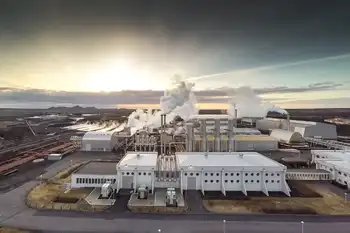
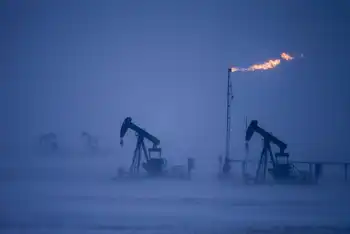
Exxon Mobil and Royal Dutch/Shell are expected to announce significant investments in separate natural gas projects in Qatar in the coming days, underscoring a vast and accelerating shift within the oil industry to capitalize on the growing demand for cleaner-burning fuels the world over, particularly in the United States.

Recently Exxon Mobil plans to sign an agreement with Qatar Petroleum to invest more than $10 billion to develop two new liquefied natural gas facilities in Qatar's prolific North Field, a person close to the negotiations said on Wednesday. Exxon Mobil owns a 30 percent stake in the project, called Qatargas II, and it would work on every aspect from producing the natural gas to building the so-called natural gas trains that would ship the gas after it is super-cooled into liquid form.

Most important, Exxon Mobil is expected to buy all the natural gas that would be produced once the project goes into operation in 2008, or about 2.8 billion cubic feet a day, for sale in the United States in a 25-year contract. That would translate to about 2.8 trillion British Thermal Units, or B.T.U.'s, the common measurement of the heating value of natural gas. In 2000, the United States consumed 22.8 trillion B.T.U.'s of natural gas.

Royal Dutch/Shell is expected to sign a $5 billion deal on Monday with Qatar's state-owned petroleum company to build one of the world's largest gas-to-liquid plants, which could use a relatively new technology to make cleaner-burning vehicle fuel from natural gas, people close to the deal said recently. Neither Exxon nor Shell would comment on the status of their negotiations with Qatar.

Shell's investment would be the largest of any major oil company in gas-to-liquid, or G.T.L., fuel production. The technology produces an odorless, clear fuel from natural gas that works in diesel engines, but contains almost none of the pollutants that traditional fuels emit, like sulfur. The plant would also be built in Qatar's North Field and is expected to come online in 2009, producing 140,000 barrels of fuel a day.

As industrialized countries struggle to reduce emissions, they are slaking their huge appetites for fuel with natural gas, which burns more cleanly than oil and coal. In the United States, demand for natural gas has rocketed as all the newest power plants have been designed to run on gas rather than other fossil fuels.

But for much of this year, the American companies and consumers have had to grapple with the lowest supplies of natural gas in 25 years. Improved technology has permitted oil and gas companies to deplete gas reserves at a faster rate than before. At the same time, some large new reserves of gas in the United States remain off limits because of environmental protection efforts.

Most industry experts expect domestic supplies of natural gas to remain tight for years to come. Crimped supplies have kept natural gas prices high most of this year, at or above $5 per million British thermal units. While that has pinched the economy, it has made expensive projects like those in Qatar economically feasible. And it has raised a host of questions about what dependence on foreign sources of gas would mean for the United States, given its overwhelming reliance on overseas sources of oil.

Qatar, however, has been a staunch, politically stable ally of the United States. It has the world's third largest reserves of natural gas after Iran and Russia, and is negotiating with other foreign investors.

Exxon Mobil already has other liquefied natural gas projects in Qatar that supply several countries. The South African company Sasol is constructing a 34,000-barrel-a-day G.T.L. plant in Qatar that is expected to come online in 2005. Together with ChevronTexaco, Sasol is negotiating with the government to build another 120,000-barrel-a-day G.T.L. plant.

Gas-to-liquids technology is still new, but the move to reduce emissions could help advance the investments in Qatar, said Jamal Qureshi, an analyst with PFC Energy, a Washington consulting firm.

Analysts are also optimistic about G.T.L. plants because they are one way for producers to take advantage of so-called stranded natural gas fields, those too far from a pipeline to export economically.

"The G.T.L. business is turning into a very viable operation," said Bruce Lanni, an analyst at A. G. Edwards.

Related News
Lump sum credit on electricity bills as soon as July

NL Hydro electricity credit delivers a one-time on-bill rebate from the rate stabilization fund, linked to oil prices and the Holyrood plant, via the Public Utilities Board, with payment deferrals and interest relief for customers.


Key Points

A one-time on-bill credit from the rate stabilization fund to cut power costs as oil prices remain low.

✅ One-time on-bill credit via the Public Utilities Board

✅ Funded by surplus in the rate stabilization fund

✅ Deferrals and 15 months interest assistance available


Most people who pay electricity bills will get a one-time credit as early as July.

The provincial government on Thursday outlined a new directive to the Public Utilities Board to provide a one-time credit for customers whose electricity rates are affected by the price of oil, part of an effort to shield ratepayers from Muskrat Falls overruns through recent agreements.

Electricity customers who are not a part of the Labrador interconnected system, including those using diesel on the north coast of Labrador, will receive the credit.

The credit, announced at a press conference Thursday morning, will come from the rate stabilization fund and comes as many customers have begun paying for Muskrat Falls on their bills, which has an estimated surplus of about $50 million because low oil prices mean NL Hydro has spent less on fuel for the Holyrood thermal generating station.

Normally a surplus would be paid out over a year, but customers this year will get the credit in a lump sum, as early as July, with the amount varying based on electricity usage.

"Given the difficult times many are finding themselves in, we believe an upfront, one-time on-bill credit would be much more helpful for customers than a small monthly decrease over the next 12 months," said Natural Resources Minister Siobhan Coady at the provincial government's announcement Thursday morning.

Premier Dwight Ball said with many households and businesses experiencing financial hardship, the one-time credit is meant to make life a little easier, noting that Nova Scotia's premier has urged regulators to reject a major hike elsewhere.

"We have requested that the board of commissioners of the Public Utilities Board, even as Nova Scotia's regulator approved a 14% increase recently, adopt a policy so that a credit will be dispersed immediately," Ball said.

"This is to help people when they need it the most.… We're doing what we can to support you."

The provincial government estimates someone whose power costs an average of $200 a month would get a one-time credit of about $130. Details of the plan will be left to the PUB.

Deferred payments allowed
Ball said the credit will make a "significant impact" on customers' July bills.

Both businesses and residential customers will also be able to defer payments, similar to Alberta's deferral program that shifted costs for unpaid bills, with up to $2.5 million in interest being waived on overdue accounts. Customers will be required to make agreed-upon monthly payments to their account, and there will be interest assistance for 15 months, beginning June 1.

Coady said customers can renegotiate their bills and defer payments, with the province picking up the tab for the interest.

"You can speak to a customer service agent and they will make accommodations, but you have to continue to make some version of a monthly payment," Coady

"The interest that may be accrued is going to be paid for by the provincial government, so if you're a business, a person, and you're having difficulty and you can't make what I would say is your normal payment, call your utility, make some arrangements."

Labrador's interconnected grid isn't affected by the price of oil, but those customers can take advantage of the interest relief.

Relief policies already put in place during the pandemic, like not disconnecting customers and providing options for more flexible bill payments, will continue, as utilities such as Hydro One reconnecting customers demonstrate in Ontario.

Credit not enough to support customers: PCs
While Ball said his government is doing what they can to help ratepayers, the opposition doesn't believe the announcement does enough to support those who need it.

Tony Wakeham, the Progressive Conservative MHA for Stephenville-Port au Port, said in a statement Thursday the credit simply gives people's money back to them, after the NL Consumer Advocate called an 18% rate hike unacceptable, and Newfoundland Power stands to benefit. 

"The Liberal government would like ratepayers to believe that they are getting electricity rate relief, but in reality, customers would have been entitled to receive the value of this credit anyway over a 12-month period. Furthermore, in providing a one-time credit, Newfoundland Power will also be able to collect an administrative fee, adding to their revenues," Wakeham said in the statement.

"People and businesses in this province are struggling to pay their utility bills, and the Liberal government should help them by putting extra money into their pockets, not by recycling an already existing program to the benefit of a large corporation."

Wakeham called on government to direct the PUB to lower Newfoundland Power's guaranteed rate of return to give cash refunds to customers, and for Newfoundland Power to waive its fees.


Related News

View more

California Regulators Face Calls for Action as Electricity Bills Soar

California Electricity Rate Hikes strain households as CPUC weighs fixed charges, utility profit caps, and stricter oversight. Wildfire mitigation, transmission upgrades, and aging grid costs push bills higher amid renewable integration and consumer protection debates.


Key Points

California power rates are rising from wildfire mitigation, transmission costs, and grid upgrades under CPUC review.

✅ CPUC mulls fixed charges to stabilize bills and rate design.

✅ Advocates push profit caps; utilities cite investment needs.

✅ Stronger oversight sought to curb waste and boost transparency.


California residents and consumer groups are demanding relief as their electricity bills continue to climb, putting increasing pressure on state regulators to intervene.  A recent op-ed in the San Francisco Chronicle highlights the growing frustration, emphasizing that California already has some of the highest electricity rates in the country, as coverage on why prices are soaring underscores, and these costs are only getting more burdensome.


Factors Driving High Bills

The rising electricity bills are attributed to several factors:

  • Wildfire Mitigation and Liability: Utility companies are investing heavily in wildfire prevention measures, such as vegetation management and infrastructure hardening. The costs of these initiatives, along with the increasing financial liabilities associated with wildfire risk, are being passed on to consumers.
  • Transmission Costs: California's vast geography and move towards renewable energy sources necessitate significant investments in transmission lines to deliver electricity from remote locations. These infrastructure costs also contribute to higher bills.
  • Aging Infrastructure: California's electricity grid is aging and requires upgrades and maintenance, and the expenses associated with these efforts are reflected in consumer rates.


Proposed Solutions and Debates

Consumer advocates and some lawmakers are calling for various actions to address the issue, including a potential revamp of electricity rates to clean the grid:

  • Fixed Charge Proposal: The California Public Utilities Commission (CPUC) is considering a proposal to introduce an income-based fixed charge on electricity bills. This change aims to make rates more predictable and encourage investment in renewable energy sources. However, opponents argue that it could disproportionately impact low-income households and discourage conservation.
  • Utility Profit Caps: Some advocate for capping utility companies' profits. They believe excessive profits should be returned to customers in the form of lower rates. However, utility companies counter that they need a certain level of profit to invest in infrastructure and maintain a reliable grid.
  • Increased Oversight: Consumer groups are calling for stricter oversight of utility company spending, and legislators are preparing to crack down on utility spending through upcoming votes as well. They demand transparency and want to ensure that funds collected from customers are being used for necessary investments and not for lobbying or excessive executive compensation.


Comparisons and National Implications

Similar concerns about rising utility bills are emerging in other parts of the country as more states transition to renewable energy and invest in infrastructure upgrades.

A report by the Energy Information Administration (EIA) shows that average residential electricity rates across the country have been on the rise for the past decade. While California currently ranks amongst the highest, major changes to electric bills are being debated, and other states are following suit, demonstrating the nationwide challenge of balancing affordability with necessary investments.


Uncertain Future

The California Public Utilities Commission is reviewing the fixed charge proposal and is expected to make a decision later this year, with income-based flat-fee utility bills moving closer in the process. The outcome of this decision and potential additional regulatory changes will have significant ramifications for California residents, and some lawmakers plan to overturn income-based charges if adopted, which could set a precedent for how other states handle the rising costs associated with the energy transition.


Related News

View more

SaskPower to buy more electricity from Manitoba Hydro

SaskPower-Manitoba Hydro Power Sale outlines up to 215 MW of clean hydroelectric baseload for Saskatchewan, supporting renewable energy targets, lower greenhouse gas emissions, and interprovincial transmission line capacity starting 2022 under a 30-year agreement.


Key Points

A long-term deal supplying up to 215 MW of hydroelectric baseload from Manitoba to Saskatchewan to cut emissions.

✅ Up to 215 MW delivered starting 2022 via new intertie

✅ Supports 40% GHG reduction target by 2030

✅ 30-year term; complements wind and solar integration


Saskatchewan's Crown-owned electric utility has made an agreement to buy more hydroelectricty from Manitoba.

A term sheet providing for a new long--term power sale has been signed between Manitoba Hydro and SaskPower which will see up to 215 megawatts flow from Manitoba to Saskatchewan, as new turbine investments advance in Manitoba, beginning in 2022.

SaskPower has two existing power purchase agreements with Manitoba Hydro that were made in 2015 and 2016, but the newest one announced Monday is the largest, as financial pressures at Manitoba Hydro continue.

SaskPower President and CEO Mike Marsh says in a news release that the clean, hydroelectric power represents a significant step forward when it comes to reaching the utility's goal of reducing greenhouse gas emissions by 40 per cent by 2030, aligning with progress on renewable electricity by 2030 initiatives.

Marsh says it's also reliable baseload electricity, which SaskPower will need as it adds more intermittent generation options like wind and solar.

SaskPower says a final legal contract for the sale is expected to be concluded by mid-2019 and be in effect by 2022, and the purchase agreement would last up to 30 years.

"Manitoba Hydro has been a valued neighbour and business partner over the years and this is a demonstration of that relationship," Marsh said in the news release.

The financial terms of the agreement are not being released, though SaskPower's latest annual report offers context on its finances.

Both parties say the sale will partially rely on the capacity provided by a new transmission line planned for construction between Tantallon, Sask. and Birtle, Man. that was previously announced in 2015 and is expected to be in service by 2021.

"Revenues from this sale will assist in keeping electricity rates affordable for our Manitoba customers, while helping SaskPower expand and diversify its renewable energy supply," Manitoba Hydro president and CEO Kelvin Shepherd said in the utility's own news release.

In 2015, SaskPower signed a 25 megawatt agreement with Manitoba Hydro that lasts until 2022. A 20-year agreement for 100 megawatts was signed in 2016 and comes into effect in 2020, and SaskPower is also exploring a purchase from Flying Dust First Nation to further diversify supply.

The deals are part of a memorandum of understanding signed in 2013 involving up to 500 megawatts.


Related News

View more

SaskPower reports $205M income in 2019-20, tables annual report

SaskPower 2019-20 Annual Report highlights $205M net income, grid capacity upgrades, emissions reduction progress, Chinook Power Station natural gas baseload, and wind and solar renewable energy to support Saskatchewan's Growth Plan and Prairie Resilience.


Key Points

SaskPower's 2019-20 results: $205M income, grid upgrades, emissions cuts, and new gas baseload with wind and solar.

✅ $205M net income, up $8M year-over-year

✅ Chinook Power Station adds stable natural gas baseload

✅ Increased grid capacity enables more wind and solar


SaskPower presented its annual report on Monday, with a net income of $205 million in 2019-20, even as Manitoba Hydro's financial pressures highlight regional market dynamics.

This figure shows an increase of $8 million from 2018-19, despite record provincial power demand that tested the grid.

“Reliable, sustainable and cost-effective electricity is crucial to achieving the economic goals laid out in the Government of Saskatchewan’s Growth Plan and the emissions reductions targets outlined in Prairie Resilience, our made-in-Saskatchewan climate change strategy,” Minister Responsible for SaskPower Dustin Duncan said.

In the last year, SaskPower has repaired and upgraded old infrastructure, invested in growth projects and increased grid capacity, including plans to buy more electricity from Manitoba Hydro to support reliability and benefiting from new turbine investments across the region.

The utility is also exploring procurement partnerships, including a plan to purchase power from Flying Dust First Nation to diversify supply.

“During the past year, we continued to move toward our target to reduce carbon dioxide emissions 40 per cent from 2005 levels by 2030, as part of efforts to double renewable electricity by 2030 across Saskatchewan,” SaskPower President and CEO Mike Marsh said. “The newly commissioned natural gas-fired Chinook Power Station will provide a stable source of baseload power while enabling the ongoing addition of intermittent renewable generation capacity, and exploring geothermal power alongside wind and solar generation.”


Related News

View more

Biden's Announcement of a 100% Tariff on Chinese-Made Electric Vehicles

U.S. 100% Tariff on Chinese EVs aims to protect domestic manufacturing, counter subsidies, and reshape the EV market, but could raise prices, disrupt supply chains, invite retaliation, and complicate climate policy and trade relations.


Key Points

A 100% import duty on Chinese EVs to boost U.S. manufacturing, counter subsidies, and address supply chain risks.

✅ Protects domestic EV manufacturing and jobs

✅ Counters alleged subsidies and IP concerns

✅ May raise prices, limit choice, trigger retaliation


President Joe Biden's administration recently made headlines with its announcement of a 100% tariff on Chinese electric vehicles (EVs), marking a significant escalation in trade tensions between the two economic powerhouses. The decision, framed as a measure to protect American industries and promote domestic manufacturing, has sparked debates over its potential impact on the EV market, global supply chains, and bilateral relations between the United States and China.

The imposition of a 100% tariff on Chinese-made EVs reflects the Biden administration's broader efforts to revitalize the American automotive industry and promote the transition to electric vehicles as part of its climate agenda and tighter EPA emissions rules that could accelerate adoption. By imposing tariffs on imported EVs, particularly those from China, the administration aims to incentivize domestic production and create jobs in the growing green economy, and to secure critical EV metals through allied supply efforts. Additionally, the tariff is seen as a response to concerns about unfair trade practices, including intellectual property theft and market distortions, allegedly perpetuated by Chinese companies.

However, the announcement has triggered a range of reactions from various stakeholders, with both proponents and critics offering contrasting perspectives on the potential consequences of such a policy. Proponents argue that the tariff will help level the playing field for American automakers, who face stiff competition from Chinese companies benefiting from government subsidies and lower production costs. They contend that promoting domestic manufacturing of EVs will not only create high-quality jobs but also enhance national security by reducing dependence on foreign supply chains at a time when an EV inflection point is approaching.

On the other hand, critics warn that the 100% tariff on Chinese-made EVs could have unintended consequences, including higher prices for consumers, as seen in the UK EV prices and Brexit debate, disruptions to global supply chains, and retaliatory measures from China. Chinese EV manufacturers, such as NIO, BYD, and XPeng, have been gaining momentum in the global market, offering competitive products at relatively affordable prices. The tariff could limit consumer choice at a time when U.S. EV market share dipped in Q1 2024, potentially slowing the adoption of electric vehicles and undermining efforts to combat climate change and reduce greenhouse gas emissions.

Moreover, the tariff announcement comes at a sensitive time for U.S.-China relations, which have been strained by various issues, including trade disputes, human rights concerns, and geopolitical tensions. The imposition of tariffs on Chinese-made EVs could further exacerbate bilateral tensions, potentially leading to retaliatory measures from China and escalating trade frictions. As the world's two largest economies, the United States and China have significant economic interdependencies, and any escalation in trade tensions could have far-reaching implications for global trade and economic stability.

In response to the Biden administration's announcement, Chinese officials have expressed concerns and called for dialogue to resolve trade disputes through negotiation and mutual cooperation. China has also emphasized its commitment to fair trade practices and compliance with international rules and regulations governing trade.

Moving forward, the Biden administration faces the challenge of balancing its domestic priorities with the need to maintain constructive engagement with China and other trading partners, even as EV charging networks scale under its electrification push. While promoting domestic manufacturing and protecting American industries are legitimate policy goals, achieving them without disrupting global trade and undermining diplomatic relations requires careful deliberation and strategic foresight.

In conclusion, President Biden's announcement of a 100% tariff on Chinese-made electric vehicles reflects his administration's commitment to revitalizing American industries and promoting domestic manufacturing. However, the decision has raised concerns about its potential impact on the EV market, global supply chains, and U.S.-China relations. As policymakers navigate these complexities, finding a balance between protecting domestic interests and fostering international cooperation will be crucial to achieving sustainable economic growth and addressing global challenges such as climate change.


Related News

View more

More Managers Charged For Price Fixing At Ukraine Power Producer

DTEK Rotterdam+ price-fixing case scrutinizes alleged collusion over coal-based electricity tariffs in Ukraine, with NABU probing NERC regulators, market manipulation, consumer overpayment, and wholesale pricing tied to imported coal benchmarks.


Key Points

NABU probes alleged DTEK-NERC collusion to inflate coal power tariffs via Rotterdam+; all suspects deny wrongdoing.

✅ NABU alleges tariff manipulation tied to coal import benchmarks.

✅ Four DTEK execs and four NERC officials reportedly charged.

✅ Probe centers on 2016-2017 overpayments; defendants contest.


Two more executives of DTEK, Ukraine’s largest private power and coal producer and recently in energy talks with Octopus Energy, have been charged in a criminal case on August 14 involving an alleged conspiracy to fix electricity prices with the state energy regulator, Interfax reported.

They are Ivan Helyukh, the CEO of subsidiary DTEK Grid, which operates as Ukraine modernizes its network alongside global moves toward a smart electricity grid, and Borys Lisoviy, a top manager of power generation company Skhidenergo, according to Kyiv-based Concorde Capital investment bank.

Ukraine’s Anti-Corruption Bureau (NABU) alleges that now four DTEK managers “pressured” and colluded with four regulators at the National Energy and Utilities Regulatory Commission to manipulate tariffs on electricity generated from coal that forced consumers to overpay, reflecting debates about unjustified profits in the UK, $747 million in 2016-2017.


DTEK allegedly benefited $560 million in the scheme.

All eight suspects are charged with “abuse of office” and deny wrongdoing, similar to findings in a B.C. Hydro regulator report published in Canada.

There is “no legitimate basis for suspicions set out in the investigation,” DTEK said in an August 8 statement.

Suspect Dmytro Vovk, the former head of NERC, dismissed the investigation as a “wild goose chase” on Facebook.

In separate statements over the past week, DTEK said the managers who are charged have prematurely returned from vacation to “fully cooperate” with authorities in order to “help establish the truth.”

A Kyiv court on August 14 set bail at $400,000 for one DTEK manager who wasn’t named, as enforcement actions like the NT Power penalty highlight regulatory consequences.

The so-called Rotterdam+ pricing formula that NABU has been investigating since March 2017, similar to federal scrutiny of TVA rates, was in place from April 2016 until July of this year.

It based the wholesale price of electricity by Ukrainian thermal power plants on coal prices set in the Rotterdam port plus delivery costs to Ukraine.

NABU alleges that at certain times it has not seen documented proof that the purchased coal originated in Rotterdam, insisting that there was no justification for the price hikes, echoing issues around paying for electricity in India in some markets.

Ukraine started facing thermal-coal shortages after fighting between government forces and Russia-backed separatists in the eastern part of the country erupted in April 2014. A vast majority of the anthracite-coal mines on which many Ukrainian plants rely are located on territory controlled by the separatists.

Overnight, Ukraine went from being a net exporter of coal to a net importer and started purchasing coal from as far away as South Africa and Australia.


Related News

View more

Sign Up for Electricity Forum’s Newsletter

Stay informed with our FREE Newsletter — get the latest news, breakthrough technologies, and expert insights, delivered straight to your inbox.

Electricity Today T&D Magazine Subscribe for FREE

Stay informed with the latest T&D policies and technologies.
  • Timely insights from industry experts
  • Practical solutions T&D engineers
  • Free access to every issue

Download the 2025 Electrical Training Catalog

Explore 50+ live, expert-led electrical training courses –

  • Interactive
  • Flexible
  • CEU-cerified