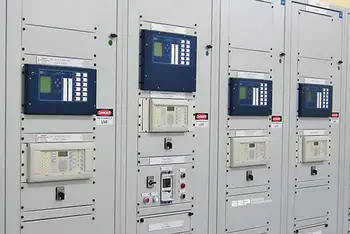
Protective Relay Training - Basic
Our customized live online or in‑person group training can be delivered to your staff at your location.
- Live Online
- 12 hours Instructor-led
- Group Training Available
Regular Price:
$699
Coupon Price:
$599
When it comes to determining the future of coal-fired power plants in the state, everyone wants a say.
But who gets the first crack at it and who has the final authority?
Those are the questions state officials and environmentalists will hash out when the board of the Idaho Department of Environmental Quality meets to discuss the state's participation in a federal mercury emission program. Both the board and the governor ultimately will play a role in the decision, as will the Legislature. But a petition submitted by the Idaho Conservation League and several Magic Valley groups has the board taking the first step - something state officials are questioning.
"We don't know if the petition is legal," said Brad Hoaglun, spokesman for Gov. Jim Risch. "Can the board even make the decision - that's the question."
The citizens' organizations requested the DEQ board get the process rolling to keep the state out of the federal program n one that allows energy companies to buy and sell credits for mercury emissions from coal-fired power plants. Opting out of the federal program essentially prohibits the building of coal-fired power plants - like the facility originally proposed for Jerome County - in Idaho. Mercury has been linked to neurological disorders and proves particularly harmful to pregnant women and small children.
The state has to provide the U.S. Environmental Protection Agency with an answer by November. Otherwise, the federal government will enroll the state with or without Idaho's approval.
"Our concern is that this is the most timely mechanism for the board to deal with this," said Courtney Washburn with the conservation group.
Attorneys for DEQ and the governor's office aren't sure the board can act on the petition.
Last year, the DEQ began drafting a rule to join the federal program at the request of Gov. Dirk Kempthorne. At the time, Kempthorne commented that he didn't want to tie the hands of future administrations by opting out of the mercury program. The EPA, however, pulled its rule back for reconsideration from October 2005 until the end of May n forcing DEQ to begin its rule-making process anew under a different governor.
Washburn says the groups involved with the petition don't want to see a last-minute decision without sufficient public input.
The 2006 Legislature enacted a two-year moratorium on the building or permitting of coal-fired power plants in the state. Legislators also instructed an interim committee to update the state's 1982 energy plan.
The moratorium came under pressure from Magic Valley residents opposed to a 600-megawatt coal-fired power plant planned for Jerome County. Sempra Generation, the California-based energy company backing the plant, withdrew its plans but still intends to sell the rights to the facility.
Typically, the governor has to give his OK before the department can draft a temporary rule, like the one required on the mercury program, said Martin Bauer, with DEQ's air quality division. After the temporary rule goes out for public comment, it comes back before DEQ's board members, providing a system of checks and balances. Eventually, the Legislature approves the rule if it passes all the steps along the way.
But, the governor signs off on that first step, Hoaglun said. Risch plans to attend the DEQ board meeting June 22 in Coeur d'Alene.
"I'm sure there will be a dialogue," he said. "The board is certainly involved in the process."
DEQ's board comprises seven members, including two Magic Valley representatives: Randy MacMillan of Clear Springs Foods Inc., and Donald Chisholm, a private attorney in Burley. The governor appoints DEQ board members with the consent of the state Senate. Members serve four-year terms.
"It's certainly the province of the DEQ board to answer the question," said Bill Eddie, an attorney who helped draft the petition. "They decide on all the other air quality rules."
Related News
Canada and Manitoba invest in new turbines
Manitoba Clean Electricity Investment will upgrade hydroelectric turbines, expand a 230 kV transmission network, and…
View more

As peak wildfire season nears, SDG&E completes work on microgrid in Ramona
SDG&E Ramona Microgrid delivers renewable energy and battery storage for wildfire mitigation, grid resilience, and…
View more
How Should California Wind Down Its Fossil Fuel Industry?
California Managed Decline of Fossil Fuels aligns oil phaseout with carbon neutrality, leveraging ZEV adoption,…
View more

Crews have restored power to more than 32,000 Gulf Power customers
Gulf Power Hurricane Michael Response details rapid power restoration, grid rebuilding, and linemen support across…
View more

SaskPower eyes buying $300M worth of electricity from Flying Dust First Nation
SaskPower-Flying Dust flare gas power deal advances a 20 MW, 20-year Power Purchase Agreement, enabling…
View more
China to build 525-MW hydropower station on Yangtze tributary
Baima Hydropower Station advances China renewable energy on the Wujiang River, a Yangtze tributary in…
View more
Sign Up for Electricity Forum’s Newsletter
Stay informed with our FREE Newsletter — get the latest news, breakthrough technologies, and expert insights, delivered straight to your inbox.
Electricity Today T&D Magazine Subscribe for FREE

Stay informed with the latest T&D policies and technologies.
- Timely insights from industry experts
- Practical solutions T&D engineers
- Free access to every issue
