Shanghai nights turn darker to cope with temporary power shortage

By XINHUA NEWS AGENCY


Substation Relay Protection Training

Our customized live online or in‑person group training can be delivered to your staff at your location.

  • Live Online
  • 12 hours Instructor-led
  • Group Training Available
Regular Price:
$699
Coupon Price:
$599
Reserve Your Seat Today
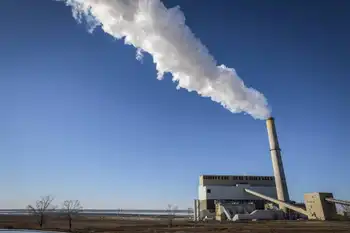
July 30, 2003-- Shanghai municipal government has ordered the suspension of all scenic lighting from Tuesday evening as an energy shortage in China's biggest industrial and commercial center is exacerbated by hot summer weather.

Municipal officials said the heatwave and the rapid economic development had exerted unprecedented pressure on the power supply in the city.

The halt of scenic illumination in Shanghai would lessen to some extent the insufficient electricity supply at nights in the city.

Meanwhile, the municipal government has also decided to restrict electricity use at some companies and construction sites.

As the temperature last week soared to a record high 39.6 degrees Celsius in Shanghai, the overload of 13.62 million kilowatts a day had far exceeded the city's power supply capacity, officials said.

Authorities had to resort to blackouts during the peak hours of energy consumption after electric power experts warned of a possible breakdown of its power grid if the overload continued.

Though the electricity generated by the Three Gorges Project began to feed Shanghai this month, the city still needs another 400,000 kilowatts per day.

Preliminary statistics show that the energy shortage has affected the electricity use of more than 1,000 companies in the city.

Power shortages have also been reported in other parts of China, especially the eastern coastal provinces like Zhejiang, Jiangsu and Anhui, and southern Guangdong province.

Related News
New Program Set to Fight for 'Electricity Future That Works for People and the Planet'

Energy Justice Program drives a renewables-based transition, challenging utility monopolies with legal action, promoting rooftop solar, distributed energy, public power, and climate justice to decarbonize the grid and protect communities and wildlife nationwide.


Key Points

A climate justice initiative advancing renewables, legal action, and public power to challenge utility monopolies.

✅ Challenges utility barriers to rooftop solar and distributed energy

✅ Advances state and federal policies for equitable, public power

✅ Uses litigation to curb fossil fuel dependence and protect communities


The Center for Biological Diversity on Monday rolled out a new program to push back against the nation's community- and wildlife-harming energy system that the climate advocacy group says is based on fossil fuels and a "centralized monopoly on power."

The goal of the new effort, the Energy Justice Program, is to help forge a path towards a just and renewables-based energy future informed by equitable regulation principles.

"Our broken energy system threatens our climate and our future," said Jean Su, the Energy Justice Program's new director, in a statement. "Utilities were given monopolies to ensure public access to electricity, but these dinosaur corporations are now hurting the public interest by blocking the clean energy transition, including via coal and nuclear subsidy schemes that profit off the fossil fuel era."

"In this era of climate catastrophe," she continued, "we have to stop these outdated monopolies and usher in a new electricity future that works for people and the planet."

To meet those goals, the new program will pursue a number of avenues, including using legal action to fight utilities' obstruction of clean energy efforts, helping communities advance local solar programs through energy freedom strategies in the South, and crafting energy policies on the state, federal, and international levels in step with commitments from major energy buyers to achieve a 90% carbon-free goal by 2030.

Some of that work is already underway. In June the Center filed a brief with a federal court in a bid to block Arizona power utility Salt River Project from slapping a 60-percent electricity rate hike on rooftop solar customers—amid federal efforts to reshape electricity pricing that critics say are being rushed—a move the group described (pdf) as an obstacle to achieving "the energy transition demanded by climate science."

The Center is among the groups in Energy Justice NC. The diverse coalition seeks to end the energy stranglehold in North Carolina held by Duke Energy, which continues to invest in fossil fuel projects even as it touts clean energy and grid investments in the region.

The time for a new energy system, says the Energy Justice Program, is now, as climate change impacts increasingly strain the grid.

"Amid this climate and extinction emergency," said Su, "the U.S. can't afford to stick with the same centralized, profit-driven electricity system that drove us here in the first place. We have to seize this once-in-a-generation opportunity to design a new system of accountable, equitable, truly public power."


Related News

View more

First Nuclear Reactors Built in 30 Years Take Shape at Georgia Power Plant

Vogtle Units 3 and 4 are Westinghouse AP1000 nuclear reactors under construction in Waynesboro, Georgia, led by Southern Nuclear, Georgia Power, and Bechtel, adding 2,234 MWe of carbon-free baseload power with DOE loan guarantees.


Key Points

Vogtle Units 3 and 4 are AP1000 reactors in Georgia delivering 2,234 MWe of low-carbon baseload electricity.

✅ Each unit: Westinghouse AP1000, 1,117 MWe capacity.

✅ Managed by Southern Nuclear, built by Bechtel.

✅ DOE loan guarantees support financing and risk.


Construction is ongoing for two new nuclear reactors, Units 3 and 4, at Georgia Power's Alvin W. Vogtle Electric Generating Plant in Waynesboro, Ga. the first new nuclear reactors to be constructed in the United Stated in 30 years, mirroring a new U.S. reactor startup that will provide electricity to more than 500,000 homes and businesses once operational.

Construction on Unit 3 started in March 2013 with an expected completion date of November 2021. For Unit 4, work began in November 2013 with a targeted delivery date of November 2022. Each unit houses a Westinghouse AP1000 (Advanced Passive) nuclear reactor that can generate about 1,117 megawatts (MWe). The reactor pressure vessels and steam generators are from Doosan, a South Korean firm.

The pouring of concrete was delayed to 2013 due to the United States Nuclear Regulatory Commission issuing a license amendment which permitted the use of higher-strength concrete for the foundations of the reactors, eliminating the need to make additional modifications to reinforcing steel bar.

The work is occurring in the middle of an operational nuclear facility, and the construction area contains many cranes and storage areas for the prefabricated parts being installed. Space also is needed for various trucks making deliveries, especially concrete.

The reactor buildings, circular in shape, are several hundred feet apart from one another and each one has an annex building and a turbine island structure. The estimated total price for the project is expected in the $18.7 billion range. Bechtel Corporation, which built Units 1 and 2, was brought in January 2017 to take over the construction that is being overseen by Southern Nuclear Operating Company (SNOC), which operates the plant.

The project will require the equivalent of 3,375 miles of sidewalk; the towers for Units 3 and 4 are 60 stories high and have two million pound CA modules; the office space for both units is 300,000 sq. ft.; and there are more than 8,000 construction workers over 30 percent being military veterans. The new reactors will create 800 permanent jobs.

Southern Nuclear and Georgia Power took over management of the construction project in 2017 after Westinghouse's Chapter 11 bankruptcy. The plant, built in the late 1980s with Unit 1 becoming operational in 1987 and Unit 2 in 1989, is jointly owned by Georgia Power (45.7 percent), Oglethorpe Power Corporation (30 percent), Municipal Electric Authority of Georgia (22.7 percent) and Dalton Utilities (1.6 percent).

"Significant progress has been made on the construction of Vogtle 3 and 4 since the transition to Southern Nuclear following the Westinghouse bankruptcy," said Paul Bowers, Chairman, President and CEO of Georgia Power. "While there will always be challenges in building the first new nuclear units in this country in more than 30 years, we remain focused on reducing project risk and maintaining the current project momentum in order to provide our customers with a new carbon-free energy source that will put downward pressure on rates for 60 to 80 years."

The Vogtle and Hatch nuclear plants currently provide more than 20 percent of Georgia's annual electricity needs. Vogtle will be the only four-unit nuclear facility in the country. The energy is needed to meet the rising demand for electricity as the state expects to have more than four million new residents by 2030.

The plant's expansion is the largest ongoing construction project in Georgia and one of the largest in the state's history, while comparable refurbishments such as the Bruce reactor overhaul progress in Canada. Last March an agreement was signed to secure approximately $1.67 billion in additional Department of Energy loan guarantees. Georgia Power previously secured loan guarantees of $3.46 billion.

The signing highlighted the placement of the top of the containment vessel for Unit 3, echoing the Hinkley Point C roof lift seen in the U.K., which signified that all modules and large components had been placed inside it. The containment vessel is a high-integrity steel structure that houses critical plant components. The top head is 130 ft. in diameter, 37 ft. tall, and weighs nearly 1.5 million lbs. It is comprised of 58 large plates, welded together with each more than 1.5 in. thick.

"From the very beginning, public and private partners have stood with us," said Southern Company Chairman, President and CEO Tom Fanning. "Everyone involved in the project remains focused on sustaining our momentum."

Bechtel has completed more than 80 percent of the project, and the major milestones for 2019 have been met, aligning with global nuclear milestones reported across the industry, including setting the Unit 4 pressurizer inside the containment vessel last February, which will provide pressure control inside the reactor coolant system. More specialized construction workers, including craft labor, have been hired via the addition of approximately 300 pipefitters and 350 electricians since November 2018. Another 500 to 1,000 craft workers have been more recently brought in.

A key accomplishment occurred last December when 1,300 cu. yds. of concrete were poured inside the Unit 4 containment vessel during a 21-hour operation that involved more than 100 workers and more than 120 truckloads of concrete. In 2018 alone, more than 23,000 cu. yds. of concrete were poured part of the nearly 600,000 cu. yds. placed since construction started, and the installation of more than 16,200 yds. of piping.

Progress also has been solid for Unit 3. Last January the integrated head package (IHP) was set inside the containment vessel. The IHP, weighing 475,000 lbs. and standing 48 ft. tall, combines several separate components in one assembly and allows the rapid removal of the reactor vessel head during a refueling outage. One month earlier, the placement of the third and final ring for containment vessel, and the placement of the fourth and final reactor coolant pump (RCP, 375,000 lbs.), were executed.

"Weighing just under 2 million pounds, approximately 38 feet high and with a diameter of 130 feet, the ring is the fourth of five sections that make up the containment vessel," stated a Georgia Power press release. "The RCPs are mounted to the steam generator and serve a critical part of the reactor coolant system, circulating water from the steam generator to the reactor vessel, allowing sufficient heat transfer for safe plant operation. In the same month, the Unit 3 shield building with additional double-decker panels, was placed.

According to a construction update from Georgia Power, a total of eight six-panel sections have been placed, with each one measuring 20 ft. tall and 114 ft. wide, weighing up to 300,000 lbs. To date, more than half of the shield building panels have been placed for Unit 3. The shield building panels, fabricated in Newport News, Va., provide structural support to the containment cooling water supply and protect the containment vessel, which houses the reactor vessel.

Building the reactors is challenging due to the design, reflecting lessons from advanced reactors now being deployed. Unit 3 will have 157 fuel assemblies, with each being a little over 14 ft. long. They are crucial to fuelling the reactor, and once the initial fueling is completed, nearly one-third of the fuel assemblies will be replaced for each re-fuelling operation. In addition to the Unit 3 containment top, placement crews installed three low-pressure turbine rotors and the generator rotor inside the unit's turbine building.

Last November, major systems testing got underway at Unit 3 as the site continues to transition from construction toward system operations. The Open Vessel Testing will demonstrate how water flows from the key safety systems into the reactor vessel ensuring the paths are not blocked or constricted.

"This is a significant step on our path towards operations," said Glen Chick, Vogtle 3 & 4 construction executive vice president. "[This] will prepare the unit for cold hydro testing and hot functional testing next year both critical tests required ahead of initial fuel load."

It also confirms that the pumps, motors, valves, pipes and other components function as designed, a reminder of how issues like the South Carolina plant leak can disrupt operations when systems falter.

"It follows the Integrated Flush process, which began in August, to push water through system piping and mechanical components that feed into the Unit 3 reactor vessel and reactor coolant loops for the first time," stated a press release. "Significant progress continues ... including the placement of the final reinforced concrete portion of the Unit 4 shield building. The 148-cubic yard placement took eight hours to complete and, once cured, allows for the placement of the first course of double-decker panels. Also, the upper inner casing for the Unit 3 high-pressure turbine has been placed, signifying the completion of the centerline alignment, which will mean minimal vibration and less stress on the rotors during operations, resulting in more efficient power generation."

The turbine rotors, each weighing approximately 200 tons and rotating at 1,800 revolutions per-minute, pass steam through the turbine blades to power the generator.

The placement of the middle containment vessel ring for Unit 4 was completed in early July. This required several cranes to work in tandem as the 51-ft. tall ring weighed 2.4 million lbs. and had dozens of individual steel plates that were fabricated on site.

A key part of the construction progress was made in late July with the order of the first nuclear fuel load for Unit 3, which consists of 157 fuel assemblies with each measuring 14 ft. tall.

On May 7, Unit 3 was energized (permanently powered), which was essential to perform the testing for the unit. Prior to this, the plant equipment had been running on temporary construction power.

"[This] is a major first step in transitioning the project from construction toward system operations," Chick said.

Construction of the north side of the Unit 3 Auxiliary Building (AB) has progressed with both the floor and roof modules being set. Substantial work also occurred on the steel and concrete that forms the remaining walls and the north AB roof at elevation.


Related News

View more

How Ukraine Will Keep the Lights On This Winter

Ukraine Winter Energy Strategy strengthens the power grid through infrastructure repairs, electricity imports, renewable integration, nuclear output, and conservation to ensure reliable heating, blackout mitigation, and grid resilience with international aid, generators, and transmission lines.


Key Points

A wartime plan to stabilize Ukraine's grid via repairs, imports, renewables, and nuclear to deliver reliable electricity.

✅ Repairs, imports, and demand management stabilize the grid.

✅ Renewables and nuclear reduce outage risks in winter.

✅ International aid supplies transformers, generators, expertise.


As Ukraine braces for the winter months, the question of how the country will keep the lights on has become a pressing concern, as the country fights to keep the lights on amid ongoing strikes. The ongoing war with Russia has severely disrupted Ukraine's energy infrastructure, leading to widespread damage to power plants, transmission lines, and other critical energy facilities. Despite these challenges, Ukraine has been working tirelessly to maintain its energy supply during the cold winter months, which are essential not only for heating but also for the functioning of homes, businesses, hospitals, and schools. Here's a closer look at the steps Ukraine is taking to keep the lights on this winter and ensure that its people have access to reliable electricity.

1. Repairing Damaged Infrastructure

One of the most immediate concerns for Ukraine's energy sector is the extensive damage inflicted on its power infrastructure by Russian missile and drone attacks. Since the war began in 2022, Ukraine has faced repeated attacks targeting power plants, substations, and power lines, including strikes on western regions that caused widespread outages across communities. These attacks have left parts of the country with intermittent or no electricity, and repairing the damage has been a monumental task.

However, Ukraine has made significant progress in restoring its energy infrastructure. Government agencies and energy companies have been working around the clock to repair power plants and transmission networks. Teams of technicians and engineers have been deployed to restore power to areas that have been hardest hit by Russian attacks, often under difficult and dangerous conditions. While some areas may continue to face outages, efforts to rebuild the energy grid are ongoing, with the government prioritizing critical infrastructure to ensure that hospitals, military facilities, and essential services have access to power.

2. Energy Efficiency and Conservation Measures

To cope with reduced energy availability and avoid overloading the grid, Ukrainian authorities have been encouraging energy efficiency and conservation measures. These efforts are particularly important during the winter when demand for electricity and heating is at its peak.

The government has implemented energy-saving programs, urging citizens and businesses to reduce their consumption and adopt new energy solutions that can be deployed quickly. Measures include limiting electricity use during peak hours, setting thermostats lower in homes and businesses, and encouraging the use of energy-efficient appliances. Ukrainian officials have also been promoting public awareness campaigns to educate people about the importance of energy conservation, which is crucial to avoid grid overload and ensure the distribution of power across the country.

3. Importing Energy from Abroad

To supplement domestic energy production, Ukraine has been working to secure electricity imports from neighboring countries. Ukraine has long been interconnected with energy grids in countries such as Poland, Slovakia, and Hungary, which allows it to import electricity during times of shortage. In recent months, Ukraine has ramped up efforts to strengthen these connections, ensuring that it can import electricity when domestic production is insufficient to meet demand, and in a notable instance, helped Spain during blackouts through coordinated cross-border support.

While electricity imports from neighboring countries provide a temporary solution, this is not without its challenges. The cost of importing electricity can be high, and the country’s ability to import large amounts of power depends on the availability of energy in neighboring nations; officials say there are electricity reserves and no scheduled outages if strikes do not resume. Ukraine has been actively seeking new energy partnerships and working with international organizations to secure access to electricity, including exploring the potential for importing energy from the European Union.

4. Harnessing Renewable Energy Sources

Another key part of Ukraine's strategy to keep the lights on this winter is tapping into renewable energy sources, particularly wind and solar power. While Ukraine’s energy sector has historically been dependent on fossil fuels, the country has been making strides in integrating renewable energy into its grid. Solar and wind energy are particularly useful in supplementing the national grid, especially during the winter months when demand is high.

Renewable energy sources are less vulnerable to missile strikes compared to traditional power plants, making them an attractive option for Ukraine's energy strategy. Although renewable energy currently represents a smaller portion of Ukraine’s overall energy mix, its contribution is expected to increase as the country invests more in clean energy infrastructure. In addition to reducing dependence on fossil fuels, this shift is aligned with Ukraine’s broader environmental goals and will be important for the long-term sustainability of its energy sector.

5. International Aid and Support

International support has been crucial in helping Ukraine keep the lights on during the war. Western allies, including the European Union and the United States, have provided financial assistance, technical expertise, and equipment to help restore the energy infrastructure, though Washington recently ended some grid restoration support as priorities shifted. In addition to rebuilding power plants and transmission lines, Ukraine has received advanced energy technologies and materials to strengthen its energy security.

The U.S. has sent electrical transformers, backup generators, and other essential equipment to help Ukraine restore its energy grid. The European Union has also provided both financial and technical assistance, supporting Ukraine’s efforts to integrate more renewable energy into its grid and enhancing the country’s ability to import electricity from neighboring states.

6. The Role of Nuclear Energy

Ukraine’s nuclear energy plants play a critical role in the country’s electricity supply. Before the war, nuclear power accounted for around 50% of Ukraine’s total electricity generation, and for communities near the front line, electricity is civilization that depends on reliable baseload. Despite the ongoing conflict, Ukrainian nuclear plants have remained operational, though they face heightened security risks due to the proximity of active combat zones.

In the winter months, nuclear plants are expected to continue providing a significant portion of Ukraine's electricity, which is essential for meeting the country's heating and power needs. The government has made efforts to ensure the safety and security of these plants, which remain a vital part of the country's energy strategy.

Keeping the lights on in Ukraine during the winter of 2024 is no small feat, given the war-related damage to energy infrastructure, rising energy demands, and ongoing security risks. However, the Ukrainian government has taken proactive steps to address these challenges, including repairing critical infrastructure, importing energy from neighboring countries, promoting energy efficiency, and expanding renewable energy sources. International aid and the continued operation of nuclear plants also play a vital role in ensuring a reliable energy supply. While challenges remain, Ukraine’s resilience and determination to overcome its energy crisis are clear, and the country is doing everything it can to keep the lights on through this difficult winter.


Related News

View more

Electric vehicle sales triple in Australia despite lack of government support

Australian Electric Vehicle Sales tripled in 2019 amid expanding charging infrastructure and more models, but market share remains low, constrained by limited government policy, weak incentives, and absent emissions standards despite growing ultra-fast chargers.


Key Points

EV units sold in Australia; in 2019 they tripled to 6,718, but market share was just 0.6%.

✅ Sales rose from 2,216 (2018) to 6,718 (2019); ~80% were BEVs.

✅ Public charging sites reached 2,307; fast chargers up 40% year-on-year.

✅ Policy gaps and absent standards limit model supply and EV uptake.


Sales of electric vehicles in Australia tripled in 2019 despite a lack of government support, according to the industry’s peak body.

The country’s network of EV charging stations was also growing, the Electric Vehicle Council’s annual report found, including a rise in the number of faster charging stations that let drivers recharge a car in about 15 minutes.

But the report, released on Wednesday, found the market share for electric vehicles was still only 0.6% of new vehicle sales – well behind the 2.5% to 5% in other developed countries.

The chief executive of the council, Behyad Jafari, said the rise in sales was down to more models becoming available. There are now 28 electric models on sale, with eight priced below $65,000.

Six more were due to arrive before the end of 2021, including two priced below $50,000, the council’s report said.

“We have repeatedly heard from car companies that they were planning to bring vehicles here, but Australia doesn’t have that policy support.”

The Morrison government promised a national electric vehicle strategy would be finalised by the middle of this year, but the policy has been delayed. The prime minister, Scott Morrison, last year accused Labor of wanting to “end the weekend” and force people out of four-wheel drives after the opposition set a target of 50% of new car sales being electric by 2030.

Jafari cited the Kia e-Niro – an award-winning electric SUV that was being prepared for an Australian launch, but is now reportedly on hold because the manufacturer favoured shipping to countries with emissions standards.

The council’s members include BMW, Nissan, Hyundai and Harley Davidson, as well as energy, technology and charging infrastructure companies.

Sales of electric vehicles – which include plug-in hybrids – went from 2,216 in 2018 to 6,718 in 2019, the report said. Jafari said about 80% of those sales were all-electric vehicles.

There have been 3,226 electric vehicles sold in 2020, the report said, despite an overall drop of 20% in vehicle sales due to the Covid-19 pandemic, while U.S. EV sales have surged into 2024.

Jafari said: “Our report is showing that Australian consumers want these cars.

“There is no controversy that the future of the industry is electric, but at the moment the industry is looking at different markets. We want policies that show [Australia] is going on this journey.”

Government agency data has forecast that half the new cars sold will be electric by 2035, underscoring that the age of electric cars is arriving even if there is no policy to support their uptake.

Manufacturers currently selling electric cars in Australia are Nissan, Hyundai, Mitsubishi, Tesla, Volvo, Porsche, Audi, BMW, Mercedes, Jaguar and Renault, the report said.

Jafari said most G20 countries had emissions standards in place for vehicles sold and incentives in place to support electric vehicles, such as rebates or exemptions from charges. This hadn’t happened in Australia, he said.

The report said: “Globally, carmakers are rolling out more electric vehicle models as the electric car market expands, but so far production cannot keep up with demand. This means that without policy signals, Australians will continue to be denied access to the full global range of electric vehicles.”

On Tuesday, one Australian charging provider, Evie Networks, opened an ultra-fast station at a rest stop at Campbell Town in Tasmania – between Launceston and Hobart.

The company said the station would connect EV owners in the state’s north and south and the two 350kW chargers could recharge a vehicle in 15 minutes, highlighting whether grids have the power to charge EVs at scale. Two more sites were planned for Tasmania, the company said.

A Tasmanian government grant to support electric vehicle charging had helped finance the site. Evie was also supported with a $15m grant from the federal government’s Australian Renewable Energy Agency.

According to the council report, Australia now has 2,307 public charging stations, including 357 fast chargers – a rise of 40% in the past year.

A survey of 2,900 people in New South Wales, the ACT, Victoria and South Australia, carried out by NRMA, RACV and RAA on behalf of the council, found the main barriers to buying an electric vehicle were concerns over access to charging points, higher prices and uncertainty over driving range.

Consumers favoured electric vehicles because of their environmental footprint, lower maintenance costs and vehicle performance.

The report said the average battery range of electric vehicles available in Australia was 400km, but almost 80% of people thought the average was less.

According to the survey, 56% of Australians would consider an electric car when they next bought a vehicle, and in the UK, EV inquiries soared during a fuel supply crisis.

“We are far behind, but it is surmountable,” Jafari said.

The council report also rated state and territories on the policies that supported its industry and found the ACT was leading, followed by NSW and Queensland.

A review of commercial electric vehicle use found public electric bus trials were planned or under way in Queensland, NSW, WA, Victoria and ACT. There are now more than 400,000 electric buses in use around the globe.


Related News

View more

IEA warns fall in global energy investment may lead to shortages

Global Energy Investment Decline risks future oil and electricity supply, says the IEA, as spending on upstream, coal plants, and grids falls while renewables, storage, and flexible generation lag in the energy transition.


Key Points

Multi-year cuts to oil, power, and grid spending that increase risks of future supply shortages and market tightness.

✅ IEA warns underinvestment risks oil supply squeeze

✅ China and India slow coal plant additions; renewables rise

✅ Batteries aid flexibility but cannot replace seasonal storage


An almost 20 per cent fall in global energy investment over the past three years could lead to oil and electricity shortages, as surging electricity demand persists, and there are concerns about whether current business models will encourage sufficient levels of spending in the future, according a new report.

The International Energy Agency’s second annual IEA benchmark analysis of energy investment found that while the world spent $US1.7 trillion ($2.2 trillion) on fossil-fuel exploration, new power plants and upgrades to electricity grids last year, with electricity investment surpassing oil and gas even as global energy investment was down 12 per cent from a year earlier and 17 per cent lower than 2014.

While the IEA said continued oversupply of oil and electricity globally would prevent any imminent shock, falling investment “points to a risk of market tightness and undercapacity at some point down the line’’.

The low crude oil price drove a 44 per cent drop in oil and gas investment between 2014 and 2016. It fell 26 per cent last year. It was due to falls in upstream activity and a slowdown in the sanctioning of conventional oilfields to the lowest level in more than 70 years.

“Given the depletion of existing fields, the pace of investment in conventional fields will need to rise to avoid a supply squeeze, even on optimistic assumptions about technology and the impact of climate policies on oil demand,’’ the IEA warned in its report released yesterday evening. “The energy transition has barely begun in several key sectors, such as transport and industry, which will continue to rely heavily on oil, gas and coal for the foreseeable future.’’

The fall in global energy spending also reflected declining investment in power generation, particularly from coal plants.

While 21 per cent of global ­energy investment was made by China in 2016, the world’s fastest growing economy had a 25 per cent decline in the commissioning of new coal-fired power plants, due largely to air pollution issues and investment in renewables.

Investment in new coal-fired plants also fell in India.

“India and China have slammed the brakes on coal-fired generation. That is the big change we have seen globally,’’ said ­Bruce Mountain a director at CME Australia.

“What it confirms is the ­pressures and the changes we are seeing in Australia, the restructuring of our energy supply, is just part of a global trend. We are facing the pressures more sharply in Australia because our power prices are very high. But that same shift in energy source in Australia are being mirrored internationally.’’ The IEA — a Paris-based adviser to the OECD on energy policy — also highlighted Australia’s reduced power reserves in its report and called for regulatory change to encourage greater use of renewables.

“Australia has one of the highest proportions of households with PV systems on their roof of any country in the world, and its ­electricity use in its National ­Electricity Market is spread out over a huge and weakly connected network,’’ the report said.

“It appears that a series of accompanying investments and regulatory changes are needed, including a plan to avoid supply threats, to use Australia’s abundant wind and solar potential: changing system operation methods and reliability procedures as well as investment into network capacity, flexible generation and storage.’’ The report found that in Australia there had been an increase in grid-scale installations mostly associated with large-scale solar PV plants.

Last month the Turnbull ­government revealed it was prepared to back the construction of new coal-fired power stations to prevent further shortfalls in electricity supplies, while the PM ruled out taxpayer-funded plants and declared it was open to using “clean coal” technology to replace existing generators.

He also pledged “immediate” ­action to boost the supply of gas by forcing exporters to divert ­production into the domestic ­market.

Since then technology billionaire Elon Musk has promised to solve South Australia’s energy ­issues by building the world’s largest lithium-ion battery in the state.

But the IEA report said batteries were unlikely to become a “one size fits all” single solution to ­electricity security and flexibility provision.

“While batteries are well-suited to frequency control and shifting hourly load, they cannot provide seasonal storage or substitute the full range of technical services that conventional plants provide to stabilise the system,’’ the report said.

“In the absence of a major technological breakthrough, it is most likely that batteries will complement rather than substitute ­conventional means of providing system flexibility. While conventional plants continue to provide essential system services, their business model is increasingly being called into question in ­unbundled systems.’’


Related News

View more

BC Hydro says three LNG companies continue to demand electricity, justifying Site C

BC Hydro LNG Load Forecast signals rising electricity demand from LNG Canada, Woodfibre, and Tilbury, aligning Site C dam capacity with BCUC review, hydroelectric supply, and a potential fourth project in feasibility study British Columbia.


Key Points

BC Hydro's projection of LNG-driven power demand, guiding Site C capacity, BCUC review, and grid planning.

✅ Includes LNG Canada, Woodfibre, and Tilbury load requests

✅ Aligns Site C hydroelectric output with industrial electrification

✅ Notes feasibility study for a fourth LNG project


Despite recent project cancellations, such as the Siwash Creek independent power project now in limbo, BC Hydro still expects three LNG projects — and possibly a fourth, which is undergoing a feasibility study — will need power from its controversial and expensive Site C hydroelectric dam.

In a letter sent to the British Columbia Utilities Commission (BCUC) on Oct. 3, BC Hydro’s chief regulatory officer Fred James said the provincially owned utility’s load forecast includes power demand for three proposed liquefied natural gas projects because they continue to ask the company for power.

The letter and attached report provide some detail on which of the LNG projects proposed in B.C. are more likely to be built, given recent project cancellations.

The documents are also an attempt to explain why BC Hydro continues to forecast a surge in electricity demand in the province, as seen in its first call for power in 15 years driven by electrification, even though massive LNG projects proposed by Malaysia’s state owned oil company Petronas and China’s CNOOC Nexen have been cancelled.

An explanation is needed because B.C.’s new NDP government had promised the BCUC would review the need for the $9-billion Site C dam, which was commissioned to provide power for the province’s nascent LNG industry, amid debates over alternatives like going nuclear among residents. The commission had specifically asked for an explanation of BC Hydro’s electric load forecast as it relates to LNG projects by Wednesday.

The three projects that continue to ask BC Hydro for electricity are Shell Canada Ltd.’s LNG Canada project, the Woodfibre LNG project and a future expansion of FortisBC’s Tilbury LNG storage facility.

None of those projects have officially been sanctioned but “service requests from industrial sector customers, including LNG, are generally included in our industrial load forecast,” the report noted, even as Manitoba Hydro warned about energy-intensive customers in a separate notice.

In a redacted section of the report, BC Hydro also raises the possibility of a fourth LNG project, which is exploring the need for power in B.C.

“BC Hydro is currently undertaking feasibility studies for another large LNG project, which is not currently included in its Current Load Forecast,” one section of the report notes, though the remainder of the section is redacted.

The Site C dam, which has become a source of controversy in B.C. and was an important election issue, is currently under construction and, following two new generating stations recently commissioned, is expected to be in service by 2024, a timeline which had been considered to provide LNG projects with power by the time they are operational.

BC Hydro’s letter to the BCUC refers to media and financial industry reports that indicate global LNG markets will require more supply by 2023.

“While there remains significant uncertainty, global LNG demand will continue to grow and there is opportunity for B.C. LNG,” the report notes.


Related News

View more

Sign Up for Electricity Forum’s Newsletter

Stay informed with our FREE Newsletter — get the latest news, breakthrough technologies, and expert insights, delivered straight to your inbox.

Electricity Today T&D Magazine Subscribe for FREE

Stay informed with the latest T&D policies and technologies.
  • Timely insights from industry experts
  • Practical solutions T&D engineers
  • Free access to every issue

Live Online & In-person Group Training

Advantages To Instructor-Led Training – Instructor-Led Course, Customized Training, Multiple Locations, Economical, CEU Credits, Course Discounts.

Request For Quotation

Whether you would prefer Live Online or In-Person instruction, our electrical training courses can be tailored to meet your company's specific requirements and delivered to your employees in one location or at various locations.