By -- Source, Reuters


Electrical Testing & Commissioning of Power Systems

Our customized live online or in‑person group training can be delivered to your staff at your location.

  • Live Online
  • 12 hours Instructor-led
  • Group Training Available
Regular Price:
$599
Coupon Price:
$499
Reserve Your Seat Today
HOUSTON (BUSINESS WIRE) -- Researched by Industrialinfo.com (Industrial Information Resources Inc, Houston). Sithe Energies Incorporated (New York), a Private Energy Producer (PEP), is investing over $3 billion in new power generation for the United States and Canada. There are six plants in various stages of development totaling 3,700MW and five facilities under construction with over 2,600MW of new power generation scheduled to come online through 2005.

Sithe Energies currently has an 800MW plant under construction in North Weymouth, Mass., which is expected to come on line later this year. A proposed project in Rockland County, N.Y., referred to as "Ramapo" has recently been cancelled due to unfavorable market conditions.

Sithe owns, develops and operates power generation facilities in North America, Canada and internationally. In North America, Sithe currently owns and operates 27 power plants producing approximately 3,800MW and expects to increase the number of operational power generating facilities to over 38 by 2005.

Sithe Energies was founded in 1984 and is one of the top five PEP's in the world. Exelon Corporation (NYSE:EXC)(Chicago) currently owns 49.9% of Sithe Energies and over the next 5 years, may have the option to purchase the remaining 50.1%. Exelon was formed in October of 2000 from the merger of PECO (NYSE:PE)(Philadelphia) and Unicom (Chicago). With over $15 billion in annual revenues and serving over 5 million customers, Exelon has become the nation's largest unregulated supplier of natural gas and electricity

Although more than 70 percent of Exelon's 19,000MW generating capacity comes from nuclear plants, Sithe Energies North American facilities consist primarily of fossil and hydro power generation.

Related News

Amazon launches new clean energy projects in US, UK

Amazon Renewable Energy Projects advance net zero goals with a Scotland wind farm PPA and US solar farms in North Carolina and Virginia, delivering clean power, added capacity, and lower carbon emissions across cloud operations.


Key Points

Amazon initiatives adding wind and solar capacity in the UK and US to cut carbon and power cloud operations.

✅ Largest UK corporate wind PPA on Scotland Kintyre Peninsula

✅ Two US solar farms in North Carolina and Virginia

✅ 265 MW added capacity, 668,997 MWh clean power annually


Amazon is launching three renewable energy projects in the United States and the United Kingdom that support Amazon’s commitment to using net zero carbon energy by 2040.

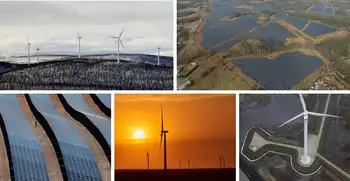
The U.K. project is a wind farm on the Kintyre Peninsula in Scotland, aligned with a 10 GW renewables contract boosting the U.K. grid. It will generate 168,000 megawatt hours (MWh) of clean energy each year, enough to power 46,000 U.K. homes. It will be the largest corporate wind power purchase agreement (PPA) in the U.K.

Offshore wind energy in the UK is powering up rapidly, complementing onshore developments.

The other two are solar projects – one in Warren County, N.C, and the other in Prince George County, Va, reflecting broader US solar and wind growth trends nationwide. Together, they are expected to generate 500,997 MWh of energy annually. It is Amazon’s second renewable energy project in North Carolina, following the Amazon Wind Farm US East operated by Avangrid Renewables, and eighth in Virginia.

The three new Amazon wind and solar projects – which are expected to be in operation in 2012 — will provide 265 MW of additional renewable capacity, and align with U.K. wind power lessons for the U.S. market nationwide.

“In addition to the environmental benefits inherently associated with running applications in the cloud, Amazon is committed to minimizing our carbon emissions and reaching 80% renewable energy use across the company by 2024. We’ve announced eight projects this year and have more projects on the horizon – and we’re committed to investing in renewable energy as a critical step toward addressing our carbon footprint globally,” Kara Hurst, director of sustainability at Amazon, said. “With nearly 70 renewable energy projects around the globe – including 54 solar rooftops – we are making significant progress towards reaching Amazon’s company-wide commitment to reach 100% renewable energy by 2030.”

Amazon has launched 18 utility-scale wind and solar renewable energy projects to date, and in parallel, Duke Energy Renewables has acquired three California solar projects, underscoring sector momentum. They will generate over 1,600 MW of renewable capacity and deliver more than 4.6 million MWh of clean energy annually. Amazon has also installed more than 50 solar rooftops on fulfillment centers and sort centers around the world. They generate 98 MW of renewable capacity and deliver 130,000 MWh of clean energy annually.

“Today’s announcement by Amazon is another important step for North Carolina’s clean energy plan that will increase our reliance on renewables and reduce our greenhouse gas emissions,” North Carolina Governor Roy Cooper said. “Not only is this the right thing to do for our planet, it’s the right thing to do for our economy. More clean energy jobs means better jobs for North Carolina families.”

Amazon reports on its sustainability commitments, initiatives, and performance on a new web site the company recently launched. It includes information on Amazon’s carbon footprint and other metrics and updates the company’s progress towards reaching The Climate Pledge. 

“It’s wonderful to see the announcement of these new projects, helping bring more clean energy to the Commonwealth of Virginia where Amazon is already recognized as a leader in bringing renewable energy projects online,” Virginia Governor Ralph Northam said. “These solar farms help reaffirm the Commonwealth’s role as a leading producer of clean energy in the U.S., helping take the nation forward in responding to climate change.”


Related News

View more

Canada Faces Critical Crunch in Electrical Supply

Canada Electricity Supply Crunch underscores grid reliability risks, aging infrastructure, and rising demand, pushing upgrades in transmission, energy storage, smart grid technology, and renewable energy integration to protect industry, consumers, and climate goals.


Key Points

A nationwide power capacity shortfall stressing the grid, raising outage risks and slowing the renewable transition.

✅ Demand growth and aging infrastructure strain transmission capacity

✅ Smart grid, storage, and interties improve reliability and flexibility

✅ Accelerated renewables and efficiency reduce fossil fuel reliance


Canada, known for its vast natural resources and robust energy sector, is now confronting a significant challenge: a crunch in electrical supply. A recent report from EnergyNow.ca highlights the growing concerns over Canada’s electricity infrastructure, revealing that the country is facing a critical shortage that could impact both consumers and industries alike. This development raises pressing questions about the future of Canada’s energy landscape and its implications for the nation’s economy and environmental goals.

The Current Electrical Supply Dilemma

According to EnergyNow.ca, Canada’s electrical supply is under unprecedented strain due to several converging factors. One major issue is the rapid pace of economic and population growth, particularly in urban centers. This expansion has increased demand for electricity, putting additional pressure on an already strained grid. Compounding this issue are aging infrastructure and a lack of sufficient investment in modernizing the electrical grid to meet current and future needs, with interprovincial frictions such as the B.C. challenge to Alberta's export restrictions further complicating coordination.

The report also points out that Canada’s reliance on certain types of energy sources, including fossil fuels, exacerbates the problem. While the country has made strides in renewable energy, including developments in clean grids and batteries across provinces, the transition has not kept pace with the rising demand for electricity. This imbalance highlights a crucial gap in Canada’s energy strategy that needs urgent attention.

Economic and Social Implications

The shortage in electrical supply has significant economic and social implications. For businesses, particularly those in energy-intensive sectors such as manufacturing and technology, the risk of power outages or unreliable service can lead to operational disruptions and financial losses. Increased energy costs due to supply constraints could also affect profit margins and competitiveness on both domestic and international fronts, with electricity exports at risk amid trade tensions.

Consumers are not immune to the impact of this electrical supply crunch. The potential for rolling blackouts or increased energy prices, as debates over electricity rates and innovation continue nationwide, can strain household budgets and affect overall quality of life. Additionally, inconsistent power supply can affect essential services, including healthcare facilities and emergency services, highlighting the critical nature of reliable electricity for public safety and well-being.

Investment and Infrastructure Upgrades

Addressing the electrical supply crunch requires significant investment in infrastructure and technology, and recent tariff threats have boosted support for Canadian energy projects that could accelerate these efforts. The EnergyNow.ca report underscores the need for modernizing the electrical grid to enhance capacity and resilience. This includes upgrading transmission lines, improving energy storage solutions, and expanding the integration of renewable energy sources such as wind and solar power.

Investing in smart grid technology is also essential. Smart grids use digital communication and advanced analytics to optimize electricity distribution, detect outages, and manage demand more effectively. By adopting these technologies, Canada can better balance supply and demand, reduce the risk of blackouts, and improve overall efficiency in energy use.

Renewable Energy Transition

Transitioning to renewable energy sources is a critical component of addressing the electrical supply crunch. While Canada has made progress in this area, the pace of change needs to accelerate under the new Clean Electricity Regulations for 2050 that set long-term targets. Expanding the deployment of wind, solar, and hydroelectric power can help diversify the energy mix and reduce reliance on fossil fuels. Additionally, supporting innovations in energy storage and grid management will enhance the reliability and sustainability of renewable energy.

The EnergyNow.ca report highlights several ongoing initiatives and projects aimed at increasing renewable energy capacity. However, these efforts must be scaled up and supported by both public policy and private investment to ensure that Canada can meet its energy needs and climate goals.

Policy and Strategic Planning

Effective policy and strategic planning are crucial for addressing the electrical supply challenges, with an anticipated electricity market reshuffle in at least one province signaling change ahead. Government action is needed to support infrastructure investment, incentivize renewable energy adoption, and promote energy efficiency measures. Collaborative efforts between federal, provincial, and municipal governments, along with private sector stakeholders, will be key to developing a comprehensive strategy for managing Canada’s electrical supply.

Public awareness and engagement are also important. Educating consumers about energy conservation practices and encouraging the adoption of energy-efficient technologies can contribute to reducing overall demand and alleviating some of the pressure on the electrical grid.

Conclusion

Canada’s electrical supply crunch is a pressing issue that demands immediate and sustained action. The growing demand for electricity, coupled with aging infrastructure and a lagging transition to renewable energy, poses significant challenges for the country’s economy and daily life. Addressing this issue will require substantial investment in infrastructure, advancements in technology, and effective policy measures. By taking a proactive and collaborative approach, Canada can navigate this crisis and build a more resilient and sustainable energy future.


Related News

View more

Ottawa sets out to protect its hydro heritage

Ottawa Hydro Substation Heritage Designation highlights Hydro Ottawa's 1920s architecture, Art Deco facades, and municipal utility history, protecting key voltage-reduction sites in Glebe, Carling-Merivale, Holland, King Edward, and Old Ottawa South.


Key Points

A city plan to protect Hydro Ottawa's 1920s substations for architecture, utility role, and civic electrical heritage.

✅ Protects five operating voltage-reduction sites citywide

✅ Recognizes Art Deco and early 20th century utility architecture

✅ Allows emergency demolition to ensure grid safety


The city of Ottawa is looking to designate five hydro substations built nearly a century ago as heritage structures, a move intended to protect the architectural history of Ottawa's earliest forays into the electricity business, even as Ottawa electricity consumption has shifted in recent years.

All five buildings are still used by Hydro Ottawa to reduce the voltage coming from transmission lines before the electricity is transmitted to homes and businesses, and when severe weather causes outages, Sudbury Hydro crews work to reconnect service across communities.

Electricity came to Ottawa in 1882 when two carbon lamps were installed on LeBreton Flats, heritage planner Anne Fitzpatrick told the city's built heritage subcommittee on Tuesday. It became a lucrative business, and soon a privately owned monopoly that drew public scrutiny similar to debates over retroactive charges in neighboring jurisdictions.

In 1905, city council held a special meeting to buy the electrical company, which led to a dramatic drop in electricity rates for residents, a contrast with recent discussions about peak hydro rates for self-isolating customers.

The substations are now owned by Hydro Ottawa, which agreed to the heritage designations on the condition it not be prevented from emergency demolitions if it needs to address incidents such as damaging storms in Ontario while it works to "preserve public safety and the continuity of critical hydro electrical services."

Built in 1922, the substation at the intersection of Glebe and Bronson avenues was the first to be built by the new municipal electrical department, long before modern battery storage projects became commonplace on Ontario's grid.

The largest of the substations being protected dates back to 1929 and is found at the corner of Carling Avenue and Merivale Road. It was built to accommodate a growing population in areas west of downtown including Hintonburg and Mechanicsville.

The substation on Holland Avenue near the Queensway is different from the others because it was built in 1924 to serve the Ottawa Electric Railway Company. The streetcar company operated from 1891 to 1959, and urban electrical infrastructure can face failures such as the Hydro-Québec manhole fire that left thousands without power.

This substation on King Edward Avenue was built in 1931 and designed by architect William Beattie, who also designed York Street Public School in Lowertown and the substation on Carling Avenue. 

The last substation to be built in a 'bold and decorative style' is at 39 Riverdale Ave. in Old Ottawa South, according to city staff. It was designed in an Art Deco style by prominent architect J. Albert Ewart, who was also behind the Civic Hospital and nearby Southminster Church on Bank Street.


Related News

View more

NDP takes aim at approval of SaskPower 8 per cent rate hike

SaskPower Rate Hike 2022-2023 signals higher electricity rates in Saskatchewan as natural gas costs surge; the Rate Review Panel approved increases, affecting residential utility bills amid affordability concerns and government energy policy shifts.


Key Points

An 8% SaskPower electricity rate increase split 4% in Sept 2022 and 4% in Apr 2023, driven by natural gas costs.

✅ 4% increase Sept 1, 2022; +4% on Apr 1, 2023

✅ Panel-approved amid natural gas price surge and higher fuel costs

✅ Avg residential bill up about $5 per step; affordability concerns


The NDP Opposition is condemning the provincial government’s decision to approve the Saskatchewan Rate Review Panel’s recommendation to increase SaskPower’s rates for the first time since 2018, despite a recent 10% rebate pledge by the Sask. Party.

The Crown electrical utility’s rates will increase four per cent this fall, and another four per cent in 2023, a trajectory comparable to BC Hydro increases over two years. According to a government news release issued Thursday, the new rates will result in an average increase of approximately $5 on residential customers’ bills starting on Sept. 1, 2022, and an additional $5 on April 1, 2023.

“The decision to increase rates is not taken lightly and came after a thorough review by the independent Saskatchewan Rate Review Panel,” Minister Responsible for SaskPower Don Morgan said in a news release, amid Nova Scotia’s 14% hike this year. “World events have caused a significant rise in the price of natural gas, and with 42 per cent of Saskatchewan’s electricity coming from natural gas-fueled facilities, SaskPower requires additional revenue to maintain reliable operations.”

But NDP SaskPower critic Aleana Young says the rate hike is coming just as businesses and industries are struggling in an “affordability crisis,” even as Manitoba Hydro scales back a planned increase next year.

She called the announcement of an eight per cent increase in power bills on a summer day before the long weekend “a cowardly move” by the premier and his cabinet, amid comparable changes such as Manitoba’s 2.5% annual hikes now proposed.

“Not to mention the Sask. Party plans to hike natural gas rates by 17% just days from now,” said Young in a news release issued Friday, as Manitoba rate hearings get underway nearby. “If Scott Moe thinks his choices — to not provide Saskatchewan families any affordability relief, to hike taxes and fees, then compound those costs with utility rate hikes — are defensible, he should have the courage to get out of his closed-door meetings and explain himself to the people of this province.”

The province noted natural gas is the largest generation source in SaskPower’s fleet. As federal regulations require the elimination of conventional coal generation in Canada by 2030, SaskPower’s reliance on natural gas generation is expected to grow, with experts in Alberta warning of soaring gas and power prices in the region. Fuel and Purchased Power expense increases are largely driven by increased natural gas prices, and SaskPower’s fuel and purchased power expense is expected to increase from $715 million in 2020-21 to $1.069 billion in 2023-24. This represents a 50 per cent increase in fuel and purchased power expense over three years.

“In the four years since our last increase SaskPower has worked to find internal efficiencies, but at this time we require additional funding to continue to provide reliable and sustainable power,” SaskPower president & CEO Rupen Pandya said in the release “We will continue to be transparent about our rate strategy and the need for regular, moderate increases.”


Related News

View more

"Energy war": Ukraine tries to protect electricity supply before winter

Ukraine Power Grid Resilience details preparations for winter blackouts, airstrike defense, decentralized generation, backup generators, battery storage, DTEK restorations, EU grid synchronization, and upgraded air defenses to safeguard electricity, heating, water, and essential services.


Key Points

Ukraine Power Grid Resilience is a strategy to harden energy systems against winter attacks and outages.

✅ DTEK repairs, backup equipment, and fortified plants across Ukraine

✅ Expanded air defenses targeting missiles and attack drones

✅ EU grid sync enables emergency imports and power trading


Oleksandr Gindyuk is determined not to be caught off guard if electricity supplies fail again this winter. When Russia pounded Ukraine’s power grid with widespread and repeated waves of airstrikes last year, causing massive rolling blackouts, his wife had just given birth to their second daughter.

“It was quite difficult,”  Gindyuk, who lives with his family in the suburbs of the capital, Kyiv, told CNN. “There is no life in our house if there is no electricity. Without electricity, we have no water, light or heating.”

He has spent the summer preparing for Russia to repeat its strategy, which was designed to sow terror and make life unsustainable, robbing Ukrainians of heat, water and health services. “We are totally ready — we have a diesel generator and a powerful 9 kWh battery. We are not scared, we are ready,” Gindyuk told CNN.

As families like Gindyuk’s gird themselves for the possibility of another dark winter, Ukraine has been rushing to rebuild and, drawing on protecting the grid lessons, protect its fragile energy infrastructure.

The summer provided a respite for Ukraine’s power grid. Russia focused its attacks on military targets and on ports on the Black Sea and the Danube River, to hinder Ukraine’s efforts to move grain and choke off an important income stream.

As the days grow shorter and the temperatures drop, Russia has another opportunity to try to break Ukrainian resilience with punishing blackouts. But this winter, defense and energy officials say Ukraine is better prepared.

With limited Ukrainian air defenses in operation last year, Russia was able to target and hit the energy grid easily, including during missile and drone assaults on Kyiv’s grid that strained responders.

“The Russians may use a combination of missile weapons and attack UAVs (unmanned aerial vehicles, or drones). These will definitely not be such primitive attacks as last year. It will be difficult for the Russians to achieve a result - we are also preparing and understanding how they act.”

DTEK, the country’s largest private energy company, has spent the past seven months restoring infrastructure, trying to boost output and bolstering defenses at its facilities across Ukraine, mindful of Russian utility hacks reported elsewhere.

“We restored what could be restored, bought back-up equipment and installed defenses around power plants, as Russian-linked breaches at US plants have underscored risks,” DTEK chief executive Maxim Timchenko told CNN.

The company generates around a quarter of Ukraine’s electricity and runs 40% of its grid network, making it a prime target for Russian attacks. Four DTEK employees have been killed while on duty and its power stations have been attacked nearly 300 times since the start of the full-scale invasion, according to the company. “Last winter, determination carried us through. This winter we are stronger, and our people are more experienced,” Timchenko said.

Russia launched 1,200 attacks on Ukraine’s energy system between October 2022 and April 2023, with every thermal power and hydro-electric plant in the country sustaining some damage, according to DTEK.

In a damage assessment report released in June, the United Nations Development Programme said that Ukraine’s power generation capacity had been reduced to about half of what it was before Russia’s full-scale invasion. “Ukraine’s power system continues to operate in an emergency mode, which affects both power grids and generation, amid rising concerns about state-backed grid hacking worldwide,” a news release accompanying the report said.

The report also laid out a roadmap to rebuilding the energy sector, prioritizing decentralization, renewable energy sources and greater integration with the European Union. Ukraine has been hooked into the EU’s power grid since the full-scale invasion, allowing it to synchronize and trade power with the bloc. But the massive wave of attacks on energy infrastructure last winter threw that balance off kilter.


Related News

View more

Sustainable Marine now delivering electricity to Nova Scotia grid from tidal energy

Sustainable Marine tidal energy delivers in-stream power to Nova Scotia's grid from Grand Passage, proving low-impact, renewable generation and advancing a floating tidal array at FORCE and Minas Passage in the Bay of Fundy.


Key Points

The first in-stream tidal project supplying clean power to Nova Scotia's grid, proven at Grand Passage.

✅ First to deliver in-stream tidal power to Canada's grid

✅ Demonstration at Grand Passage informs FORCE deployments

✅ Low-impact design and environmental monitoring validated


Sustainable Marine has officially powered up its tidal energy operation in Canada and is delivering clean electricity to the power system in Nova Scotia, on the country’s Atlantic coast, as the province moves to increase wind and solar projects in the years ahead. The company’s system in Grand Passage is the first to deliver in-stream tidal power to the grid in Canada, following provincial approval to harness Bay of Fundy tides that is spurring further development.

The system start-up is the culmination of more than a decade of research, development and testing, including lessons from Scottish tidal projects in recent years and a powerful tidal turbine feeding onshore grids, managing the technical challenges associated with operating in highly energetic environments and proving the ultra-low environmental impact of the tidal technology.

Sustainable Marine is striving to deliver the world’s first floating tidal array at FORCE (Fundy Ocean Research Centre for Energy). This project will be delivered in phases, drawing upon the knowledge gained and lessons learned in Grand Passage, and insights from offshore wind pilots like France’s first offshore wind turbine in Europe. In the coming months the company will continue to operate the platform at its demonstration site at Grand Passage, gradually building up power production, while New York and New England clean energy demand continues to rise, to further prove the technology and environmental monitoring systems, before commencing deployments in the Minas Passage – renowned as the Everest of tidal energy.

The Bay of Fundy’s huge tidal energy resource contains more than four times the combined flow of every freshwater river in the world, with the potential to generate approximately 2,500 MW of green energy, underscoring why independent electricity planning will be important for integrating marine renewables.


Related News

View more

Sign Up for Electricity Forum’s Newsletter

Stay informed with our FREE Newsletter — get the latest news, breakthrough technologies, and expert insights, delivered straight to your inbox.

Electricity Today T&D Magazine Subscribe for FREE

Stay informed with the latest T&D policies and technologies.
  • Timely insights from industry experts
  • Practical solutions T&D engineers
  • Free access to every issue

Download the 2025 Electrical Training Catalog

Explore 50+ live, expert-led electrical training courses –

  • Interactive
  • Flexible
  • CEU-cerified