By Alaska Highway News


Substation Relay Protection Training

Our customized live online or in‑person group training can be delivered to your staff at your location.

  • Live Online
  • 12 hours Instructor-led
  • Group Training Available
Regular Price:
$699
Coupon Price:
$599
Reserve Your Seat Today
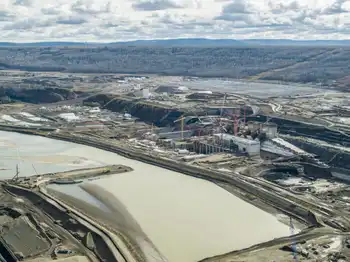
-- B.C. Hydro continues to maximize power generation as spill rates were reduced at two northeastern power-generating facilities over the weekend.

Spill rates at the W.A.C. Bennett Dam and the Peace Canyon Dam are now 708 cubic metres per second and 340 cubic metres per second respectively, Hydro reported. Total discharge into the Peace River is now 2,351 cubic metres per second.

The spills were reduced as inflows into the Williston Lake reservoir are on the decline, according to Hydro, but are expected to fluctuate as inflow rates change.

Hydro continues to maximize power generation at both dams. A ninth generating unit was brought online at the G.M. Shrum generating station July 10, which increased discharge by an additional 210 cubic metres per second.

Spillways at the dams were opened July 8 afternoon to release built-up water at the Williston Lake reservoir. The reservoir?s inflow rates had increased to 117 cubic feet per second as recent rain dumped as much as 10-20 millimetres of new water into the 300-kilometre reservoir.

The spills were originally expected to last as many as five days, but are now into their fourth week.

Hydro reports crews are monitoring the effects of the spills on fish and wildlife and water quality. Hydro confirmed 11 fish mortalities in the Dinosaur Lake reservoir when the spill began July 8. That number has since increased to 220 by July 21.

Hydro has implemented spill ramping rates to lessen the impact to fish. Spillway gates are opened slowly to allow fish upstream to sense the rate of flow change. Closing gates slowly allows fish downstream to adjust to decreasing water levels.

The spill is not as large as the last spill in 1996, which was ordered as an emergency measure ordered after a sinkhole was discovered in the dam.

Downstream, the District of Taylor had to close Peace Island Park for four days as rising water threatened the causeway connecting the park to the riverbank. Water drew flush, but did not crest the causeway, prompting officials to relocate about 100 campers to the park?s expansion area just west of the Alaska Highway as a safety measure.

The park was re-opened as water levels subsided. There was no apparent damage to the park or causeway.

Flooding along the Peace River has not been a problem as homes are not allowed along the Hydro-controlled floodplain. Recreational users have been warned of potential danger.

The Williston Lake reservoir is the ninth largest hydroelectric reservoir in the world with a surface area of 179,425 hectares. Rain and a higher than average snowcap have pushed up the reservoir, which reached 670.53 metres by June 30, just shy of the 672-metre capacity. The Dinosaur Lake reservoir at the Peace Canyon Dam was also at capacity.

The W.A.C. Bennett Dam is one of the largest earthfill dams in the world at two kilometers long, 183 metres high and 800 metres wide. Intake pipes five metres in diameter feed ten turbines powering generators capable of producing up to 300,000 kilowatts each.

Related News

Lebanon Cabinet approves watershed electricity sector reform

Lebanon Electricity Sector Reform aims to overhaul tariffs, modernize the grid, cut fuel oil subsidies, unlock donor loans, and deliver 24-hour power, restructuring EDL governance, boosting generation capacity, and reducing the budget deficit.


Key Points

A plan to restructure EDL, adjust tariffs, add capacity, and cut subsidies to deliver 24-hour power and reduce deficits.

✅ New tariffs and phased cost recovery

✅ Added generation capacity and grid modernization

✅ Governance reform of EDL and loss reduction


Lebanon’s Cabinet has approved a much-anticipated plan to restructure the country’s dysfunctional electricity sector, as Beirut power challenges continue to underscore chronic gaps, which hasn’t been developed since the time of the country’s civil war, decades ago.

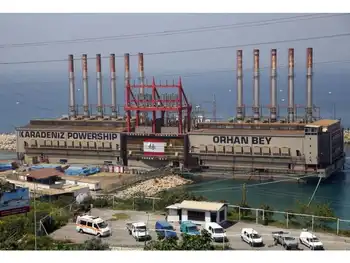
The Lebanese depend on a network of private generator providers and decrepit power plants that rely on expensive fuel oil, while Israeli power supply competition seeks to lower consumer prices in a nearby market. Subsidies to the state electricity company cost nearly $2 billion a year.

For years, reform of the electricity sector, echoed by EU electricity market revamp, has been a major demand of Lebanon’s population of over 5 million. But frequent political stalemates, corruption and infighting among politicians, entrenched since the civil war that began in 1975, often derailed reforms.

International donors have called for reforms, including in the electricity sector, to unlock $11 billion in soft loans and grants pledged last year, as regional initiatives like the Jordan-Saudi electricity linkage move ahead to strengthen interconnections. Prime Minister Saad Hariri said Monday that the new plan will eventually provide 24-hour electricity.

Energy Minister Nada Boustani said that if there were no obstacles, residents could start feeling the difference next year, as an electricity market overhaul advances alongside the plan.

The plan, which is expected to get parliament approval, will reform the state electricity company, introduce new pricing policies, with international examples like France's electricity pricing scheme, and boost power production.

“This plan will also reduce the budget deficit,” Hariri told reporters. “This is positive and all international ratings companies will see … that Lebanon is taking real steps to reform in this sector.”

Lebanon’s soaring debt prompted rating agencies to downgrade the country’s credit ratings in January over concerns the government may not be able to pay its debts. Unemployment is believed to be at 36 per cent and more than 1 million Syrian refugees have overwhelmed the already aging infrastructure, while policy debates like Alberta electricity market changes illustrate different approaches to balancing cost and reliability.

Boustani told the Al-Manar TV that the electricity sector should be spared political bickering and populist approaches.


Related News

View more

Opinion: Fossil-fuel workers ready to support energy transition

Canada Net-Zero Transition unites energy workers, R&D, and clean tech to decarbonize steel and cement with hydrogen, scale renewables, and build hybrid storage, delivering a just transition that strengthens communities and the economy.


Key Points

A national plan to reach net-zero by 2050 via renewables, hydrogen, decarbonization, and a just transition for workers.

✅ Hydrogen for steel and cement decarbonization

✅ Hybrid energy storage and clean tech R&D

✅ Just transition pathways for energy workers


Except for an isolated pocket of skeptics, there is now an almost universal acceptance that climate change is a global emergency that demands immediate and far-reaching action to defend our home and future generations. Yet in Canada we remain largely focused on how the crisis divides us rather than on the potential for it to unite us, despite nationwide progress in electricity decarbonization efforts.

It’s not a case of fossil-fuel industry workers versus the rest, or Alberta versus British Columbia where bridging the electricity gap could strengthen cooperation. We are all in this together. The challenge now is how to move forward in a way that leaves no one behind.

The fossil fuel industry has been — and continues to be — a key driver of Canada’s economy. Both of us had successful careers in the energy sector, but realized, along with an increasing number of energy workers, that the transition we need to cope with climate change could not be accomplished solely from within the industry.

Even as resource companies innovate to significantly reduce the carbon burden of each barrel, the total emission of greenhouse gases from all sources continues to rise. We must seize the opportunity to harness this innovative potential in alternative and complementary ways, mobilizing research and development, for example, to power carbon-intensive steelmaking and cement manufacture from hydrogen or to advance hybrid energy storage systems and decarbonizing Canada's electricity grid strategies — the potential for cross-over technology is immense.

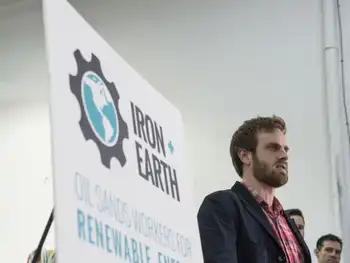
The bottom line is inescapable: we must reach net-zero emissions by 2050 in order to prevent runaway global warming, which is why we launched Iron & Earth in 2016. Led by oilsands workers committed to increasingly incorporating renewable energy projects into our work scope, our non-partisan membership now includes a range of industrial trades and professions who share a vision for a sustainable energy future for Canada — one that would ensure the health and equity of workers, our families, communities, the economy, and the environment.

Except for an isolated pocket of skeptics, there is now an almost universal acceptance that climate change is a global emergency that demands immediate and far-reaching action, including cleaning up Canada's electricity to meet climate pledges, to defend our home and future generations. Yet in Canada we remain largely focused on how the crisis divides us rather than on the potential for it to unite us.

It’s not a case of fossil-fuel industry workers versus the rest, or Alberta versus British Columbia. We are all in this together. The challenge now is how to move forward in a way that leaves no one behind.

The fossil fuel industry has been — and continues to be — a key driver of Canada’s economy. Both of us had successful careers in the energy sector, but realized, along with an increasing number of energy workers, that the transition we need to cope with climate change could not be accomplished solely from within the industry.

Even as resource companies innovate to significantly reduce the carbon burden of each barrel, the total emission of greenhouse gases from all sources continues to rise, underscoring that Canada will need more electricity to hit net-zero, according to the IEA. We must seize the opportunity to harness this innovative potential in alternative and complementary ways, mobilizing research and development, for example, to power carbon-intensive steelmaking and cement manufacture from hydrogen or to advance hybrid energy storage systems — the potential for cross-over technology is immense.

The bottom line is inescapable: we must reach net-zero emissions by 2050 in order to prevent runaway global warming, which is why we launched Iron & Earth in 2016. Led by oilsands workers committed to increasingly incorporating renewable energy projects into our work scope, as calls for a fully renewable electricity grid by 2030 gain attention, our non-partisan membership now includes a range of industrial trades and professions who share a vision for a sustainable energy future for Canada — one that would ensure the health and equity of workers, our families, communities, the economy, and the environment.


Related News

View more

OPG, TVA Partner on New Nuclear Technology Development

OPG-TVA SMR Partnership advances advanced nuclear technology and small modular reactors for 24/7 carbon-free baseload power, enabling net-zero goals, cross-border licensing, and deployment within a North American clean energy hub.


Key Points

A cross-border effort by OPG and TVA to develop, license, and deploy SMRs for reliable, carbon-free baseload power.

✅ Coordinates design, licensing, construction, and operations

✅ Supports 24/7 baseload, net-zero targets, and energy security

✅ Leverages Darlington and Clinch River early site permits


Two of North America's leading nuclear utilities unveiled a pioneering partnership to develop advanced nuclear technology as an integral part of a clean energy future and creating a North American energy hub. Ontario Power Generation, whose OPG's SMR commitment is well established, and the Tennessee Valley Authority will jointly work to help develop small modular reactors as an effective long-term source of 24/7 carbon-free energy in both Canada and the U.S.

The agreement allows the companies to coordinate their explorations into the design, licensing, construction and operation of small modular reactors.

"As leaders in our industry and nations, OPG and TVA share a common goal to decarbonize energy generation while maintaining reliability and low-cost service, which our customers expect and deserve," said Jeff Lyash, TVA President and CEO. "Advanced nuclear technology will not only help us meet our net-zero carbon targets but will also advance North American energy security."

"Nuclear energy has long been key to Ontario's clean electricity grid, and is a crucial part of our net-zero future," said Ken Hartwick, OPG President and CEO. "Working together, OPG and TVA will find efficiencies and share best practices for the long-term supply of the economical, carbon-free, reliable electricity our jurisdictions need, supported by ongoing Pickering life extensions across Ontario's fleet."

OPG and TVA have similar histories and missions. Both are based on public power models that developed from renewable hydroelectric generation before adding nuclear to their generation mixes. Today, nuclear generation accounts for significant portions of their carbon-free energy portfolios, with Ontario advancing the Pickering B refurbishment to sustain capacity.

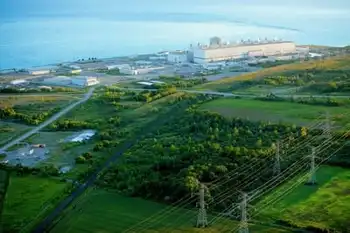
Both are also actively exploring SMR technologies. OPG is moving forward with plans to deploy an SMR at its Darlington nuclear facility in Clarington, ON, as part of broader Darlington SMR plans now underway. The Darlington site is the only location in Canada licensed for new nuclear with a completed and accepted Environmental Assessment. TVA currently holds the only Nuclear Regulatory Commission Early Site Permit in the U.S. for small modular reactor deployment at its Clinch River site near Oak Ridge, TN.

No exchange of funding is involved. However, the collaboration agreement will help OPG and TVA reduce the financial risk that comes from development of innovative technology, as well as future deployment costs.

"TVA has the most recent experience completing a new nuclear plant in North America at Watts Bar and that knowledge is invaluable to us as we work toward the first SMR groundbreaking at Darlington," said Hartwick. "Likewise, because we are a little further along in our construction timing, TVA will gain the advantage of our experience before they start work at Clinch River."

"It's a win-win agreement that benefits all of those served by both OPG and TVA, as well as our nations," said Lyash. "Moving this technology forward is not only a significant step in advancing a clean energy future and Canada's climate goals, but also in creating a North American energy hub."

"With the demand for clean electricity on the rise around the world, Ontario's momentum is growing. The world is watching Ontario as we advance our work to fully unleash our nuclear advantage, alongside a premiers' SMR initiative that underscores provincial collaboration. I congratulate OPG and TVA – two great industry leaders – for working together to deploy SMRs and showcase and apply Canada's nuclear expertise that will deliver economic, health and environmental benefits for all of us to enjoy," said Todd Smith, Ontario Minister of Energy.

"The changing climate is a global crisis that requires global solutions. The partnership between the Tennessee Valley Authority and Ontario Power Generation to develop and deploy advanced nuclear technology is exactly the kind of innovative collaboration that is needed to quickly bring the next generation of nuclear carbon-free generation to market. I applaud the leadership that both companies are demonstrating to further strengthen our cross-border relationships," said Maria Korsnick, President and CEO, Nuclear Energy Institute.


Related News

View more

SC nuclear plant on the mend after a leak shut down production for weeks

V.C. Summer nuclear plant leak update: Dominion Energy repaired a valve in the reactor cooling system; radioactive water stayed within containment, NRC oversight continues as power output ramps toward full operation.


Key Points

A minor valve leak in the reactor cooling system contained onsite; Dominion repaired it as the plant resumes power.

✅ Valve leak in piping to steam generators, not environmental release.

✅ Radioactive water remained in containment, monitored per NRC rules.

✅ Plant ramping from 17% power; full operations may take days.


The V.C. Summer nuclear power plant, which has been shut down since early November because of a pipe leak, is expected to begin producing energy in a few days, a milestone comparable to a new U.S. reactor startup reported recently.

Dominion Energy says it has fixed the small leak in a pipe valve that allowed radioactive water to drip out. The company declined to say when the plant would be fully operational, but spokesman Ken Holt said that can take several days, amid broader discussions about the stakes of early nuclear closures across the industry.

The plant was at 17 percent power Wednesday, he said, as several global nuclear project milestones continue to be reported this year.

Holt, who said Dominion is still investigating the cause, said water that leaked was part of the reactor cooling system. While the water came in contact with nuclear fuel in the reactor, the water never escaped the plant's containment building and into the environment, Holt said.

He characterized the valve leak as '"uncommon" but not unexpected. The nuclear leak occurred in piping that links the nuclear reactor with the power plant's steam generators. Hundreds of pipes are in that part of the nuclear plant, a complexity often cited in the energy debate over struggling nuclear plants nationwide.

"There is always some level of leakage when you are operating, but it is contained and monitored, and when it rises to a certain level, you may take action to stop it," Holt said.

A nuclear safety watchdog has criticized Dominion for not issuing a public notice about the leak, but both the company and the U.S. Nuclear Regulatory Commission say the amount was so small it did not require notice.

The V.C. Summer Nuclear plant is about 25 miles northwest of Columbia in Fairfield County. It was licensed in the early 1980s. At one point, Dominion's predecessor, SCE&G, partnered with state owned Santee Cooper to build two more reactors there, even as new reactors in Georgia were taking shape. But the companies walked away from the project in 2017, citing high costs and troubles with its chief contractor, Westinghouse, even as closures such as Three Mile Island's shutdown continued to influence policy.


Related News

View more

Energy experts: US electric grid not designed to withstand the impacts of climate change

Summer Power Grid Reliability and Climate Risk drives urgent planning as extreme heat, peak demand, drought, and aging infrastructure strain ERCOT, NERC regions, risking outages without renewables integration and climate-informed grid modeling.


Key Points

Assessment of how extreme weather and demand stress the US grid, informing climate-smart planning to reduce outages.

✅ Many operators rely on historical weather, not climate projections

✅ NERC flags elevated blackout risk amid extreme heat and drought

✅ Renewables and storage can boost capacity and cut emissions


As heat ramps up ahead of what forecasters say will be a hotter than normal summer, electricity experts and officials are warning that states may not have enough power to meet demand in the coming months. And many of the nation's grid operators are also not taking climate change into account in their planning, despite available grid resilience guidance that could inform upgrades, even as extreme weather becomes more frequent and more severe.

Power operators in the Central US, in their summer readiness report, have already predicted "insufficient firm resources to cover summer peak forecasts." That assessment accounted for historical weather and the latest NOAA outlook that projects for more extreme weather this summer.

But energy experts say that some power grid operators are not considering how the climate crisis is changing our weather — including more frequent extreme events — and that is a problem if the intent is to build a reliable power grid while accelerating investing in carbon-free electricity across markets.

"The reality is the electricity system is old and a lot of the infrastructure was built before we started thinking about climate change," said Romany Webb, a researcher at Columbia University's Sabin Center for Climate Change Law. "It's not designed to withstand the impacts of climate change."

Webb says many power grid operators use historical weather to make investment decisions, rather than the more dire climate projections, simply because they want to avoid the possibility of financial loss, even as climate-related credit risks for nuclear plants are being flagged, for investing in what might happen versus what has already happened. She said it's the wrong approach and it makes the grid vulnerable.

"We have seen a reluctance on the part of many utilities to factor climate change into their planning processes because they say the science around climate change is too uncertain," Webb said. "The reality is we know climate change is happening, we know the impact it has in terms of more severe heatwaves, hurricanes, drought, with recent hydropower constraints in British Columbia illustrating the risks, and we know that all of those things affect the electricity system so ignoring those impacts just makes the problems worse."

An early heatwave knocked six power plants offline in Texas earlier this month. Residents were asked to limit electricity use, keeping thermostats at 78 degrees or higher and, as extreme heat boosts electricity bills for consumers, avoid using large appliances at peak times. The Electric Reliability Council of Texas, or ERCOT, in its seasonal reliability report, said the state's power grid is prepared for the summer and has "sufficient" power for "normal" summer conditions, based on average weather from 2006 to 2020.

But NOAA's recently released summer outlook forecasts above average temperatures for every county in the nation.

"We are continuing to design and site facilities based on historical weather patterns that we know in the age of climate change are not a good proxy for future conditions," Webb said.

When asked if the agency is creating a blind spot for itself by not accounting for extreme weather predictions, an ERCOT spokesperson said the report "uses a scenario approach to illustrate a range of resource adequacy outcomes based on extreme system conditions, including some extreme weather scenarios."

The North American Electric Reliability Corporation, or NERC — a regulating authority that oversees the health of the nation's electrical infrastructure — has a less optimistic projection.

In a recent seasonal reliability report, NERC placed Texas at "elevated risk" for blackouts this summer. It also reported that while much of the nation will have adequate electricity this summer, several markets are at risk of energy emergencies.

California grid operators, who recently avoided widespread rolling blackouts as heat strained the grid, in its summer reliability report also based its readiness analysis on "the most recent 20 years of historical weather data." The report also notes the assessment "does not fully reflect more extreme climate induced load and supply uncertainties."

Compounding the US power grid's supply and demand problem is drought: NERC says there's been a 2% loss of reliable hydropower from the nation's power-producing dams. Add to that the rapid retirement of many coal power plants — all while nearly everything from toothbrushes to cars are now electrified. Energy experts say adding more renewables into the mix will have the dual impact of cutting climate change inducing greenhouse gas emissions but also increasing the nation's power supply, aligning with efforts such as California's 100% carbon-free mandate that aim to speed the transition.


Related News

View more

When did BC Hydro really know about Site C dam stability issues? Utilities watchdog wants to know

BC Utilities Commission Site C Dam Questions press BC Hydro on geotechnical risks, stability issues, cost overruns, oversight gaps, seeking transparency for ratepayers and clarity on contracts, mitigation, and the powerhouse and spillway foundations.


Key Points

Inquiry seeking explanations from BC Hydro on geotechnical risks, costs, timelines and oversight for Site C.

✅ Timeline of studies, monitoring, and mitigation actions

✅ Rationale for contracts, costs, and right bank construction

✅ Implications for ratepayers, oversight, and project stability


The watchdog B.C. Utilities Commission has sent BC Hydro 70 questions about the troubled Site C dam, asking when geotechnical risks were first identified and when the project’s assurance board was first made aware of potential issues related to the dam’s stability. 

“I think they’ve come to the conclusion — but they don’t say it — that there’s been a cover-up by BC Hydro and by the government of British Columbia,” former BC Hydro CEO Marc Eliesen told The Narwhal. 

On Oct. 21, The Narwhal reported that two top B.C. civil servants, including the senior bureaucrat who prepares Site C dam documents for cabinet, knew in May 2019 that the project faced serious geotechnical problems due to its “weak foundation” and the stability of the dam was “a significant risk.” 

Get The Narwhal in your inbox!
People always tell us they love our newsletter. Find out yourself with a weekly dose of our ad‑free, independent journalism

“They [the civil servants] would have reported to their ministers and to the government in general,” said Eliesen, who is among 18 prominent Canadians calling for a halt to Site C work until an independent team of experts can determine if the geotechnical problems can be resolved and at what cost.  

“It’s disingenuous for Premier [John] Horgan to try to suggest, ‘Well, I just found out about it recently.’ If that’s the case, he should fire the public servants who are representing the province.” 

The public only found out about significant issues with the Site C dam at the end of July, when BC Hydro released overdue reports saying the project faces unknown cost overruns, schedule delays and, even as it achieved a transmission line milestone earlier, such profound geotechnical troubles that its overall health is classified as ‘red,’ meaning it is in serious trouble. 

“The geotechnical challenges have been there all these years.”

The Site C dam is the largest publicly funded infrastructure project in B.C.’s history. If completed, it will flood 128 kilometres of the Peace River and its tributaries, forcing families from their homes and destroying Indigenous gravesites, hundreds of protected archeological sites, some of Canada’s best farmland and habitat for more than 100 species vulnerable to extinction.

Eliesen said geotechnical risks were a key reason BC Hydro’s board of directors rejected the project in the early 1990s, when he was at the helm of BC Hydro.

“The geotechnical challenges have been there all these years,” said Eliesen, who is also the former Chair and CEO of Ontario Hydro, where Ontario First Nations have urged intervention on a critical electricity line, the former Chair of Manitoba Hydro and the former Chair and CEO of the Manitoba Energy Authority.

Elsewhere, a Manitoba Hydro line to Minnesota has faced potential delays, highlighting broader grid planning challenges.

The B.C. Utilities Commission is an independent watchdog that makes sure ratepayers — including BC Hydro customers — receive safe and reliable energy services, as utilities adapt to climate change risks, “at fair rates.”

The commission’s questions to BC Hydro include 14 about the “foundational enhancements” BC Hydro now says are necessary to shore up the Site C dam, powerhouse and spillways. 

The commission is asking BC Hydro to provide a timeline and overview of all geotechnical engineering studies and monitoring activities for the powerhouse, spillway and dam core areas, and to explain what specific risk management and mitigation practices were put into effect once risks were identified.

The commission also wants to know why construction activities continued on the right bank of the Peace River, where the powerhouse would be located, “after geotechnical risks materialized.” 

It’s asking if geotechnical risks played a role in BC Hydro’s decision in March “to suspend or not resume work” on any components of the generating station and spillways.

The commission also wants BC Hydro to provide an itemized breakdown of a $690 million increase in the main civil works contract — held by Spain’s Acciona S.A. and the South Korean multinational conglomerate Samsung C&T Corp. — and to explain the rationale for awarding a no-bid contract to an unnamed First Nation and if other parties were made aware of that contract. 

Peace River Jewels of the Peace Site C The Narwhal
Islands in the Peace River, known as the ‘jewels of the Peace’ will be destroyed for fill for the Site C dam or will be submerged underwater by the dam’s reservoir, a loss that opponents are sharing with northerners in community discussions. Photo: Byron Dueck

B.C. Utilities Commission chair and CEO David Morton said it’s not the first time the commission has requested additional information after receiving BC Hydro’s quarterly progress reports on the Site C dam. 

“Our staff reads them to make sure they understand them and if there’s anything in then that’s not clear we go then we do go through this, we call it the IR — information request — process,” Morton said in an interview.

“There are things reported in here that we felt required a little more clarity, and we needed a little more understanding of them, so that’s why we asked the questions.”

The questions were sent to BC Hydro on Oct. 23, the day before the provincial election, but Morton said the commission is extraordinarily busy this year and that’s just a coincidence. 

“Our resources are fairly strained. It would have been nice if it could have been done faster, it would be nice if everything could be done faster.” 

“These questions are not politically motivated,” Morton said. “They’re not political questions. There’s no reason not to issue them when they’re ready.”

The commission has asked BC Hydro to respond by Nov. 19.

Read more: Top B.C. government officials knew Site C dam was in serious trouble over a year ago: FOI docs

Morton said the independent commission’s jurisdiction is limited because the B.C. government removed it from oversight of the project. 

The commission, which would normally determine if a large dam like the Site C project is in the public’s financial interest, first examined BC Hydro’s proposal to build the dam in the early 1980s.

After almost two years of hearings, including testimony under oath, the commission concluded B.C. did not need the electricity. It found the Site C dam would have negative social and environmental impacts and said geothermal power should be investigated to meet future energy needs. 

The project was revived in 2010 by the BC Liberal government, which touted energy from the Site C dam as a potential source of electricity for California and a way to supply B.C.’s future LNG industry with cheap power.

Not willing to countenance another rejection from the utilities commission, the government changed the law, stripping the commission of oversight for the project. The NDP government, which came to power in 2017, chose not to restore that oversight.

“The approval of the project was exempt from our oversight,” Morton said. “We can’t come along and say ‘there’s something we don’t like about what you’re doing, we’re going to stop construction.’ We’re not in that position and that’s not the focus of these questions.” 

But the commission still retains oversight for the cost of construction once the project is complete, Morton said. 

“The cost of construction has to be recovered in [hydro] rates. That means BC Hydro will need our approval to recover their construction cost in rates, and those are not insignificant amounts, more than $10.7 billion, in all likelihood.” 

In order to recover the cost from ratepayers, the commission needs to be satisfied BC Hydro didn’t spend more money than necessary on the project, Morton said. 

“As you can imagine, that’s not a straight forward review to do after the fact, after a 10-year construction project or whatever it ends up being … so we’re using these quarterly reports as an opportunity to try to stay on top of it and to flag any areas where we think there may be areas we need to look into in the future.”

The price tag for the Site C dam was $10.7 billion before BC Hydro’s announcement at the end of July — a leap from $6.6 billion when the project was first announced in 2010 and $8.8 billion when construction began in 2015. 

Eliesen said the utilities commission should have been asking tough questions about the Site C dam far earlier. 

“They’ve been remiss in their due diligence activities … They should have been quicker in raising questions with BC Hydro, rather than allowing BC Hydro to be exceptionally late in submitting their reports.” 

BC Hydro is late in filing another Site C quarterly report, covering the period from April 1 to June 30. 

The quarterly reports provide the B.C. public with rare glimpses of a project that international hydro expert Harvey Elwin described as being more secretive than any hydro project he has encountered in five decades working on large dams around the world, including in China.

Read more: Site C dam secrecy ‘extraordinary’, international hydro construction expert tells court proceeding

Morton said the commission could have ordered regular reporting for the Site C project if it had its previous oversight capability.

“Then we would have had the ability to follow up and ultimately order any delinquent reports to be filed. In this circumstance, they are being filed voluntarily. They can file it as late as they choose. We don’t have any jurisdiction.” 

In addition to the six dozen questions, the commission has also filed confidential questions with BC Hydro. Morton said confidential information could include things such as competitive bid information. “BC Hydro itself may be under a confidentiality agreement not to disclose it.” 

With oversight, the commission would also have been able to drill down into specific project elements,  Morton said. 

“We would have wanted to ensure that the construction followed what was approved. BC Hydro wouldn’t have the ability to make significant changes to the design and nature of the project as they went along.”

BC Hydro has been criticized for changing the design of the Site C dam to an L-shape, which Eliesen said “has never been done anywhere in the world for an earthen dam.” 

Morton said an empowered commission could have opted to hold a public hearing about the design change and engage its own technical consultants, as it did in 2017 when the new NDP government asked it to conduct a fast-tracked review of the project’s economics. 


Construction Site C Dam
A recent report by a U.S. energy economist found cancelling the Site C dam project would save BC Hydro customers an initial $116 million a year, with increasing savings growing over time. Photo: Garth Lenz / The Narwhal

The commission’s final report found the dam could cost more than $12 billion, that BC Hydro had a historical pattern of overestimating energy demand and that the same amount of energy could be produced by a suite of renewables, including wind and proposed pumped storage such as the Meaford project, for $8.8 billion or less. 

The NDP government, under pressure from construction trade unions, opted to continue the project, refusing to disclose key financial information related to its decision. 

When the geotechnical problems were revealed in July, the government announced the appointment of former deputy finance minister Peter Milburn as a special Site C project advisor who will work with BC Hydro and the Site C project assurance board to examine the project and provide the government with independent advice.

Eliesen said BC Hydro and the B.C. government should never have allowed the recent diversion of the Peace River to take place given the tremendous geotechnical challenges the project faces and its unknown cost and schedule for completion. 

“It’s a disgrace and scandalous,” he said. “You can halt the river diversion, but you’ve got another four or five years left in construction of the dam. What are you going to do about all the cement you’ve poured if you’ve got stability problems?”

He said it’s counter-productive to continue with advice “from the same people who have been wrong, wrong, wrong,” without calling in independent global experts to examine the geotechnical problems. 

“If you stop construction, whether it takes three or six months, that’s the time that’s required in order to give yourself a comfort level. But continuing to do what you’ve been doing is not the right course. You should have to sit back.”

Eliesen said it reminded him of the Pete Seeger song Waist Deep in the Big Muddy, which tells the story of a captain ordering his troops to keep slogging through a river because they will soon be on dry ground. After the captain drowns, the troops turn around.

“It’s a reflection of the fact that if you don’t look at what’s new, you just keep on doing what you’ve been doing in the past and that, unfortunately, is what’s happening here in this province with this project.”


Related News

View more

Sign Up for Electricity Forum’s Newsletter

Stay informed with our FREE Newsletter — get the latest news, breakthrough technologies, and expert insights, delivered straight to your inbox.

Electricity Today T&D Magazine Subscribe for FREE

Stay informed with the latest T&D policies and technologies.
  • Timely insights from industry experts
  • Practical solutions T&D engineers
  • Free access to every issue

Download the 2025 Electrical Training Catalog

Explore 50+ live, expert-led electrical training courses –

  • Interactive
  • Flexible
  • CEU-cerified