Canada-U.S. Power System Outage Task Force Appointed

By Canada, U.S.


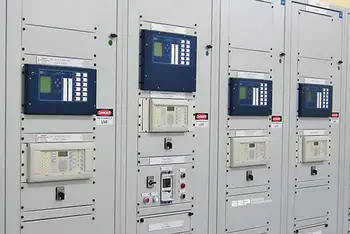
NFPA 70b Training - Electrical Maintenance

Our customized live online or in‑person group training can be delivered to your staff at your location.
  • Live Online
  • 12 hours Instructor-led
  • Group Training Available
Regular Price:
$699
Coupon Price:
$599
Reserve Your Seat Today
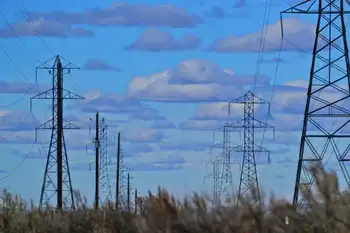
U.S. Energy Secretary Spencer Abraham and Canadian Minister of Natural Resources Herb Dhaliwal met in Detroit, Michigan, on August 20, 2003, and agreed on an Outline to be followed by the Task Force in its investigation of the recent power outage that affected Canada and the United States. Under the Task Force Outline, the Joint Task Force will determine what happened, and why it was not contained. The Task Force will be supported by three Working Groups that will address electric system, security, and nuclear issues. The Task Force Outline also calls for the development of recommendations on how to prevent future power outages.

The Task Force will be jointly chaired by Secretary Abraham and Minister Dhaliwal, and will include as U.S. members Tom Ridge, Secretary of Homeland Security, Pat Wood, Chairman of the Federal Energy Regulatory Commission, and Nils J. Diaz, Chairman of the Nuclear Regulatory Commission. The Canadian members will be John Manley, Deputy Prime Minister, in his capacity as Minister responsible for Border and Security Issues; Kenneth Vollman, Chairman of the National Energy Board; and Linda J. Keen, President and CEO of the Canadian Nuclear Safety Commission.

The Working Groups will include all relevant federal departments and agencies and will include representatives from the affected states and provinces. In addition, the North American Electric Reliability Council (NERC) and the affected Independent System Operators and utilities have agreed that their investigations will supplement and contribute to the work of the Task Force. Local authorities, private sector electricity providers, and other experts will be invited to contribute to the work of the Task Force.

The principals also announced that the work of the Task Force will be managed by Jimmy Glotfelty on behalf of the U.S. Department of Energy, and Dr. Nawal Kamel on behalf of Natural Resources Canada.

The parties expressed a firm commitment to a renewed and strengthened effort to address the security and efficiency of the North American electric power system. This signals their determination to enhance the reliability of our power supply for the future.

Related News
Substation Maintenance Training

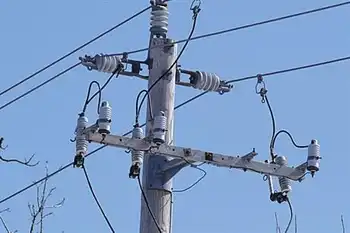
Substation Maintenance Training delivers live online instruction on testing switchgear, circuit breakers, transformers, protective relays, batteries, and SCADA systems, covering safety procedures, condition assessment, predictive maintenance, and compliance for utility substations.


Key Points

A live online course on testing and maintaining substation switchgear, breakers, transformers, relays, and batteries.

✅ Live instructor-led, 12-hour web-based training

✅ Covers testing: insulation resistance, contact resistance, TLI

✅ Includes 7 days of post-course email mentoring


Our Substation Maintenance Training course is a 12-Hour Live online instruction-led course that will cover the maintenance and testing requirements for common substation facilities, and complements VFD drive training for professionals managing motor control systems.

Electrical Transformer Maintenance Training

Substation Maintenance Training

Request a Free Training Quotation

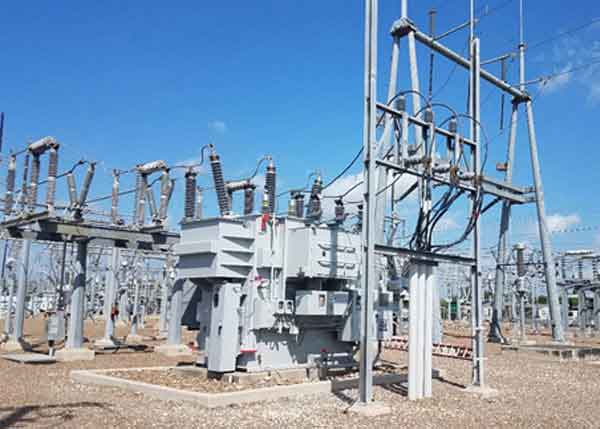
Electrical Substation maintenance is a key component of any substation owner's electrical maintenance program. It has been well documented that failures in key procedures such as racking mechanisms, meters, relays and busses are among the most common source of unplanned outages. Electrical transmission, distribution and switching substations, as seen in BC Hydro's Site C transmission line work milestone, generally have switching, protection and control equipment and one or more transformers.Our electrical substation maintenance course focuses on maintenance and testing of switchgear, circuit breakers, batteries and protective relays.

This Substation Maintenance Training course will cover the maintenance and testing requirements for common substation devices, including power transformers, oil, air and vacuum circuit breakers, switchgear, ground grid systems aligned with NEC 250 grounding and bonding guidance, batteries, chargers and insulating liquids. This course focuses on what to do, when to do it and how to interpret the results from testing and maintenance. This Substation Maintenance course will deal with all of these important issues.

You Can Access The Live Online Training Through Our Web-Based Platform From Your Own Computer. You Can See And Hear The Instructor And See His Screen Live.

You Can Interact And Ask Questions, similar to our motor testing training sessions delivered online. The Cost Of The Training Also Includes 7 Days Of Email Mentoring With The Instructor.


LEARNING OBJECTIVES

  • Substation Types, Applications, Components And lightning protection systems safety procedures
  • Maintenance And Testing Methods For Medium-Voltage Circuit Breakers
  • How To Perform Insulation Resistance, Contact Resistance On Air, Oil And Vacuum Breakers, And Tank Loss Index On Oil Circuit Breaker And Vacuum Bottle Integrity Tests On Vacuum Breaker
  • Switchgear Arrangement, Torque Requirements, Insulation Systems, grounding guidelines And Maintenance Intervals
  • How To Perform Switchgear Inspection And Maintenance


WHO SHOULD ATTEND

This course is designed for engineering project managers, engineers, and technicians from utilities who have built or are considering building or retrofitting substations or distribution systems with SCADA and substation integration and automation equipment, and for teams focused on electrical storm safety in the field.

Complete Course Details Here:

https://electricityforum.com/electrical-training/substation-maintenance-training


Related News

View more

Are Norwegian energy firms ‘best in class’ for environmental management?

CO2 Tax for UK Offshore Energy Efficiency can accelerate adoption of aero-derivative gas turbines, flare gas recovery, and combined cycle power, reducing emissions on platforms like Equinor's Mariner and supporting net zero goals.


Key Points

A carbon price pushing operators to adopt efficient turbines, flare recovery, and combined cycle to cut emissions.

✅ Aero-derivative turbines beat industrial units on efficiency

✅ Flare gas recovery cuts routine flaring and fuel waste

✅ Combined cycle raises efficiency and lowers emissions


By Tom Baxter

The recent Energy Voice article from the Equinor chairman concerning the Mariner project heralding a ‘significant point of reference’ for growth highlighted the energy efficiency achievements associated with the platform.

I view energy efficiency as a key enabler to net zero, and alongside this the UK must start large-scale storage to meet system needs; it is a topic I have been involved with for many years.

As part of my energy efficiency work, I investigated Norwegian practices and compared them with the UK.

There were many differences, here are three;


1. Power for offshore installations is usually supplied from gas turbines burning fuel from the oil and gas processing plant, and even as the UK's offshore wind supply accelerates, installations convert that to electricity or couple the gas turbine to a machine such as a gas compressor.

There are two main generic types of gas turbine – aero-derivative and industrial. As the name implies aero-derivatives are aviation engines used in a static environment. Aero-derivative turbines are designed to be energy efficient as that is very import for the aviation industry.

Not so with industrial type gas turbines; they are typically 5-10% less efficient than a comparable aero-derivative.

Industrial machines do have some advantages – they can be cheaper, require less frequent maintenance, they have a wide fuel composition tolerance and they can be procured within a shorter time frame.

My comparison showed that aero-derivative machines prevailed in Norway because of the energy efficiency advantages – not the case in the UK where there are many more offshore industrial gas turbines.

Tom Baxter is visiting professor of chemical engineering at Strathclyde University and a retired technical director at Genesis Oil and Gas Consultants


2. Offshore gas flaring is probably the most obvious source of inefficient use of energy with consequent greenhouse gas emissions.

On UK installations gas is always flared due to the design of the oil and gas processing plant.

Though not a large quantity of gas, a continuous flow of gas is routinely sent to flare from some of the process plant.

In addition the flare requires pilot flames to be maintained burning at all times and, while Europe explores electricity storage in gas pipes, a purge of hydrocarbon gas is introduced into the pipes to prevent unsafe air ingress that could lead to an explosive mixture.

On many Norwegian installations the flare system is designed differently. Flare gas recovery systems are deployed which results in no flaring during continuous operations.

Flare gas recovery systems improve energy efficiency but they are costly and add additional operational complexity.


3. Returning to gas turbines, all UK offshore gas turbines are open cycle – gas is burned to produce energy and the very hot exhaust gases are vented to the atmosphere. Around 60 -70% of the energy is lost in the exhaust gases.

Some UK fields use this hot gas as a heat source for some of the oil and gas treatment operations hence improving energy efficiency.

There is another option for gas turbines that will significantly improve energy efficiency – combined cycle, and in parallel plans for nuclear power under the green industrial revolution aim to decarbonise supply.

Here the exhaust gases from an open cycle machine are taken to a separate turbine. This additional turbine utilises exhaust heat to produce steam with the steam used to drive a second turbine to generate supplementary electricity. It is the system used in most UK power stations, even as UK low-carbon generation stalled in 2019 across the grid.

Open cycle gas turbines are around 30 – 40% efficient whereas combined cycle turbines are typically 50 – 60%. Clearly deploying a combined cycle will result in a huge greenhouse gas saving.

I have worked on the development of many UK oil and gas fields and combined cycle has rarely been considered.

The reason being is that, despite the clear energy saving, they are too costly and complex to justify deploying offshore.

However that is not the case in Norway where combined cycle is used on Oseberg, Snorre and Eldfisk.

What makes the improved Norwegian energy efficiency practices different from the UK – the answer is clear; the Norwegian CO2 tax.

A tax that makes CO2 a significant part of offshore operating costs.

The consequence being that deploying energy efficient technology is much easier to justify in Norway when compared to the UK.

Do we need a CO2 tax in the UK to meet net zero – I am convinced we do. I am in good company. BP, Shell, ExxonMobil and Total are supporting a carbon tax.

Not without justification there has been much criticism of Labour’s recent oil tax plans, alongside proposals for state-owned electricity generation that aim to reshape the power market.

To my mind Labour’s laudable aims to tackle the Climate Emergency would be much better served by supporting a CO2 tax that complements the UK's coal-free energy record by strengthening renewable investment.


Related News

View more

IEA: Asia set to use half of world's electricity by 2025

Asia Electricity Consumption 2025 highlights an IEA forecast of surging global power demand led by China, lagging access in Africa, rising renewables and nuclear output, stable emissions, and weather-dependent grids needing flexibility and electrification.


Key Points

An IEA forecast that Asia will use half of global power by 2025, led by China, as renewables and nuclear drive supply.

✅ Asia to use half of global electricity; China leads growth

✅ Africa just 3% consumption despite rapid population growth

✅ Renewables, nuclear expand; grids must boost flexibility


Asia will for the first time use half of the world’s electricity by 2025, even as global power demand keeps rising and Africa continues to consume far less than its share of the global population, according to a new forecast released Wednesday by the International Energy Agency.

Much of Asia’s electricity use will be in China, a nation of 1.4 billion people whose China's electricity sector is seeing shifts as its share of global consumption will rise from a quarter in 2015 to a third by the middle of this decade, the Paris-based body said.

“China will be consuming more electricity than the European Union, United States and India combined,” said Keisuke Sadamori, the IEA’s director of energy markets and security.

By contrast, Africa — home to almost a fifth of world’s nearly 8 billion inhabitants — will account for just 3% of global electricity consumption in 2025.

“This and the rapidly growing population mean there is still a massive need for increased electrification in Africa,” said Sadamori.

The IEA’s annual report predicts that low-emissions sources will account for much of the growth in global electricity supply over the coming three years, including nuclear power and renewables such as wind and solar. This will prevent a significant rise in greenhouse gas emissions from the power sector, it said.

Scientists say sharp cuts in all sources of emissions are needed as soon as possible to keep average global temperatures from rising 1.5 degrees Celsius (2.7 Fahrenheit) above pre-industrial levels. That target, laid down in the 2015 Paris climate accord, appears increasingly doubtful as temperatures have already increased by more than 1.1 C since the reference period.

One hope for meeting the goal is a wholesale shift away from fossil fuels such as coal, gas and oil toward low-carbon sources of energy. But while some regions are reducing their use of coal and gas for electricity production, in others, soaring electricity and coal use are increasing, the IEA said.

The 134-page also report warned that surging electricity demand and supply are becoming increasingly weather dependent, a problem it urged policymakers to address.

“In addition to drought in Europe, there were heat waves in India (last year),” said Sadamori. “Similarly, central and eastern China were hit by heatwaves and drought. The United States, where electricity sales projections continue to fall, also saw severe winter storms in December, and all those events put massive strain on the power systems of these regions.”

“As the clean energy transition gathers pace, the impact of weather events on electricity demand will intensify due to the increased electrification of heating, while the share of weather-dependent renewables poised to eclipse coal will continue to grow in the generation mix,” the IEA said. “In such a world, increasing the flexibility of power systems while ensuring security of supply and resilience of networks will be crucial.”


Related News

View more

Closure of 3 Southern California power plants likely to be postponed

California Gas Plant Extensions keep Ormond Beach, AES Alamitos, and Huntington Beach on standby for grid reliability during heat waves, as regulators balance renewables, battery storage, and power, pending State Water Resources Control Board approval.


Key Points

State plan extending three coastal gas plants to 2026, adding capacity as California expands renewables and storage.

✅ Extends Ormond Beach, AES Alamitos, AES Huntington Beach

✅ Mitigates blackout risk during extreme heat and peak demand

✅ Pending State Water Resources Control Board approval


Temperatures in many California cities are cooling down this week, but a debate is simmering on how to generate enough electricity to power the state through extreme weather events while transitioning away from a reliance on fossil fuels as clean energy progress indicates statewide.

The California Energy Commission voted Wednesday to extend the life of three gas power plants along the state’s southern coast through 2026, even as natural-gas electricity records persist nationwide, postponing a shutoff deadline previously set for the end of this year. The vote would keep the decades-old facilities _ Ormond Beach Generating Station, AES Alamitos and AES Huntington Beach — open so they can run during emergencies.

The state is at a greater risk of blackouts during major events when many Californians simultaneously crank up their air conditioning, such as a blistering heat wave, illustrated by widespread utility shutoffs in recent years.

“We need to move faster in incorporating renewable energy. We need to move faster at incorporating battery storage. We need to build out chargers faster,” commissioner Patricia Monahan said amid an ongoing debate over the classification of nuclear power in California. “We’re working with all the energy institutions to do that, but we are not there yet.”

The plan, put together by the state’s Department of Water Resources, still needs final approval from the State Water Resources Control Board, which may vote on the issue next week. Democratic Gov. Gavin Newsom signed legislation last year creating an energy reserve the state could use as a last resort if there is likely to be an energy shortage, a challenge mirrored by Ontario electricity shortfall concerns elsewhere. The law allowed the Department of Water Resources to fund or secure power sources in those instances, after PG&E shutdown reasons drew attention to grid vulnerabilities.

The commission acknowledged it was a difficult decision. Environmentalists say the state needs to transition to more short- and long-term solutions that will help it move away from fossil fuels and to rely more on renewable energy sources like solar and wind, similar to Ontario's clean power push in recent years. They’re also concerned about the health impacts associated with pollution from gas plants.


Related News

View more

Reliability of power winter supply puts Newfoundland 'at mercy of weather': report

Labrador Island Link Reliability faces scrutiny as Nalcor Energy and General Electric address software issues; Liberty Consulting warns of Holyrood risks, winter outages, grid stability concerns, and PUB oversight for Newfoundland and Labrador.


Key Points

It is the expected dependability of the link this winter, currently uncertain due to GE software and Holyrood risks.

✅ GE software delays may hinder reliable in-service by mid-November.

✅ Holyrood performance issues increase winter outage risk.

✅ PUB directs Hydro to plan contingencies and improve assets.


An independent consultant is questioning if the brand new Labrador Island link can be counted on to supply power to Newfoundland this coming winter.

In June, Nalcor Energy confirmed it had successfully sent power from Churchill Falls to the Avalon Peninsula through its more than 1500-kilometre link, but now the Liberty Consulting Group says it doesn't expect the link will be up and running consistently this winter.

"What we have learned supports a conclusion that the Labrador Island Link is unlikely to be reliably in commercial operation at the start of the winter," says the report dated Aug. 30, 2018.

The link relies on software provided by General Electric but Liberty says there are lingering questions about GE's ability to ensure the necessary software will be in place this fall.

"At an August meeting, company representatives did not express confidence in GE's ability to meet an in-service date for the Labrador Island Link of mid-November," says the report.

Liberty also says testing the link for a brief period this spring and fall doesn't demonstrate long-term reliability.

"The link will remain prone to the uncertainties any new major facility faces early in its operating life, especially one involving technology new to the operating company," according to the report.

Holyrood trouble

The report goes on to say island residents should also be worried about the reliability of the troubled Holyrood facility — a facility that's important when demand for energy is high during winter months.

Liberty says "poor performance at the Holyrood thermal generating station increases the risk of outages considerably."

The group's report concludes the deteriorating condition of Holyrood is a major threat to the island's power supply and Liberty says that threat "could produce very severe consequences when the Labrador Island Link is unavailable."

The consultant says questions about the Labrador Island Link's readiness combined with concerns about the reliability of Holyrood may mean power outages, and for vulnerable customers, debates over hydro disconnections policies often intensify during winter.

"This all suggests that, for at least part of this winter, the island interconnected system may be at the mercy of the weather, where severe events can test utilities' storm response efforts further."

The consultant's report also includes five recommendations to the PUB, reflecting the kind of focused nuclear alert investigation follow-up seen elsewhere.

In essence, Liberty is calling for the board to direct Newfoundland and Labrador Hydro to make plans for the possibility that the link won't be available this winter. It's also calling on hydro to do more to improve the reliability of its other assets, such as Holyrood, as some operators have even contemplated locking down key staff to maintain operations during crises.

Response to Liberty's report

Nalcor CEO Stan Marshall defended the Crown corporation's winter preparedness in an email statement to CBC.

"The right level of planning and investment has been made for our existing equipment so we can continue to meet all of our customer electricity needs for this coming winter season," he wrote.

Regarding the Labrador Island Link, Marshall called for patience.

"This is new technology for our province and integrating the new transmission assets into our current electricity system is complex work that takes time," he said.

There is also a more detailed response from Newfoundland and Labrador Hydro which was sent to the province's Public Utiltiies Board.

Hydro says it will keep testing the Labrador Island Link and increasing the megawatts that are wheeled through it. It also says in October it will begin to give the PUB regular reports on the link's anticipated in-service date.


Related News

View more

China's nuclear energy on steady development track, say experts

China Nuclear Power Expansion accelerates with reactor approvals, Hualong One and CAP1400 deployments, rising gigawatts, clean energy targets, carbon neutrality goals, and grid reliability benefits to meet coastal demand and reduce emissions.


Key Points

An accelerated reactor buildout to add clean capacity, curb emissions, and improve grid reliability nationwide.

✅ Approvals surge for Hualong One and CAP1400 third-gen reactors

✅ Capacity targets approach 100 GW installed by 2030

✅ Supports carbon neutrality, energy security, and lower costs


While China has failed to accomplish its 2020 nuclear target of 58 gigawatts under operation and 30 GW under construction, insiders are optimistic about prospects for the nonpolluting energy resource in China over the next five years as the country has stepped up nuclear approvals and construction since 2020.

China expects to record 49 operating nuclear facilities and capacity of more than 51 GW as of the end of 2020. Nuclear power currently makes up around 2.4 percent of the country's total installed energy capacity, said the China Nuclear Energy Association. There are 19 facilities that have received approval and are under construction, with capacity exceeding 20 GW, ranking top globally as nuclear project milestones worldwide continue, it said.

"With surging power demand from coastal regions, more domestic technology, including next-gen nuclear, will be adopted with installations likely nearing 100 GW by the end of 2030," said Wei Hanyang, a power market analyst at Bloomberg New Energy.

Following the Fukushima nuclear reactor disaster in 2011 in Japan, China has, like many countries including Japan, Germany and Switzerland, suspended nuclear power project approvals for a period, including construction of the pilot project of Shidaowan nuclear power plant in Shandong province that uses CAP1400 technology, based on third-generation Westinghouse AP1000 reactor technology.

As China promotes greener development and prioritizes safety and security of nuclear power plant construction, it has pledged to hit peak emissions before 2030 and achieve carbon neutrality by 2060, with electricity meeting 60% of energy use by 2060 according to Shell, the Shidaowan plant, originally scheduled to launch construction in 2014 and enter service in 2018, is expected to start fuel loading and begin operations this year.

Joseph Jacobelli, an independent energy analyst and executive vice-president for Asia business at Cenfura Ltd, a smart energy services company, said recent developments confirm China's ongoing commitment to further boost the country's nuclear sector.

"The nuclear plants can help meet China's goal of reducing greenhouse gas emissions as the country reduces coal power production and provide air pollution-free energy at a lower cost to consumers. China's need for clean energy means that nuclear power generation definitely has an important place in the long-term energy mix," Jacobelli said.

He added that Chinese companies' cost control capabilities and technological advancements, and operational performance improvements such as the AP1000 refueling outage record, are also likely to continue providing domestic companies with advantages, as the cost per kilowatt-hour is very important, especially as solar, wind and other clean energy solutions become even cheaper over the next few years.

China approved two nuclear projects in 2020- Hainan Changjiang nuclear power plant unit 2 and Zhejiang San'ao nuclear power plant unit 1. This is after the country launched three new nuclear power plants in 2019 in the provinces of Shandong, Fujian and Guangdong, which marked the end of a moratorium on new projects.

The Zhejiang San'ao nuclear power plant saw concrete poured for unit 1 on Dec 31, according to its operator China General Nuclear. It will be the first of six Hualong One pressurized water reactors to be built at the site as well as the first Chinese nuclear power plant project to involve private capital.

Jointly invested, constructed and operated by CGN, Zheneng Electric Power, Wenzhou Nuclear Energy Development, Cangnan County Haixi Construction Development and Geely Maijie Investment, the project creates a new model of mixed ownership of nuclear power enterprises, said CGN.

The world's first Hualong One reactor at unit 5 of China National Nuclear Corp's Fuqing nuclear plant in Fujian province was connected to the grid in November. With the start of work on San'ao unit 1, China now has further seven Hualong One units under construction, including Fuqing 6, which is scheduled to go online this year.

CNNC is also constructing one unit at Taipingling in Guangdong and two at Zhangzhou in Fujian province. CGN is building two at its Fangchenggang site in Guangxi Zhuang autonomous region. In addition, two Hualong One units are under construction at Karachi in Pakistan, while CGN proposes to use a UK version of the Hualong One at Bradwell in the United Kingdom, aligning with the country's green industrial revolution strategy.


Related News

View more

Sign Up for Electricity Forum’s Newsletter

Stay informed with our FREE Newsletter — get the latest news, breakthrough technologies, and expert insights, delivered straight to your inbox.

Electricity Today T&D Magazine Subscribe for FREE

Stay informed with the latest T&D policies and technologies.
  • Timely insights from industry experts
  • Practical solutions T&D engineers
  • Free access to every issue

Download the 2025 Electrical Training Catalog

Explore 50+ live, expert-led electrical training courses –

  • Interactive
  • Flexible
  • CEU-cerified