By ssss
Electrical Testing & Commissioning of Power Systems
Our customized live online or in‑person group training can be delivered to your staff at your location.
- Live Online
- 12 hours Instructor-led
- Group Training Available
By ssss
Our customized live online or in‑person group training can be delivered to your staff at your location.
COVID-19 Impact on Global Oil Demand 2020 signals an IEA forecast of declining consumption as travel restrictions curb transport fuels, disrupt energy markets, and shift OPEC and non-OPEC supply dynamics amid economic slowdown.
IEA sees first demand drop since 2009 as COVID-19 curbs travel, weakening transport fuels and unsettling energy markets.
✅ IEA base case: 2020 demand at 99.9 mb/d, down 90 kb/d from 2019.
✅ Travel restrictions hit transport fuels; China drives the decline.
✅ Scenarios: low -730 kb/d; high +480 kb/d in 2020.
Global oil demand is expected to decline in 2020 as the impact of the new coronavirus (COVID-19) spreads around the world, constricting travel and broader economic activity, according to the International Energy Agency’s latest oil market forecast.
The situation remains fluid, creating an extraordinary degree of uncertainty over what the full global impact of the virus will be. In the IEA’s central base case, even as global CO2 emissions flatlined in 2019 according to the IEA, demand this year drops for the first time since 2009 because of the deep contraction in oil consumption in China, and major disruptions to global travel and trade.
“The coronavirus crisis is affecting a wide range of energy markets – including coal-fired electricity generation, gas and renewables – but its impact on oil markets is particularly severe because it is stopping people and goods from moving around, dealing a heavy blow to demand for transport fuels,” said Dr Fatih Birol, the IEA’s Executive Director. “This is especially true in China, the largest energy consumer in the world, which accounted for more than 80% of global oil demand growth last year. While the repercussions of the virus are spreading to other parts of the world, what happens in China will have major implications for global energy and oil markets.”
The IEA now sees global oil demand at 99.9 million barrels a day in 2020, down around 90,000 barrels a day from 2019. This is a sharp downgrade from the IEA’s forecast in February, which predicted global oil demand would grow by 825,000 barrels a day in 2020.
The short-term outlook for the oil market will ultimately depend on how quickly governments move to contain the coronavirus outbreak, how successful their efforts are, and what lingering impact the global health crisis has on economic activity.
To account for the extreme uncertainty facing energy markets, the IEA has developed two other scenarios for how global oil demand could evolve this year. In a more pessimistic low case, global measures fail to contain the virus, and global demand falls by 730,000 barrels a day in 2020. In a more optimistic high case, the virus is contained quickly around the world, and global demand grows by 480,000 barrels a day.
“We are following the situation extremely closely and will provide regular updates to our forecasts as the picture becomes clearer,” Dr Birol said. “The impact of the coronavirus on oil markets may be temporary. But the longer-term challenges facing the world’s suppliers are not going to go away, especially those heavily dependent on oil and gas revenues. As the IEA has repeatedly said, these producer countries need more dynamic and diversified economies in order to navigate the multiple uncertainties that we see today.”
The IEA also published its medium-term outlook examining the key issues in global demand, supply, refining and trade to 2025, as well as the trajectory of the global energy transition now shaping markets. Following a contraction in 2020 and an expected sharp rebound in 2021, yearly growth in global oil demand is set to slow as consumption of transport fuels grows more slowly and as national net-zero pathways, with Canada needing more electricity to reach net-zero influencing power demand, according to the report. Between 2019 and 2025, global oil demand is expected to grow at an average annual rate of just below 1 million barrels a day. Over the period as whole, demand rises by a total of 5.7 million barrels a day, with China and India accounting for about half of the growth.
At the same time, the world’s oil production capacity is expected to rise by 5.9 million barrels a day, with more than three-quarters of it coming from non-OPEC producers, the report forecasts. But production growth in the United States and other non-OPEC countries is set to lose momentum after 2022, amid shifts in Wall Street's energy strategy linked to policy signals, allowing OPEC producers from the Middle East to turn the taps back up to help keep the global oil market in balance.
The medium-term market report, Oil 2020, also considers the impact of clean energy transitions on oil market trends. Demand growth for gasoline and diesel between 2019 and 2025 is forecast to weaken as countries around the world implement policies to improve efficiency and cut carbon dioxide emissions – and as solar power becomes the cheapest electricity in many markets and electric vehicles increase in popularity. The impact of energy transitions on oil supply remains unclear, with many companies prioritising short-cycle projects for the coming years.
“The coronavirus crisis is adding to the uncertainties the global oil industry faces as it contemplates new investments and business strategies,” Dr Birol said. “The pressures on companies are changing, with European oil majors turning electric to diversify. They need to show that they can deliver not just the energy that economies rely on, but also the emissions reductions that the world needs to help tackle our climate challenge.”
New Zealand Renewable Energy Strategy examines decarbonisation, GHG emissions, and net energy as electrification accelerates, expanding hydro, geothermal, wind, and solar PV while weighing intermittency, storage, materials, and energy security for a resilient power system.
A plan to expand electricity generation, balancing decarbonisation, net energy limits, and energy security.
✅ Distinguishes decarbonisation targets from renewable capacity growth
✅ Highlights net energy limits, intermittency, and storage needs
✅ Addresses materials, GHG build-out costs, and energy security
The Electricity Authority has released a document outlining a plan to achieve the Government’s goal of more than doubling the amount of electricity generated in New Zealand over the next few decades.
This goal is seen as a way of both reducing our greenhouse gas (GHG) emissions overall, as everything becomes electrified, and ensuring we have a 100 percent renewable energy system at our disposal. Often these two goals are seen as being the same – to decarbonise we must transition to more renewable energy to power our society.
But they are quite different goals and should be clearly differentiated. GHG emissions could be controlled very effectively by rationing the use of a fossil fuel lockdown approach, with declining rations being available over a few years. Such a direct method of controlling emissions would ensure we do our bit to remain within a safe carbon budget.
If we took this dramatic step we could stop fretting about how to reduce emissions (that would be guaranteed by the rationing), and instead focus on how to adapt our lives to the absence of fossil fuels.
Again, these may seem like the same task, but they are not. Decarbonising is generally thought of in terms of replacing fossil fuels with some other energy source, signalling that a green recovery must address more than just wind capacity. Adapting our lives to the absence of fossil fuels pushes us to ask more fundamental questions about how much energy we actually need, what we need energy for, and the impact of that energy on our environment.
MBIE data indicate that between 1990 and 2020, New Zealand almost doubled the total amount of energy it produced from renewable energy sources - hydro, geothermal and some solar PV and wind turbines.
Over this same time period our GHG emissions increased by about 25 percent. The increase in renewables didn’t result in less GHG emissions because we increased our total energy use by almost 50 percent, mostly by using fossil fuels. The largest fossil fuel increases were used in transport, agriculture, forestry and fisheries (approximately 60 percent increases for each).
These data clearly demonstrate that increasing renewable energy sources do not necessarily result in reduced GHG emissions.
The same MBIE data indicate that over this same time period, the amount of Losses and Own Use category for energy use more than doubled. As of 2020 almost 30 percent of all energy consumed in New Zealand fell into this category.
These data indicate that more renewable energy sources are historically associated with less energy actually being available to do work in society.
While the category Losses and Own Use is not a net energy analysis, the large increase in this category makes the call for a system-wide net energy analysis all the more urgent.
Net energy is the amount of energy available after the energy inputs to produce and deliver the energy is subtracted. There is considerable data available indicating that solar PV and wind turbines have a much lower net energy surplus than fossil fuels.
And there is further evidence that when the intermittency and storage requirements are engineered into a total renewable energy system, the net energy of the entire system declines sharply. Could the Losses and Other Uses increase over this 30-year period be an indication of things to come?
Despite the importance of net energy analysis in designing a national energy system which is intended to provide energy security and resilience, there is not a single mention of net energy surplus in the EA reference document.
So over the last 30 years, New Zealand has doubled its renewable energy capacity, and at the same time increased its GHG emissions and reduced the overall efficiency of the national energy system.
And we are now planning to more than double our renewable energy system yet again over the next 30 years, even as zero-emissions electricity by 2035 is being debated elsewhere. We need to ask if this is a good idea.
How can we expand New Zealand’s solar PV and wind turbines without using fossil fuels? We can’t.
How could we expand our solar PV and wind turbines without mining rare minerals and the hidden costs of clean energy they entail, further contributing to ecological destruction and often increasing social injustices? We can't.
Even if we could construct, deliver, install and maintain solar PV and wind turbines without generating more GHG emissions and destroying ecosystems and poor communities, this “renewable” infrastructure would have to be replaced in a few decades. But there are at least two major problems with this assumed scenario.
The rare earth minerals required for this replacement will already be exhausted by the initial build out. Recycling will only provide a limited amount of replacements.
The other challenge is that a mostly “renewable” energy system will likely have a considerably lower net energy surplus. So where, in 2060, will the energy come from to either mine or recycle the raw materials, and to rebuild, reinstall and maintain the next iteration of a renewable energy system?
There is currently no plan for this replacement. It is a serious misnomer to call these energy technologies “renewable”. They are not as they rely on considerable raw material inputs and fossil energy for their production and never ending replacement.
New Zealand is, of course, blessed with an unusually high level of hydro electric and geothermal power. New Zealand currently uses over 170 GJ of total energy per capita, 40 percent of which is “renewable”. This provides approximately 70 GJ of “renewable” energy per capita with our current population.
This is the average global per capita energy level from all sources across all nations, as calls for 100% renewable energy globally emphasize. Several nations operate with roughly this amount of total energy per capita that New Zealand can generate just from “renewables”.
It is worth reflecting on the 170 GJ of total energy use we currently consume. Different studies give very different results regarding what levels are necessary for a good life.
For a complex industrial society such as ours, 100 GJ pc is said to be necessary for a high levels of wellbeing, determined both subjectively (life satisfaction/ happiness measures), and objectively (e.g. infant mortality levels, female morbidity as an index of population health, access to nutritious food and educational and health resources, etc). These studies do not take into account the large amount of energy that is wasted either through inefficient technologies, or frivolous use, which effective decarbonization strategies seek to reduce.
Other studies that consider the minimal energy needed for wellbeing suggest a much lower level of per capita energy consumption is required. These studies take a different approach and focus on ensuring basic wellbeing is maintained, but not necessarily with all the trappings of a complex industrial society. Their results indicate a level of approximately 20 GJ per capita is adequate.
In either case, we in New Zealand are wasting a lot of energy, both in terms of the efficiency of our technologies (see the Losses and Own Use info above), and also in our uses which do not contribute to wellbeing (think of the private vehicle travel that could be done by active or public transport – if we had good infrastructure in place).
We in New Zealand need a national dialogue about our future. And energy availability is only one aspect. We need to discuss what our carrying capacity is, what level of consumption is sustainable for our population, and whether we wish to make adjustments in either our per capita consumption or our population. Both together determine whether we are on the sustainable side of carrying capacity. Currently we are on the unsustainable side, meaning our way of life cannot endure. Not a good look for being a good ancestor.
The current trajectory of the Government and Electricity Authority appears to be grossly unsustainable. At the very least they should be able to answer the questions posed here about the GHG emissions from implementing a totally renewable energy system, the net energy of such a system, and the related environmental and social consequences.
Public dialogue is critical to collectively working out our future. Allowing the current profit-driven trajectory to unfold is a recipe for disasters for our children and grandchildren.
Being silent on these issues amounts to complicity in allowing short-term financial interests and an addiction to convenience jeopardise a genuinely secure and resilient future. Let’s get some answers from the Government and Electricity Authority to critical questions about energy security.
Yukon Electricity Demand Record underscores peak load growth as winter cold snaps drive heating, lighting, and EV charging, blending hydro, LNG, and diesel with renewable energy and planned grid-scale battery storage in Whitehorse.
It is the territory's new peak electricity load, reflecting winter demand, electric heating, EVs, and mixed generation.
✅ New peak: 104.42 MW, surpassing 2020 record of 103.84 MW
✅ Winter peaks met with hydro, LNG, diesel, and renewables mix
✅ Customers urged to shift use off peak hours and use timers
A new record for electricity demand has been set in Yukon. The territory recorded a peak of 104.42 megawatts, according to a news release from Yukon Energy.
The new record is about a half a megawatt higher than the previous record of 103.84 megawatts recorded on Jan. 14, 2020.
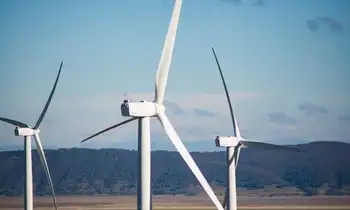
While in general, over 90 per cent of the electricity generated in Yukon comes from renewable resources each year, with initiatives such as new wind turbines expanding capacity, during periods of high electricity use each winter, Yukon Energy has to use its hydro, liquefied natural gas and diesel resources to generate the electricity, the release says.
But when it comes to setting records, Andrew Hall, CEO of Yukon Energy, says it's not that unusual.
"Typically, during the winter, when the weather is cold, demand for electricity in the Yukon reaches its maximum. And that's because folks use more electricity for heating their homes, for cooking meals, there's more lighting demand, because the days are shorter," he said.
"It usually happens either in December or sometimes in January, when we get a cold snap."
He said generally over the years, electricity demand has grown.
"We get new home construction, construction of new apartment buildings. And typically, those new homes are all heated by electricity, maybe not all of them but the majority," Hall said.
Vuntut Gwitchin First Nation's solar farm now generating electricity
In taking action on climate, this Arctic community wants to be a beacon to the world
Efforts to curb climate change add to electricity demand
There are also other reasons, ones that are "in the name of climate change," Hall added.
That includes people trying to limit fossil fuel heating by swapping to electric heating. And, he said some Yukoners are switching to electric vehicles as incentives expand across the North.
"Over time, those two new demands, in the name of climate change, will also contribute to growing demand for electricity," he said.
While Yukon did reach this new all time high, Hall said the territory still hadn't hit the maximum capacity for the week, which was 118 megawatts, and discussions about a potential connection to the B.C. grid are part of long-term planning.
Yukon Energy's hydroelectric dam in Whitehorse. Yukon Energy's CEO, Andrew Hall, said demand of 104 megawatts wasn't unexpected, nor was it an emergency. The corporation has the ability to generate 118 megawatts. (Paul Tukker/CBC)
Tips to curve demand
"When we plan our system, we actually plan for a scenario, guided by the view that sustainability is key to the grid's future, where we actually lose our largest hydro generating facility," Hall said.
"We had plenty of generation available so it wasn't an emergency situation, and, even as other provinces face electricity shortages, it was more just an observation that hey, our peaks are growing."
He also said it was an opportunity to reach out to customers on ways to curve their demand for electricity around peak times, drawing on energy efficiency insights from other provinces, which is typically between 7 a.m. and 9 a.m., and between 5 p.m. and 7 p.m., Monday to Friday.
For example, he said, people should consider running major appliances, like dishwashers, during non-peak hours, such as in the afternoon rather than in the morning or evening.
During winter peaks, people can also use a block heater timer on vehicles and turn down the thermostat by one or two degrees.
'We plan for each winter'
Hall said Yukon Energy is working to increase its peak output, including working on a large grid scale battery to be installed in Whitehorse, similar to Ontario's energy storage push now underway.
When it comes to any added load from people working from home due to COVID-19, Hall said they haven't noticed any identifiable increase there.
"Presumably, if someone's working from home, you know, their computer is at home, and they're not using the computer at the office," he said.
Yukon Energy one step closer to having largest battery storage site in the North
He said there shouldn't be any concern for maxing out the capacity of electricity demand as Yukon moves into the colder winter months, since those days are forecast for.
"This number of 104 megawatts wasn't unexpected," he said, adding how much electricity is needed depends on the weather too.
"We plan for each winter."
Alaska Coal-Fired CHP Plant opens near Usibelli mine, supplying electricity and district heat to UAF; remote location without gas pipelines, low wind and solar potential, and high heating demand shaped fuel choice.
A 17 MW coal CHP at UAF producing power and campus heat, chosen for remoteness and lack of gas pipelines.
✅ 17 MW generator supplying electricity and district heat
✅ Near Usibelli mine; limited pipeline access shapes fuel
✅ Alternative options like LNG, wind, solar not cost-effective
One way to boost coal in the US: Find a spot near a mine with no access to oil or natural gas pipelines, where it’s not particularly windy and it’s dark much of the year.
That’s how the first coal-fired plant to open in the U.S. since 2015 bucked the trend in an industry that’s seen scores of facilities close in recent years. A 17-megawatt generator, built for $245 million, is set to open in April at the University of Alaska Fairbanks, just 100 miles from the state’s only coal mine.
“Geography really drove what options are available to us,” said Kari Burrell, the university’s vice chancellor for administrative services, in an interview. “We are not saying this is ideal by any means.”
The new plant is arriving as coal fuels about 25 percent of electrical generation in the U.S., down from 45 percent a decade earlier, even as some forecasts point to a near-term increase in coal-fired generation in 2021. A near-record 18 coal plants closed in 2018, and 14 more are expected to follow this year, according to BloombergNEF.
The biggest bright spot for U.S. coal miners recently has been exports to overseas power plants. At home, one of the few growth areas has been in pizza ovens.
There are a handful of other U.S. coal power projects that have been proposed, including plans to build an 850 megawatt facility in Georgia and an 895 megawatt plant in Kansas, even as a Minnesota utility reports declining coal returns across parts of its portfolio. But Ashley Burke, a spokeswoman for the National Mining Association, said she’s unaware of any U.S. plants actively under development besides the one in Alaska.
Future of power
“The future of power in the U.S. does not include coal,” Tessie Petion, an analyst for HSBC Holdings Plc, said in a research note, a view echoed by regions such as Alberta retiring coal power early in their transition.
Fairbanks sits on the banks of the Chena River, amid the vast subarctic forests in the heart of Alaska. The oil and gas fields of the state’s North slope are 500 miles north. The nearest major port is in Anchorage, 350 miles south.
The university’s new plant is a combined heat and power generator, which will create steam both to generate electricity and heat campus buildings. Before opting for coal, the school looked into using liquid natural gas, wind and solar, bio-mass and a host of other options, as new projects in Southeast Alaska seek lower electricity costs across the region. None of them penciled out, said Mike Ruckhaus, a senior project manager at the university.
The project, financed with university and state-municipal bonds, replaces a coal plant that went into service in 1964. University spokeswoman Marmian Grimes said it’s worth noting that the new plant will emit fewer emissions.
The coal will come from Usibelli Coal Mine Inc., a family-owned business that produces between 1.2 and 2 million tons per year from a mine along the Alaska railroad, according to the company’s website.
While any new plant is good news for coal miners, Clarksons Platou Securities Inc. analyst Jeremy Sussman said this one is "an isolated situation."
“We think the best producers can hope for domestically is a slow down in plant closures,” he said, even as jurisdictions like Alberta close their last coal plant entirely.
Nova Scotia Power Renewable Energy delivers 30% in 2018, led by wind power, hydroelectric and biomass, with coal and natural gas declining, as Muskrat Falls imports from Labrador target 40% renewables to cut emissions.
It is the utility's 30% 2018 renewable mix and plan to reach 40% via Muskrat Falls while reducing carbon emissions.
✅ 18% wind, 9% hydro and tidal, 3% biomass in 2018
✅ Coal reliance fell from 76% in 2007 to 52% in 2018
✅ 58% carbon emissions cut from 2005 levels projected by 2030
Nova Scotia's private utility says it has hit a new milestone in its delivery of electricity from renewable resources, a trend highlighted by Summerside wind generation in nearby P.E.I.
Nova Scotia Power says 30 per cent of the electricity it produced in 2018 came from renewable sources such as wind power.
The utility says 18 per cent came from wind turbines, nine per cent from hydroelectric and tidal turbines and three per cent by burning biomass.
However, over half of the province's electrical generation still comes from the burning of coal or petroleum coke. Another 13 per cent come from burning natural gas and five per cent from imports, even as U.S. renewable generation hits record shares.
The utility says that since 2007, the province's reliance on coal-fired plants has dropped from 76 per cent of electricity generated to 52 per cent last year, as Prairie renewables growth accelerates nationally.
It says it expects to meet the province's legislated renewable target of 40 per cent in 2020, when it begins accessing hydroelectricity from the Muskrat Falls project in Labrador.
"We have made greener, cleaner energy a priority," utility president and CEO Karen Hutt said in a news release.
"As we continue to achieve new records in renewable electricity, we remain focused on ensuring electricity prices stay predictable and affordable for our customers, including solar customers across the province."
Nova Scotia Power also projects achieving a 58 per cent reduction in carbon emissions from 2005 levels by 2030.
TEP Undergrounding Policy prioritizes selective underground power lines to manage wildfire risk, engineering costs, and ratepayer impacts, balancing transmission and distribution reliability with right-of-way, safety, and vegetation management per Arizona regulators.
A selective TEP approach to bury lines where safety, engineering, and cost justify undergrounding.
✅ Selective undergrounding for feeders near substations
✅ Balances wildfire mitigation, reliability, and ratepayer costs
✅ Follows ACC rules, BLM and USFS vegetation management
Though wildfires in California caused by power lines have prompted calls for more underground lines, Tucson Electric Power Co. plans to keep to its policy of burying lines selectively for safety.
Like many other utilities, TEP typically doesn’t install its long-range, high-voltage transmission lines, such as the TransWest Express project, and distribution equipment underground because of higher costs that would be passed on to ratepayers, TEP spokesman Joe Barrios said.
But the company will sometimes bury lower-voltage lines and equipment where it is cost-effective or needed for safety as utilities adapt to climate change across North America, or if customers or developers are willing to pay the higher installation costs
Underground installations generally include additional engineering expenses, right-of-way acquisition for projects like the New England Clean Power Link in other regions, and added labor and materials, Barrios said.
“This practice avoids passing along unnecessary costs to customers through their rates, so that all customers are not asked to subsidize a discretionary expenditure that primarily benefits residents or property owners in one small area of our service territory,” he said, adding that the Arizona Corporation Commission has supported the company’s policy.
Even so, TEP will place equipment underground in some circumstances if engineering or safety concerns, including electrical safety tips that utilities promote during storm season, justify the additional cost of underground installation, Barrios said.
In fact, lower-voltage “feeder” lines emerging from distribution substations are typically installed underground until the lines reach a point where they can be safely brought above ground, he added.
While in California PG&E has shut off power during windy weather to avoid wildfires in forested areas traversed by its power lines after events like the Drum Fire last June, TEP doesn’t face the same kind of wildfire risk, Barrios said.
Most of TEP’s 5,000 miles of transmission and distribution lines aren’t located in heavily forested areas that would raise fire concerns, though large urban systems have seen outages after station fires in Los Angeles, he said.
However, TEP has an active program of monitoring transmission lines and trimming vegetation to maintain a fire-safety buffer zone and address risks from vandalism such as copper theft where applicable, in compliance with federal regulations and in cooperation with the U.S. Bureau of Land Management and the U.S. Forest Service.
Stay informed with our FREE Newsletter — get the latest news, breakthrough technologies, and expert insights, delivered straight to your inbox.
Advantages To Instructor-Led Training – Instructor-Led Course, Customized Training, Multiple Locations, Economical, CEU Credits, Course Discounts.
Request For QuotationWhether you would prefer Live Online or In-Person instruction, our electrical training courses can be tailored to meet your company's specific requirements and delivered to your employees in one location or at various locations.