Toledo Edison on schedule to complete substation

By FirstEnergy Corp.


Arc Flash Training CSA Z462 - Electrical Safety Essentials

Our customized live online or in‑person group training can be delivered to your staff at your location.
  • Live Online
  • 6 hours Instructor-led
  • Group Training Available
Regular Price:
$249
Coupon Price:
$199
Reserve Your Seat Today
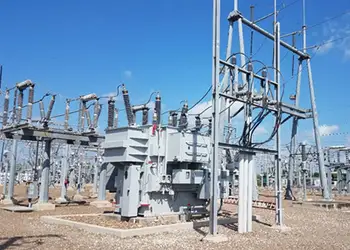
Toledo Edison, a subsidiary of FirstEnergy Corp., will soon complete construction of a new $12 million high-voltage transmission substation in Fulton County to support the load growth experienced in the region and enhance service reliability. The new substation is expected to be in operation by the end of the year.

Located in Fulton Township, northwest of the Village of Swanton, the new substation will be supplied by a nearby existing 345 kV transmission line and will reinforce the existing 138 kV transmission line in the western part of Toledo Edison's service area to help maintain reliable service.

"This new substation demonstrates a continuing commitment to supporting load growth and enhancing reliability across our service area," said Linda Moss, regional president of Toledo Edison. "This investment was necessary because industrial load in the area continues to grow, which is encouraging news for the economy and northwest Ohio."

The substation will provide additional voltage support to five substations on Toledo Edison's system, as well as five customer substations at large industrial operations in the area.

Construction on the Fulton Substation began in February. Contractors were used for all the underground and concrete work, and the rest of the construction is being completed by Toledo Edison employees. The transformer in this substation holds 12,600 gallons of mineral oil and will weigh almost 200 tons when fully assembled. The substation is expected to pay more than $650,000 in property taxes annually, which will benefit local schools, Fulton Township and Fulton County.

Completion of the Fulton Substation is just one part of a planned $23 million in system upgrades in Toledo Edison's service area during 2013. The company also will inspect and preemptively replace equipment and utility poles, replace underground vault tops and continue vegetation management programs across its service area, all designed to enhance service reliability.

FirstEnergy has 10 electric distribution companies that form one of the nation's largest investor-owned electric systems, serving customers in Ohio, Pennsylvania, New Jersey, West Virginia, Maryland, and New York.

Related News

Oil crash only a foretaste of what awaits energy industry

Oil and Gas Profitability Decline reflects shale-driven oversupply, OPEC-Russia dynamics, LNG exports, renewables growth, and weak demand, signaling compressed margins for producers, stressed petrodollar budgets, and shifting energy markets post-Covid.


Key Points

A sustained squeeze on hydrocarbon margins from agile shale supply, weaker OPEC leverage, and expanding renewables.

✅ Shale responsiveness caps prices and erodes industry rents

✅ OPEC-Russia cuts face limited impact versus US supply

✅ Renewables and EVs slow long-term oil and gas demand


The oil-price crash of March 2020 will probably not last long. As in 2014, when the oil price dropped below $50 from $110 in a few weeks, this one will trigger a temporary collapse of the US shale industry. Unless the coronavirus outbreak causes Armageddon, cheap oil will also support policymakers’ efforts to help the global economy.

But there will be at least one important and lasting difference this time round — and it has major market and geopolitical implications.

The oil price crash is a foretaste of where the whole energy sector was going anyway — and that is down.

It may not look that way at first. Saudi Arabia will soon realise, as it did in 2015, that its lethal decision to pump more oil is not only killing US shale but its public finances as well. Riyadh will soon knock on Moscow’s door again. Once American shale supplies collapse, Russia will resume co-operation with Saudi Arabia.

With the world economy recovering from the Covid-19 crisis by then, and with electricity demand during COVID-19 shifting, moderate supply cuts by both countries will accelerate oil market recovery. In time, US shale producers will return too.

Yet this inevitable bounceback should not distract from two fundamental factors that were already remaking oil and gas markets. First, the shale revolution has fundamentally eroded industry profitability. Second, the renewables’ revolution will continue to depress growth in demand.

The combined result has put the profitability of the entire global hydrocarbon industry under pressure. That means fewer petrodollars to support oil-producing countries’ national budgets, including Canada's oil sector exposures. It also means less profitable oil companies, which traditionally make up a large segment of stock markets, an important component of so many western pension funds.

Start with the first factor to see why this is so. Historically, the geological advantages that made oil from countries such as Saudi Arabia so cheap to produce were unique. Because oil and gas were produced at costs far below the market price, the excess profits, or “rent”, enjoyed by the industry were very large.

Furthermore, collusion among low-cost producers has been a winning strategy. The loss of market share through output cuts was more than compensated by immediately higher prices. It was the raison d’être of Opec.

The US shale revolution changed all this, exposing the limits of U.S. energy dominance narratives. A large oil-producing region emerged with a remarkable ability to respond quickly to price changes and shrink its costs over time. Cutting back cheap Opec oil now only increases US supplies, with little effect on world prices.

That is why Russia refused to cut production this month. Even if its cuts did boost world prices — doubtful given the coronavirus outbreak’s huge shock to demand — that would slow the shrinkage of US shale that Moscow wants.

Shale has affected the natural gas industry even more. Exports of US liquefied natural gas now put an effective ceiling on global prices, and debates over a clean electricity push have intensified when gas prices spike.

On top of all this, there is also the renewables’ revolution, though a green revolution has not been guaranteed in the near term. Around the world, wind and solar have become ever-cheaper options to generate electricity. Storage costs have also dropped and network management improved. Even in the US, renewables are displacing coal and gas. Electrification of vehicle fleets will damp demand further, as U.S. electricity, gas, and EVs face evolving pressures.

Eliminating fossil fuel consumption completely would require sustained and costly government intervention, and reliability challenges such as coal and nuclear disruptions add to the complexity. That is far from certain. Meanwhile, though, market forces are depressing the sector’s usual profitability.

The end of oil and gas is not immediately around the corner. Still, the end of hydrocarbons as a lucrative industry is a distinct possibility. We are seeing that in dramatic form in the current oil price crash. But this collapse is merely a message from the future.


Related News

View more

P.E.I. government exploring ways for communities to generate their own electricity

P.E.I. Community Energy Independence empowers local microgrids through renewable generation, battery storage, and legislative reform, enabling community-owned power, stable electricity rates, and grid-friendly distributed generation across Island communities with wind, biomass, and net metering models.


Key Points

A program enabling communities to generate and store renewable power under supportive laws and grid-friendly models.

✅ Legislative review of Electric Power and Renewable Energy Acts

✅ Community microgrids with wind, biomass, and battery storage

✅ Grid integration without raising rates via Maritime Electric


The P.E.I. government is taking steps to review energy legislation and explore new options when it comes to generating power across Island communities.

Energy Minister Steven Myers said one of those options will be identifying ways for Island communities to generate their own energy, aligning with a federal electrification study now examining how electricity can reduce or eliminate fossil fuels. 

He said the move would provide energy independence, create jobs and economic development, and save the communities on their energy bills, as seen with an electricity bill credit in Newfoundland that eased costs for consumers.

But the move will require sweeping legislative changes, that may include the merging of the Electric Power Act and the Renewable Energy Act, similar to an electricity market overhaul in Connecticut seen in other jurisdictions.  

Myers said creating energy independence should ensure a steady supply of electricity while also ensuring costs remain reasonable for P.E.I. residents, even as a Nova Scotia electricity rate hike highlights regional cost pressures.   

"We have communities that are looking to generate their own electricity for their own needs," said Myers, adding the province will not dictate what energy sources communities can invest in. 

He also said the province wants to find new community-based models that will complement existing services.

"How do we do that in a way that we don't impact the grid, that we don't impact the service that Maritime Electric is delivering, mindful of a seasonal rate backlash in New Brunswick that illustrates consumer concerns, that we don't drive up the rates for all other Islanders."

Last fall, a group of P.E.I. MLAs traveled to Samsø, a small Danish island, where they learned about renewable and sustainable energy systems being used there.

The province is looking at storage options so it can store power generated during the day to be used in the evening when electricity use is at its highest. (CBC)
Samsø produces 100 per cent of its electricity from wind and biomass, and utilities like HECO meeting renewable goals early show how quickly transitions can occur. The P.E.I. government said the Island produces 25 per cent of its electricity from wind. 

Following the trip, Myers said he was impressed by the control the island had over its energy production and would like to see if a similar model could work on P.E.I. 

Myers said the legislative review will also look at different ways to store energy on the Island. 

He said that will allow communities to sell that excess energy into the provincial electricity grid, and those revenues could be redirected into that community's priorities. 

'For the survival and the future of their community'
"This is kind of a model that we had suggested that would be in place that would allow people in their own community to produce a revenue stream for themselves that they could then turn into projects like rinks, or parks, or tennis courts or whatever it is that community thinks is the most important thing for the survival and the future of their community," said Myers. 

Energy Minister Steven Myers says creating energy independence could create a steady supply of electricity while also ensuring costs remain reasonable for P.E.I. residents. (Randy McAndrew/CBC)
The province said Maritime Electric, Summerside Electric and the P.E.I. Energy Corporation will be involved in the review, recognizing that a Nova Scotia ruling on rate-setting powers underscores regulatory limits 

Government also wants to hear from Islanders and will be accepting written submissions beginning Monday. Myers said the province is also planning to host public consultations, but because of COVID-19, those will be held virtually in mid-June.

Myers calls this a major move, one that will take time. He said he doesn't expect the legislation to be made public until the spring of 2021.

"I want to make sure we take our time and do the proper consultation."


Related News

View more

Competition in Electricity Has Been Good for Consumers and Good for the Environment

Electricity Market Competition drives lower wholesale prices, stable retail rates, better grid reliability, and faster emissions cuts as deregulation and renewables adoption pressure utilities, improve efficiency, and enhance consumer choice in power markets.


Key Points

Electricity market competition opens supply to rivals, lowering prices, improving reliability, and reducing emissions.

✅ Wholesale prices fell faster in competitive markets

✅ Retail rates rose less than in monopoly states

✅ Fewer outages, shorter durations, improved reliability


By Bernard L. Weinstein

Electricity used to be boring.  Public utilities that provided power to homes and businesses were regulated monopolies and, by law, guaranteed a fixed rate-of-return on their generation, transmission, and distribution assets. Prices per kilowatt-hour were set by utility commissions after lengthy testimony from power companies, wanting higher rates, and consumer groups, wanting lower rates.

About 25 years ago, the electricity landscape started to change as economists and others argued that competition could lead to lower prices and stronger grid reliability. Opponents of competition argued that consumers weren’t knowledgeable enough about power markets to make intelligent choices in a competitive pricing environment. Nonetheless, today 20 states have total or partial competition for electricity, allowing independent power generators to compete in wholesale markets and retail electric providers (REPs) to compete for end-use customers, a dynamic echoed by the Alberta electricity market across North America. (Transmission, in all states, remains a regulated natural monopoly).

A recent study by the non-partisan Pacific Research Institute (PRI) provides compelling evidence that competition in power markets has been a boon for consumers. Using data from the U.S. Energy Information Administration (EIA), PRI’s researchers found that wholesale electricity prices in competitive markets have been generally declining or flat, prompting discussions of free electricity business models, over the last five years. For example, compared to 2015, wholesale power prices in New England have dropped more than 44 percent, those in most Mid-Atlantic States have fallen nearly 42 percent, and in New York City they’ve declined by nearly 45 percent. Wholesale power costs have also declined in monopoly states, but at a considerably slower rate.

As for end-users, states that have competitive retail electricity markets have seen smaller price increases, as consumers can shop for electricity in Texas more cheaply than in monopoly states. Again, using EIA data, PRI found that in 14 competitive jurisdictions, retail prices essentially remained flat between 2008 and 2020. By contrast, retail prices jumped an average of 21 percent in monopoly states.  The ten states with the largest retail price increases were all monopoly-based frameworks. A 2017 report from the Retail Energy Supply Association found customers in states that still have monopoly utilities saw their average energy prices increase nearly 19 percent from 2008 to 2017 while prices fell 7 percent in competitive markets over the same period.

The PRI study also observed that competition has improved grid reliability, the recent power disruptions in California and Texas, alongside disruptions in coal and nuclear sectors across the U.S., notwithstanding. Looking at two common measures of grid resiliency, PRI’s analysis found that power interruptions were 10.4 percent lower in competitive states while the duration of outages was 6.5 percent lower.

Citing data from the EIA between 2008 and 2018, PRI reports that greenhouse gas emissions in competitive states declined on average 12.1 percent compared to 7.3 percent in monopoly states. This result is not surprising, and debates over whether Israeli power supply competition can bring cheaper electricity mirror these dynamics.  In a competitive wholesale market, independent power producers have an incentive to seek out lower-cost options, including subsidized renewables like wind and solar. By contrast, generators in monopoly markets have no such incentive as they can pass on higher costs to end-users. Perhaps the most telling case is in the monopoly state of Georgia where the cost to build nuclear Plant Vogtle has doubled from its original estimate of $14 billion 12 years ago. Overruns are estimated to cost Georgia ratepayers an average of $854, and there is no definite date for this facility to come on line. This type of mismanagement doesn’t occur in competitive markets.

Unfortunately, some critics are attempting to halt the momentum for electricity competition and have pointed to last winter’s “deep freeze” in Texas that left several million customers without power for up to a week. But this example is misplaced. Power outages in February were the result of unprecedented and severe weather conditions affecting electricity generation and fuel supply, and numerous proposals to improve Texas grid reliability have focused on weatherization and fuel resilience; the state simply did not have enough access to natural gas and wind generation to meet demand. Competitive power markets were not a factor.

The benefits of wholesale and retail competition in power markets are incontrovertible. Evidence shows that households and businesses in competitive states are paying less for electricity while grid reliability has improved. The facts also suggest that wholesale and retail competition can lead to faster reductions in greenhouse gas emissions. In short, competition in power markets is good for consumers and good for the environment.

Bernard L. Weinstein is emeritus professor of applied economics at the University of North Texas, former associate director of the Maguire Energy Institute at Southern Methodist University, and a fellow of Goodenough College, London. He wrote this for InsideSources.com.


Related News

View more

An NDP government would make hydro public again, end off-peak pricing, Horwath says in Sudbury

Ontario NDP Hydro Plan proposes ending time-of-use pricing, buying back Hydro One, lowering electricity rates, curbing rural delivery fees, and restoring public ownership to ease household bills amid debates with PCs and Liberals over costs.


Key Points

A plan to end time-of-use pricing, buy back Hydro One, and cut bills via public ownership and fair delivery fees.

✅ End time-of-use pricing; normal schedules without penalties

✅ Repurchase Hydro One; restore public ownership

✅ Cap rural delivery fees; address oversupply to cut rates


Ontario NDP leader Andrea Horwath says her party’s hydro plan will reduce families’ electricity bills, a theme also seen in Manitoba Hydro debates and the NDP is the only choice to get Hydro One back in public hands.

Howarth outlined the plan Saturday morning outside the home of a young family who say they struggle with their electricity bills — in particular over the extra laundry they now have after the birth of their twin boys.

An NDP government would end time-of-use pricing, which charges higher rates during peak times and lower rates after hours, “so that people aren’t punished for cooking dinner at dinner time,” Horwath said at a later campaign stop in Orillia, “so people can live normal lives and still afford their hydro bill.”

#google#

An NDP government would end time-of-use pricing, which gives lower rates for off-peak usage, Howarth said, separate from a recent subsidized hydro plan during COVID-19. The change would mean families wouldn't be "forced to wait until night when the pricing is lower to do laundry," and wouldn't have to rearrange their lives around chores.

The pricing scheme was supposed to lower prices and help smooth out demand for electricity, especially during peak times, but has failed, she said.

In order to lower hydro bills, Horwath said an NDP government would buy back shares of Hydro One sold off under the Wynne government, which she said has led to high prices and exorbitant executive pay among executives. The NDP plan would also make sure rural families do not pay more in delivery fees than city dwellers, and curb the oversupply of energy to bring prices down.

Critics have said the NDP plan is too costly and will take a long time to implement, and investors see too many unknowns about Hydro One.

"The NDP's plan to buy back Hydro One and continue moving forward with a carbon tax will cost taxpayers billions," said Melissa Lantsman, a spokesperson for PC Leader Doug Ford.

"Only Doug Ford has a plan to reduce hydro rates and put money back in people's pockets. We'll reduce your hydro bill by 12 per cent."

Ford has said he will fire Hydro One CEO Mayo Schmidt, and has dubbed him the $6-million-dollar man.

Horwath has said both Ford and Liberal Leader Kathleen Wynne will end up costing Ontarians more in electricity if one of them is elected come June 7. Their "hydro scheme is the wrong plan," she said.


Related News

View more

Longer, more frequent outages afflict the U.S. power grid as states fail to prepare for climate change

Power Grid Climate Resilience demands storm hardening, underground power lines, microgrids, batteries, and renewable energy as regulators and utilities confront climate change, sea level rise, and extreme weather to reduce outages and protect vulnerable communities.


Key Points

It is the grid capacity to resist and recover from climate hazards using buried lines, microgrids, and batteries.

✅ Underground lines reduce wind outages and wildfire ignition risk.

✅ Microgrids with solar and batteries sustain critical services.

✅ Regulators balance cost, resilience, equity, and reliability.


Every time a storm lashes the Carolina coast, the power lines on Tonye Gray’s street go down, cutting her lights and air conditioning. After Hurricane Florence in 2018, Gray went three days with no way to refrigerate medicine for her multiple sclerosis or pump the floodwater out of her basement.

What you need to know about the U.N. climate summit — and why it matters
“Florence was hell,” said Gray, 61, a marketing account manager and Wilmington native who finds herself increasingly frustrated by the city’s vulnerability.

“We’ve had storms long enough in Wilmington and this particular area that all power lines should have been underground by now. We know we’re going to get hit.”

Across the nation, severe weather fueled by climate change is pushing aging electrical systems past their limits, often with deadly results. Last year, amid increasing nationwide blackouts, the average American home endured more than eight hours without power, according to the U.S. Energy Information Administration — more than double the outage time five years ago.

This year alone, a wave of abnormally severe winter storms caused a disastrous power failure in Texas, leaving millions of homes in the dark, sometimes for days, and at least 200 dead. Power outages caused by Hurricane Ida contributed to at least 14 deaths in Louisiana, as some of the poorest parts of the state suffered through weeks of 90-degree heat without air conditioning.

As storms grow fiercer and more frequent, environmental groups are pushing states to completely reimagine the electrical grid, incorporating more grid-scale batteries, renewable energy sources and localized systems known as “microgrids,” which they say could reduce the incidence of wide-scale outages. Utility companies have proposed their own storm-proofing measures, including burying power lines underground.

But state regulators largely have rejected these ideas, citing pressure to keep energy rates affordable. Of $15.7 billion in grid improvements under consideration last year, regulators approved only $3.4 billion, according to a national survey by the NC Clean Energy Technology Center — about one-fifth, highlighting persistent vulnerabilities in the grid nationwide.

After a weather disaster, “everybody’s standing around saying, ‘Why didn’t you spend more to keep the lights on?’ ” Ted Thomas, chairman of the Arkansas Public Service Commission, said in an interview with The Washington Post. “But when you try to spend more when the system is working, it’s a tough sell.”

A major impediment is the failure by state regulators and the utility industry to consider the consequences of a more volatile climate — and to come up with better tools to prepare for it. For example, a Berkeley Lab study last year of outages caused by major weather events in six states found that neither state officials nor utility executives attempted to calculate the social and economic costs of longer and more frequent outages, such as food spoilage, business closures, supply chain disruptions and medical problems.

“There is no question that climatic changes are happening that directly affect the operation of the power grid,” said Justin Gundlach, a senior attorney at the Institute for Policy Integrity, a think tank at New York University Law School. “What you still haven’t seen … is a [state] commission saying: 'Isn’t climate the through line in all of this? Let’s examine it in an open-ended way. Let’s figure out where the information takes us and make some decisions.’ ”

In interviews, several state commissioners acknowledged that failure.

“Our electric grid was not built to handle the storms that are coming this next century,” said Tremaine L. Phillips, a commissioner on the Michigan Public Service Commission, which in August held an emergency meeting to discuss the problem of power outages. “We need to come up with a broader set of metrics in order to better understand the success of future improvements.”

Five disasters in four years
The need is especially urgent in North Carolina, where experts warn Atlantic grids and coastlines need a rethink as the state has declared a federal disaster from a hurricane or tropical storm five times in the past four years. Among them was Hurricane Florence, which brought torrential rain, catastrophic flooding and the state’s worst outage in over a decade in September 2018.

More than 1 million residents were left disconnected from refrigerators, air conditioners, ventilators and other essential machines, some for up to two weeks. Elderly residents dependent on oxygen were evacuated from nursing homes. Relief teams flew medical supplies to hospitals cut off by flooded roads. Desperate people facing closed stores and rotting food looted a Wilmington Family Dollar.

“I have PTSD from Hurricane Florence, not because of the actual storm but the aftermath,” said Evelyn Bryant, a community organizer who took part in the Wilmington response.

The storm reignited debate over a $13 billion proposal by Duke Energy, one of the largest power companies in the nation, to reinforce the state’s power grid. A few months earlier, the state had rejected Duke’s request for full repayment of those costs, determining that protecting the grid against weather is a normal part of doing business and not eligible for the type of reimbursement the company had sought.

After Florence, Duke offered a smaller, $2.5 billion plan, along with the argument that severe weather events are one of seven “megatrends” (including cyberthreats and population growth) that require greater investment, according to a PowerPoint presentation included in testimony to the state. The company owns the two largest utilities in North Carolina, Duke Energy Carolinas and Duke Energy Progress.

Vote Solar, a nonprofit climate advocacy group, objected to Duke’s plan, saying the utility had failed to study the risks of climate impacts. Duke’s flood maps, for example, had not been updated to reflect the latest projections for sea level rise, they said. In testimony, Vote Solar claimed Duke was using environmental trends to justify investments “it had already decided to pursue.”

The United States is one of the few countries where regulated utilities are usually guaranteed a rate of return on capital investments, even as studies show the U.S. experiences more blackouts than much of the developed world. That business model incentivizes spending regardless of how well it solves problems for customers and inspires skepticism. Ric O’Connell, executive director of GridLab, a nonprofit group that assists state and regional policymakers on electrical grid issues, said utilities in many states “are waving their hands and saying hurricanes” to justify spending that would do little to improve climate resilience.

In North Carolina, hurricanes convinced Republicans that climate change is real

Duke Energy spokesman Jeff Brooks acknowledged that the company had not conducted a climate risk study but pointed out that this type of analysis is still relatively new for the industry. He said Duke’s grid improvement plan “inherently was designed to think about future needs,” including reinforced substations with walls that rise several feet above the previous high watermark for flooding, and partly relied on federal flood maps to determine which stations are at most risk.

Brooks said Duke is not using weather events to justify routine projects, noting that the company had spent more than a year meeting with community stakeholders and using their feedback to make significant changes to its grid improvement plan.

This year, the North Carolina Utilities Commission finally approved a set of grid improvements that will cost customers $1.2 billion. But the commission reserved the right to deny Duke reimbursement of those costs if it cannot prove they are prudent and reasonable. The commission’s general counsel, Sam Watson, declined to discuss the decision, saying the commission can comment on specific cases only in public orders.

The utility is now burying power lines in “several neighborhoods across the state” that are most vulnerable to wide-scale outages, Brooks said. It is also fitting aboveground power lines with “self-healing” technology, a network of sensors that diverts electricity away from equipment failures to minimize the number of customers affected by an outage.

As part of a settlement with Vote Solar, Duke Energy last year agreed to work with state officials and local leaders to further evaluate the potential impacts of climate change, a process that Brooks said is expected to take two to three years.

High costs create hurdles
The debate in North Carolina is being echoed in states across the nation, where burying power lines has emerged as one of the most common proposals for insulating the grid from high winds, fires and flooding. But opponents have balked at the cost, which can run in the millions of dollars per mile.

In California, for example, Pacific Gas & Electric wants to bury 10,000 miles of power lines, both to make the grid more resilient and to reduce the risk of sparking wildfires. Its power equipment has contributed to multiple deadly wildfires in the past decade, including the 2018 Camp Fire that killed at least 85 people.

PG&E’s proposal has drawn scorn from critics, including San Jose Mayor Sam Liccardo, who say it would be too slow and expensive. But Patricia Poppe, the company’s CEO, told reporters that doing nothing would cost California even more in lost lives and property while struggling to keep the lights on during wildfires. The plan has yet to be submitted to the state, but Terrie Prosper, a spokeswoman for the California Public Utilities Commission, said the commission has supported underground lines as a wildfire mitigation strategy.

Another oft-floated solution is microgrids, small electrical systems that provide power to a single neighborhood, university or medical center. Most of the time, they are connected to a larger utility system. But in the event of an outage, microgrids can operate on their own, with the aid of solar energy stored in batteries.

In Florida, regulators recently approved a four-year microgrid pilot project, but the technology remains expensive and unproven. In Maryland, regulators in 2016 rejected a plan to spend about $16 million for two microgrids in Baltimore, in part because the local utility made no attempt to quantify “the tangible benefits to its customer base.”

Amid shut-off woes, a beacon of energy

In Texas, where officials have largely abandoned state regulation in favor of the free market, the results have been no more encouraging. Without requirements, as exist elsewhere, for building extra capacity for times of high demand or stress, the state was ill-equipped to handle an abnormal deep freeze in February that knocked out power to 4 million customers for days.

Since then, Berkshire Hathaway Energy and Starwood Energy Group each proposed spending $8 billion to build new power plants to provide backup capacity, with guaranteed returns on the investment of 9 percent, but the Texas legislature has not acted on either plan.

New York is one of the few states where regulators have assessed the risks of climate change and pushed utilities to invest in solutions. After 800,000 New Yorkers lost power for 10 days in 2012 in the wake of Hurricane Sandy, state regulators ordered utility giant Con Edison to evaluate the state’s vulnerability to weather events.

The resulting report, which estimated climate risks could cost the company as much as $5.2 billion by 2050, gave ConEd data to inform its investments in storm hardening measures, including new storm walls and submersible equipment in areas at risk of flooding.

Meanwhile, the New York Public Service Commission has aggressively enforced requirements that utility companies keep the lights on during big storms, fining utility providers nearly $190 million for violations including inadequate staffing during Tropical Storm Isaias in 2020.

“At the end of the day, we do not want New Yorkers to be at the mercy of outdated infrastructure,” said Rory M. Christian, who last month was appointed chair of the New York commission.

The price of inaction
In North Carolina, as Duke Energy slowly works to harden the grid, some are pursuing other means of fostering climate-resilient communities.

Beth Schrader, the recovery and resilience director for New Hanover County, which includes Wilmington, said some of the people who went the longest without power after Florence had no vehicles, no access to nearby grocery stores and no means of getting to relief centers set up around the city.

For example, Quanesha Mullins, a 37-year-old mother of three, went eight days without power in her housing project on Wilmington’s east side. Her family got by on food from the Red Cross and walked a mile to charge their phones at McDonald’s. With no air conditioning, they slept with the windows open in a neighborhood with a history of violent crime.

Schrader is working with researchers at the University of North Carolina in Charlotte to estimate the cost of helping people like Mullins. The researchers estimate that it would have cost about $572,000 to provide shelter, meals and emergency food stamp benefits to 100 families for two weeks, said Robert Cox, an engineering professor who researches power systems at UNC-Charlotte.

Such calculations could help spur local governments to do more to help vulnerable communities, for example by providing “resilience outposts” with backup power generators, heating or cooling rooms, Internet access and other resources, Schrader said. But they also are intended to show the costs of failing to shore up the grid.

“The regulators need to be moved along,” Cox said.

In the meantime, Tonye Gray finds herself worrying about what happens when the next storm hits. While Duke Energy says it is burying power lines in the most outage-prone areas, she has yet to see its yellow-vested crews turn up in her neighborhood.

“We feel,” she said, “that we’re at the end of the line.”


Related News

View more

Global CO2 emissions 'flatlined' in 2019, says IEA

2019 Global CO2 Emissions stayed flat, IEA reports, as renewable energy growth, wind and solar deployment, nuclear output, and coal-to-gas switching in advanced economies offset increases elsewhere, supporting climate goals and clean energy transitions.


Key Points

33 gigatonnes, unchanged YoY, as advanced economies cut power emissions via renewables, gas, and nuclear.

✅ IEA reports emissions flat at 33 Gt despite 2.9% GDP growth

✅ Advanced economies cut power-sector CO2 via wind, solar, gas

✅ Nuclear restarts and mild weather aided reductions


Despite widespread expectations of another increase, global energy-related CO2 emissions stopped growing in 2019, according to International Energy Agency (IEA) data released today. After two years of growth, global emissions were unchanged at 33 gigatonnes in 2019, a notable marker in the global energy transition narrative even as the world economy expanded by 2.9%.

This was primarily due to declining emissions from electricity generation in advanced economies, thanks to the expanding role of renewable sources (mainly wind and solar across many markets), fuel switching from coal to natural gas, and higher nuclear power generation, the Paris-based organisation says in the report.

"We now need to work hard to make sure that 2019 is remembered as a definitive peak in global emissions, not just another pause in growth," said Fatih Birol, the IEA's executive director. "We have the energy technologies to do this, and we have to make use of them all."

Higher nuclear power generation in advanced economies, particularly in Japan and South Korea, avoided over 50 Mt of CO2 emissions. Other factors included milder weather in several countries, and slower economic growth in some emerging markets. In China, emissions rose but were tempered by slower economic growth and higher output from low-carbon sources of electricity. Renewables continued to expand in China, and 2019 was also the first full year of operation for seven large-scale nuclear reactors in the country.

A significant decrease in emissions in advanced economies in 2019 offset continued growth elsewhere. The USA recorded the largest emissions decline on a country basis, with a fall of 140 million tonnes, or 2.9%. US emissions are now down by almost 1 gigatonne from their peak in 2000. Emissions in the European Union fell by 160 million tonnes, or 5%, in 2019 driven by reductions in the power sector as electricity producers move away from coal in the generation mix. Japan’s emissions fell by 45 million tonnes, or around 4%, the fastest pace of decline since 2009, as output from recently restarted nuclear reactors increased.

Emissions in the rest of the world grew by close to 400 million tonnes in 2019, with almost 80% of the increase coming from countries in Asia where coal-fired power generation continued to rise, and in Australia emissions rose 2% due to electricity and transport. Coal-fired power generation in advanced economies declined by nearly 15%, reflecting a sharp fall in coal-fired electricity across multiple markets, as a result of growth in renewables, coal-to-gas switching, a rise in nuclear power and weaker electricity demand.

The IEA will publish a World Energy Outlook Special Report in June that will map out how to cut global energy-related carbon emissions by one-third by 2030 and put the world on track for longer-term climate goals, a pathway that, in Canada, will require more electricity to hit net-zero. It will also hold an IEA Clean Energy Transitions Summit in Paris on 9 July, bringing together key government ministers, CEOs, investors and other major stakeholders.

Birol will discuss the results published today tomorrow at an IEA Speaker Series event at its headquarters with energy and climate ministers from Poland, which hosted COP24 in Katowice; Spain, which hosted COP25 in Madrid; and the UK, which will host COP26 in Glasgow this year, as greenhouse gas concentrations continue to break records worldwide.


Related News

View more

Sign Up for Electricity Forum’s Newsletter

Stay informed with our FREE Newsletter — get the latest news, breakthrough technologies, and expert insights, delivered straight to your inbox.

Electricity Today T&D Magazine Subscribe for FREE

Stay informed with the latest T&D policies and technologies.
  • Timely insights from industry experts
  • Practical solutions T&D engineers
  • Free access to every issue

Live Online & In-person Group Training

Advantages To Instructor-Led Training – Instructor-Led Course, Customized Training, Multiple Locations, Economical, CEU Credits, Course Discounts.

Request For Quotation

Whether you would prefer Live Online or In-Person instruction, our electrical training courses can be tailored to meet your company's specific requirements and delivered to your employees in one location or at various locations.