Substation Protection Training - Protect Transformers, Buses and Lines
Our customized live online or in‑person group training can be delivered to your staff at your location.
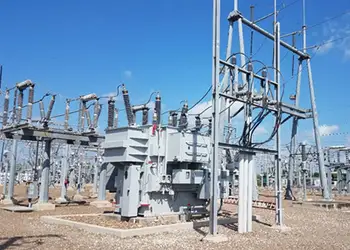
- Live Online
- 12 hours Instructor-led
- Group Training Available
Regular Price:
$799
Coupon Price:
$699
Virginia's biggest electric company must retain ownership of its power plants -- while keeping them separate from its other operations -- in a move regulators and others say will protect consumers.
"I think that's the right decision for Virginia at this point," said Irene Leech, president of the Virginia Citizen's Consumer Council, a watchdog group. "There are just so many unknowns right now. Virginia will still have options as long as we stay at this point."
Dominion Virginia Power and other power companies must spin off their plants to comply with the restructuring of the state's energy industry, effective Jan. 1.
Virginia Power officials said they had not fully studied the lengthy SCC order Tuesday, so they could not talk about it.
Restructuring will allow ratepayers to shop for their electricity, and utilities to compete for the business. Supporters say the plan should lead to better service and lower rates.
The separation of generation, transmission and distribution functions is designed to keep existing power companies from wielding an unfair advantage over new competitors.
Virginia Power parent Dominion Resources Inc. had asked state regulators to allow its $7 billion in plants to be taken over by Dominion Generation, a wholly owned but separate company that could sell electricity to Virginia Power.
But the State Corporation Commission ruled Tuesday that Virginia Power must keep the plants itself out of concern that transferring them to a corporate sibling would reduce state oversight.
One big difference is in how the two structures are regulated.
Dominion executives argued that its plan would allow each company to focus on its own specialized business, improving operations and helping hold down costs to consumers.
But as a wholesale arrangement between separate companies, that would have fallen under the jurisdiction of the Federal Energy Regulatory Commission, rather than the SCC.
And opponents said that would unacceptably diminish state regulatory authority.
Virginia, for example, has capped retail power rates through July 2007 to prevent runaway bills like those seen in California for the past two summers.
The state also has designated existing utility companies, like Virginia Power, as default providers for consumers who do not choose their own electricity supplier or whose supplier leaves the market.
Dominion had insisted that its separation plan offered the same protections. But they would not necessarily have been enforceable under FERC control, according to the SCC.
"The way the commission reads the restructuring act, the General Assembly specifically wanted to monitor this transition. The best way to do that is to make sure the state maintains authority over the output from those plants," said SCC spokesman Ken Schrad. "Legal separation doesn't do that."
Instead, the SCC ruled, Virginia Power must use "divisional separation," with the generating plants owned by the company but run as a separate division from transmission and distribution.
The power plants could be taken over by Dominion Generation later, Schrad said, if the competitive market evolves normally.
"Later may very well be appropriate, but right now it would be a dreadful mistake," said Leech. "We will continue to have the option of having the state control, if that's necessary."
Related News
Prevent Summer Power Outages
Summer Heatwave Electricity Shutoffs strain utilities and vulnerable communities, highlighting energy assistance, utility moratoriums, cooling…
View more
External investigators looking into alleged assaults by Manitoba Hydro workers
Manitoba Hydro Allegations Investigation reveals RCMP and OPP probes into 1960s abuses in northern Manitoba,…
View more
Pacific Northwest's Renewable Energy Goals Hindered
Pacific Northwest Transmission Bottleneck slows clean energy progress as BPA's aging grid constrains renewable interconnections,…
View more
A new nuclear reactor in the U.S. starts up. It's the first in nearly seven years
Vogtle Unit 3 Initial Criticality marks the startup of a new U.S. nuclear reactor, initiating…
View more
Wind Power Surges in U.S. Electricity Mix
U.S. Wind Power 2025 drives record capacity additions, with FERC data showing robust renewable energy…
View more
BC Hydro: 2021 was a record-breaking year for electricity demand
BC Hydro 2021 Peak Load Records highlight record-breaking electricity demand, peak load spikes, heat dome…
View more
Sign Up for Electricity Forum’s Newsletter
Stay informed with our FREE Newsletter — get the latest news, breakthrough technologies, and expert insights, delivered straight to your inbox.
Electricity Today T&D Magazine Subscribe for FREE

Stay informed with the latest T&D policies and technologies.
- Timely insights from industry experts
- Practical solutions T&D engineers
- Free access to every issue
