By -- Source, Reuters


Substation Relay Protection Training

Our customized live online or in‑person group training can be delivered to your staff at your location.

  • Live Online
  • 12 hours Instructor-led
  • Group Training Available
Regular Price:
$699
Coupon Price:
$599
Reserve Your Seat Today
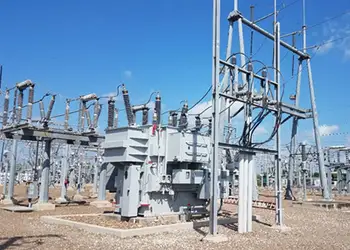
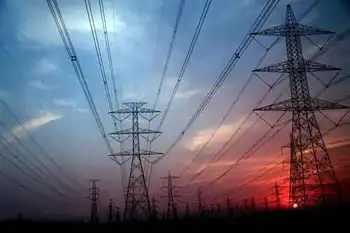
WASHINGTON - The economic benefit from having U.S. utilities join Regional Transmission Organizations (RTOs) to boost available power supplies could be as much as $10 billion a year, according to a new study commissioned by U.S. energy regulators.

The Federal Energy Regulatory Commission (FERC) wants the nation's utilities to be grouped under RTOs to ensure that power suppliers have fair access to the U.S. electric grid.

The cost-benefit study, which was presented to FERC on Wednesday, said RTOs can deliver $1 billion to $10 billion in long-term annual benefits.

``It is likely that larger RTOs would lead to slightly greater benefits, and that regional energy price impacts will vary, with most regions seeing price decreases,'' the study said. FERC commissioned ICF Consulting to do the study.

The study did not provide a dollar amount on how much RTOs could lower retail electricity prices, but some of the potential annual $10 billion economic benefit would more than likely be passed on to consumers.

FERC's push to open up the transmission grid has been met with heavy resistance, particularly in the Southeast.

The study said that while the initial cost of forming RTOs was uncertain, it provided a low nationwide total estimate of $1 billion to as much as $5.7 billion.

``Although the exact magnitude of costs and benefits is uncertain, the range estimated here yields a positive net benefit from pursuing RTO policy even if benefits are relatively low and costs are relatively high,'' the study said.

Most regions of the country would experience electricity price decreases from RTOs, according to the report.

However, some regions would have price increases lasting a few years, followed by decreasing prices, and few regions appear likely to experience increased energy prices for a prolonged period, the study said.

For example, the region with the greatest price increase in any one year is downstate Illinois and Missouri, where prices would rise by 8 percent in 2006, the study said.

Montana and parts of the interior West show the most persistent, albeit small, energy price increases, the report said.

A region covering Louisiana, Arkansas, and western Mississippi would have the biggest price decline decline, down 8 percent to 10 percent.

Related News

IAEA Reviews Belarus’ Nuclear Power Infrastructure Development

Belarus Nuclear Power Infrastructure Review evaluates IAEA INIR Phase 3 readiness at Ostrovets NPP, VVER-1200 reactors, legal and regulatory framework, commissioning, safety, emergency preparedness, and energy diversification in a low-carbon program.


Key Points

An IAEA INIR Phase 3 assessment of Belarus readiness to commission and operate the Ostrovets NPP with VVER-1200 units.

✅ Reviews legal, regulatory, and institutional arrangements

✅ Confirms Phase 3 readiness for safe commissioning and operation

✅ Highlights good practices in peer reviews and emergency planning


An International Atomic Energy Agency (IAEA) team of experts today concluded a 12-day mission to Belarus to review its infrastructure development for a nuclear power programme. The Integrated Nuclear Infrastructure Review (INIR) was carried out at the invitation of the Government of Belarus.

Belarus, seeking to diversify its energy production with a reliable low-carbon source, and aware of the benefits of energy storage for grid flexibility, is building its first nuclear power plant (NPP) at the Ostrovets site, about 130 km north-west of the capital Minsk. The country has engaged with the Russian Federation to construct and commission two VVER-1200 pressurised water reactors at this site and expects the first unit to be connected to the grid this year.

The INIR mission reviewed the status of nuclear infrastructure development using the Phase 3 conditions of the IAEA’s Milestones Approach. The Ministry of Energy of Belarus hosted the mission.

The INIR team said Belarus is close to completing the required nuclear power infrastructure for starting the operation of its first NPP. The team made recommendations and suggestions aimed at assisting Belarus in making further progress in its readiness to commission and operate it, including planning for integration with variable renewables, as advances in new wind turbines are being deployed elsewhere to strengthen the overall energy mix.

“This mission marks an important step for Belarus in its preparations for the introduction of nuclear power,” said team leader Milko Kovachev, Head of the IAEA’s Nuclear Infrastructure Development Section. “We met well-prepared, motivated and competent professionals ready to openly discuss all infrastructure issues. The team saw a clear drive to meet the objectives of the programme and deliver benefits to the Belarusian people, such as supporting the country’s economic development, including growth in EV battery manufacturing sectors.”

The team comprised one expert from Algeria and two experts from the United Kingdom, as well as seven IAEA staff. It reviewed the status of 19 nuclear infrastructure issues using the IAEA evaluation methodology for Phase 3 of the Milestones Approach, noting that regional integration via an electricity highway can shape planning assumptions as well. It was the second INIR mission to Belarus, who hosted a mission covering Phases 1 and 2 in 2012.

Prior to the latest mission, Belarus prepared a Self-Evaluation Report covering all infrastructure issues and submitted the report and supporting documents to the IAEA.

The team highlighted areas where further actions would benefit Belarus, including the need to improve institutional arrangements and the legal and regulatory framework, drawing on international examples of streamlined licensing for advanced reactors to ensure a stable and predictable environment for the programme; and to finalize the remaining arrangements needed for sustainable operation of the nuclear power plant.

The team also identified good practices that would benefit other countries developing nuclear power in the areas of programme and project coordination, the use of independent peer reviews, cooperation with regulators from other countries, engagement with international stakeholders and emergency preparedness, and awareness of regional initiatives such as new electricity interconnectors that can enhance system resilience.

Mikhail Chudakov, IAEA Deputy Director General and Head of the Department of Nuclear Energy attended the Mission’s closing meeting. “Developing the infrastructure required for a nuclear power programme requires significant financial and human resources, and long lead times for preparation and the approval of major transmission projects that support clean power flows, and the construction activities,” he said. “Belarus has made commendable progress since the decision to launch a nuclear power programme 10 years ago.”

“Hosting the INIR mission, Belarus demonstrated its transparency and genuine interest to receive an objective professional assessment of the readiness of its nuclear power infrastructure for the commissioning of the country’s first nuclear power plant,” said Mikhail Mikhadyuk, Deputy Minister of Energy of the Republic of Belarus. ”The recommendations and suggestions we received will be an important guidance for our continuous efforts aimed at ensuring the highest level of safety and reliability of the Belarusian NPP."


Related News

View more

Energy Ministry may lower coal production target as Chinese demand falls

Indonesia Coal Production Cuts reflect weaker China demand, COVID-19 impacts, falling HBA reference prices, and DMO sales to PLN, pressuring thermal coal output, miner budgets, and investment plans under the 2020 RKAB.


Key Points

Planned 2020 coal output reductions from China demand slump, lower HBA prices, and DMO constraints impacting miners.

✅ China demand drop reduces exports and thermal coal shipments.

✅ HBA reference price decline pressures margins and cash flow.

✅ DMO sales to PLN limit revenue; investment plans may slow.


The Energy and Mineral Resources (ESDM) Ministry is considering lowering the coal production target this year as demand from China has shown a significant decline, with China power demand drops reported, since the start of the outbreak of the novel coronavirus in the country late last year, a senior ministry official has said.

The ministry’s coal and mineral director general Bambang Gatot Ariyono said in Jakarta on March 12 that the decline in the demand had also caused a sharp drop in coal prices on the world market, and China's plan to reduce coal power has further weighed on sentiment, which could cause the country’s miners to reduce their production.

The 2020 minerals and coal mining program and budget (RKAB) has set a current production goal of 550 million tons of coal, a 10 percent increase from last year’s target. As of March 6, 94.7 million tons of coal had been mined in the country in the year.

“With the existing demand, revision to this year’s production is almost certain,” he said, adding that the drop in demand had also caused a decline in coal prices.

Indonesia’s thermal coal reference price (HBA) fell by 26 percent year-on-year to US$67.08 per metric ton in March, according to a Standards & Poor press release on March 5.  At home, the coal price is also unattractive for local producers. Under the domestic market obligation (DMO) policy, miners are required to sell a quarter of their production to state-owned electricity company PLN at a government-set price, even as imported coal volumes rise in some markets. This year’s coal reference price is $70 per metric ton, far below the internal prices before the coronavirus outbreak hit China.

The ministry’s expert staff member Irwandy Arif said China had reduced its coal demand by 200,000 tons so far, as six of its coal-fired power plants had suspended operation due to the significant drop in electricity demand. Many factories in the country were closed as the government tried to halt the spread of the new coronavirus, which caused the decline in energy demand and created electric power woes for international supply chains.

“At present, all mines in Indonesia are still operating normally, while India is rationing coal supplies amid surging electricity demand. But we have to see what will happen in June,” he said.

The ministry predicted that the low demand would also result in a decline in coal mining investment, as clean energy investment has slipped across many developing nations.

The ministry set a $7.6 billion investment target for the mining sector this year, up from $6.17 billion last year, even as Israel reduces coal use in its power sector, which may influence regional demand. The year’s total investment realization was $192 million as of March 6, or around 2.5 percent of the annual target. 


Related News

View more

Iraq plans nuclear power plants to tackle electricity shortage

Iraq Nuclear Power Plan targets eight reactors and 11 GW to ease blackouts, curb emissions, and support desalination, with financing via partners like Rosatom and Kepco amid OPEC-linked demand growth and chronic grid shortages.


Key Points

A $40B push to build eight reactors adding 11 GW, easing blackouts, cutting emissions, and supporting desalination.

✅ $40B, 20-year payback via partner financing

✅ Talks with Rosatom, Kepco; U.S. and France consulted

✅ Parallel solar buildout to meet 2030 demand


Iraq is working on a plan to build nuclear reactors as the electricity-starved petrostate seeks to end the widespread blackouts that have sparked social unrest.

OPEC’s No. 2 oil producer – already suffering from power shortages and insufficient investment in aging plants – needs to meet an expected 50% jump in demand by the end of the decade. Building atomic plants could help to close the supply gap, though the country will face significant financial and geopolitical challenges in bringing its plan to fruition.

Iraq seeks to build eight reactors capable of producing about 11 gigawatts, said Kamal Hussain Latif, chairman of the Iraqi Radioactive Sources Regulatory Authority. It would seek funding from prospective partners for the $40 billion plan and pay back the costs over 20 years, he said, adding that the authority had discussed cooperation with Russian and South Korean officials, as Iran-Iraq energy cooperation progresses across the sector.

Plunging crude prices last year deprived Iraq of funds to maintain and expand its long-neglected electricity system, though grid rehabilitation deals have been finalized to support upgrades. The resulting outages triggered protests that threatened to topple the government.

“We have several forecasts that show that without nuclear power by 2030, we will be in big trouble,” Latif said in an interview at his office in Baghdad. Not only is there the power shortage and surge in demand to deal with, but Iraq is also trying to cut emissions and produce more water via desalination — “issues that raise the alarm for me.”

Raising financing will be a major task given that Iraq has suffered budgetary crises amid volatile oil prices. Even with crude at about $70 a barrel now, the country is only just balancing its budget, according to data from the International Monetary Fund.

The government will also have to tackle geopolitical concerns around the safety of atomic energy, which have stymied nuclear ambitions elsewhere in the region, even as Europe's nuclear decline underscores broader energy challenges.

Nuclear power, which doesn’t produce carbon dioxide, would help Gulf states’ efforts to cut emissions as governments worldwide, including India's nuclear push to expand capacity, look to become greener. The technology would also allow them to earmark more of their valuable hydrocarbons for export. Saudi Arabia, which is building a test reactor, burns as much as 1 million barrels of crude a day in power plants during its summer months when temperatures soar beyond 50 degrees Celsius (122 Fahrenheit).

The Iraqi cabinet is reviewing an agreement with Russia’s Rosatom Corp. to cooperate in building reactors, Latif said. South Korean officials this year said they wanted to help build the plants and offered the Iraqis a tour of UAE nuclear reactors run by Korea Electric Power Corp. Latif said the nuclear authority has also spoken with French and U.S. officials about the plan.

Kepco, Rosatom
Kepco, as the Korean energy producer is known, is not aware of Iraq’s nuclear plans and hasn’t been in touch with Iraqi officials or been asked to work on any projects there, a company spokesman said Tuesday. Rosatom didn’t immediately comment when asked about an agreement with Iraq.

Even if Iraq builds the planned number of power stations, that still won’t be sufficient to cover future consumption. The country already faces a 10-gigawatt gap between capacity and demand and expects to need an additional 14 gigawatts this decade, Latif said.

With this in mind, Iraq plans to build enough solar plants to generate a similar amount of power to the nuclear program by the end of the decade.
Iraq currently boasts 18.4 gigawatts of electricity, including 1.2 gigawatts imported from Iran into the grid. Capacity additions mean generation will rise to as much as 22 gigawatts by August, but that’s well short of notional demand that stands at almost 28 gigawatts under normal conditions. Peak usage during the hot summer months of July and August exceeds 30 gigawatts, according to the Electricity Ministry. Demand will hit 42 gigawatts by 2030, Latif said.

The nuclear authority has picked 20 potential sites for the reactors and Latif suggested that the first contracts could be signed in the next year.

It won’t be Iraq’s first attempt to go nuclear. Four decades ago, an Israeli air strike destroyed a reactor under construction south of Baghdad. The Israelis alleged the facility, called Osirak, was aimed at producing nuclear weapons for use against them. Iraq suffered more than a decade of violence and upheaval after the 2003 U.S. invasion, which was also motivated by allegations that Iraq wanted to develop weapons.


Related News

View more

Brazil government considers emergency Coronavirus loans for power sector

Brazil Energy Emergency Loan Package aims to bolster utilities via BNDES as coronavirus curbs electricity demand. Aneel and the Mines and Energy Ministry weigh measures while Eletrobras privatization and auctions face delays.


Key Points

An emergency plan supporting Brazilian utilities via BNDES and banks during coronavirus demand slumps and payment risks.

✅ Modeled on 2014-2015 sector loans via BNDES and private banks

✅ Addresses cash flow from lower demand and bill nonpayment

✅ Auctions and Eletrobras privatization delayed amid outbreak


Brazil’s government is considering an emergency loan package for energy distributors struggling with lower energy use and facing lost revenues because of the coronavirus outbreak, echoing strains seen elsewhere such as Germany's utility troubles during the energy crisis, an industry group told Reuters.

Marcos Madureira, president of Brazilian energy distributors association Abradee, said the package being negotiated by companies and the government could involve loans from state development bank BNDES or a pool of banks, but that the value of the loans and other details was not yet settled.

Also, Brazil’s Mines and Energy Ministry is indefinitely postponing projects to auction off energy transmission and generation assets planned for this year because of the coronavirus, even as the need for electricity during COVID-19 remained critical, it said in the Official Gazette.

The coronavirus outbreak will also delay the privatization of state-owned utility Eletrobras, its chief executive officer said on Monday.

The potential loan package under discussion would resemble a similar measure in 2014 and 2015 that offered about 22 billion reais ($4.2 billion) in loans to the sector as Brazil was entering its deepest recession on record, and drawing comparisons to a proposed Texas market bailout after a winter storm, Madureira said.

Public and private banks including BNDES, Caixa Economica Federal, Itau Unibanco and Banco Bradesco participated in those loans.

Three sources involved in the discussions said on condition of anonymity that the Mines and Energy Ministry and energy regulator Aneel were considering the matter.

Aneel declined to comment. The Mines and Energy Ministry and BNDES did not immediately respond to requests for comment.

Energy distributors worry that reduced electricity demand during COVID-19 could result in deep revenue losses.

The coronavirus has led to widespread lockdowns of non-essential businesses in Brazil, while citizens are being told to stay home. That is causing lost income for many hourly and informal workers in Brazil, who could be unable to pay their electricity bills, raising risks of pandemic power shut-offs for vulnerable households.

The government sees a loan package as a way to stave off a potential chain of defaults in the sector, a move discussed alongside measures such as a Brazil tax strategy on energy prices, one of the sources said.

On a conference call with investors about the company’s latest earnings, Eletrobras CEO Wilson Ferreira Jr. said privatization would be delayed, without giving any more details on the projected time scale.

The largest investors in Brazil’s energy distribution sector include Italy’s Enel, Spain’s Iberdrola via its subsidiary Neoenergia and China’s State Grid via CPFL Energia, with Chinese interest also evidenced by CTG's bid for EDP, as well as local players Energisa e Equatorial Energia. 


Related News

View more

Australia's energy transition stalled by stubbornly high demand

Australia Renewable Energy Transition: solar capacity growth, net-zero goals, rising electricity demand, coal reliance, EV adoption, grid decarbonization, heat waves, air conditioning loads, and policy incentives shaping clean power, efficiency, and emissions reduction.


Key Points

Australia targets net-zero by 2050 by scaling renewables, curbing demand, and phasing down coal and gas.

✅ Solar capacity up 200% since 2018, yet coal remains dominant.

✅ Transport leads energy use; EV uptake lags global average.

✅ Heat waves boost AC load, stressing grids and emissions goals.


A more than 200% increase in installed solar power generation capacity since 2018 helped Australia rank sixth globally in terms of solar capacity last year and emerge as one of the world's fastest-growing major renewable energy producers, aligning with forecasts that renewables to surpass coal in global power generation by 2025.

However, to realise its goal of becoming a net-zero carbon emitter by 2050, Australia must reverse the trajectory of its energy use, which remains on a rising path, even as Asia set to use half of electricity underscores regional demand growth, in contrast with several peers that have curbed energy use in recent years.

Australia's total electricity consumption has grown nearly 8% over the past decade, amid a global power demand surge that has exceeded pre-pandemic levels, compared with contractions over the same period of more than 7% in France, Germany and Japan, and a 14% drop in the United Kingdom, data from Ember shows.

Sustained growth in Australia's electricity demand has in turn meant that power producers must continue to heavily rely on coal for electricity generation on top of recent additions in supply of renewable energy sources, with low-emissions generation growth expected to cover most new demand.

Australia has sharply boosted clean energy capacity in recent years, but remains heavily reliant on coal & natural gas for electricity generation
To accomplish emissions reduction targets on time, Australia's energy use must decline while clean energy supplies climb further, as that would give power producers the scope to shut high-polluting fossil-powered energy generation systems ahead of the 2050 deadline.

DEMAND DRIVERS
Reducing overall electricity and energy use is a major challenge in all countries, where China's electricity appetite highlights shifting consumption patterns, but will be especially tough in Australia which is a relative laggard in terms of the electrification of transport systems and is prone to sustained heat waves that trigger heavy use of air conditioners.

The transport sector uses more energy than any other part of the Australian economy, including industry, and accounted for roughly 40% of total final energy use as of 2020, according to the International Energy Agency (IEA.)

Transport energy demand has also expanded more quickly than other sectors, growing by over 5% from 2010 to 2020 compared to industry's 1.3% growth over the same period.

Transport is Australia's main energy use sector, and oil products are the main source of energy type
To reduce energy use, and cut the country's fuel import bill which topped AUD $65 billion in 2022 alone, according to the Australian Bureau of Statistics, the Australian government is keen to electrify car fleets and is offering large incentives for electric vehicle purchases.

Even so, electric vehicles accounted for only 5.1% of total Australian car sales in 2022, according to the International Energy Agency (IEA).

That compares to 13% in New Zealand, 21% in the European Union, and a global average of 14%.

More incentives for EV purchases are expected, but any rapid adoption of EVs would only serve to increase overall electricity demand, and with surging electricity demand already straining power systems worldwide, place further pressure on power producers to increase electricity supplies.

Heating and cooling for homes and businesses is another major energy demand driver in Australia, and accounts for roughly 40% of total electricity use in the country.

Australia is exposed to harsh weather conditions, especially heat waves which are expected to increase in frequency, intensity and duration over the coming decades due to climate change, according to the New South Wales government.

To cope, Australians are expected to resort to increased use of air conditioners during the hottest times of the year, and with reduced power reserves flagged by the market operator, adding yet more strain to electricity systems.


Related News

View more

Pickering nuclear station is closing as planned, despite calls for refurbishment

Ontario Pickering Nuclear Closure will shift supply to natural gas, raising emissions as the electricity grid manages nuclear refurbishment, IESO planning, clean power imports, and new wind, solar, and storage to support electrification.


Key Points

Ontario will close Pickering and rely on natural gas, increasing emissions while other nuclear units are refurbished.

✅ 14% of Ontario electricity supplied by Pickering now

✅ Natural gas use rises; grid emissions projected up 375%

✅ IESO warns gas phaseout by 2030 risks blackouts, costs


The Ontario government will not reconsider plans to close the Pickering nuclear station and instead stop-gap the consequent electricity shortfall with natural gas-generated power in a move that will, as an analysis of Ontario's grid shows, hike the province’s greenhouse gas emissions substantially in the coming years.

In a report released this week, a nuclear advocacy group urged Ontario to refurbish the aging facility east of Toronto, which is set to be shuttered in phases in 2024 and 2025, prompting debate over a clean energy plan after Pickering as the closure nears. The closure of Pickering, which provides 14 per cent of the province’s annual electricity supply, comes at the same time as Ontario’s other two nuclear stations are undergoing refurbishment and operating at reduced capacity.

Canadians for Nuclear Energy, which is largely funded by power workers' unions, argued closing the 50-year-old facility will result in job losses, emissions increases, heightened reliance on imported natural gas and an electricity supply gap across Ontario.

But Palmer Lockridge, spokesperson for the provincial energy minister, said further extending Pickering’s lifespan isn’t on the table.

“As previously announced in 2020, our government is supporting Ontario Power Generation’s plan to safely extend the life of the Pickering Nuclear Generating Station through the end of 2025,” said Lockridge in an emailed response to questions.

“Going forward, we are ensuring a reliable, affordable and clean electricity system for decades to come. That’s why we put a plan in place that ensures we are prepared for the emerging energy needs following the closure of Pickering, and as a result of our government’s success in growing and electrifying the province’s economy.”

The Progressive Conservative government under Premier Doug Ford has invested heavily in electrification, sinking billions into electric vehicle and battery manufacturing and industries like steel-making to retool plants to run on electricity rather than coal, and exploring new large-scale nuclear plants to bolster baseload supply.

Natural gas now provides about seven per cent of the province’s energy, a piece of the pie that will rise significantly as nuclear energy dwindles. Emissions from Ontario’s electricity grid, which is currently one of the world’s cleanest with 94 per cent zero-emission power generation, are projected to rise a whopping 375 per cent as the province turns increasingly to natural gas generation. Those increases will effectively undo a third of the hard-won emissions reductions the province achieved by phasing out coal-fired power generation.

The Independent Electricity System Operator (IESO), which manages Ontario’s grid, studied whether the province could phase out natural gas generation by 2030 and concluded that “would result in blackouts and hinder electrification” and increase average residential electricity costs by $100 per month.

The Ontario Clean Air Alliance, however, obtained draft documents from the electricity operator that showed it had studied, but not released publicly, other scenarios that involved phasing out natural gas without energy shortfalls, price hikes or increases in emissions.

The Ontario government will not reconsider plans to close the Pickering nuclear station and instead stop-gap the consequent electricity shortfall facing Ontario with natural gas-generated power in a move that will hike the province’s greenhouse gas emissions.

One model suggested increasing carbon taxes and imports of clean energy from other provinces could keep blackouts, costs and emissions at bay, while another involved increasing energy efficiency, wind generation and storage.

“By banning gas-fired electricity exports to the U.S., importing all the Quebec water power we can with the existing transmission lines and investing in energy efficiency and wind and solar and storage — do all those things and you can phase out gas-fired power and lower our bills,” said Jack Gibbons, chair of the Ontario Clean Air Alliance.

The IESO has argued in response that the study of those scenarios was not complete and did not include many of the challenges associated with phasing out natural gas plants.

Ontario Energy Minister Todd Smith asked the IESO to develop “an achievable pathway to zero-emissions in the electricity sector and evaluate a moratorium on new-build natural gas generation stations,” said his spokesperson. That report, an early look at halting gas power, is expected in November.


Related News

View more

Sign Up for Electricity Forum’s Newsletter

Stay informed with our FREE Newsletter — get the latest news, breakthrough technologies, and expert insights, delivered straight to your inbox.

Electricity Today T&D Magazine Subscribe for FREE

Stay informed with the latest T&D policies and technologies.
  • Timely insights from industry experts
  • Practical solutions T&D engineers
  • Free access to every issue

Download the 2025 Electrical Training Catalog

Explore 50+ live, expert-led electrical training courses –

  • Interactive
  • Flexible
  • CEU-cerified