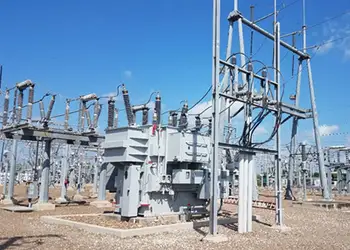
Substation Relay Protection Training
Our customized live online or in‑person group training can be delivered to your staff at your location.
- Live Online
- 12 hours Instructor-led
- Group Training Available
Regular Price:
$699
Coupon Price:
$599
The opposition to wind energy installations blamed for killing birds and bats in West Virginia now poses a critical question: Are we going to allow not-in-my-back-yard sentiment to thwart an energy source that could produce hundreds of jobs and pump millions of dollars of investment revenue into our state?
The not-in-my-back-yard mentality is shortsighted, and the situation will deteriorate further if ardent conservationists succeed in placing a moratorium on wind-energy development.
West Virginia has only 66 megawatts of wind power at the Mountaineer Wind Energy Center in Tucker and Preston Counties, but 300 megawatts is planned in Grant County.
Wind energy is already a boon for communities across the American heartland, and it could become one for West Virginia.
No longer an oddity, wind power is the fastest-growing form of electricity generation in the United States and the world. Almost 1 percent of U.S. electricity is produced by wind - more than 6,000 megawatts - but that's at least three times as much as five years ago. Wind turbines are now connected to the bulk power grid in 30 states, from Texas to Maine. The appeal of wind power is obvious: No fuel costs, no pollution or global warming emissions, no wastes, no foreign countries that can cut off the supply, and no sudden fuel- price increases that can leave households in the dark and freezing.
A wind turbine today produces electricity for 3 cents to 4 cents a kilowatt hour, after tax incentives are taken into account, down from 20 cents a kilowatt hour in the 1980s. That's competitive with electricity produced at power plants burning natural gas, an increasingly scarce fuel subject to volatile price increases.
Wind turbines in West Virginia occupy only tiny parts of the mountains; they do not dominate the landscape as some critics suggest. And the wind turbines operate far more reliably than they once did. Years ago, wind turbines were inefficient and prone to breakdowns. Today's turbines have fiberglass composite blades that are capable of producing more energy, plus computer controls that let them turn at whatever rate the wind pushes them, increasing power production.
What's more, because the machines stand higher off the ground, blades can be longer and spin in a bigger arc. That means the tips appear to move slowly and are easier to see, allowing birds to take evasive action.
Still, some birds - and bats - unwittingly fly into the turbines. The blades are not benign, but a million times more birds are killed flying into windows and cars than by all the wind turbines in the United States.
Nor is there anything to suggest an ecologically significant mortality rate of birds and bats in West Virginia.
It is one thing for conservationists to make sure that wind turbines do not take an excessive toll on wildlife. It is something else entirely to decide willy-nilly to slough off a source of clean renewable energy as if it had no economic or environmental benefits.
West Virginians need to overcome the not-in-my-back-yard resistance and cash in on the advantages of wind-based electricity generation. West Virginia has always been an energy-producing state.
The production of energy creates jobs and economic growth. The nation must get all the energy it used from somewhere. Wind energy centers offer economic development with opportunities to West Virginia with minimal negative impact.
Dr. Lyons is a professor at West Virginia University's College of Engineering and Mineral Resources.
Related News
London's Newest Electricity Tunnel Goes Live
London Electricity Tunnel strengthens grid modernization with high-voltage cabling from major substations, increasing redundancy, efficiency,…
View more

PC Leader Doug Ford vows to fire Hydro One CEO, board if elected
Doug Ford's Hydro One firing vow targets CEO pay, the utility's board, and privatization, amid…
View more
Hydro wants B.C. residents to pay an extra $2 a month for electricity
BC Hydro Rate Increase proposes a 2.3% hike from April, with BCUC review, aligning below…
View more
Ontario hydro rates set to increase Nov. 1, Ontario Energy Board says
Ontario Electricity Rebate clarifies hydro rates as OEB aligns bills with inflation, shows true cost…
View more
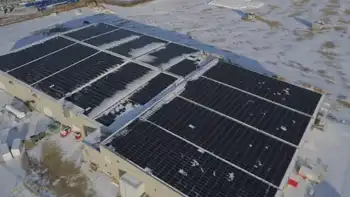
Solar-powered pot: Edmonton-area producer unveils largest rooftop solar array
Freedom Cannabis solar array powers an Acheson cannabis facility with 4,574 rooftop panels, a 1,830-kilowatt…
View more

Brazilian electricity workers call for 72-hour strike
Eletrobras Privatization Strike sparks a 72-hour CNE walkout by Brazil's electricity workers, opposing asset sell-offs…
View more
Sign Up for Electricity Forum’s Newsletter
Stay informed with our FREE Newsletter — get the latest news, breakthrough technologies, and expert insights, delivered straight to your inbox.
Electricity Today T&D Magazine Subscribe for FREE

Stay informed with the latest T&D policies and technologies.
- Timely insights from industry experts
- Practical solutions T&D engineers
- Free access to every issue

