CSA Z462 Arc Flash Training – Electrical Safety Compliance Course
Our customized live online or in‑person group training can be delivered to your staff at your location.

- Live Online
- 6 hours Instructor-led
- Group Training Available
Regular Price:
$249
Coupon Price:
$199
Cyprus
—
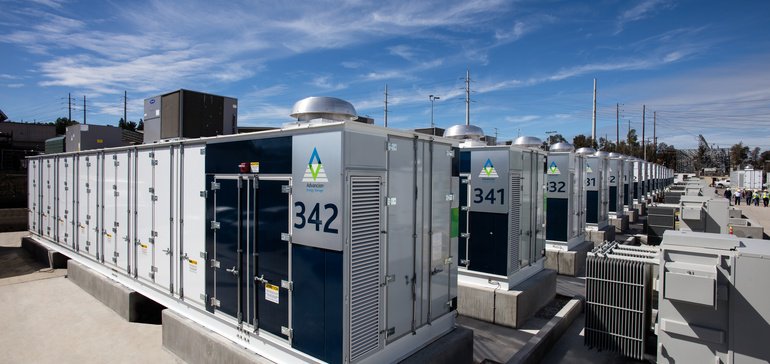
EU battery storage dependence drives fresh concern as ministers warn over China-linked supply chains, lithium-ion imports, and grid bottlenecks, backing diversification via pumped hydro and thermal storage alongside grid upgrades to bolster resilience and competitiveness.
Essential Takeaways
-
Ministers flag heavy reliance on China for storage
-
Diversified storage backed: pumped hydro and thermal options
-
Grid upgrades tied to price stability and resilience
EU energy ministers used an informal meeting in Cyprus to spotlight Europe's growing reliance on China for battery energy storage systems, warning that deployment of wind and solar continues to outpace the buildout of storage and grid capacity. The discussion framed storage as strategic to system flexibility and market stability, and it unfolded against the policy backdrop shaped by the europe energy crisis and its lingering market impacts across member states.
Officials underlined that abundant clean generation is increasingly curtailed for lack of storage, with congestion adding to grid instability and price swings. Recent shocks to energy security have also imposed additional financial burdens on the bloc. In parallel, ministers acknowledged that electricity affordability remains a central concern, a theme reflected in debates captured by eu balks electricity prices, even as long-term reforms aim to reduce volatility through better system flexibility.
A central risk identified was market concentration across the storage supply chain. Chinese manufacturers hold a dominant position in Europe's battery energy storage market, including a large share of residential systems and a very high share of lithium-ion battery imports. Ministers warned that such dependencies could undermine resilience and competitiveness if left unaddressed.
While recognizing lithium-ion's dominance, the talks endorsed a broader portfolio of technologies to diversify risk and services. In addition to batteries, several countries highlighted pumped hydro and thermal storage as important options for seasonal shifting, inertia and system balancing. Participants linked diversified storage and stronger grids to medium-term price stability, aligning with forward-looking analyses such as europe future electricity prices, as policymakers weigh cost, reliability and industrial outcomes.
Ministers also noted that 2024 marked a record year for new storage capacity, yet additions still fall short of what is needed to keep pace with electrification. Recent large-scale deployments in parts of the bloc illustrate momentum, but gaps remain as transport and industry electrify and as transmission and distribution networks face heavier duty cycles. Upgrades were deemed essential to integrate storage, with debate continuing around how the EU should coordinate cross-border planning and investment under proposals akin to eu revamps electricity, ensuring that flexibility resources can flow where they add the most value.
Political tensions over governance and cost allocation also surfaced. For example, national decisions on interconnectors and the use of congestion revenues are testing how far common market rules should stretch versus domestic priorities. Those debates echo the shift from short-term crisis responses toward structural fixes, a transition often contrasted with european emergency electricity measures, as stakeholders seek durable investment signals for grids and storage.
Finally, ministers framed storage as a strategic industrial sector within the bloc's clean-tech agenda, aiming to scale domestic manufacturing under recent legislation while pursuing selective de-risking of supply chains. The objective is not full autonomy in the near term, but rather a more balanced position that reduces vulnerability to single-country concentration, supports security of supply, and sustains industrial competitiveness as Europe advances toward climate targets.
Related News
Related News
BC Hydro hoping to be able to charge customers time of use rates
BC Hydro Time-of-Use Rates propose off-peak credits and peak surcharges, with 5 cent/kWh differentials, encouraging…
View more
Five EU states push back on Commission's grid plans, warn on higher costs
EU Grids Package pushback intensifies as Bulgaria, Finland, France, Poland and Sweden warn that centralised…
View more

‘Tsunami of data’ could consume one fifth of global electricity by 2025
ICT Electricity Demand is surging as data centers, 5G, IoT, and server farms expand, straining…
View more
Dutch produce more green electricity but target still a long way off
Netherlands renewable energy progress highlights rising wind energy and solar power output, delivering 17 billion…
View more
Energy Efficiency and Demand Response Can Nearly Level Southeast Electricity Demand for More than a Decade
Southeast Electricity Demand Forecast examines how energy efficiency, photovoltaics, electric vehicles, heat pumps, and demand…
View more

PG&E Supports Local Communities as It Pays More Than $230 Million in Property Taxes to 50 California Counties
PG&E property tax payments bolster counties, education, public safety, and infrastructure across Northern and Central…
View more
Sign Up for Electricity Forum’s Newsletter
Stay informed with our FREE Newsletter — get the latest news, breakthrough technologies, and expert insights, delivered straight to your inbox.
Electricity Today T&D Magazine Subscribe for FREE

Stay informed with the latest T&D policies and technologies.
- Timely insights from industry experts
- Practical solutions T&D engineers
- Free access to every issue

