Geospatial ADMS: The Grid Model Behind Safe Operations
By Kyle Comstock, Senior Vice President, Grid Modernization, Itron
By Kyle Comstock, Senior Vice President, Grid Modernization, Itron

Request for Quotation Service
Buyers Submit Free RFQs to top suppliers, no obligation.
Suppliers Browse real project RFQs directly from buyers.
Trust Electricity Forum 40 years connection buyers and suppliers.
Geospatial ADMS integrates GIS topology, feeder connectivity, asset location intelligence, and real-time telemetry into the operational grid model. This spatial electrical network model enables accurate power-flow analysis, safe switching, and ADMS operational decision support.
Distribution system operators depend on the accuracy of their operational network model every time they execute switching, isolate faults, or transfer load. When that model does not reflect actual device states, feeder connectivity, or asset relationships, operational decisions are made on assumptions rather than reality. Geospatial ADMS exists to prevent that disconnect by maintaining an accurate as-operated distribution network model that represents the physical and electrical grid exactly as it exists in the field.
A geospatial ADMS is not simply a visualization tool. It is the operational network model that allows utilities to represent feeder topology, device states, and electrical connectivity in real time. This as-operated distribution model serves as the backbone of operational control, enabling situational awareness, switching validation, and reliable outage restoration. Without an accurate network model reflecting real-world system conditions, operational applications cannot safely or reliably support grid operations.
The distribution network model serves as the foundation for operational grid management because it represents both the physical structure and electrical behavior of the system. This model allows Advanced Distribution Management Systems to interpret feeder connectivity, understand energized and de-energized sections, and support operational decision-making based on actual system conditions rather than static engineering records.
This operational model is fundamentally different from planning models or static GIS representations. It reflects the system as it is currently operated, including switch positions, energized sections, and active device states. This as-operated model ensures that ADMS accurately represents energized pathways and isolation boundaries, eliminating uncertainty during switching and restoration.

Maintaining this level of accuracy requires continuous alignment between engineering records, operational telemetry, and system connectivity data. Utilities achieve this by implementing rigorous grid modeling processes that validate network topology, device relationships, and connectivity assumptions against actual system conditions.
Operational control requires more than knowing where assets are located. It requires understanding how they function electrically within the network. A geospatial ADMS maintains this awareness by continuously updating the as-operated network model with real-time device states, telemetry, and operational changes.
This model enables ADMS to support critical operational applications such as fault isolation, load transfers, and restoration planning. When switching actions occur, the system immediately reflects those changes, ensuring operators have an accurate representation of energized and de-energized sections. This capability directly supports safe switching practices and reduces the risk of operational errors.
Accurate network models also serve as the integration point for advanced grid management solutions, allowing utilities to coordinate system operations across multiple platforms while maintaining a single operational representation of the electrical network.
The accuracy of the geospatial ADMS model depends on its ability to integrate and harmonize data from multiple utility systems. GIS records, telemetry systems, and operational databases all contribute to building a unified network model that reflects real-world conditions.
Advanced Metering Infrastructure plays an important role in this process by providing node-level voltage and consumption measurements. Integration of AMI data enables ADMS to validate electrical connectivity and system conditions against field-measured data, thereby strengthening the reliability of the operational network model.
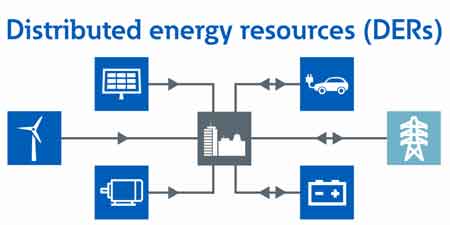
Distributed energy resources introduce additional complexity, requiring the network model to account for generation sources that dynamically affect power flow. Coordination with a distributed energy resource management system ensures that DER behavior is accurately represented within the operational network model, allowing ADMS to maintain system balance and operational stability.
The operational network model directly reduces system risk. Inaccurate connectivity, outdated device states, or incomplete network representation can lead to incorrect switching decisions or delayed restoration. Maintaining an accurate as-operated model allows utilities to verify system conditions before executing switching actions, improving both crew safety and operational reliability.
This model accuracy supports overall power system reliability by ensuring that operational decisions are based on verified system conditions. Continuous validation and testing of the network model ensure it remains synchronized with real-world system behavior.
Advanced ADMS software platforms rely on this network model to execute automated analysis, switching validation, and restoration workflows. Without an accurate operational model, these advanced capabilities cannot function reliably.
Building the operational network model is only the beginning. Maintaining its accuracy requires ongoing data governance, rigorous testing, and continuous coordination between engineering, operations, and system integration teams. Changes to feeder configurations, asset replacements, and system expansions must be reflected immediately in the model to preserve operational accuracy.
Utilities that treat the network model as a continuously maintained operational asset gain significant advantages. Their ADMS platforms provide accurate situational awareness, support reliable switching decisions, and enable advanced operational automation.
Geospatial ADMS serves as the backbone of this operational capability by maintaining the as-operated distribution network model, which enables utilities to manage the grid safely and efficiently. The strength of ADMS does not come from visualization or automation alone. It stems from the network model's accuracy, which supports every operational decision.
When that model reflects the grid exactly as it exists in the field, ADMS becomes a true operational control system. When it does not, operational risk increases. This distinction defines the critical role of geospatial ADMS in modern utility operations.
Stay informed with our FREE Grid Optimization, DER & Flexibility Newsletter — get the latest news, breakthrough technologies, and expert insights, delivered straight to your inbox.
This article is based on a presentation delivered to Distributech 2026.
 How Circuit Breaker Monitoring Helps Detect Problems Before Failure
Article
How Circuit Breaker Monitoring Helps Detect Problems Before Failure
Article
 ADMS Enables Real-Time Control of Distribution Grid
Brochure
ADMS Enables Real-Time Control of Distribution Grid
Brochure
 The Quiet Backbone Of Grid Reliability: Why Laboratory Services Are Critical in Today’s Energy Landscape
Product
The Quiet Backbone Of Grid Reliability: Why Laboratory Services Are Critical in Today’s Energy Landscape
Product
 Custom Transformer Control Cabinets | Dynamic Ratings
Advantages To Instructor-Led Training – Instructor-Led Course, Customized Training, Multiple Locations, Economical, CEU Credits, Course Discounts.
Request For QuotationWhether you would prefer Live Online or In-Person instruction, our electrical training courses can be tailored to meet your company's specific requirements and delivered to your employees in one location or at various locations.