Advanced Metering Infrastructure for Utility Data Governance
By Joyce Solomon, Data Science & Analytics, AMI Management Systems
By Joyce Solomon, Data Science & Analytics, AMI Management Systems
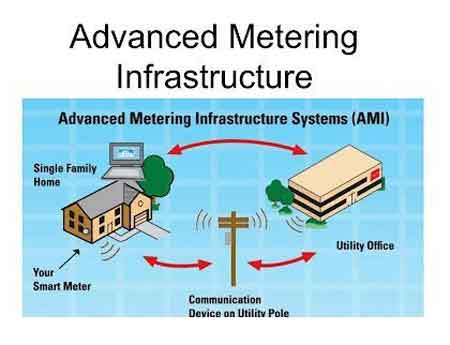
Advanced metering infrastructure is the enterprise system that unifies meters, communications, headend platforms, and data governance into a coordinated operational framework. It establishes how interval reads, voltage measurements, device status, and event telemetry move through the utility organization.
Advanced metering infrastructure is no longer a billing modernization initiative. It is the structural backbone that governs how field telemetry is ingested, validated, stored, and exposed to operational platforms.
At enterprise scale, architecture becomes a reliability variable. A deployment of several million meters transmitting at fixed intervals produces billions of structured records annually. At that volume, storage design, ingestion cadence, schema discipline, and access governance directly influence operational confidence.
The engineering question is not whether AMI produces data. It is whether the system architecture preserves lineage, enforces governance, and supports model accountability across enterprise workflows.
Advanced metering infrastructure sits between the field device and operational applications. It defines how meter telemetry moves from endpoints through communications networks into headend systems, meter data management platforms, and enterprise environments.
The AMI stack typically includes:
• endpoint measurement devices
• secure communications transport
• headend collection systems
• meter data management systems
• integration interfaces to operational platforms
This page does not redefine device engineering or analytics logic. It defines how those layers are structured and governed inside the enterprise.
When unified within a disciplined data architecture, AMI creates a controlled telemetry spine that feeds operational platforms, including ADMS, outage management, customer systems, and forecasting tools.
Without architectural separation between ingestion, curation, and consumption layers, interval telemetry becomes an uncontrolled data stream rather than a governed enterprise asset.
Think you know Metering, AMI & Edge Intelligence? Take our quick, interactive quiz and test your knowledge in minutes.
A mature advanced metering infrastructure implementation separates:
• raw ingestion zones
• curated data layers
• aggregated enterprise views
Raw reads enter controlled ingestion environments where validation rules enforce schema integrity and time synchronization. Curated layers apply quality gates, align topology references, and preserve historical lineage. Aggregated views support operational dashboards and model features without bypassing governance controls.
This structural separation ensures that AMI Data remains trustworthy when consumed by operational systems. If curated layers are bypassed, downstream models inherit unvalidated assumptions.
Alignment between AMI architecture and grid modeling platforms ensures that feeder simulations reflect governed telemetry rather than unmanaged interval records.
At enterprise scale, advanced metering infrastructure must enforce column-level lineage and traceability for transformations. Every step from raw interval read to aggregated transformer loading estimate must be auditable.
Governance discipline requires:
• role-based access controls
• versioned data products
• schema change validation
• transformation tracking across pipelines
If feeder mappings drift or if seasonal data is incomplete, model outputs degrade. Inaccurate peak loading forecasts increase overload exposure during extreme weather events.
Integration between the AMI architecture and the Advanced Distribution Management System Benefits clarifies how governed telemetry improves switching safety and load-balancing decisions at the operational level.
Treating AMI as a reporting database rather than a governed control framework increases systemic risk in high-variability distribution systems.
Modern AMI environments increasingly incorporate streaming pipelines that reduce latency between field measurement and enterprise visibility.
However, streaming without architectural discipline introduces volatility. High-frequency interval reads must resolve against curated topology layers before influencing operational logic.
AI-enabled tools, such as GenAI Copilots for Utility Engineering, can translate governed data products into engineering insights. But AI agents must query curated layers, not raw ingestion tables, or lineage discipline collapses.
Architectural maturity ensures that AI augmentation strengthens model interpretation rather than introducing uncontrolled inference risk.
Migration from legacy storage systems to federated lakehouse or cloud-native architectures restructures ingestion cadence, retraining intervals, and validation controls. During migration windows, governance controls must remain intact to prevent model drift.
When advanced metering infrastructure is integrated with outage identification, transformer loading validation, and operational forecasting, it becomes a structural reliability layer. When treated as an archive, it remains a cost center.
Advanced metering infrastructure ultimately defines how a utility governs measurement at scale. If architected as a federated, lineage-enforced, role-secured enterprise system, it enables reliable operational decision support. If fragmented across unmanaged silos, it produces data volume without control authority.
The distinction is between architectural discipline and device capability.
Stay informed with our FREE Metering, AMI & Edge Intelligence Newsletter — get the latest news, breakthrough technologies, and expert insights, delivered straight to your inbox.
Advantages To Instructor-Led Training – Instructor-Led Course, Customized Training, Multiple Locations, Economical, CEU Credits, Course Discounts.
Request For QuotationWhether you would prefer Live Online or In-Person instruction, our electrical training courses can be tailored to meet your company's specific requirements and delivered to your employees in one location or at various locations.