Grid Edge Intelligence for Distribution Lateral Automation
By Balaji Santhanam, Director, Hubbell Incorporated
By Balaji Santhanam, Director, Hubbell Incorporated
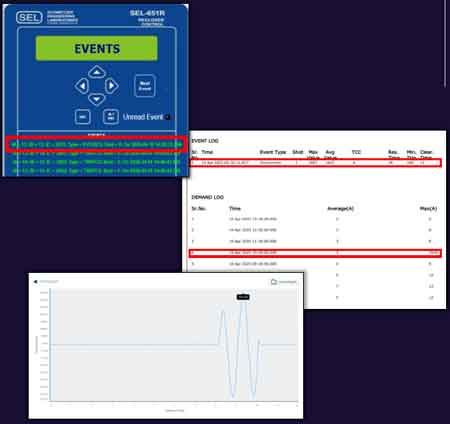

Grid edge intelligence equips lateral devices with fault recording, oscillography, GPS time stamping, load profiling, and secure cellular connectivity, enabling real-time distribution automation and DER coordination where most distribution faults originate.
Grid edge intelligence has shifted from feeder-head automation to lateral circuit control. Reliability performance is increasingly determined by what operators cannot see. Laterals define that blind zone, and when it persists, restoration slows, switching confidence erodes, and fault conditions can escalate beyond routine outage management.
Utilities historically concentrated automation budgets on substations and three-phase feeder devices. Yet interruption density, vegetation exposure, and DER volatility concentrate downstream. When lateral events lack telemetry, operators default to patrol confirmation and customer call correlation. In high-risk weather or high DER penetration areas, that reactive posture can shift from reliability degradation to public safety exposure and regulatory scrutiny.
The operational question is no longer whether intelligence belongs at the edge. It is how far down the circuit hierarchy visibility must extend to materially change restoration time, wildfire risk, coordination accuracy, and executive accountability for system performance.
Traditional lateral protection relied on fuses and hydraulic devices with no communications. They isolated faults but provided no waveform context, no time stamping, and no coordination analytics. Modern intelligent lateral devices incorporate oscillography, GPS time alignment, programmable load profiling, and event sequencing. This is not an incremental improvement. It alters the speed of decision-making in the control room.
When a high-impedance fault occurs on a lateral during dry wind conditions, feeder-level relays may not detect sustained arcing. Without edge intelligence, that condition can persist undetected. The cascading consequence is ignition, feeder trip, public safety escalation, and regulatory exposure. A single missed lateral event becomes a system-wide liability.
Stay informed with our FREE Asset Intelligence & Predictive Maintenance Newsletter — get the latest news, breakthrough technologies, and expert insights, delivered straight to your inbox.
The introduction of intelligent sectionalizing devices changes this sequence. Event capture, timestamp precision, and remote trip capability allow isolation before escalation. However, the benefit exists only if communications and configuration governance are disciplined.
A feeder may serve dozens of laterals. Substation-grade devices cannot simply be replicated at this scale. Grid edge intelligence must be economically deployable and remotely manageable.
Cellular LPWAN, hybrid RF mesh, and private LTE backhaul have reduced total ownership cost and expanded coverage. But the ubiquity of connectivity increases cyber exposure and configuration complexity. Firmware drift across thousands of edge devices introduces inconsistencies in protection. Fleet-level governance is not optional.
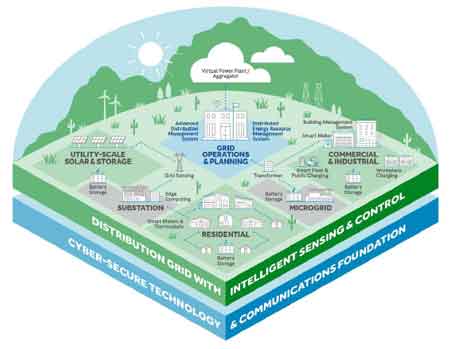
Integration with ADMS enables coordinated switching logic once lateral telemetry becomes visible. Without this integration, lateral data remains isolated, and operational leverage is reduced.
Bidirectional current on residential and commercial laterals alters protection assumptions. Reverse flow can mask fault magnitude or shift pickup thresholds outside expected curves. Grid edge intelligence provides waveform visibility and adaptive settings, but configuration error becomes a real risk.
Load trends from AMI Data improve situational awareness, yet meter resolution cannot substitute for sub-cycle oscillography during transient events. Threshold discipline requires modeling and staged deployment.
Using Grid Modeling, planners can simulate DER growth scenarios and evaluate coordination margins before field implementation. The tradeoff is speed versus certainty. Accelerated rollout reduces blind spots but increases the probability of miscoordination if modeling assumptions are incomplete.
One operational edge case appears during switching under high DER export. Inrush signatures can resemble fault transients. Without safeguards against waveform classification errors, nuisance trips may inflate reliability metrics and erode operator confidence.
Grid edge intelligence generates data volume that must be interpreted. Device-level oscillography becomes operational leverage only when correlated across circuits.
Platforms supporting Predictive Grid Intelligence use distributed lateral events to identify vegetation patterns, aging hardware signatures, and recurring transient clusters. This shifts O and M from response to preemption.
Expanded telemetry improves Grid Observability beyond feeder head current magnitude. Operators gain visibility into phase imbalance, neutral shifts, and abnormal voltage excursions before customers report disturbance.
Edge devices equipped with Grid Edge Sensors extend the monitoring depth. However, more sensing does not guarantee better outcomes. Data latency, communication loss, or synchronization error can distort event correlation.
AI-assisted classification, such as AI Fault Detection, can reduce review burden, but false positives remain a constraint. A misclassified switching transient on red-flag wildfire days could trigger unnecessary sectionalizing and cascade into feeder reconfiguration stress.
Edge intelligence requires secure device management, encrypted communications, and structured user access control. Mobile workforce programming tools must align with the audit logging discipline. A compromised lateral controller is not a minor incident. It becomes a lateral injection point into distribution control networks.
Operational safety also shifts. Visible open indication, secure latching, and remote trip capability reduce field exposure. Yet operators must validate device state before downstream energized work. Overreliance on telemetry without visual confirmation introduces human factor risk.
Most automation investment historically bypassed laterals. That gap now defines the reliability margin. Intelligence at the lateral layer does not eliminate faults. It eliminates ambiguity in event origin, fault magnitude, and coordination sequence.
Selective deployment leaves blind segments that continue to dominate outage statistics. Overdeployment without governance amplifies cyber and configuration exposure. The engineering decision requires balancing deployment scale, communications architecture, cyber discipline, and threshold management.

Grid edge intelligence is not a device upgrade. It is a control philosophy shift that relocates reliability leverage to the distribution periphery.
Advantages To Instructor-Led Training – Instructor-Led Course, Customized Training, Multiple Locations, Economical, CEU Credits, Course Discounts.
Request For QuotationWhether you would prefer Live Online or In-Person instruction, our electrical training courses can be tailored to meet your company's specific requirements and delivered to your employees in one location or at various locations.