Differential Protection Relay Schemes in Critical Power Assets
By William Conklin, Associate Editor
By William Conklin, Associate Editor
Our customized live online or in‑person group training can be delivered to your staff at your location.
Request for Quotation Service
Buyers Submit Free RFQs to top suppliers, no obligation.
Suppliers Browse real project RFQs directly from buyers.
Trust Electricity Forum 40 years connection buyers and suppliers.
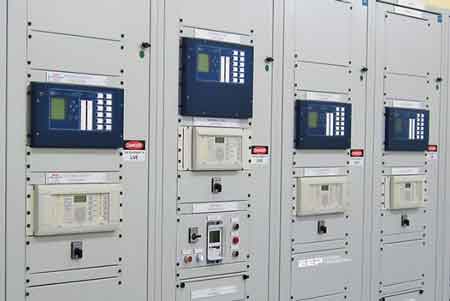
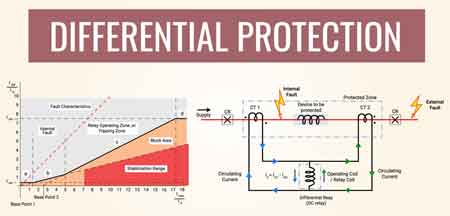
Differential protection relay schemes compare current entering and leaving a defined zone to detect internal faults with high selectivity. Used for transformers, generators, and busbars, they isolate faults without relying on overcurrent pickup.
That single comparison, what goes in versus what comes out, changes how fault control decisions are made. Unlike magnitude-based schemes that infer fault location indirectly, differential protection draws a hard boundary around an asset and enforces it. When the balance breaks, the assumption is simple: the problem is within the zone and must be removed immediately.
This is why a differential protection relay is rarely treated as just another relay option. It represents a design choice about how risk is contained, not merely how fast a breaker opens. Engineers who approach it as a sensitivity upgrade often miss the deeper responsibility that comes with defining and maintaining a protection zone.
Differential protection is best understood as a fault control philosophy rather than a component category. The relay itself is secondary to the scheme it enforces. Once a zone is defined, the system no longer asks whether current is “high enough” to justify action. It asks whether current behavior is consistent across the zone boundary.
This distinction matters because it separates differential protection from conventional overcurrent protection, where fault discrimination depends on time delays, pickup thresholds, and coordination margins. Differential schemes bypass those compromises entirely by acting only on imbalance, not magnitude. That is why they are often deployed alongside, rather than instead of, overcurrent elements in a layered strategy, as discussed under Overcurrent Protection.

Defining a differential zone is an act of intent. Everything inside that boundary is treated as a single protected entity. Everything outside it is assumed to be someone else’s problem. That clarity is powerful and unforgiving.
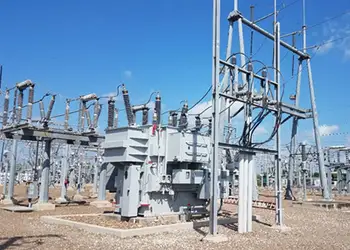
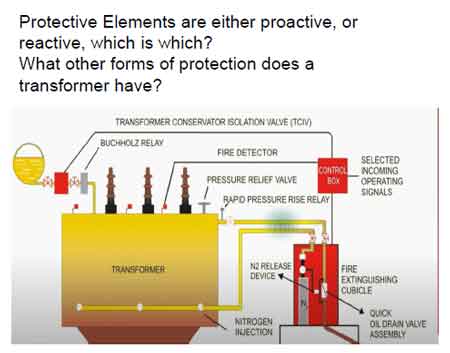
A well-defined zone produces near-perfect selectivity for internal faults, but only if the measurements framing that zone behave predictably. This is why a differential protection relay is most often applied to assets where internal fault consequences are severe and isolation must be decisive, such as large transformers and generators. In those contexts, designers often anchor the differential scheme within a broader Transformer Protection strategy, ensuring backup elements are available if assumptions break down.
Where differential protection excels is not speed alone, but certainty. An internal winding fault that barely nudges system current may never challenge an upstream relay, yet it immediately disrupts current balance across a differential zone. That early recognition is what limits damage and prevents escalation.
By contrast, systems relying purely on feeder-based fault control must infer fault location indirectly, often coordinating across multiple devices. Differential schemes eliminate that ambiguity. The decision logic is local, contained, and decisive, a sharp contrast to time-graded approaches that dominate Relay and Circuit Breaker Coordination.
Differential schemes are most effective where the protected element can be cleanly bounded and measured. Transformers, generators, and busbars naturally meet that requirement. Motors sometimes do as well, though designers often weigh differential logic against dedicated Motor Protection Relay strategies depending on size and duty.
What differential protection does not do well is replace system-level awareness. It will not address feeder faults, arc-fault risks, or ground faults occurring outside the zone. Those hazards remain the domain of broader Power System Protection methods and specialized elements like Ground Fault Protection, which operate on different assumptions altogether.
When differential protection relay schemes misoperate, the cause is rarely relay behavior in isolation. It is usually a breakdown in zone discipline: mismatched measurements, wiring errors, or operating conditions that were never fully considered. Experienced designers know that these risks are inseparable from the decision to use differential protection in the first place.
That reality explains why differential schemes are often paired with conservative backup fault control based on Short Circuit Protection principles. The differential element handles its task uniquely well. The rest of the system remains ready if assumptions are violated.
Differential protection does not sit above or below other fault control methods. It sits orthogonally to them. It answers a different question entirely: not how much current is flowing, but whether current behavior makes sense given the defined boundary.
Seen that way, a differential protection relay becomes a structural component of the overall Electrical Protection philosophy rather than a specialized add-on. It forces clarity about what is being protected, how that fault control is enforced, and what consequences follow when those assumptions fail.
Once the protection philosophy and scheme structure are clearly established, device-level decisions tend to follow with much less ambiguity. At that stage, engineers move beyond questions of zone definition and fault discrimination and begin evaluating specific relay functions, testing practices, and application-dependent constraints.
Those subjects require a different kind of attention. They are no longer about why a scheme exists or where it belongs in the protective hierarchy, but about how that scheme is implemented, verified, and maintained in the field. Attempting to collapse philosophy, scheme logic, and device mechanics into a single explanation usually results in a shallow understanding of all three.
Think you know Electrical Protection? Take our quick, interactive quiz and test your knowledge in minutes.
For engineers who need to develop that deeper, device-level competence, formal training environments such as basic protective relay training provide the structured focus that technical articles intentionally avoid.
Explore 50+ live, expert-led electrical training courses –