Electrical Neutral vs Ground Explained
By Frank Baker, Technical Editor
By Frank Baker, Technical Editor
Our customized live online or in‑person group training can be delivered to your staff at your location.
Request for Quotation Service

Buyers Submit Free RFQs to top suppliers, no obligation.
Suppliers Browse real project RFQs directly from buyers.
Trust Electricity Forum 40 years connection buyers and suppliers.
Electrical neutral vs ground shows that the neutral wire carries load current in normal use, while the ground wire stays idle and only carries fault current and voltages back to the source during power grid faults to protect life and gear.
In residential, commercial, and industrial AC systems, the neutral and ground wires often appear side by side in panels and outlets, leading many people to assume they serve similar roles. They do not. Their separation is deliberate because each conductor participates in the system at different times and for different reasons, one as part of normal circuit operation, the other as part of fault control and safety response. Confusing those roles alters how current returns, faults clear, and protective devices operate reliably.
When a load, such as a motor, heater, or appliance, operates, it needs two paths for current: one to supply energy and one to return it. The neutral conductor completes that circuit alongside the hot or phase conductor. Unlike ground, the neutral carries current continuously whenever loads are energized. The reason it can do this safely is that neutral is bonded to the electrical service reference at a single point, creating a stable voltage reference for the entire system.
Where the neutral ties into the broader grounding architecture is in how it helps establish the system’s reference point. That single bond at the service, not multiple scattered connections, is essential for keeping voltage predictable and protecting insulation from undue stress. When current flows through neutral, voltage drops along its length can shift potentials locally; proper sizing and routing minimize those effects so that devices operate as intended.
Think you know Power Quality? Take our quick, interactive quiz and test your knowledge in minutes.
In panel and distribution environments, you’ll often see the neutral bar used as a reference point for devices and loads. Where neutral and earth bonding occur influences how transient voltages develop and dissipate. For a deeper exploration of how grounding fixes reference points and shapes system behavior, refer to Understanding Electrical Grounding.
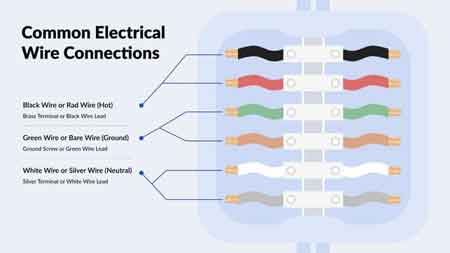
By contrast, the grounding conductor (often bare copper or green-insulated) is normally dormant. It doesn’t carry load current in everyday operation. Its purpose emerges only when something goes wrong—an insulation breakdown, a loose connection, or an accidental contact would otherwise energize exposed conductive parts. In those moments, ground provides a low-impedance path that guides fault current back toward the source reference and allows protective devices, such as breakers, to clear the fault rapidly.
That distinction has real consequences: neutral conductors are designed to carry return load current during normal operation, while grounding conductors are intended to remain non-current-carrying except during fault conditions. The presence of current on a ground path during service conditions can obscure whether a fault exists and can interfere with protective coordination. For an architectural perspective on how grounding systems organize conductors and bonding paths to control voltage behavior, see Grounding System.
If neutral and ground serve different functions, why do most systems join them together at the service disconnect? That single-point bond creates the reference that stabilizes system voltages relative to earth and allows fault current to take a predictable path to the source. Without this controlled connection, protective devices might not see enough fault current to trip, or voltage could float unpredictably under unbalanced conditions.
However, multiple bonds scattered throughout a system can create parallel paths for return current. That can lead to circulating neutral currents, stray voltages on equipment frames, and interference with sensitive electronics. Effective Grounding and Bonding practice (especially as interpreted by codes such as NEC Article 250) balances single-point bonding with continuous conductor routing so that the system behaves as a coherent whole rather than a collection of isolated connections.
Inside a service panel, you’ll often see neutral and ground bars adjacent or even tied off near each other. That physical proximity can obscure their electrical identity, but the behavior under load is what matters. Neutral returns current continually; ground nearly never does. That means neutral conductors are sized and routed to handle expected return currents, while grounding conductors are sized to handle fault currents for the brief interval until protection clears the fault.
In some legacy installations or for specific system types, neutral and earth may share portions of their paths. Standards and field experience caution that while they touch at one point, they ought not be used interchangeably on a day-to-day basis. Mixing their roles can cause unexpected voltage on grounding paths during normal operation, undermining safety rather than enhancing it. For more on how standards and installation practice shape these boundaries, consult Electrical Grounding Code.
When a hot conductor accidentally contacts an enclosure or frame, an effective grounding network shunts that energy into the protective path. The resulting surge of fault current allows circuit breakers and fuses to operate, detect excessive current, and disconnect the supply. Without a reliable ground path, that fault energy might find an alternate route through equipment, structures, or even human contact, increasing the risk of shock and damage.
Stay informed with our FREE Power Quality Newsletter — get the latest news, breakthrough technologies, and expert insights, delivered straight to your inbox.
Neutral, carrying return current under normal conditions, does not serve this safety function in the same way. When neutral paths are interrupted or overloaded, loads may fail to operate, but the protective system behaves differently: flowing return currents through the neutral are an operational reality, not a symptom of a fault. Situations where neutral carries unbalanced or harmonic currents are matters of design and load analysis, not fault mitigation.
For electricians and designers, thinking in terms of behavior rather than terminology clarifies many field decisions. If a conductor carries current continuously, it is part of the return path; if it is dormant until something abnormal occurs, it is a protective element. Identifying which is which in a system helps size conductors, diagnose strange voltages seen on metal parts, and ensure protective coordination functions as steady-state and transient conditions dictate.
If you ever find current flowing on grounding conductors during what appears to be normal operation, that’s a signal to investigate bonding, conductor routing, or loads that may be introducing unintended return paths. For guidance on how neutrals and grounding interact in specific equipment contexts—like motors, transformers, and derived systems, see: Neutral Grounding Resistor.
Neutral and ground look similar in an installation but behave differently in fundamental ways. Neutral is a return conductor in normal operation; ground is a safety conductor that only conducts during fault conditions. Their controlled connection at a single point ties the system voltage to a stable reference, while preserving the distinction in role ensures that faults are handled safely, predictably, and in a way that allows protective devices to respond as intended.
Advantages To Instructor-Led Training – Instructor-Led Course, Customized Training, Multiple Locations, Economical, CEU Credits, Course Discounts.
Request For QuotationWhether you would prefer Live Online or In-Person instruction, our electrical training courses can be tailored to meet your company's specific requirements and delivered to your employees in one location or at various locations.