Aerial Power Line Inspection for Overhead Grid Monitoring
By Howard WIlliams, Associate Editor
By Howard WIlliams, Associate Editor
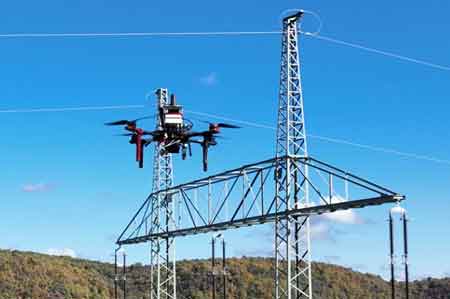
Aerial power line inspection allows utilities to assess the condition of conductors, insulators, and hardware, as well as vegetation risk, using aircraft, drones, and imaging sensors, improving asset monitoring, maintenance planning, and grid reliability across overhead transmission and distribution networks.
Think you know Vision AI, Inspection & Field Intelligence? Take our quick, interactive quiz and test your knowledge in minutes.
Aerial patrols are widely used along transmission corridors where utilities must inspect thousands of towers and spans across long-distance high-voltage infrastructure.
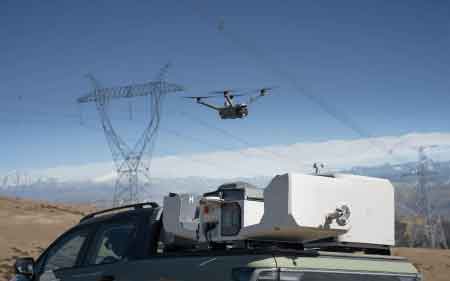
Drone systems expand inspection coverage for areas that are difficult or dangerous to access. They allow utilities to capture high-resolution imagery of conductor attachment points and structural components while minimizing the need for workers to climb structures.
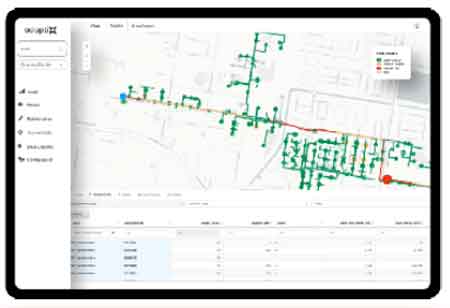
Inspection imagery increasingly feeds operational analytics platforms such as the AI Grid Monitoring System that correlate physical asset conditions with system performance data and operational alarms.
Aerial inspection systems may also incorporate LiDAR scanning to measure vegetation encroachment, conductor sag, structure clearance, and terrain elevation, all of which affect the reliability of transmission and distribution lines.
Inspection programs generate large volumes of imagery and sensor data that require structured data processing and engineering data analysis before maintenance decisions can be made.
Utilities often deploy drones equipped with high-resolution cameras and thermal sensors to visually inspect conductors, insulators, and hardware along distribution and transmission lines.
The collected imagery supports rapid review and real time assessment of infrastructure condition, allowing operators to identify defects, vegetation conflicts, and structural deterioration before failures affect grid reliability.
The primary engineering value of aerial power line inspection lies in identifying early-stage infrastructure degradation before it produces outages or equipment damage.
Typical findings include conductor strand damage, insulator contamination, corrosion on hardware assemblies, vegetation encroachment, and mechanical stress on poles or towers. In wildfire-prone regions, proximity to vegetation and hardware deterioration are particularly important risk indicators.
Inspection findings contribute to broader asset monitoring strategies supported by technologies such as Predictive Grid Intelligence that combine inspection observations with operational sensor data to detect emerging infrastructure problems.
Utilities use these insights to prioritize maintenance interventions across thousands of assets, directing field crews toward locations where failure probability is highest.
Aerial power line inspection programs produce large volumes of imagery and condition reports that must be integrated with operational systems to deliver practical value. Data collected in the field becomes useful only when it can be interpreted within the broader context of grid operations.
Utilities increasingly link aerial inspection observations with network models and operational platforms, such as Advanced Distribution Management System Benefits, allowing asset condition insights to influence switching plans, load transfer strategies, and reliability planning.
Inspection information may also feed into broader operational intelligence platforms such as Grid Observability, where infrastructure condition data is combined with sensor measurements and outage analytics.
By correlating inspection findings with operational system data, utilities can determine whether physical asset degradation is already influencing electrical behavior across feeders.
Wildfire risk management programs have significantly increased the importance of aerial inspection in many electric utilities. Overhead infrastructure exposed to vegetation and environmental conditions can become ignition sources when equipment deterioration goes undetected.
Inspection flights help utilities identify vegetation conflicts, damaged hardware, and conductor clearance problems that may elevate ignition risk. These observations support mitigation programs that target the most critical infrastructure vulnerabilities.
Aerial inspection also complements automated monitoring technologies such as Power Grid Monitoring Systems that provide continuous visibility into network conditions.
Together, aerial power line inspection programs and monitoring technologies allow utilities to maintain awareness of both the electrical behavior and physical condition of grid infrastructure.
The ultimate purpose of aerial power line inspection is to support operational decision making. Inspection programs provide engineers and system operators with direct evidence of asset condition across the network.

These insights influence multiple operational processes, including maintenance prioritization, vegetation management scheduling, equipment replacement planning, and reliability improvement programs.
Inspection data also supports predictive asset strategies such as Condition Based Asset Strategy, where maintenance activities are triggered by infrastructure condition rather than fixed schedules.
Utilities that integrate aerial inspection programs with operational analytics gain earlier visibility into infrastructure degradation and can intervene before equipment failures disrupt service.
When combined with grid monitoring and asset intelligence platforms such as Grid Edge Intelligence, aerial inspection becomes part of a broader operational framework that allows utilities to maintain situational awareness across complex distribution and transmission networks.
Explore 50+ live, expert-led electrical training courses –