NFPA 70b Training - Electrical Maintenance
Our customized live online or in‑person group training can be delivered to your staff at your location.

- Live Online
- 12 hours Instructor-led
- Group Training Available
Regular Price:
$699
Coupon Price:
$599
Smart Meter Privacy protects consumer data from utilities, smart meters, and IoT devices, emphasizing consent, anonymization, cybersecurity, demand response programs, and default privacy settings to prevent data monetization, profiling, and targeted marketing abuses.
What's Behind the News
Controls utility access to energy data, requiring consent and security to protect household patterns.
- Default privacy: data sharing only with explicit opt-in.
- Limits utilities from monetizing identifiable usage data.
- Uses anonymization and aggregation to reduce re-identification risk.
- Applies privacy by design to smart meters and IoT devices.
Picture this:
You sign up for an energy conservation scheme that lets your local utility shut down your air conditioner temporarily if the power grid is overloaded. Shortly afterward, you get a marketing call from an air conditioning company amid concerns about energy retailers in Ontario.
Or this:
You buy an electric car that you charge up every Sunday night, but never on Mondays because you always do an overnight trip. One Monday night, your home is burgled.
In fact, this doesn’t happen right now. Privacy commissioner Ann Cavoukian wants to keep it that way.
The electricity system is gearing up to gather more and more information about customers and their habits through smart meters and smart appliances, she says.
Cavoukian wants power system planners to protect private information, right from the start.
Cavoukian released a paper setting standards for utilities to use in keeping private information from leaking out in unauthorized ways.
“This is all about control: Who gets control over the personal data?” she said in an interview. “It’s your data, it’s not Toronto Hydro’s or Hydro One’s. You should be the person to decide how that data is used.”
Until recently, electric utilities didn’t know that much about most power use in most households. They read the meter every couple of months, which gave an over-all usage, though early smart meter results have been mixed in some jurisdictions, and that was about it.
But smart meters – now installed in just about every household across the province – have in some areas prompted a consumer revolt over privacy and costs, and now provide utilities with power readings every 15 minutes, almost in real time.
As well, consumers can volunteer to have devices that allow the utility to shut down their air conditioner as part of a revised smart meter program choice for participants.
And in the next few years, many appliances will grow “smarter”, allowing the electric utilities to peer into households and monitor what appliances are being used, even as telecoms explore home energy management services, Cavoukian said.
Potential trouble lurks if that happens. In the wrong hands, up-to-the-minute data can tell people when you’re not at home, much like court-approved monitoring of power usage has shown in other cases, she said.
And she recently attended a conference in the U.S. where utilities were talking about “monetizing” – they meant selling—the new information they were gleaning from their customers.
That, she says, is “an abomination” because the utilities were planning to use private information in ways the customer had not intended.
“You should care, because you didn’t sign up for unwanted marketing efforts,” she said. “You don’t want more spam, you don’t want more people calling you.”
Cavoukian said Canadian utilities have been far more sensitive about privacy issues. Toronto Hydro and Hydro One both worked with her in preparing the privacy standards.
The best privacy practices ensure that privacy is the “default option”: Customer information is kept private unless the customer specifically authorizes a release, she said.
Or, as one of her neighbours put it, when Cavoukian explained the principle to her:
“You mean, if I do nothing, I get privacy for free.”
Related News
Related News
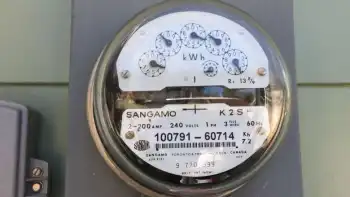
Alberta ratepayers on the hook for unpaid gas and electricity bills from utility deferral program
Alberta Utility Rate Rider will add a modest fee to electricity bills and natural gas…
View more
More Polar Vortex 2021 Fallout (and Texas Two-Step): Monitor For ERCOT Identifies Improper Payments For Ancillary Services
ERCOT Ancillary Services Clawback and VOLL Pricing summarize PUCT and IMM actions on load shed,…
View more
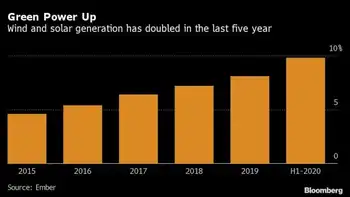
Wind and Solar Double Global Share of Electricity in Five Years
Wind And Solar Energy Growth is reshaping the global power mix, accelerating grid decarbonization as…
View more
Saudis set to 'boost wind by over 6GW'
Saudi Arabia Wind Power Market set to lead the Middle East, driven by Vision 2030…
View more
BNEF Report: Wind and Solar Will Provide 50% of Electricity in 2050
BNEF 2019 New Energy Outlook projects surging renewable energy demand, aggressive decarbonization, wind and solar…
View more
Cheap material converts heat to electricity
Polycrystalline Tin Selenide Thermoelectrics enable waste heat recovery with ZT 3.1, matching single crystals while…
View more
Sign Up for Electricity Forum’s Newsletter
Stay informed with our FREE Newsletter — get the latest news, breakthrough technologies, and expert insights, delivered straight to your inbox.
Electricity Today T&D Magazine Subscribe for FREE

Stay informed with the latest T&D policies and technologies.
- Timely insights from industry experts
- Practical solutions T&D engineers
- Free access to every issue

