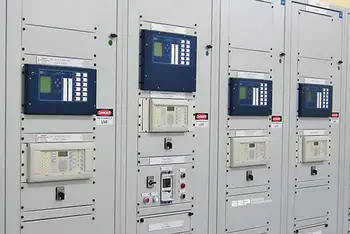
Protective Relay Training - Basic
Our customized live online or in‑person group training can be delivered to your staff at your location.
- Live Online
- 12 hours Instructor-led
- Group Training Available
Regular Price:
$699
Coupon Price:
$599
Rare earths for hybrid cars face a supply crunch as China curbs exports, straining neodymium magnets, lanthanum batteries, and terbium, dysprosium additives used in electric motors and wind turbine generators amid surging clean energy demand.
Understanding the Story
Neodymium and lanthanum power hybrid magnets and batteries, but tightening supply now puts production at risk.
- China limits exports, widening a global rare earth shortfall
- Neodymium magnets critical for hybrid motors and wind turbines
- Lanthanum essential for NiMH hybrid batteries like Prius
The Prius hybrid automobile is popular for its fuel efficiency, but its electric motor and battery guzzle rare earth metals, a little-known class of elements found in a wide range of gadgets and consumer goods.
That makes Toyota's market-leading gasoline-electric hybrid car and other similar vehicles vulnerable to a supply crunch predicted by experts as China, the world's dominant rare earths producer, limits exports while global demand swells.
Worldwide demand for rare earths, covering 15 entries on the periodic table of elements, is expected to exceed supply by some 40,000 tonnes annually in several years, a reminder that raw materials for electrification will determine progress unless major new production sources are developed. One promising U.S. source is a rare earths mine slated to reopen in California by 2012.
Among the rare earths that would be most affected in a shortage is neodymium, the key component of an alloy used to make the high-power, lightweight magnets for electric motors of hybrid cars, such as the Prius, Honda Insight and Ford Focus, as well as in generators for wind turbines.
Close cousins terbium and dysprosium are added in smaller amounts to the alloy to preserve neodymium's magnetic properties at high temperatures. Yet another rare earth metal, lanthanum, is a major ingredient for hybrid car batteries.
Production of both hybrids cars and wind turbines is expected to climb sharply, as EVs shift into drive across key markets amid the clamor for cleaner transportation and energy alternatives that reduce dependence on fossil fuels blamed for global climate change.
Toyota has 70 per cent of the U.S. market for vehicles powered by a combination of an internal-combustion engine and electric motor, even as it holds back in the EV race in some segments. The Prius is its No. 1 hybrid seller.
Jack Lifton, an independent commodities consultant and strategic metals expert, calls the Prius "the biggest user of rare earths of any object in the world."
Each electric Prius motor requires 1 kilogram of neodymium, and each hybrid battery uses 10 to 15 kg of lanthanum. That number will nearly double under Toyota's plans to boost the car's fuel economy, he said.
Toyota plans to sell 100,000 Prius cars in the United States alone for 2009, as automakers roll out electric and hybrid hopes at major shows worldwide today, and 180,000 next year. The company forecasts sales of 1 million units per year starting in 2010.
As China's industries begin to consume most of its own rare earth production, Toyota and other companies are seeking to secure reliable reserves for themselves, and to buy batteries from Sanyo where needed globally.
Reuters reported last year that Japanese firms are showing strong interest in a Canadian rare earth site under development at Thor Lake in the Northwest Territories.
A Toyota spokeswoman in Los Angeles said the automaker would not comment on its resource development plans. But media accounts and industry blogs have reported recently that Toyota has looked at rare earth possibilities in Canada and Vietnam.
Related News
Related News
Washington County planning officials develop proposed recommendations for solar farms
Washington County solar farm incentives aim to steer projects to industrial sites with tax breaks,…
View more

'For now, we're not touching it': Quebec closes door on nuclear power
Quebec Energy Strategy focuses on hydropower, energy efficiency, and new dams as Hydro-Que9bec pursues Churchill…
View more

Feds "changing goalposts" with 2035 net-zero electricity grid target: Sask. premier
Canada Clean Electricity Regulations outline a 2035 net-zero grid target, driving decarbonization via wind, solar,…
View more

Green hydrogen, green energy: inside Brazil's $5.4bn green hydrogen plant
Enegix Base One Green Hydrogen Plant will produce renewable hydrogen via electrolysis in Ceara, Brazil,…
View more

BC Hydro launches program to help coronavirus-affected customers with their bills
BC Hydro COVID-19 Bill Relief provides payment deferrals, no-penalty payment plans, Crisis Fund grants up…
View more

Hydro-Québec puts global ambitions on hold as crisis weighs on demand
Hydro-Que9bec COVID-19 M&A Pause signals a halt to international expansion as falling electricity demand, weaker…
View more
Sign Up for Electricity Forum’s Newsletter
Stay informed with our FREE Newsletter — get the latest news, breakthrough technologies, and expert insights, delivered straight to your inbox.
Electricity Today T&D Magazine Subscribe for FREE

Stay informed with the latest T&D policies and technologies.
- Timely insights from industry experts
- Practical solutions T&D engineers
- Free access to every issue

