Hydro-Quebec impact spurs Maine debate

By istock Analyst


Substation Relay Protection Training

Our customized live online or in‑person group training can be delivered to your staff at your location.
  • Live Online
  • 12 hours Instructor-led
  • Group Training Available
Regular Price:
$699
Coupon Price:
$599
Reserve Your Seat Today
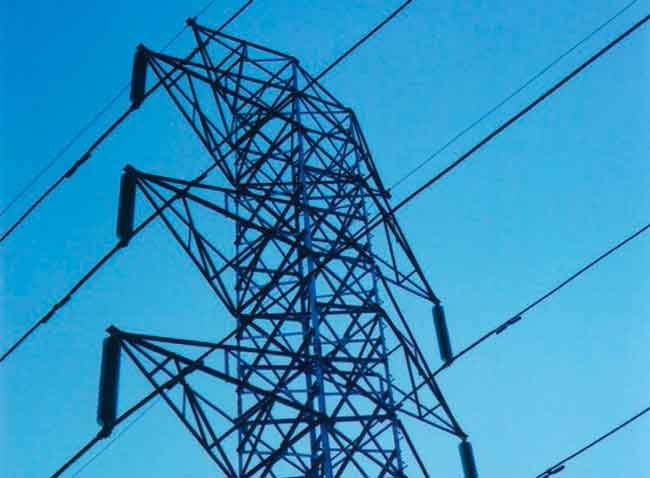
A massive energy source in Canada is casting a long shadow over legislation in Maine to determine the future course of power transmission through the state.

The source is Hydro-Quebec, a utility owned by the provincial government, which is trying to obtain the generation capacity of its counterpart provincial utility in New Brunswick, New Brunswick Power.

Hydro-Quebec's purchase has lingered over discussion during legislative hearings on L.D. 1786, a bill that would steer energy transmission corridors to designated state-owned land, giving the state oversight to ensure how the projects would benefit Maine.

With access to New Brunswick's grid, Hydro-Quebec could be poised to build a corridor across the border into Maine and flood the state and regional U.S. markets with subsidized hydroelectric power, several lawmakers have said.

Hydro-Quebec now produces 41,000 megawatts of energy, even before considering the capacity of New Brunswick power, which produces 4,000 megawatts from nuclear, hydroelectric, coal, oil and diesel sources. This production dwarfs Maine's current energy demand of 2,200 megawatts and production capacity of about 3,400 megawatts.

By 2015, 4,000 megawatts of Hydro-Quebec's capacity will come from wind power. New Brunswick Power is also expanding its wind capacity.

During hearings on the corridor bill, Rep. Ken Fletcher, R-Winslow, raised concerns that Hydro-Quebec's current energy exports — which were only 8 percent of its production in 2008 — produced almost one-third of its profits that year.

"Isn't it reasonable for them to expect that they could send their 4,000 megawatts of wind and combine it with their hydro, and probably control the market?" said Fletcher, a member of the Legislature's Utilities and Energy Committee.

Some state officials, however, don't see Hydro-Quebec's growing capacity as a problem — they see it as a solution.

John Kerry, the director of the Office of Energy Independence and Security, said steady Canadian hydroelectric capacity could balance Maine's production of wind energy.

"I think we should work collaboratively with our Canadian neighbors," Kerry said in an interview. "I underscore that we should do it at arm's length and be prudent, but we should see it as an opportunity."

For its part, Hydro-Quebec said that its wind capacity, aside from about 150 megawatts for Massachusetts and Connecticut, is for Quebec consumption, and hydroelectric power like that in Hydro-Quebec's portfolio does not qualify for valuable renewable energy certificates, or RECs, traded in New England.

"The wind developers or the solar developers in New England should not fear the presence of Hydro-Quebec in the market, because we are not going after the REC market," said Christian Brosseau, president of Hydro-Quebec US.

Furthermore, Brosseau said, Hydro-Quebec would not undercut the electricity market in the northeastern U.S. with cheap hydroelectricity, because it would sell at the marginal wholesale rate.

The corridor bill being considered, however, would allow the company to tap into the Maine grid and potentially the larger, lucrative regional market if it entered into a long-term contract favorable to Maine ratepayers and industry.

"Anything that makes sense we'll look at seriously but there's no commitment that yes we will be building certainly in the next 10 years in Maine," Brosseau said. "But we will be looking at it."

Lawmakers are again scheduled to review the corridor legislation in a work session at Burton M. Cross building in Augusta, across from the State House.

Related News

Nuclear helps Belgium increase electricity exports in 2019

Belgium Energy Mix 2019 shows strong nuclear output, rising offshore wind, net electricity exports, and robust interconnections, per Elia, as the nuclear phaseout drives 3.9GW new capacity needs after improved reactor availability.


Key Points

High nuclear share, offshore wind, net exports, interconnections; 3.9GW capacity needed amid nuclear phaseout.

✅ Nuclear supplied 48.8% of generation in 2019.

✅ Net exporter: 1.8 TWh, aided by interconnections.

✅ Elia projects 3.9GW new capacity for phaseout.


Belgium's electricity transmission system operator, Elia, said that the major trends in 2019 were a steady increase in (mainly offshore) renewable power generation, illustrated by EU wind and solar records across the bloc, better availability of nuclear-generating facilities and an increase in electricity exports.

In 2019, 48.8% of the power generated in Belgium came from nuclear plants. This was in line with the total for 2017 (50%) and significantly more than in 2018 (31.2%) when several reactors were unavailable amid stunted hydro and nuclear output in Europe as well.

Belgium exported more electricity in 2019, as neighbors like Germany saw renewables overtake coal and nuclear generation, with net exports of 1.8TWh (2.1% of the energy mix), in contrast to 2018 when Belgium imported 17.5TWh (20%).

Elia said this “should be viewed in its wider context, of declining nuclear capacity in Europe and regional market shifts, against the backdrop of an increasingly Europeanised market, and can be explained primarily by the good availability of Belgium's generating facilities (especially its nuclear power stations).”

The development of interconnections was also a key factor in the circulation of these electricity flows, as seen with Irish grid price spikes highlighting regional stress, Elia noted.

“Belgium had not been a net exporter of electricity for almost 10 years, the last time being in 2009 and 2010, when total net exports represented 2.8% and 0.2% respectively of Belgium’s energy mix,” it said.

Belgian has seven nuclear reactors – three at Tihange near Liege and four at Doel near Antwerp – and, regionally, nuclear-powered France faces outage risks that influence cross-border reliability.

In 2003, Belgium decided to phase out nuclear power and passed a law to that effect, with neighbors like Germany navigating a balancing act during their energy transition, which was reaffirmed in 2015 and 2018.

A commission appointed to assess the impact of the nuclear phaseout is scheduled to be completed in 2025 but has yet to report any findings.

Elia estimates that some 3.9GW of new power generating capacity will be needed to compensate for Belgium's nuclear phaseout.


Related News

View more

Paris Finalises Energy Roadmap for 2025–2035 with Imminent Decree

France 2025–2035 Energy Roadmap accelerates carbon neutrality via renewables expansion, energy efficiency, EV adoption, heat pumps, hydrogen, CCS, nuclear buildout, and wind and solar targets, cutting fossil fuels and emissions across transport, housing, industry.


Key Points

A national plan to cut fossil use and emissions, boost renewables, and scale efficiency and clean technologies.

✅ Cuts fossil share to 30% by 2035 with efficiency gains

✅ Scales solar PV and wind; revives nuclear with EPR 2

✅ Electrifies transport and industry with EVs, hydrogen, CCS


Paris is on the verge of finalising its energy roadmap for the period 2025–2035, with an imminent decree expected to be published by the end of the first quarter of 2025. This roadmap is part of France's broader strategy to achieve carbon neutrality by 2050, aligning with wider moves toward clean electricity regulations in other jurisdictions.

Key Objectives of the Roadmap

The energy roadmap outlines ambitious targets for reducing greenhouse gas emissions across various sectors, including transport, housing, food, and energy. The primary goals are:

  • Reducing Fossil Fuel Dependency: Building on the EU's plan to dump Russian energy, the share of fossil fuels in final energy consumption is to fall from 60% in 2022 to 42% in 2030 and 30% in 2035.

  • Enhancing Energy Efficiency: A target of a 28.6% reduction in energy consumption between 2012 and 2030 is set, focusing on conservation and energy efficiency measures.

  • Expanding Decarbonised Energy Production: The roadmap aims to accelerate the development of renewable energies and the revival.

Sector-Specific Targets

  • Transport: The government aims to cut emissions by 31, focusing on the growth of electric vehicles, increasing public transport, and expanding charging infrastructure.

  • Housing: Emissions from buildings are to be reduced by 44%, with plans to replace 75% of oil-fired and install 1 million heat pumps.

  • Agriculture and Food: The roadmap includes measures to reduce emissions from agriculture by 9%, promoting organic farming and reducing the use of nitrogen fertilizers.

  • Industry: A 37% reduction in emissions is targeted through the use of electricity, biomass, hydrogen, and CO₂ capture and storage technologies informed by energy technology pathways outlined in ETP 2017.

Renewable Energy Targets

The roadmap sets ambitious targets for renewable energy production that align with Europe's ongoing electricity market reform efforts:

  • Photovoltaic Power: A sixfold increase in photovoltaic power between 2022

  • Offshore Wind Power: Reaching 18 gigawatts up from 0.6 GW

  • Onshore Wind Power: Doubling capacity from 21 GW to 45 GW over the same period.

  • Nuclear Power: The commissioning of the evolutionary power and the construction of six EPR 2 reactors, underpinned by France's deal on electricity prices with EDF to support long-term investment, with the potential for eight more.
     

Implementation and Governance

The final version of the roadmap will be adopted by decree, alongside a proposed electricity pricing scheme to address EU concerns, rather than being enshrined in law as required by the Energy Code. The government had previously abandoned the energy-climate planning. The decree is expected to be published at the end of the Multiannual Energy Program (PPE) and in the second half of the third National Low-Carbon Strategy (SNBC).

Paris's finalisation of its energy roadmap for 2025–2035 marks a significant step towards achieving carbon neutrality by 2050. The ambitious targets set across various sectors reflect a comprehensive approach to reducing greenhouse gas emissions and transitioning to a more sustainable energy system amid the ongoing EU electricity reform debate shaping market rules. The imminent decree will provide the legal framework necessary to implement these plans and drive the necessary changes across the country.


Related News

View more

US Dept. of Energy awards Washington state $23.4 million to strengthen infrastructure

Washington Grid Resilience Grant funds DOE-backed modernization to harden Washington's electric grid against extreme weather, advancing clean energy, affordable and reliable electricity, and community resilience under the Bipartisan Infrastructure Law via projects and utility partnerships.


Key Points

A $23.4M DOE grant to modernize Washington's grid, boost weather resilience, and deliver clean, reliable power.

✅ Targets outages, reliability, and community resilience statewide.

✅ Prioritizes disadvantaged areas and quality clean energy jobs.

✅ Backed by Bipartisan Infrastructure Law and DOE funding.


Washington state has received a $23.4 million Grid Resilience State and Tribal Formula Grant from the U.S. Department of Energy (DOE) to modernize the electric grid through smarter electricity infrastructure and reduce impacts due to extreme weather and natural disasters. Grid Resilience State and Tribal Formula Grants aim to ensure the reliability of power sector infrastructure so that communities have access to affordable, reliable, clean electricity.

“Electricity is an essential lifeline for communities. Improving our systems by reducing disruptive events is key as we cross the finish line of a 100% clean electricity grid and ensure equitable benefits from the clean energy economy reach every community,” said Gov. Jay Inslee.

The federal funding for energy resilience will enhance and expand ongoing current grid modernization and resilience efforts throughout the state. For example, working directly with rural and typical end-of-the-line customers to develop resilience plans and collaborating with communities and utilities, including smart city efforts in Spokane as examples, on building resilient and renewable infrastructure for essential services.

“This is a significant opportunity to supplement our state investments in building a robust, resilient electric grid that supports our long-term vision for clean, affordable and reliable electricity – the foundation for economic growth and job creation that strengthens our communities and keeps Washington globally competitive. It shows once again that we are maximizing the federal funding being made available by the Biden-Harris Administration to invest in the country’s infrastructure,” said Washington State Department of Commerce Director Mike Fong.

Across the border, British Columbia's clean energy shift adds regional momentum for resilient, low-carbon power.

Goals include:

Reducing the frequency, duration and impact of outages as climate change impacts on the grid intensify while enhancing resiliency in historically disadvantaged communities.
Strengthening prosperity by expanding well-paying, safe clean energy jobs accessible to all workers and ensuring investments have a positive effect on quality job creation and equitable economic development.

Building a community of practice and maximizing project scalability by identifying pathways for scaling innovations such as integrating solar into the grid across programs.

“The Grid Resilience Formula Grants will enable communities in Washington to protect households and businesses from blackouts or power shutdowns during extreme weather,” said Maria Robinson, Director, Grid Deployment Office, U.S. Department of Energy. “Projects selected through this program will benefit communities by creating good-paying jobs to deliver clean, affordable, and reliable energy across the country.”

DOE has also announced $34 million for grid improvements to bolster reliability nationwide.

“An innovative, reliable, and efficient power grid is vital to Washington’s continued economic growth and for community resilience especially in disadvantaged areas,” said U.S. Rep. Strickland, Co-Lead of the bipartisan Grid Innovation Caucus. “The funding announced today will invest in our energy grid, support good-paying jobs, and means a cleaner, more energy-efficient future.”

Funded through the Bipartisan Infrastructure Law and administered by DOE’s Grid Deployment Office, with related efforts such as California grid upgrades advancing nationwide, the Grid Resilience State and Tribal Formula Grants distribute funding to states, territories, and federally recognized Indian Tribes, over five years based on a formula that includes factors such as population size, land area, probability and severity of disruptive events, and a locality’s historical expenditures on mitigation efforts. Priority will be given to projects that generate the greatest community benefit providing clean, affordable, and reliable energy.


Related News

View more

Hinkley C nuclear reactor roof lifted into place

Hinkley Point C dome lift marks a nuclear reactor milestone in Somerset, as EDF used Big Carl crane to place a 245-tonne steel roof, enabling 2027 startup amid costs, delays, and precision indoor welding.


Key Points

A 245-tonne dome lifted onto Hinkley Point C's first reactor, finishing the roof and enabling fit-out for a 2027 startup.

✅ 245-tonne steel dome lifted by Big Carl onto 44m-high reactor

✅ Indoor welding avoided weather defects seen at Flamanville

✅ Cost now £33bn; first power targeted by end of 2027


Engineers have lifted a steel roof onto a building which will house the first of two nuclear reactors at Hinkley Point in Somerset.

Hundreds of people helped with the delicate operation to get the 245-tonne steel dome into position.

It means the first reactor can be installed next year, ready to be switched on in June 2027.

Engineers at EDF said the "challenging job" was completed in just over an hour.

They first broke the ground on the new nuclear station in March 2017. Now, some 10,000 people work on what is Europe's largest building site.

Yet many analysts note that Europe is losing nuclear power even as demand for reliable energy grows.

They have faced delays from Covid restrictions and other recent setbacks, and the budget has doubled to £33bn, so getting the roof on the first of the two reactor buildings is a big deal.

EDF's nuclear island director Simon Parsons said it was a "fantastic night".

"Lifting the dome into place is a celebration of all the work done by a fantastic team. The smiles on people's faces this morning were something else.

"Now we can get on with the fitting of equipment, pipes and cables, including the first reactor which is on site and ready to be installed next year."

Nuclear minister Andrew Bowie hailed the "major milestone" in the building project, citing its role in the UK's green industrial revolution ambitions.

He said: "This is a key part of the UK Government's plans to revitalise nuclear."

But many still question whether Hinkley Point C will be worth all the money, especially after Hitachi's project freeze in Britain, with Roy Pumfrey of the Stop Hinkley campaign describing the project as "shockingly bad value".


Why lift the roof on?

The steel dome is bigger than the one on St Paul's Cathedral in London.

To lift it onto the 44-metre-high reactor building, they needed the world's largest land-based crane, dubbed Big Carl by engineers.

So why not just build the roof on top of the building?

The answer lies in a remote corner of Normandy in France, near a village called Flamanville.

EDF has been building a nuclear reactor there since 2007, ten years before they started in west Somerset.

The project is now a decade behind schedule and has still not been approved by French regulators.

Why? Because of cracks found in the precision welding on the roof of the reactor building.

In nuclear-powered France, they built the roof in situ, out in the open. 

Engineers have decided welding outside, exposed to wind and rain, compromised the high standards needed for a nuclear reactor.

So in Somerset they built a temporary workshop, which looks like a fair sized building itself. All the welding has been done inside, and then the completed roof was lifted into place.


Is it on time or on budget?

No, neither. When Hinkley C was first approved a decade ago, EDF said it would cost £14bn.

Four years later, in 2017, they finally started construction. By now the cost had risen to £19.5bn, and EDF said the plant would be finished by the end of 2025.

Today, the cost has risen to £33bn, and it is now hoped Hinkley C will produce electricity by the end of 2027.

"Nobody believes it will be done by 2027," said campaigner Roy Pumfrey.

"The costs keep rising, and the price of Hinkley's electricity will only get dearer," they added.

On the other hand, the increase in costs is not a problem for British energy bill payers, or the UK government.

EDF agreed to pay the full cost of construction, including any increases.

When I met Grant Shapps, then the UK Energy Secretary, at the site in April, he shrugged off the cost increases.

He said: "I think we should all be rather pleased it is not the British tax payer - it is France and EDF who are paying."

In return, the UK government agreed a set rate for Hinkley's power, called the Strike Price, back in 2013. The idea was this would guarantee the income from Hinkley Point for 35 years, allowing investors to get their money back.


Will it be worth the money?

Back in 2013, the Strike Price was set at £92.50 for each megawatt hour of power. At the time, the wholesale price of electricity was around £50/MWh, so Hinkley C looked expensive.

But since then, global shocks like the war in Ukraine have increased the cost of power substantially, and advocates argue next-gen nuclear could deliver smaller, cheaper, safer designs.


Related News

View more

Federal net-zero electricity regulations will permit some natural gas power generation

Canada Clean Electricity Regulations allow flexible, technology-neutral pathways to a 2035 net-zero grid, permitting limited natural gas with carbon capture, strict emissions standards, and exemptions for emergencies and peak demand across provinces and territories.


Key Points

Federal draft rules for a 2035 net-zero grid, allowing limited gas with CCS under strict performance and compliance standards.

✅ Performance cap: 30 tCO2 per GWh annually for gas plants

✅ CCS must sequester 95% of emissions to comply

✅ Emergency and peak demand exemptions permitted


After facing pushback from Alberta and Saskatchewan, and amid looming power challenges nationwide, Canada's draft net-zero electricity regulations — released today — will permit some natural gas power generation. 

Environment Minister Steven Guilbeault released Ottawa's proposed Clean Electricity Regulations on Thursday.

Provinces and territories will have a minimum 75-day window to comment on the draft regulations. The final rules are intended to pave the way to a net-zero power grid in Canada, aligning with 2035 clean electricity goals established nationally. 

Calling the regulations "technology neutral," Guilbeault said the federal government believes there's enough flexibility to accommodate the different energy needs of Canada's diverse provinces and territories, including how Ontario is embracing clean power in its planning. 

"What we're talking about is not a fossil fuel-free grid by 2035; it's a net zero grid by 2035," Guilbeault said. 

"We understand there will be some fossil fuels remaining … but we're working to minimize those, and the fossil fuels that will be used in 2035 will have to comply with rigorous environmental and emission standards," he added. 

Some analysts argue that scrapping coal-fired electricity can be costly and ineffective, underscoring the trade-offs in transition planning.

While non-emitting sources of electricity — hydroelectricity, wind and solar and nuclear — should not have any issues complying with the regulations, natural gas plants will have to meet specific criteria.

Those operations, the government said, will need to emit the equivalent of 30 tonnes of carbon dioxide per gigawatt hour or less annually to help balance demand and emissions across the grid.

Federal officials said existing natural gas power plants could comply with that performance standard with the help of carbon capture and storage systems, which would be required to sequester 95 per cent of their emissions.

"In other words, it's achievable, and it is achievable by existing technology," said a government official speaking to reporters Thursday on background and not for attribution.

The regulations will also allow a certain level of natural gas power production without the need to capture emissions. Capturing emissions will be exempted during emergencies and peak periods when renewables cannot keep up with demand. 

Some newer plants might not have to comply with the rules until the 2040s, because the regulations apply to plants 20 years after they are commissioned, which dovetails with net-zero by 2050 commitments from electricity associations. 

The two-decade grace period does not apply to plants that open after the regulations are expected to be finalized in 2025.


Related News

View more

China boosts wind energy, photovoltaic and concentrated solar power

China Renewable Energy Law drives growth in wind power, solar thermal, and photovoltaic capacity, supporting grid integration and five-year plans, even as China leads CO2 emissions, with policy incentives, compliance inspections, and national resource assessments.


Key Points

A legal framework that speeds wind, solar thermal, and PV growth in China via mandates, incentives, and grid rules.

✅ 2018 renewables: 1.87T kWh, 26.7% of national power

✅ Over 100 State Council policies enabling deployment

✅ Law inspections and regional oversight across six provinces


China leads renewable energies, installing more wind power, solar thermal and photovoltaic than any other country, as seen in the China solar PV growth reported in 2016, but also leads CO2 emissions, and much remains to be done.

The effective application of Chinas renewable energy law has boosted the use of renewable energy in the country and facilitated the rapid development of the sector, as solar parity across Chinese cities indicates, a report said.

The report on compliance with renewable energy law was presented today at the current bimonthly session of the Standing Committee of the National Peoples Assembly (APN).

Electricity generated by renewable energy amounted to about 1.87 trillion kilowatts per hour in 2018, representing 26.7 percent of Chinas total energy production in the year, aligning with trends where wind and solar doubling globally over five years, the report said.

Ding Zhongli, vice president of the NPC Standing Committee, presented the report to the legislators at the second plenary meeting of the session.

An inspection of the law enforcement was carried out from August to November, as U.S. renewables hit 28% record showed momentum elsewhere. A total of 21 members of the NPC Standing Committee and the NPC Environmental Protection and Resource Conservation Committee, as well as national legislators, traveled to six regions at the provincial level on inspection visits. Twelve legislative bodies at the provincial level inspected the law enforcement efforts in their jurisdictions.

The relevant State Council agencies have implemented more than 100 regulations and policies to foster a good policy environment for the development of renewable energy, as seen in markets where U.S. renewable electricity surpassed coal in 2022. Local regulations have also been formulated based on local conditions, according to the report.

In accordance with the law, a thorough investigation of the national conditions of renewable energy resources was undertaken.

In 2008 and 2014 atlas of solar energy resources and wind energy evaluation of China were issued. The relevant agencies of the State Council have also implemented five-year plans for the development of renewable energy, which have provided guidance to the sector, while countries like Ireland's one-third green power target remain in focus within four years.

The main provisions of the law have been met, the law has been effectively applied and the purpose of the legislation has been met, and this momentum is echoed abroad, with U.S. renewables near one-fourth according to projections, Ding said.


Related News

View more

Sign Up for Electricity Forum’s Newsletter

Stay informed with our FREE Newsletter — get the latest news, breakthrough technologies, and expert insights, delivered straight to your inbox.

Electricity Today T&D Magazine Subscribe for FREE

Stay informed with the latest T&D policies and technologies.
  • Timely insights from industry experts
  • Practical solutions T&D engineers
  • Free access to every issue

Live Online & In-person Group Training

Advantages To Instructor-Led Training – Instructor-Led Course, Customized Training, Multiple Locations, Economical, CEU Credits, Course Discounts.

Request For Quotation

Whether you would prefer Live Online or In-Person instruction, our electrical training courses can be tailored to meet your company's specific requirements and delivered to your employees in one location or at various locations.