Substation Relay Protection Training
Our customized live online or in‑person group training can be delivered to your staff at your location.
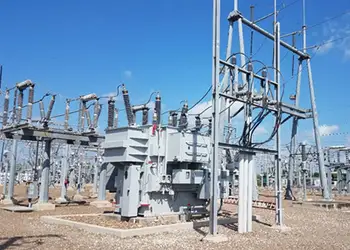
- Live Online
- 12 hours Instructor-led
- Group Training Available
Regular Price:
$699
Coupon Price:
$599
Over the next few months, the Washington Utilities and Transportation Commission will be reviewing the facts and figures to determine how much Whatcom County residents will be paying for natural gas and electricity over the coming winter.
Both Puget Sound Energy and Cascade Natural Gas Corp. have asked the three-member commission to approve hefty increases:
- Puget's bill to the average home would rise 11.8 percent or about $7.91 per month.
- Cascade's bill would rise 9.5 percent or $9.64 per month on average.
The three-member commission is expected to rule on the requests in time for at least a portion of the winter's energy bills.
The utility commission's staffers have questioned some of the utilities' arguments for higher rates. In the staff's analysis, both privately owned utilities could get by with far less than what they have requested. The commission is still taking testimony in both cases, and Cascade's proposed rates will be the subject of a Bellingham public hearing Sept. 7.
Representatives of affected industries and advocates for lower-income people have weighed in, too.
Charles Eberdt, manager of The Energy Project at the Whatcom Opportunity Council, has submitted testimony that the rate structure Cascade is proposing puts too great a burden on lower-income households. That's because the gas company wants to raise its basic monthly charge from the present $4 to $10, regardless of use. Eberdt said it would be better to use a system that allows Cascade customers a low rate on the first portion of their gas usage, with a higher rate imposed as monthly use increases.
Larry Rosok, Cascade's vice president of human resources, defended his company's proposal. The company's current monthly charge is among the lowest in the industry and doesn't come close enough to covering fixed costs, he said. He also argued that the company's proposed pricing system would help to keep the customer's costs and the company's income on an even keel as use fluctuates with weather.
Under the existing pricing system, Rosok said, the company's profits drop when gas use drops, meaning the company has a disincentive to promote conservation. Under the system that Cascade would like to adopt, profits would be less closely linked to the volume of gas its customers use, he said.
Whatever the commission decides, everyone in America had better be bracing for higher household energy costs in the years ahead, said Eric Markell, Puget's senior vice president of energy resources. Among other factors, the short supply of natural gas is pushing up gas and electric bills because gas is the cleanest available large-scale electric power source in an environmentally conscious country.
For years, Puget has relied on Eastern Washington public utility districts for purchases of relatively cheap hydropower under long- term contracts that kept power costs stable. But as those deals expire, Puget must pay more to renew them, and the utility districts have smaller surpluses for sale as their own populations grow.
Markell said Puget has invested in large wind power facilities in Eastern Washington and will continue to promote conservation, but those measures can meet only a portion of the future gap between power and supply. In the years ahead, the nation will need to import large quantities of liquefied natural gas to keep the lights on, Markell said.
"The power markets in the West are being driven by the supply and cost of natural gas," Markell said. "It's a phenomenally costly fuel. That's the box the West Coast is in. That's the box the country is in."
Related News

Charting a path to net zero electricity emissions by the middle of the century
Clean Energy Standard charts a federal path to decarbonize the power sector, scaling renewables, wind,…
View more
Emissions rise 2% in Australia amid increased pollution from electricity and transport
Australia's greenhouse gas emissions rose in Q2 as electricity and transport pollution increased, despite renewable…
View more
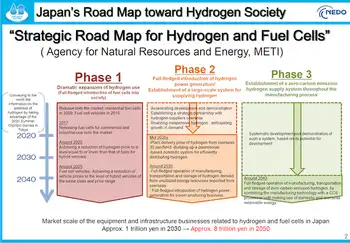
Toshiba, Tohoku Electric Power and Iwatani start development of large H2 energy system
Fukushima Hydrogen Energy System leverages a 10,000 kW H2 production hub for grid balancing, demand…
View more
California Gets $500M to Upgrade Power Grid
California Grid Modernization Funding will upgrade transmission and distribution, boost grid resilience, enable renewable energy…
View more
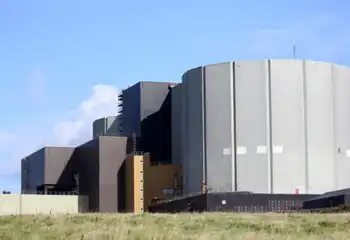
Demise of nuclear plant plans ‘devastating’ to Welsh economy, MP claims
Wylfa Nuclear Project Cancellation reflects Hitachi's withdrawal, pulling £16bn from North Wales, risking jobs, reshaping…
View more

U.S. Speeds Up Permitting for Geothermal Energy
Geothermal Emergency Permitting accelerates BLM approvals on public lands via categorical exclusions for exploratory drilling…
View more
Sign Up for Electricity Forum’s Newsletter
Stay informed with our FREE Newsletter — get the latest news, breakthrough technologies, and expert insights, delivered straight to your inbox.
Electricity Today T&D Magazine Subscribe for FREE

Stay informed with the latest T&D policies and technologies.
- Timely insights from industry experts
- Practical solutions T&D engineers
- Free access to every issue
